Murakami plays antiwar songs on radio to protest Ukraine war

Advertisement

Advertise with us

TOKYO (AP) — Playing James Taylor’s “Never Die Young” and going back to songs that marked the antiwar movement in the 1960s, author Haruki Murakami added his voice to protests against the war in Ukraine with a special edition of his Japanese radio show.

Read this article for free:


By clicking the button above, an account will be created and you will begin to receive some of our recommended newsletters. You may opt out of any newsletter by visiting your Email and Communication Preferences page or by clicking "unsubscribe" at the bottom of any email.

or

Already have an account? Log in here »

To continue reading, please subscribe:

Digital Subscription

One year of digital access for only $1.44 a week*

  • Enjoy unlimited reading on winnipegfreepress.com
  • Read the E-Edition, our digital replica newspaper
  • Access News Break, our award-winning app
  • Play interactive puzzles

*Billed as $5.77 plus GST every four weeks. After 52 weeks, price increases to the regular rate of $19.95 plus GST every four weeks. Offer available to new and qualified returning subscribers only. Cancel any time.

To continue reading, please subscribe:

Add Free Press access to your Brandon Sun subscription for only an additional

$1 for the first 4 weeks*

  • Enjoy unlimited reading on winnipegfreepress.com
  • Read the E-Edition, our digital replica newspaper
  • Access News Break, our award-winning app
  • Play interactive puzzles
Start now

*Your next Brandon Sun subscription payment will increase by $1.00 and you will be charged $17.95 plus GST for four weeks. After four weeks, your payment will increase to $24.95 plus GST every four weeks.

Hey there, time traveller!
This article was published 18/03/2022 (1686 days ago), so information in it may no longer be current.

TOKYO (AP) — Playing James Taylor’s “Never Die Young” and going back to songs that marked the antiwar movement in the 1960s, author Haruki Murakami added his voice to protests against the war in Ukraine with a special edition of his Japanese radio show.

“Does music have the power to stop war? Sadly, the answer is no,” Murakami said. “But it has the power to make listeners believe that war is something we must stop.”

For Friday’s 55-minute program called “Music to put an end to war,” broadcast across Japan by Tokyo FM, Murakami chose 10 tracks from his collections of records and CDs at home that “in my mind best fit our theme.”

FILE - Japanese novelist Haruki Murakami poses for media during a press conference on the university's new international house of literature as known as The Haruki Murakami Library at the Waseda University Wednesday, Sept. 22, 2021, in Tokyo. (AP Photo/Eugene Hoshiko, File)

Some were more straightforward antiwar songs and others “songs that deal with the importance of human life, love and dignity, they can be considered antiwar songs in some broader sense.”

“Lyrics are going to play a big part in tonight’s show, so be sure to keep an open ear,” Murakami reminded his listeners. “By the end of the show, I have a feeling that you’ll be more inspired to bring an end to war. Time will tell.”

For some songs he rehearsed passages of the lyrics he translated into Japanese in his own words, adding historical background that included racial and social disparities while conveying the message of anger, sorrow and love.

The antiwar songs from the 1960s included Peter, Paul & Mary’s “Cruel War,” which he used to play as part of a folk song band in high school, and “Unknown Soldier” by the Doors, which he remembered always playing on the radio in his college days.

With his youth years overlapping with the antiwar movement, his words — and choice of songs — gave a deeper meaning and relevance to the conflict in Ukraine.

He opened his program with James Taylor’s “Never Die Young,” a song aimed at young people in the city losing their lives to drugs and crime.

“There’s a clear connection here to young people sent to war,” he said. “In a war started by an older generation, it’s the younger generation that gives up their lives. That’s the way it’s been for a long time, and it’s truly heartbreaking.”

As he played “Last Night I Had the Strangest Dream,” written by folk singer Ed McCurdy in 1950, he recalled the year the Korean War started, the Cold War turned hot and the threat of nuclear war intensified. Murakami chose the version performed by the Weavers, whose records were banned on the radio because of their antiwar message.

Murakami provided his Japanese translation of passages from reggae singer Eddy Grant’s “Living on the Front Line,” explaining that the front line also was about “a society on the brink of destruction.” Grant mostly wanted to get African tribes stop killing each other, but “his heartfelt lyrics could really apply to any war.”

He chose “Blowin’ In The Wind” that Stevie Wonder sang for Bob Dylan’s 30th anniversary concert celebration in 1992, and summarized what Wonder, before performing, told the audience — that despite the civil rights movement and the Vietnam War, the world’s troubles haven’t ended and the song remained relevant.

After playing John Lennon’s “Imagine” performed by Jack Johnson, Murakami said that the lyrics sounded “pretty optimistic” because they were written in 1971, when “we could still believe in the future, when we still had our ideals.”

In closing, Murakami quoted Martin Luther King Jr. as saying in his speech that “Never forget that everything Hitler did in Germany was legal.” Murakami said that King probably meant that individual rights could be the first to be taken away when the law says so.

He never explicitly mentioned Russia or President Vladimir Putin.

But he noted that many people, frustrated by representative democracy, are drawn closer to authoritarianism. “That might seem efficient, but it’s important to remember that if things take a turn in a dark direction, where we end up is truly dangerous, so please be careful.”

“I hope there will be some peace in our world.”

Report Error Submit a Tip

More Stories

‘Women were shortchanged.’ Why bobsledding’s idea of equality doesn’t add up

Kerry Gillespie - Sports Reporter, Toronto Star 7 minute read Preview

‘Women were shortchanged.’ Why bobsledding’s idea of equality doesn’t add up

Kerry Gillespie - Sports Reporter, Toronto Star 7 minute read Saturday, Dec. 4, 2021

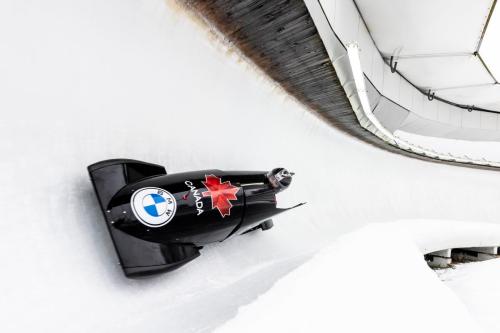
When female bobsledders pushed for an Olympic four-woman event, they got a solo discipline instead: monobob. Now they’ll race for the same number of medals as men, but with fewer sledders. Not the progress they were looking for.

Read
Saturday, Dec. 4, 2021

Carrying a torch for tiki

Eva Wasney 5 minute read Preview

Carrying a torch for tiki

Eva Wasney 5 minute read Monday, Nov. 15, 2021

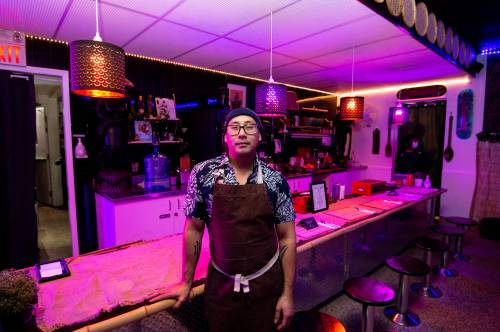
A paper tiki mask is the only indication that the door it’s affixed to leads somewhere other than a dive bar. Ring the doorbell and walk through the kitchen, however, and you’ll be transported to an island-themed lounge that’s equal parts kitschy and comfortable.

“This is just from people’s houses, like my mom’s,” says Allan Pineda, pointing to the wood carvings, water-buffalo horns and rattan furniture decorating the room. “A lot of the stuff you see in here, you’d see in a Filipino’s house back in the day — like second-wave immigrants in the ‘60s and ‘70s, they’d bring this stuff home (from the Philippines).”

Pineda is a local chef and part of the team behind the Bahay Kubo Tiki Bar, a pop-up Filipino drinking and dining experience hosted weekly at an undisclosed Winnipeg establishment.

The details are hush-hush because the temporary eatery is meant to operate like a speakeasy. The dinners are an offshoot of Baon Manila Nights, which Pineda started as a way to highlight Winnipeg’s Filipino culinary scene.

Read
Monday, Nov. 15, 2021

Multi-year budget to force councillors, bureaucrats to focus on the big picture

Aldo Santin 12 minute read Preview

Multi-year budget to force councillors, bureaucrats to focus on the big picture

Aldo Santin 12 minute read Tuesday, Feb. 26, 2019

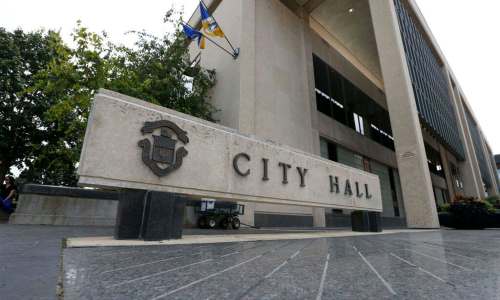
City hall is putting the final touches on the 2019 preliminary budget -- but the real tough job will start after that.

The city is committed to developing a four-year budget beginning with 2020, and having it in place by the end of this year.

It's a process that is filled with uncertainties, trying to balance four successive annual budgets at the same time, using assumptions on revenues and expenses that can change without notice: a provincial government that has frozen funding to city hall at 2016 levels and is reluctant to disclose annual funding commitments or share in unexpected revenues; erratic fuel prices; a possible change in government in Ottawa, which could bring new spending priorities. And in the middle of that four-year span, another civic election where new members of council may have other priorities than those laid out by the current crop of office holders.

Municipal governments across Manitoba are required to approve their annual operating and capital budgets by the end of March each year. But the criticism of decision-making at city hall has been that all the decisions are made on a year-to-year basis, keeping voters happy with an eye on the next election.

Read
Tuesday, Feb. 26, 2019

Indigenous-, newcomer-focused job fair puts opportunity in spotlight

Gabrielle Piché 3 minute read Tuesday, Oct. 27, 2026

Canadian Armed Forces pamphlets grazed the side of Serena Valiquette’s ribbon skirt, as the Grade 9 student clutched the handouts tight.

“When I get to age, I’ll probably apply,” said Serena, 14, joining pockets of students hopping from booth to booth — City of Winnipeg here, Manitoba Public Insurance there — at a job fair in Winnipeg on Tuesday.

The job seekers, present and future, were largely Indigenous and newcomers. It was the demographic organizer Clayton Sandy aimed to attract.

“We have the ability to open doors for young people,” Sandy said. “This is one of the ways we use.”

2026 Winnipeg election results: Mayor and council

1 minute read Preview

2026 Winnipeg election results: Mayor and council

1 minute read Thursday, Oct. 22, 2026

Complete results for the 2022 election races for Winnipeg mayor and city councillors.

Read
Thursday, Oct. 22, 2026

Meteorologist behind Rob’s Obs is moving weather station to Ontario

Ben Waldman 7 minute read Preview

Meteorologist behind Rob’s Obs is moving weather station to Ontario

Ben Waldman 7 minute read Monday, Jun. 13, 2022

In a Winnipeg winter, there are always at least two certainties: it will be cold, and it will snow. A third certainty: the people will talk endlessly about how frigid the temperature is, and argue about how much snow is cloaking their driveways. Is it colder than it ever has been? Is there more snow today than the same time last year?

Rob Paola likely knows the answers to those questions.

Paola possesses no super powers. He is but a man with a metre stick and 40 years of professional meteorological experience, in the midst of a lifelong love affair with Mother Nature, a most turbulent mistress who rarely, if ever, reciprocates.

Each year when snow begins to fall, Paola heads outside his Charleswood home to figure out how much. He sticks his ruler in the ground, grabs his clipboard, and clicks his pen. In neat script, he records the temperature, what time precipitation began, how deep the powder is stacked. Then, he shares his data and insights online with thousands of followers who want a clear answer to the eternal questions: Why is this happening? When will it stop? How much snow has fallen in the city of Winnipeg?

Read
Monday, Jun. 13, 2022