Feds offer $50-million fund to film, TV productions struggling to get insurance

Advertisement

Advertise with us

Canadian producers are applauding a new temporary federal relief fund to help film and television productions that have been stalled by a lack of COVID-19 insurance.

Read this article for free:


By clicking the button above, an account will be created and you will begin to receive some of our recommended newsletters. You may opt out of any newsletter by visiting your Email and Communication Preferences page or by clicking "unsubscribe" at the bottom of any email.

or

Already have an account? Log in here »

To continue reading, please subscribe:

Digital Subscription

One year of digital access for only $1.44 a week*

  • Enjoy unlimited reading on winnipegfreepress.com
  • Read the E-Edition, our digital replica newspaper
  • Access News Break, our award-winning app
  • Play interactive puzzles

*Billed as $5.77 plus GST every four weeks. After 52 weeks, price increases to the regular rate of $19.95 plus GST every four weeks. Offer available to new and qualified returning subscribers only. Cancel any time.

To continue reading, please subscribe:

Add Free Press access to your Brandon Sun subscription for only an additional

$1 for the first 4 weeks*

  • Enjoy unlimited reading on winnipegfreepress.com
  • Read the E-Edition, our digital replica newspaper
  • Access News Break, our award-winning app
  • Play interactive puzzles
Start now

*Your next Brandon Sun subscription payment will increase by $1.00 and you will be charged $17.95 plus GST for four weeks. After four weeks, your payment will increase to $24.95 plus GST every four weeks.

Hey there, time traveller!
This article was published 25/09/2020 (2227 days ago), so information in it may no longer be current.

Canadian producers are applauding a new temporary federal relief fund to help film and television productions that have been stalled by a lack of COVID-19 insurance.

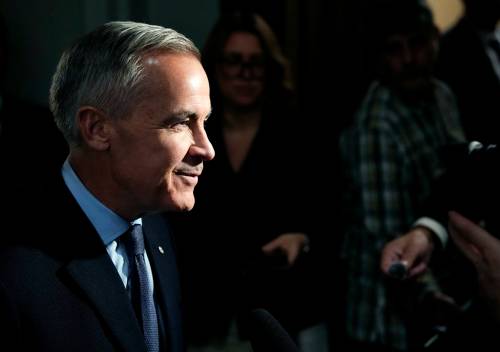
On Friday Heritage Minister Steven Guilbeault announced the $50-million fund as a short-term measure that will be managed through Telefilm Canada and the Canada Media Fund.

The fund will offer productions a maximum compensation of $1.5 million in the case of a temporary interruption and $3 million in the case of a complete shutdown of production.

Crews work on a film set for a Titans Netflix TV series on a Toronto street on Wednesday April 17, 2019. The federal government says it will offer access to a $50-million fund to film and television productions struggling to find insurance during the COVID-19 pandemic. THE CANADIAN PRESS/Doug Ives

“There’s rarely been a single issue affecting this industry as profoundly as this one, so obviously the news is very welcome,” said Calgary-based “Wynonna Earp” producer Tom Cox, who’s been waiting for months for such a relief measure so he can move forward on some upcoming productions.

“There were literally tens of thousands of jobs and hundreds of millions of (dollars in) production activity on the line, and they recognized that and have put forward a positive proposal that obviously will be of absolutely essential value to the industry.”

Guilbeault said a production company would need to meet certain criteria in order to be eligible for the fund.

“It would have to be a production owned and controlled by Canadians regarding Canadian production,” Guilbeault said in a conference call with reporters.

“The company would have to have a COVID security plan. It would have to be an independent production company, so not affiliated with a broadcaster.”

Telefilm will announce more information on the implementation of the new fund in the coming weeks, he added, noting the ministry is “literally running to put this together and get this in operation as soon as possible.”

“We will be looking at the evolution of the situation very closely and if we need to do more to help the sector, as we have throughout the sector, we will continue to do that.”

The announcement comes after the Canadian Media Producers Association (CMPA) and the Association quebecoise de la production mediatique pushed for a fund, where producers would pay premiums to access COVID-19 coverage and the government would offer a $100-million backstop if money generated though the sale of the policies was insufficient to cover the claims made.

The crisis arose during the pandemic when some insurance companies that service the film and TV industry started excluding from their new production policies any coverage for COVID-19 on a go-forward basis.

That meant a large number of Canadian productions that didn’t have insurance policies in place before COVID-19 couldn’t take the financial risk of starting up only to have the virus shut down the project.

The organizations said last week that they have identified 214 camera-ready film and TV projects, 19,560 jobs and $1 billion in production volume that have stalled because insurers aren’t offering COVID-19 coverage.

Winnipeg producer Kyle Irving has a couple of projects on hold due to a lack of such insurance. The partner at Eagle Vision was able to roll cameras on season 4 of the CBC series “Burden of Truth” earlier this month, but only because co-producer eOne was able “to back up the insurance risk,” he said in an interview.

“Unless you have the size of a company like that, Canadian independent production companies can’t take on that level of risk,” said Irving, who expressed optimism about Friday’s announcement.

“The devil is always in the details, but we’ll give the government the benefit of the doubt. I know the CMPA is working actively on how to properly set this up with government, and has been informing and consulting them to make sure that they have all the information they need to make sure it’s done right. So fingers crossed.”

Friday’s announcement falls short of the funding the groups were asking for, but Guilbeault suggested the government is willing to increase the fund if necessary.

“If we realized that $50 million dollars is not enough and more is required to help the audiovisual sector, we will certainly adjust this measure accordingly.”

The performers’ union ACTRA and the industry consortium FilmOntario were among the film and TV organizations that praised Friday’s news on social media.

CMPA president and CEO Reynolds Mastin thanked the government in a statement, noting the funding “will help hundreds of camera-ready Canadian film and TV projects move forward after months of uncertainty.”

“The swift implementation of a workable program is now mission critical, to safeguard thousands of jobs in jeopardy.”

This report by The Canadian Press was first published September 25, 2020.

Report Error Submit a Tip

More Stories

A little toponder, a lot to celebrate

Erna Buffie 5 minute read 2:01 AM CDT

Well, another civic election season has come and gone, and I have to say it was a doozy. The most surprising event was the steady climb in support for young mayoral candidate Noah Redden, who started out with just four per cent public support in September but had reached a solid 14 per cent support in October.

On election day, Redden nearly came in second, less than one percentage point behind Kevin Klein, an experienced politician.

Indeed, the 27-year-old’s accomplishment was nothing short of astonishing. Particularly given that his shoestring campaign was given very little coverage — largely, according to one pundit, because he didn’t send out any press releases.

This when Redden’s unwritten press releases were there for everyone to see on Instagram, as he popped up in locations across the city, posting videos about what he hoped to achieve as mayor.

Behind the scenes at circus spectacle Odysseo, it's the horses who hold the reins

Erin Lebar / Photos by Ruth Bonneville 15 minute read Preview

Behind the scenes at circus spectacle Odysseo, it's the horses who hold the reins

Erin Lebar / Photos by Ruth Bonneville 15 minute read Wednesday, Jun. 13, 2018

It’s almost 4 p.m. on a particularly steamy May afternoon and Cavalia Odysseo rider Chelsea Jordan is putting on her makeup in the back corner of the very humid artistic tent.

She’s already spent some time layering on foundation, and is now into the decorative portion of the 30-minute process, placing a pair of small gems on her forehead and enhancing her naturally sharp cheekbones with some extra contouring.

“This is the messy part of the business,” she jokes as she sticks on fake lashes over an eyelid covered in earth-toned shadow.

It’s odd that makeup is considered the messy part of the day when Jordan spends the majority of her time surrounded by horses, but as with most people involved in Odysseo, the glitzy and glamorous aspects of being a member of the largest touring production in the world aren’t nearly as fun as the time she gets to spend with her four-legged cast-mates.

Read
Wednesday, Jun. 13, 2018

Affordable southwest Winnipeg attached two-storey home designed with families in mind

Todd Lewys 5 minute read Preview

Affordable southwest Winnipeg attached two-storey home designed with families in mind

Todd Lewys 5 minute read 2:01 AM CDT

Those in the market for a new entry-level home tend to have one main thought in mind. That thought, in most cases, centres on how much value a dwelling delivers — in both price and livability.

Spencer Curtis, owner of Hilton Homes, says he and his design team are acutely aware of how meticulously prospective buyers scrutinize entry-level new house options, which in most cases are attached two-storey models.

“That’s why we keep tweaking plans to make those homes better,” Curtis says. “This model, the Wilkens, is by far our most popular plan. We put a lot of thought into its design, and are always working at making it as functional and family-friendly as possible.”

Right from the get-go, the Wilkens distinguishes itself from other attached two-storey homes with its square footage.

Read
2:01 AM CDT

Letters, Oct. 31

6 minute read 2:01 AM CDT

Civic election a missed opportunity

The outcome of the latest municipal election in Winnipeg is nothing short of baffling. The decline of what was once a proud, beautiful prairie hub is impossible to ignore.

Winnipeg is rapidly sliding into a state of structural and social dilapidation, yet voters have inexplicably chosen to hand incumbent Mayor Scott Gillingham a second term. The decision smells of complacency, and sadly, it represents a massive missed opportunity for real urban renewal.

Walking through downtown Winnipeg today is an exercise in heartbreak. A city centre that should be a bustling economic and cultural core has instead transformed into an absolute eyesore. Encampments and tents are permitted to dot the heart of the city. Streets that used to thrive are now dominated by the tragic, visible reality of severe addiction, with individuals wandering and staggering through public spaces without adequate intervention or care.

The new normal in Canadian politics

David McLaughlin 5 minute read Preview

The new normal in Canadian politics

David McLaughlin 5 minute read 2:01 AM CDT

“Nothing happening, all at once.”

Welcome to the new normal of Canadian politics, where normality is the new normal. Routine and stable are in; disruptive and excessive are out. Exhibits A and B are the Alberta referendum and the British Columbia election. Voters opted for stability over volatility.

The opposite of being normal is being different from the norm. In politics that means different from where we’ve been and what we’ve come to expect. Two competing trends have dominated our politics for the past decade and a half — progressivism and populism. Think Justin Trudeau and liberal, progressive identity politics in Canada, and Donald Trump and conservative, populist MAGA politics in America. We are now experiencing a swing away from both those trends.

Representing this “new normal” are Prime Minister Mark Carney, for one, and newly elected British Columbia premier, Lorne Doerksen, for another. Both are considered normal because they talk and act like adults in a childish political world. Their political flair is to not have any political flair. They stand out for not standing out.

Read
2:01 AM CDT

Olympics Overnight: Canada reclaims gold in women’s hockey, Thompson wins silver in ski cross, and Kamila Valieva struggles in women’s free skate

Richie Assaly - Toronto Star, Toronto Star 8 minute read Preview

Olympics Overnight: Canada reclaims gold in women’s hockey, Thompson wins silver in ski cross, and Kamila Valieva struggles in women’s free skate

Richie Assaly - Toronto Star, Toronto Star 8 minute read Thursday, Feb. 17, 2022

Here’s what you missed overnight at Day 13 of the 2022 Beijing Olympics.

Read
Thursday, Feb. 17, 2022