Composer dares to use A-word
Advertisement
Read this article for free:
or
Already have an account? Log in here »
To continue reading, please subscribe:
Digital Subscription
One year of digital access for only $1.44 a week*
- Enjoy unlimited reading on winnipegfreepress.com
- Read the E-Edition, our digital replica newspaper
- Access News Break, our award-winning app
- Play interactive puzzles
*Billed as $5.77 plus GST every four weeks. After 52 weeks, price increases to the regular rate of $19.95 plus GST every four weeks. Offer available to new and qualified returning subscribers only. Cancel any time.
To continue reading, please subscribe:
Add Free Press access to your Brandon Sun subscription for only an additional
$1 for the first 4 weeks*
- Enjoy unlimited reading on winnipegfreepress.com
- Read the E-Edition, our digital replica newspaper
- Access News Break, our award-winning app
- Play interactive puzzles
*Your next Brandon Sun subscription payment will increase by $1.00 and you will be charged $17.95 plus GST for four weeks. After four weeks, your payment will increase to $24.95 plus GST every four weeks.
Read unlimited articles for free today:
or
Already have an account? Log in here »
It’s a term composers sometimes use hesitatingly to describe their own music.
“I’m a fan of really strong melodies and harmonies that are engaging and accessible to the audience. One of my goals was to create music that’s not too academic or cerebral,” says jazz pianist and composer Florian Hoefner about his work Into the Aquasphere, which Jazz Winnipeg and the Manitoba Chamber Orchestra co-present at Desautels Concert Hall at the University of Manitoba under the baton of Alexandre Da Costa.
You might have spotted the term-in-question in Hoefner’s comment: “accessible.”
Bo Huang Photo
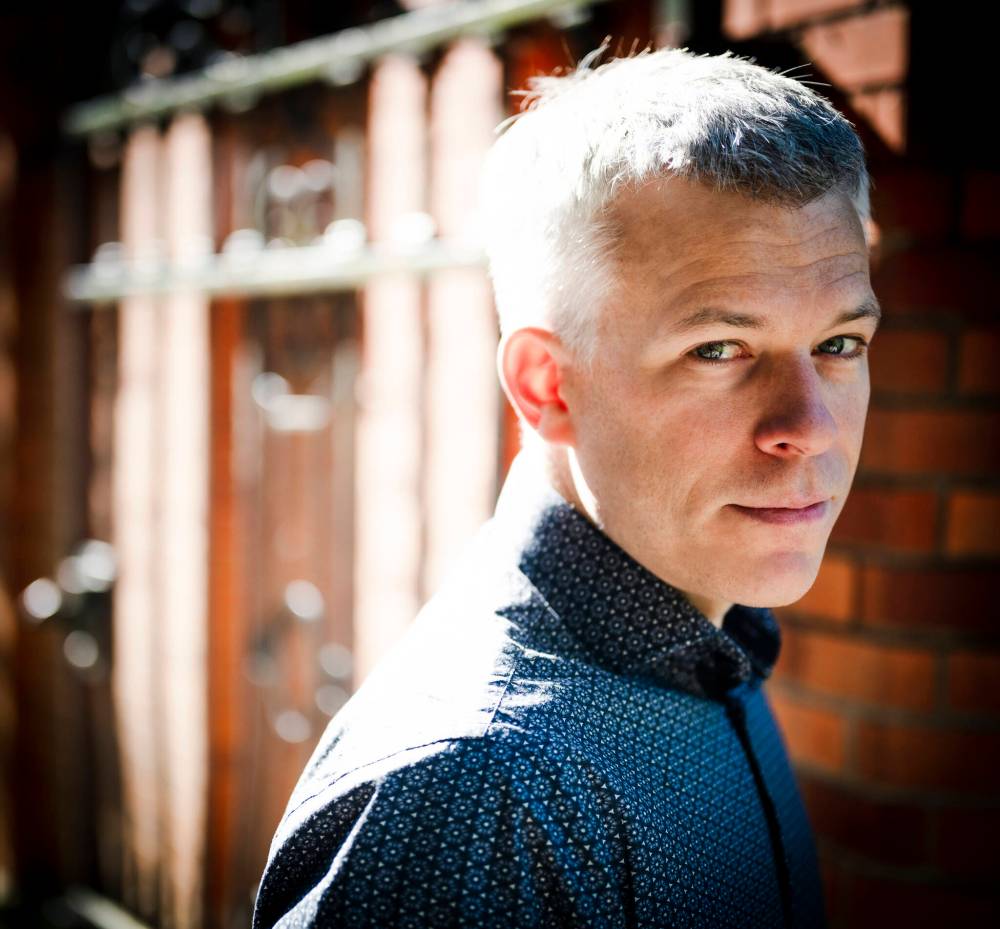
Florian Hoefner’s Into the Aquasphere includes everything from Brazilian music to contemporary jazz, he says.
One can hardly blame the German-born, Newfoundland-based Hoefner for invoking the “A-word.”
For much of the 20th century, contemporary classical music was steered by a heady avant garde with a reputation for making a whole lot of racket. The A-word is often used today to signal that a composer is, cross their heart, not up to those old shenanigans.
MCO executive director Sean McManus uses decidedly less lukewarm terms to describe Into the Aquasphere, which is performed in an unusual configuration of jazz quartet and chamber orchestra.
“The Manitoba Chamber Orchestra regularly collaborates with composers to bring new music to life, but there’s something especially exciting about working with a composer who is also performing alongside the orchestra,” McManus says via email.
“For audiences, I think the experience will be almost cinematic, with lush orchestral textures, thrilling improvisations from the jazz quartet.”
The Juno-winning Hoefner, a Fulbright scholar who studied at the Manhattan School of Music, unpacks the piece’s sundry influences: “You’ll hear Brazilian music in there, Argentinian music, contemporary jazz, of course, a lot of Western classical music as well, a bit of folk and pop … it’s a very positive piece, very uplifting.”
It’s hard to pin down a piece that, like its water inspiration, moves so unpredictably by giving the quartet — Hoefner on piano, Lucas Pino on tenor sax, John Hébert on bass and Jay Sawyer on drums — ample space to glide on the orchestra’s surface as improvisational soloists.
Into the Aquasphere is, in any case, also a piece with much to say.
Spanning three movements over about 30 minutes, the piece explores water as a holistic planetary system, from the Amazon rainforest’s rivers to the Atlantic currents.

“The Amazon is doing a huge service to all of South America and, really, to all of humanity. There’s a lot of my fear and my angst in there about what we’re doing to this place and about our future,” Hoefner says.
Also on the program are three works — Tides, Sterna Paradisaea and Supercell — by acclaimed Canadian-born saxophonist, clarinetist and composer Quinsin Nachoff about coastlines, migratory birds and the relationship between sea and land.
Developed with assistance from tidal data gathered from Vancouver, the piece likewise features lengthy improvisation, this time from the clarinet.
“What I love about this program is that the music takes its inspiration from the natural world … there’s a real sense of movement and drama in these compositions,” McManus says.
conrad.sweatman@winnipegfreepress.com
Conrad Sweatman is an arts reporter and feature writer. Before joining the Free Press full-time in 2024, he worked in the U.K. and Canadian cultural sectors, freelanced for outlets including The Walrus, VICE and Prairie Fire. Read more about Conrad.
Our newsroom depends on a growing audience of readers to power our journalism. If you are not a paid reader, please consider becoming a subscriber.
Our newsroom depends on its audience of readers to power our journalism. Thank you for your support.