Fifth fest
Orchestra kicks off season pairing Beethoven, Tchaikovsky
Advertisement
Read this article for free:
or
Already have an account? Log in here »
To continue reading, please subscribe:

Digital Subscription
One year of digital access for only $205*
- Enjoy unlimited reading on winnipegfreepress.com
- Read the E-Edition, our digital replica newspaper
- Access News Break, our award-winning app
- Play interactive puzzles
*First annual payment billed as $205.00 + GST for one year. This annual subscription will automatically renew at $233.00 + GST every 52 weeks (10% off the regular annual price of $259.35). Offer available to new and qualified returning subscribers only. Cancel any time.
To continue reading, please subscribe:
Add Free Press access to your Brandon Sun subscription for only an additional
$1 for the first 4 weeks*
- Enjoy unlimited reading on winnipegfreepress.com
- Read the E-Edition, our digital replica newspaper
- Access News Break, our award-winning app
- Play interactive puzzles
*Your next Brandon Sun subscription payment will increase by $1.00 and you will be charged $17.95 plus GST for four weeks. After four weeks, your payment will increase to $24.95 plus GST every four weeks.
Read unlimited articles for free today:
or
Already have an account? Log in here »
French fries and milkshake, watermelon and feta cheese … Beethoven’s Fifth and Tchaikovsky’s Fifth?
Few events mark the beginning of the classical concert season like the Winnipeg Symphony Orchestra’s season-opener and this year they kick things off with an unusual but satisfying pairing.
“I think that for me, the combination of these two pieces is, first of all, a celebration of great masterworks that have withstood 100 years of being probed by time for their relevancy,” says conductor Daniel Raiskin, the WSO’s music director. “It’s the quality of music, it’s the quality of narrative that attracts us to these masterworks again and again.”
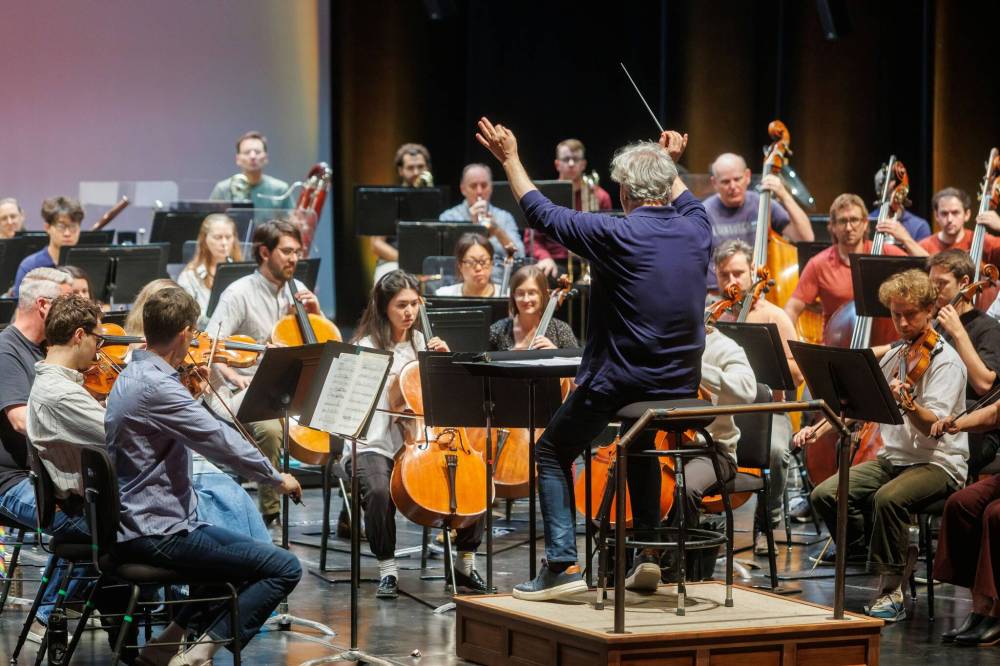
MIKE DEAL / FREE PRESS
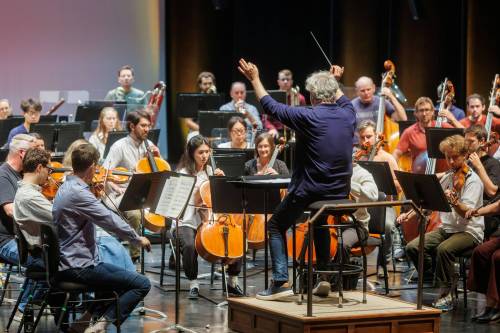
The Winnipeg Symphony Orchestra rehearses with conductor Daniel Raiskin.
Both symphonies are so hefty and canonical, one might have expected half of the concert would be devoted to a concerto, tone poem or something smaller or lesser known.
But they are also highly contrasting works. From its thunderous da-da-da-DUM opening to the blazingly sunny arrival of C major in the finale, Beethoven’s Fifth feels like a force of nature, and boasts one of the most famous earworms. It was received badly when it premièred in Vienna in 1808, but in a few years critics recognized it for the revolutionary work it was.
It took another leap into pop cultural fame during the Second World War, when the BBC prefaced wartime broadcasts with the four-note motif, because those notes — short-short-short-long — corresponded to the Morse code for V, then a rallying symbol for victory and resistance.
Tchaikovsky’s Fifth Symphony, composed over a few months in 1888, is more lyrical and intimate. Written nearly a century later, it may not sound as modern as Richard Wagner or Claude Debussy’s experiments around that time in continental Europe, with their extended dissonance wandering in search of a tonal home that feels elusive.
But the symphony’s lush, expansive orchestration is modern in other ways, anticipating Hollywood film scores. It is, in any case, one of Tchaikovsky’s most celebrated works and the WSO’s performance is a chance to hear T in a setting that isn’t the familiar Nutcracker once again.
Raiskin underlines another key contrast between these works.
“Both, of course, inevitably deal with the notion of fate and the role we tend to assign to the notion of fate taking rule of our lives,” he says.
But where Tchaikovsky, composing in Czarist Russia, described the piece as a struggle with what he called “the inscrutable predestination of Providence,” Beethoven channelled the revolutionary energies of continental Europe — and a healthy helping of his own ego.
“Beethoven famously shouted that he is not going to bend to Fate. He is going to take it by the throat and would never bend to it entirely,” says Raiskin.
Beethoven composed his fifth symphony during the Napoleonic era. By 1804, Beethoven had, in fact, turned against his former hero, after Napoleon declared himself Emperor of the French, leading Beethoven to furiously erase Napoleon’s name from his third symphony (Heroica).
But the ideals of individual liberty and self-determination, which Napoleon symbolized in the minds of many radicals, continued to resonate with Beethoven in his struggle against deafness and the arbitrariness of hereditary privilege in the ancien regime.
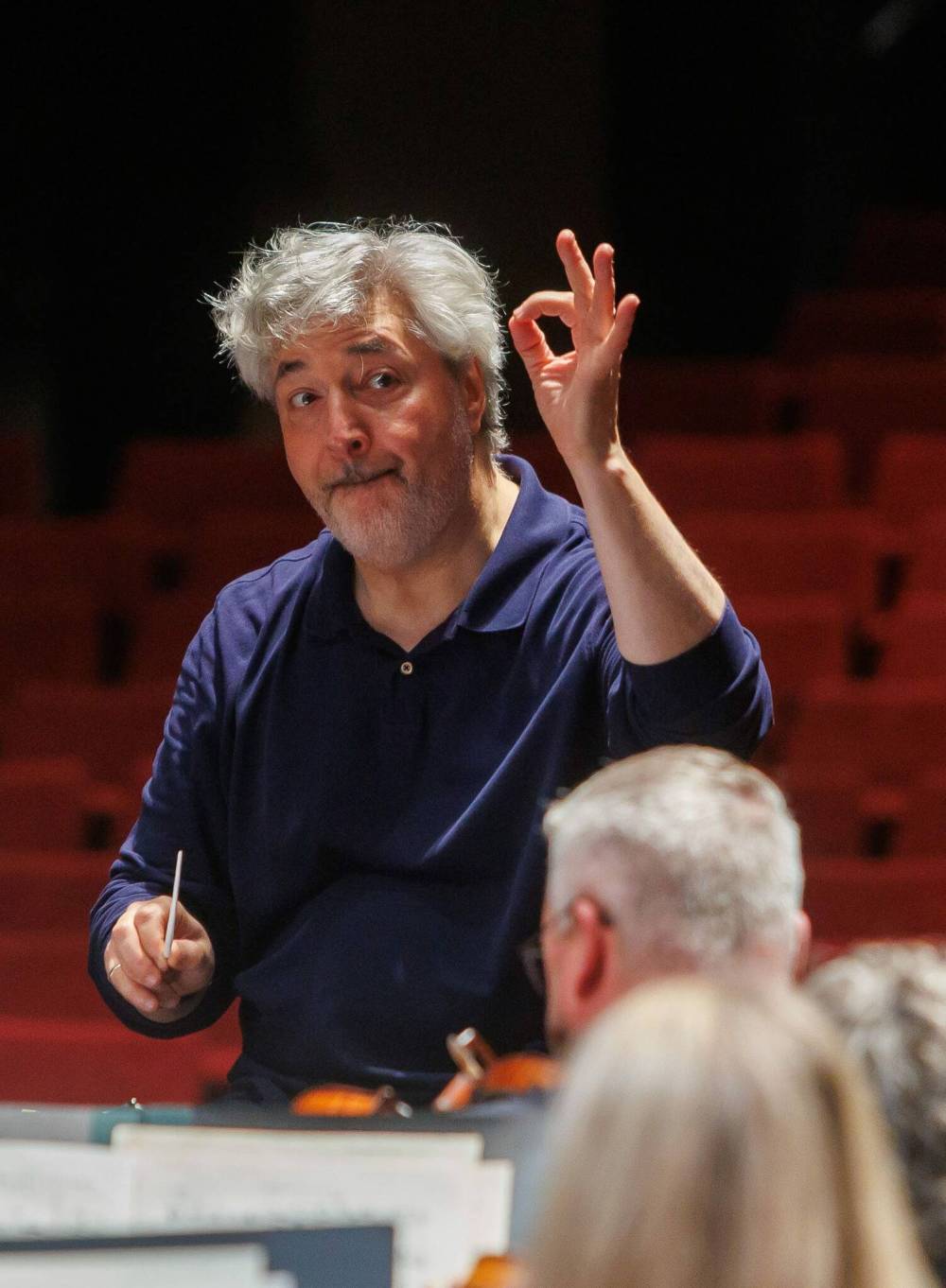
MIKE DEAL / FREE PRESS
Daniel Raiskin: really letting the orchestra rip.
“What I am, I am through myself. There have been and will be thousands of princes; there is only one Beethoven,” he famously wrote.
Raiskin nods to the relevancy of the work’s optimism of the will in what he calls an era of “environmental catastrophes, wars raging around the world, failing social systems, fractured societies.”
But, as a conductor, there’s a more basic pleasure in programming these two symphonies side by side: really letting the orchestra rip.

“I think it (sets the tone for the rest of the season) because if you look at the rest, you will recognize that it’s a little bit back to the masterworks, rightfully,” he says. “It’s a real celebration of what the symphony orchestra can do best. Overwhelmed with incredible sound, the richness of sonorities, but also by some of the greatest music, by the greatest composers.”
The WSO’s season opening concert is also a chance for Winnipeggers to get to know the orchestra’s new composer-in-residence, Kelly-Marie Murphy. The concert also includes a performance of her new work, Dark Nights, Bright Stars, Vast Universe.
With Murphy first performing with orchestra in the early years of the WSO’s New Music Festival in the 1990s, Raiskin calls her new role at the WSO — where she will now guide the festival — “full circle in a very positive way.”
“It is not going to be that the artistic path and a view of the WSO is suddenly going to look entirely different from what it was a year ago,” he says. “(But) I’m very receptive to any new ideas, and I’m very curious and open to the perspectives Kelly-Marie is going to bring.”
conrad.sweatman@winnipegfreepress.com
Conrad Sweatman is an arts reporter and feature writer. Before joining the Free Press full-time in 2024, he worked in the U.K. and Canadian cultural sectors, freelanced for outlets including The Walrus, VICE and Prairie Fire. Read more about Conrad.
Our newsroom depends on a growing audience of readers to power our journalism. If you are not a paid reader, please consider becoming a subscriber.
Our newsroom depends on its audience of readers to power our journalism. Thank you for your support.