Pandemic places public health experts on centre-stage

Advertisement

Advertise with us

Throughout the COVID-19 pandemic, public health physicians have been brought to the front of the stage regionally, nationally, and across the world. Once largely unknown by the people they serve, public health physicians such as doctors Theresa Tam, Brent Roussin, and Bonnie Henry have become household names providing expertise, steadfast leadership, and calm guidance throughout this public health crisis.

Read this article for free:


or

Already have an account? Log in here »

To continue reading, please subscribe:

Subscribe and receive a limited-edition Free Press branded hat or tote.

Digital Subscription

One year of digital access for only $205*

  • Enjoy unlimited reading on winnipegfreepress.com
  • Read the E-Edition, our digital replica newspaper
  • Access News Break, our award-winning app
  • Play interactive puzzles

*First annual payment billed as $205.00 + GST for one year. This annual subscription will automatically renew at $233.00 + GST every 52 weeks (10% off the regular annual price of $259.35). Offer available to new and qualified returning subscribers only. Cancel any time.

To continue reading, please subscribe:

Add Free Press access to your Brandon Sun subscription for only an additional

$1 for the first 4 weeks*

  • Enjoy unlimited reading on winnipegfreepress.com
  • Read the E-Edition, our digital replica newspaper
  • Access News Break, our award-winning app
  • Play interactive puzzles
Start now

*Your next Brandon Sun subscription payment will increase by $1.00 and you will be charged $17.95 plus GST for four weeks. After four weeks, your payment will increase to $24.95 plus GST every four weeks.

Hey there, time traveller!
This article was published 09/08/2021 (1837 days ago), so information in it may no longer be current.

Throughout the COVID-19 pandemic, public health physicians have been brought to the front of the stage regionally, nationally, and across the world. Once largely unknown by the people they serve, public health physicians such as doctors Theresa Tam, Brent Roussin, and Bonnie Henry have become household names providing expertise, steadfast leadership, and calm guidance throughout this public health crisis.

Though they’ve been thrust into the public spotlight during the current pandemic, this highly-trained group of physicians has been working hard behind the scenes throughout their careers to help improve the health of populations.

Public health physicians and Medical Officers of Health are medical experts trained to understand health issues at a systemic level. Seeing the whole population as our patient, we rely on epidemiology (the method used to find the causes of health outcomes and diseases in populations) and surveillance data to help prevent disease and promote health at a societal level. Similar to how a family physician prescribes medication and counsel to a patient at an individual level, public health physicians recommend specific policies, program development, approaches to population health, and engagement in public communication and education.
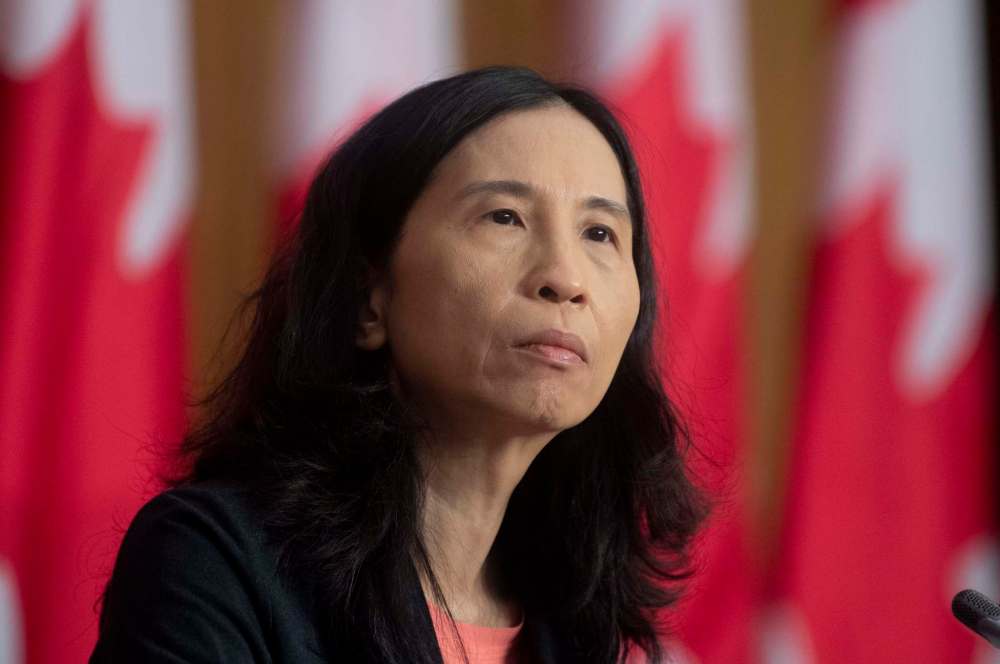
Adrian Wyld / The Canadian Press files
Chief Public Health Officer Theresa Tam
Adrian Wyld / The Canadian Press files Chief Public Health Officer Theresa Tam

With so many aspects to community health, the field of public health is as varied as it is vital. Whether working on climate change, active transportation, preventing syphilis or pandemic preparedness, public health physicians can work as generalists or specialists across a diverse array of work. This spans communicable diseases, chronic disease prevention and health promotion, to environmental health and emergency and disaster management.

Vulnerable populations are another focus for public health physicians. These structurally-disadvantaged populations include people with addictions, impermanent housing, street involvement, as well as immigrant, refugee, and indigenous populations. Many public health physicians in Canada choose to maintain a clinical practice ranging from family medicine to travel health and hospital medicine to stay connected to front-line patient care and inform work on policy and programming.

Among the most meaningful parts of this work is the ability to distill complex health topics in a way that is both easy for the public to understand and motivates behavior change.

Similarly, public health physicians must be adept in using their medical expertise to inform and influence decision makers and stakeholders in pursuit of health policy that better addresses underlying social determinants of health and the root causes of population health challenges.

Throughout the COVID-19 pandemic, all levels of government have been under extreme pressure from different segments of the population to respond to the crisis in different ways — whether it be adding or eliminating restrictions, or changing how and when vaccines are distributed. That pressure is not always generated with respect to the evidence at hand, and as a result, public health physicians have had the responsibility to be a source of calm, evidence-based guidance and consultation in challenging and often confusing times.

Public health has changed during every pandemic. The Severe Acute Respiratory Syndrome (SARS) pandemic of 2003, for example, led to the creation of the Public Health Agency of Canada in 2004, providing Canada with a unifying workforce across provinces to better anticipate and respond to public health threats.
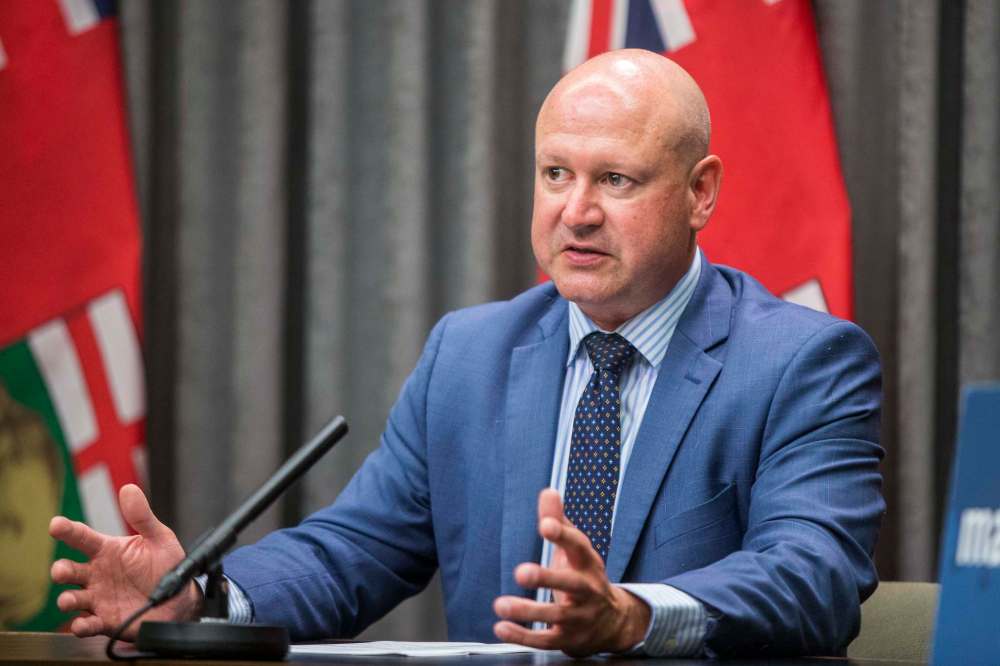
Mikaela MacKenzie / Winnipeg Free Press files
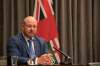
Dr. Brent Roussin, chief provincial public health officer
Mikaela MacKenzie / Winnipeg Free Press files Dr. Brent Roussin, chief provincial public health officer

The COVID-19 pandemic has brought change of its own, including magnifying the impact of health inequities, recognizing the interdependence between economics and healthy communities, and an accelerated and widespread application of virtual care.

If pandemics both past and present have taught us anything, it is that creating healthy communities requires an ongoing investment in, and commitment to, public health. As we work to draw the curtain on COVID-19 and look into the future, it remains to be seen if factors such as the rise of antimicrobial resistance, climate change, and how interconnected our world is in global pandemic response will give rise to a greater appreciation of the importance of supporting public health efforts.

Dr. Lerly Luo is a public health and family medicine resident physician with the Winnipeg Regional Health Authority.

Report Error Submit a Tip

More Stories

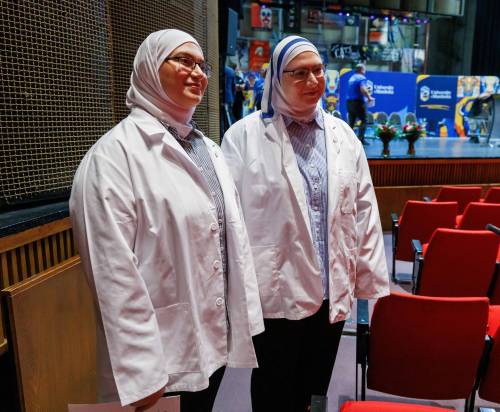
Sisters among 137 to begin doctor journey at U of M

Nicole Buffie 4 minute read Preview

Sisters among 137 to begin doctor journey at U of M

Nicole Buffie 4 minute read Yesterday at 6:32 PM CDT

Not everyone enters medical school with a built-in study buddy.

Sisters Maya and Dana Jalal joined 135 of their classmates to don white coats and mark the beginning of their journey through the University of Manitoba’s Max Rady College of Medicine Wednesday morning.

Maya, 22, and Dana, 21, were accepted into medical school at the same time.

“Thankfully, we both got accepted in the same area, same time. So we decided we’d rather go together than apart,” Maya said. “It’ll be nice seeing different perspectives during our studies. We are siblings, but we each have our own perspectives, our own lived experiences.”

Read
Yesterday at 6:32 PM CDT

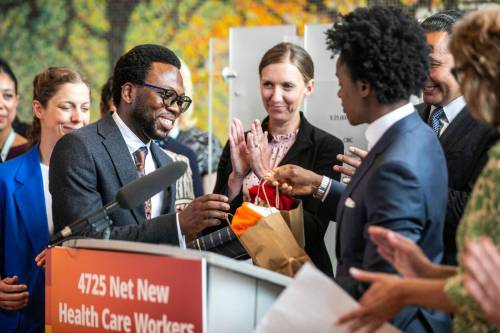
Close to 5,000 net new health-care workers added since 2023 election, province says

Chris Kitching 7 minute read Preview

Close to 5,000 net new health-care workers added since 2023 election, province says

Chris Kitching 7 minute read Tuesday, Aug. 18, 2026

More doctors and nurses are working in Manitoba than ever before but health-care challenges remain, Premier Wab Kinew says.

The province has added 4,725 net new health-care workers to the provincial system since the NDP won the October 2023 election, Kinew told reporters Tuesday.

The government’s total includes 370 doctors, 1,464 nurses, 2,152 health-care aides and 607 allied health professionals, a group that includes physiotherapists, dietitians, paramedics, medical lab technologists and others.

Kinew said more doctors and nurses are working in Manitoba than ever before.

Read
Tuesday, Aug. 18, 2026

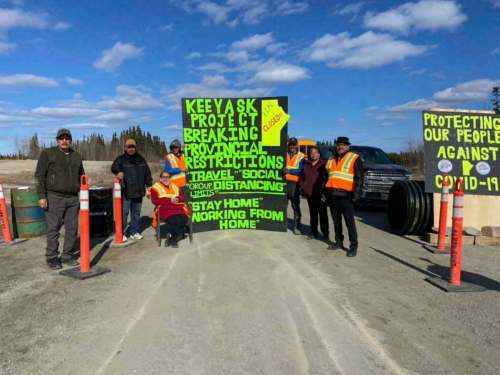
New blockade launched at access road to Keeyask site

Dylan Robertson 4 minute read Preview

New blockade launched at access road to Keeyask site

Dylan Robertson 4 minute read Tuesday, May. 19, 2020

A second First Nation has blocked the other access point to Manitoba Hydro’s Keeyask megaproject, over concerns a massive shift change will introduce COVID-19 to vulnerable reserves.

Fox Lake Cree Nation decided to launch the new blockade Monday evening, just hours after a Manitoba court authorized the RCMP to arrest anyone blocking access to the Keeyask plant.

The new blockade, on the southern access road, comes after Tataskweyak Cree Nation restricted the northern road Friday to non-Hydro traffic.

The southern road is closer to the Gillam airport, where workers were supposed to start arriving Tuesday from Winnipeg.

Read
Tuesday, May. 19, 2020

Small-business sector facing ‘silver tsunami’

Marcelo Vieta and Daniel Brunette 4 minute read Thursday, Jan. 13, 2022

EVEN before the COVID-19 pandemic, another threat to business continuity was looming — the “silver tsunami.” Canada’s 1.2 million small- and medium-sized enterprises (SMEs) community has been bracing for the departure of nearly three-quarters of its owners, who plan to retire within the next decade.

Often, the intent is for owners to transfer the company to relatives or sell to a third-party purchaser. The reality is that either way, many entrepreneurs have yet to draft a formal succession plan or are unable to execute it due to various factors, heightened by the COVID-19 reality.

There’s a lesser-known, but proven, third option that rarely gets the attention it deserves.

SMEs could also consider selling the business to employees or community stakeholders who have formed co-operatives. Such transitions, known as Business Conversions to Co-operatives (BCC), are a tried-and-true solution for rescuing businesses or for succession planning in numerous jurisdictions around the world.

Letters, Aug. 20

7 minute read 2:00 AM CDT

Old-fashioned news

I scrolled through the comment section of the online news story, my eyes darting through differing opinions until I landed on one that caught my attention. I felt my shoulders tense and my breath quicken as I read the fiery thoughts of a stranger.

Surely, there must be a better way to read the news?

I thought back to the ’90s. Every morning, my mother would open the front door to retrieve the Winnipeg Free Press. I would jump at the Arts section until I found the comics and giggle while I ate my cereal. My parents absorbed the news while getting ready for their day, and eventually the newspaper found its way to the top of the paper pile in the garage. The next morning, the cycle would repeat itself.

RRC shelter support worker program grads seek to make difference in lives of province’s most vulnerable

Maggie Macintosh 4 minute read Preview

RRC shelter support worker program grads seek to make difference in lives of province’s most vulnerable

Maggie Macintosh 4 minute read Tuesday, Aug. 18, 2026

Pauline Pollard didn’t hesitate when asked what advice she would give her teenage self, a pregnant young mother of one in an abusive relationship.

“Leave sooner,” she said, citing everything she’s learned over the last 25 years, including at Red River College Polytechnic’s shelter support worker program.

The 43-year-old said she has “a lot of compassion” for women of all ages who find themselves stuck in unsafe situations.

It’s far easier in retrospect to see the warning signs, noting that in her case, an ex-boyfriend started confiscating her clothes and makeup before his controlling behaviour escalated to physical violence.

Read
Tuesday, Aug. 18, 2026