

Listening, healing, togetherness
RRC shelter support worker program grads seek to make difference in lives of province’s most vulnerable

Advertisement
Read this article for free:
or
Already have an account? Log in here »
To continue reading, please subscribe:

Digital Subscription
One year of digital access for only $205*
- Enjoy unlimited reading on winnipegfreepress.com
- Read the E-Edition, our digital replica newspaper
- Access News Break, our award-winning app
- Play interactive puzzles
*First annual payment billed as $205.00 + GST for one year. This annual subscription will automatically renew at $233.00 + GST every 52 weeks (10% off the regular annual price of $259.35). Offer available to new and qualified returning subscribers only. Cancel any time.
To continue reading, please subscribe:
Add Free Press access to your Brandon Sun subscription for only an additional
$1 for the first 4 weeks*
- Enjoy unlimited reading on winnipegfreepress.com
- Read the E-Edition, our digital replica newspaper
- Access News Break, our award-winning app
- Play interactive puzzles
*Your next Brandon Sun subscription payment will increase by $1.00 and you will be charged $17.95 plus GST for four weeks. After four weeks, your payment will increase to $24.95 plus GST every four weeks.
Read unlimited articles for free today:
or
Already have an account? Log in here »
Pauline Pollard didn’t hesitate when asked what advice she would give her teenage self, a pregnant young mother of one in an abusive relationship.
“Leave sooner,” she said, citing everything she’s learned over the last 25 years, including at Red River College Polytechnic’s shelter support worker program.
The 43-year-old said she has “a lot of compassion” for women of all ages who find themselves stuck in unsafe situations.
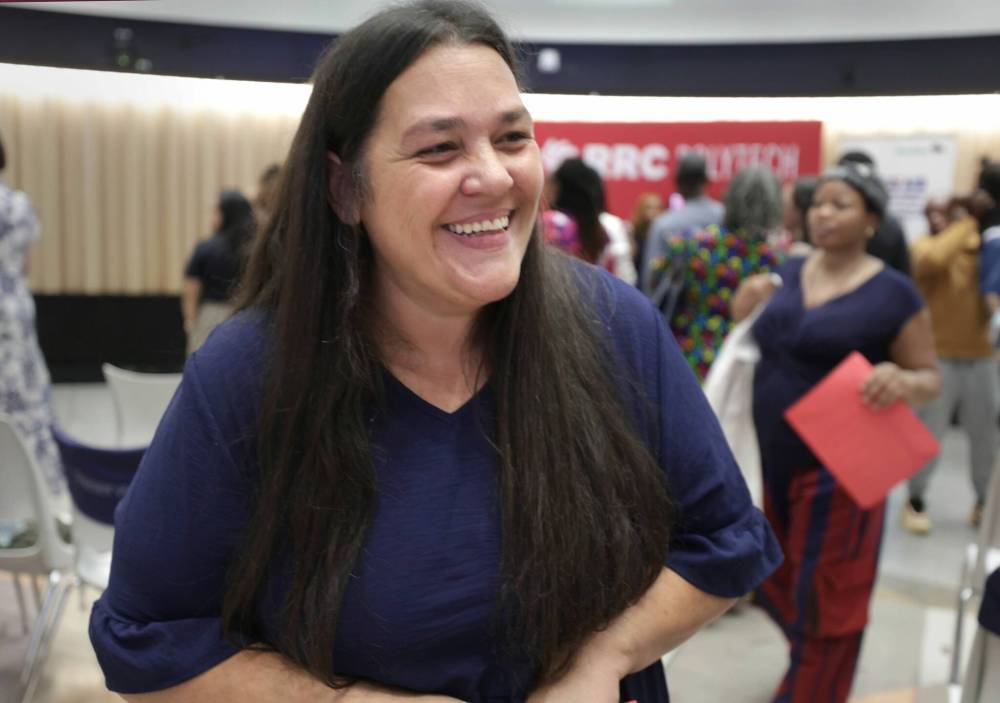
RUTH BONNEVILLE / FREE PRESS
Pauline Pollard celebrates receiving her certificate of accreditation for shelter support work at RRC Polytech Exchange District Campus Tuesday.
It’s far easier in retrospect to see the warning signs, noting that in her case, an ex-boyfriend started confiscating her clothes and makeup before his controlling behaviour escalated to physical violence.
“I know my heart is in support work now. Support work doesn’t feel like work. (Listening to others) is not working. That’s healing. That’s community. That’s togetherness,” she said.
RRC Polytech hosted a celebration Tuesday for 34 graduates of the six-month course designed to grow and support the crisis-intervention workforce in homeless and family violence shelters across Manitoba.
The tuition-free program, run in partnership with the Manitoba Association of Women’s Shelters and Women and Gender Equity Manitoba, just wrapped up its third year of operations.
Since its launch during the 2023-24 school year, 180 students, including current and aspiring shelter workers, have registered in it. Students choose to specialize in homeless shelter support or family violence shelter support — the stream that Pollard chose.
The online training is funded through the National Action Plan to End Gender-based Violence. The graduation rate is approximately 70 per cent.
“When the work becomes difficult, remember what brought you here in the first place — the belief that people deserve to live in safety, dignity and freedom from violence,” Tsungai Muvingi Van Landeghem, provincial co-ordinator for the shelter association, told the graduates Tuesday.
The event drew about 75 people to the Manitou a bi Bii daziigae building (formerly the RRC Polytech Innovation Centre) at the Exchange District campus. Its Anishinaabemowin title translates to “where creator sits and brings light.”
It was the first time instructors Samantha Hupe-Wells and Richelle Ready met their students in-person. The course is run online on a part-time basis so it’s accessible to students regardless of their hometown.
Participants hailed from Long Plain, The Pas, Ste. Anne, Steinbach, Swan River and Pukatawagan, among other communities.
Hupe-Wells said she repeatedly spoke to her students about the power of human connection and making vulnerable clients feel heard.
“I really stressed the importance of connecting, of listening, of including people within their own stories and their own healing and not prescribing,” the instructor said.
As part of their final research projects, students prepared presentations on de-escalation techniques, the impacts of colonization on Indigenous mothers and best practises to integrate trauma-informed care into youth programming.
Ready, an experienced counsellor in the shelter system, described trauma-informed care as “understanding where people come from to meet them where they’re at.”
Hupe-Wells echoed those comments, calling it an approach that recognizes every human is a multi-faceted individual with diverse experiences and behaviours.
The duo designed their courses so students could learn from one another’s lived experiences just as much as they learned from their instructors.

The program typically includes a work placement component.
Pollard said she’s found that being a Métis mother who’s sought outpatient services at a shelter in the past makes her more approachable in community support work.
“People trust you more. It gives you an edge,” she said.
The mother of five said she’s been reaching out to the operators of a new shelter slated to open in her neighbourhood in the hopes of securing a job and putting her new microcredential to good use.
maggie.macintosh@freepress.mb.ca
Maggie Macintosh reports on education for the Winnipeg Free Press. Funding for the Free Press education reporter comes from the Government of Canada through the Local Journalism Initiative.
Our newsroom depends on a growing audience of readers to power our journalism. If you are not a paid reader, please consider becoming a subscriber.
Our newsroom depends on its audience of readers to power our journalism. Thank you for your support.
Maggie Macintosh reports on education for the Winnipeg Free Press. Funding for the Free Press education reporter comes from the Government of Canada through the Local Journalism Initiative.
Our newsroom depends on a growing audience of readers to power our journalism. If you are not a paid reader, please consider becoming a subscriber.
Our newsroom depends on its audience of readers to power our journalism. Thank you for your support.
Advertisement Advertise With Us
Advertisement Advertise With Us