Curator tells young Winnipeg soldiers’ Second World War stories

Advertisement
Read this article for free:
or
Already have an account? Log in here »
To continue reading, please subscribe:

Digital Subscription
One year of digital access for only $205*
- Enjoy unlimited reading on winnipegfreepress.com
- Read the E-Edition, our digital replica newspaper
- Access News Break, our award-winning app
- Play interactive puzzles
*First annual payment billed as $205.00 + GST for one year. This annual subscription will automatically renew at $233.00 + GST every 52 weeks (10% off the regular annual price of $259.35). Offer available to new and qualified returning subscribers only. Cancel any time.
To continue reading, please subscribe:
Add Free Press access to your Brandon Sun subscription for only an additional
$1 for the first 4 weeks*
- Enjoy unlimited reading on winnipegfreepress.com
- Read the E-Edition, our digital replica newspaper
- Access News Break, our award-winning app
- Play interactive puzzles
*Your next Brandon Sun subscription payment will increase by $1.00 and you will be charged $17.95 plus GST for four weeks. After four weeks, your payment will increase to $24.95 plus GST every four weeks.
Read unlimited articles for free today:
or
Already have an account? Log in here »
Hey there, time traveller!
This article was published 10/11/2020 (2135 days ago), so information in it may no longer be current.
Among the things lost in the pandemic shuffle in 2020 was the 75th anniversary of the end to the Second World War.
It was to be a summer of celebrations — not nearly as spontaneous and exhilarating as in May 1945, to be sure — but it would include events that would recognize the sacrifices a generation of soldiers, pilots, air crews and navy personnel made in liberating Europe or those who fought in the Pacific theatre, some of whom spent years being mistreated in prisoner-of-war camps.
In all, more than a million Canadians served in the military during the war.
While celebrations were cancelled in May because of COVID-19 and Remembrance Day services across Canada are being livestreamed instead of being held at public gatherings Wednesday, there are those who have found ways to recognize this key period in the world’s history.
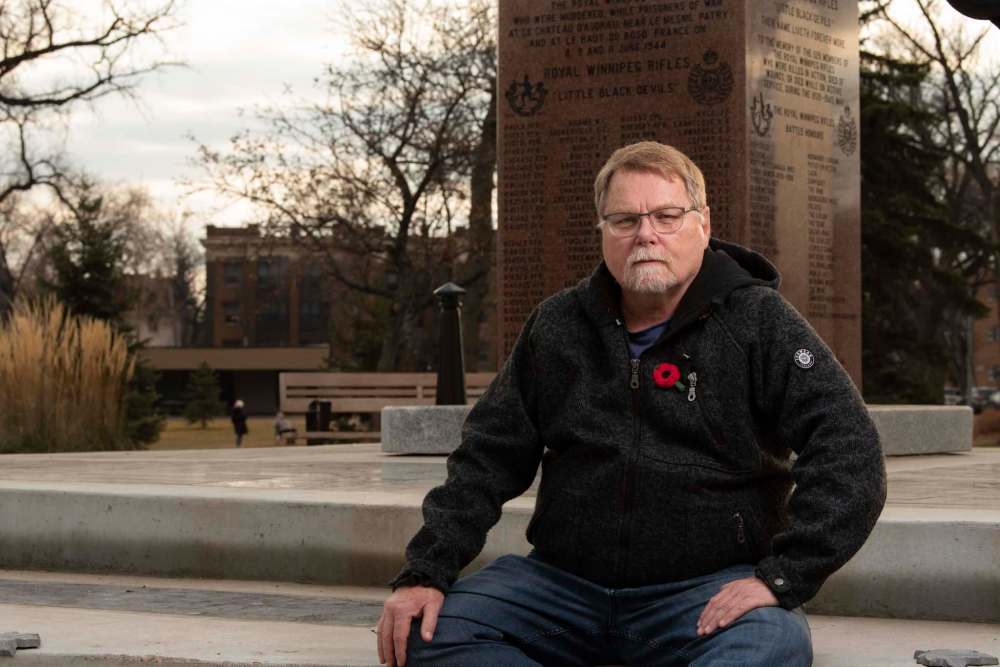
One of them is Ian Stewart, the curator of the Royal Winnipeg Rifles Museum and Archives, who has dug into the the regiment’s past to write Voices of War: Royal Winnipeg Rifles Canada 1944-1945, a book of soldiers’ stories.
This period includes the Rifles’ role in the D-Day landings at Juno Beach in Normandy, the battles to take the key city of Caen and the Falaise pocket in northern France, as well as the liberation of the Netherlands in 1945.
“I started the genesis about thinking about it a year ago for Manitoba 150, which is also the 75th anniversary of the end of the war,” Stewart says. “That’s when I started thinking about it and going through our archives and the Royal Winnipeg Rifles Association newsletters. Just poking around and looking for sources.”
Voices of War goes back to the formation of the Royal Winnipeg Rifles in the summer of 1940. The vast majority of them were young men, 18 to 22 years old, and others who were too young to enlist but found a way to join anyway, using relatives’ identification.
For many, signing up to fight was as much a way to escape hard times at home as it was in liberating Europe from the Nazis. Stewart says most of them had little idea of the ins and outs of the political situation that led to the war but got a better idea when the news from Europe grew more dire for Great Britain.
“By the summer of 1940, France had fallen and all of Europe was under the Nazi sway. The Battle of Britain had started. Everybody knew about it and was concerned,” he says.
“You don’t read many stories about patriotism. They had a job to do and they were going to sign up. A lot of these guys, it was Depression time and they didn’t have good jobs.”
Many of the Rifles were small-town boys from western Manitoba, but there were many from Winnipeg that were already part of the militia or the cadets.
“When I was doing this and finding out there are so many young guys, I wondered where are all the 25 and 26 year olds,” Stewart says.
“Those guys have jobs and families, they have commitments here, and these teenagers have no commitments. They can just sign up without anything to worry about.”
Those who enlisted trained at Camp Shilo near Brandon and, later, in Nova Scotia before making the trip across the Atlantic Ocean to Britain, where they would train for the next three years for the Allies’ invasion of Europe. That took place June 6, 1944 — D-Day.
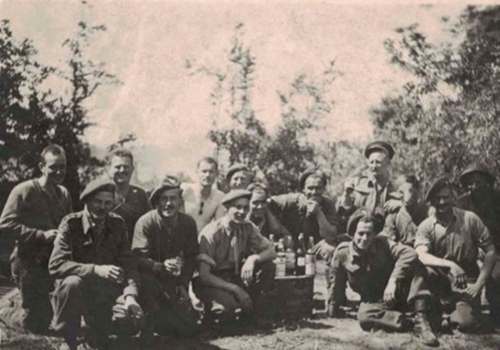
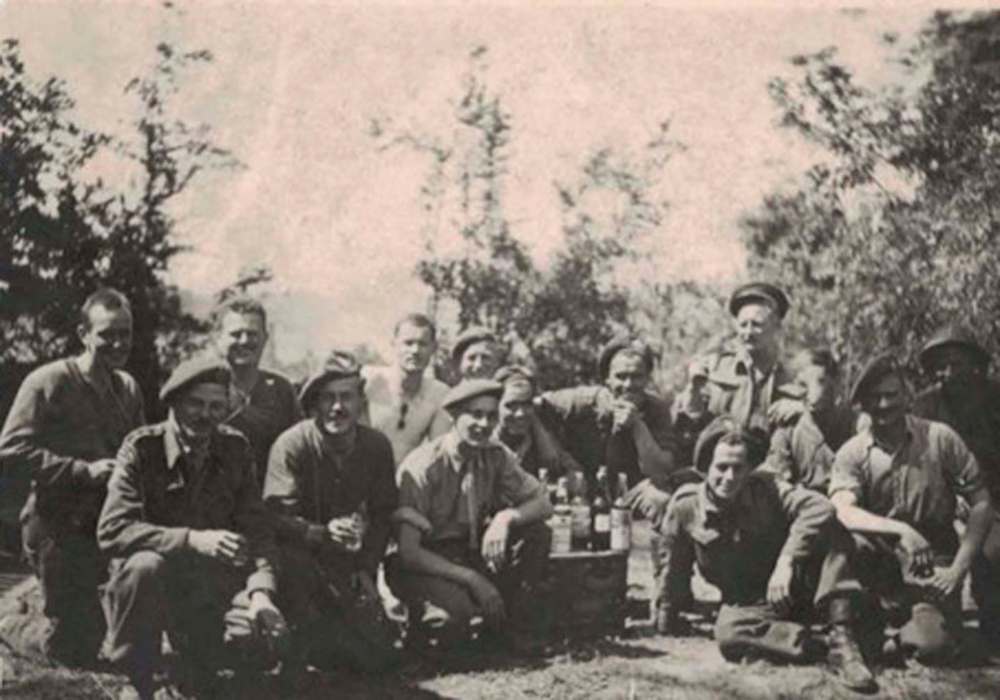
Letters and stories from those early years in Britain were filled with hard training in England and in the lochs of Scotland as well as the odd moments of hijinks when the Rifles’ soldiers had some time off.
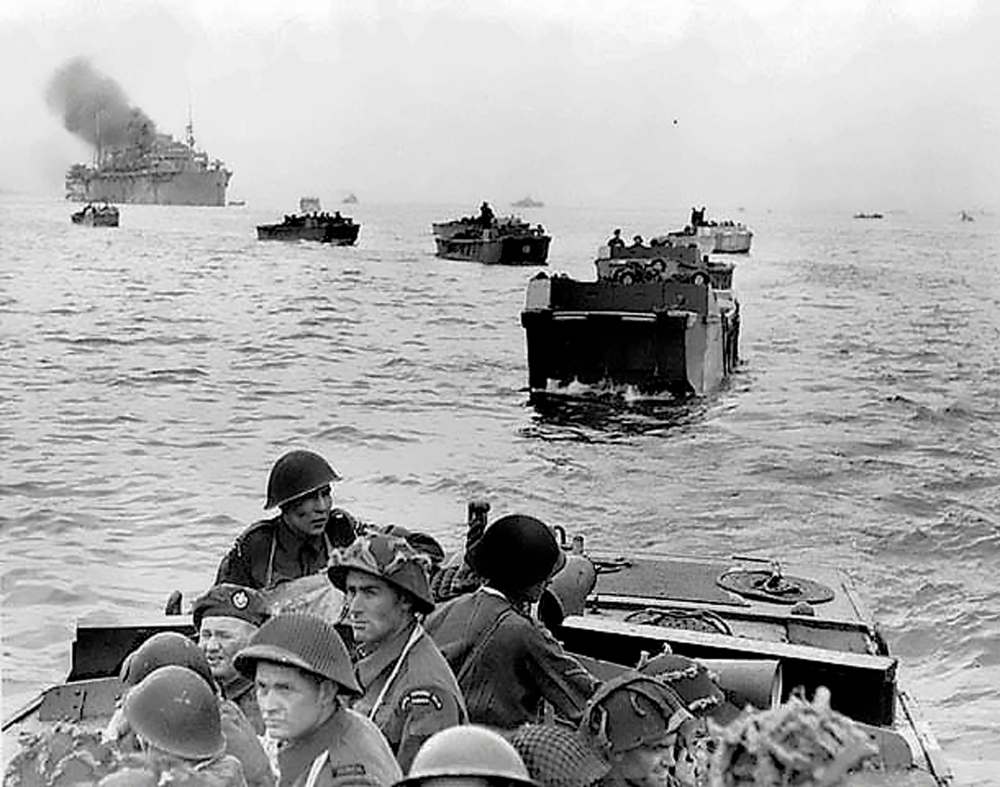
They all got down to business in early June 1944, though. There are many recollections of that “day of days” in Voices of War and Dauphin’s Jim Bage, who enlisted in 1942 as a 16 year old, remembers being a rifleman aboard the landing craft.
“I cannot begin to describe the horrors of the beach landing June 6th,” writes Bage, who would go on to be a farmer after the war and died in 2013. “We had a very rough crossing on the channel from England to France. The weather was awful. The sailors kept giving us their rum ration, so when we were in our landing craft, I was feeling no pain, nor was I seasick.
“Landing craft could not get too close to the shore, so we were let out in deep waters and waded to shore. When we hit Juno Beach all hell broke loose, so I sobered up in a hurry. The beach was filled with wounded or dying comrades. The bullets were flying. Firing was intense, It was the real thing. I figured we would never get across that beach.”
Stories such as Bage’s are part of the museum’s collection, and perhaps some of the most moving parts of Voices of War are letters donated by families to the museum. Reading a letter written by Fred Stephaniuk to the family of his comrade, soldier Roger Firman, who went missing shortly after D-Day and was eventually found dead, is heartbreaking, a sad fact of life from the war years.
“All through those terrible few terrible first days in France, he set a fine example to his men and proved to us who are left, and those of us who aren’t, the calibre of which he was made, which was the highest,” Stephaniuk wrote.
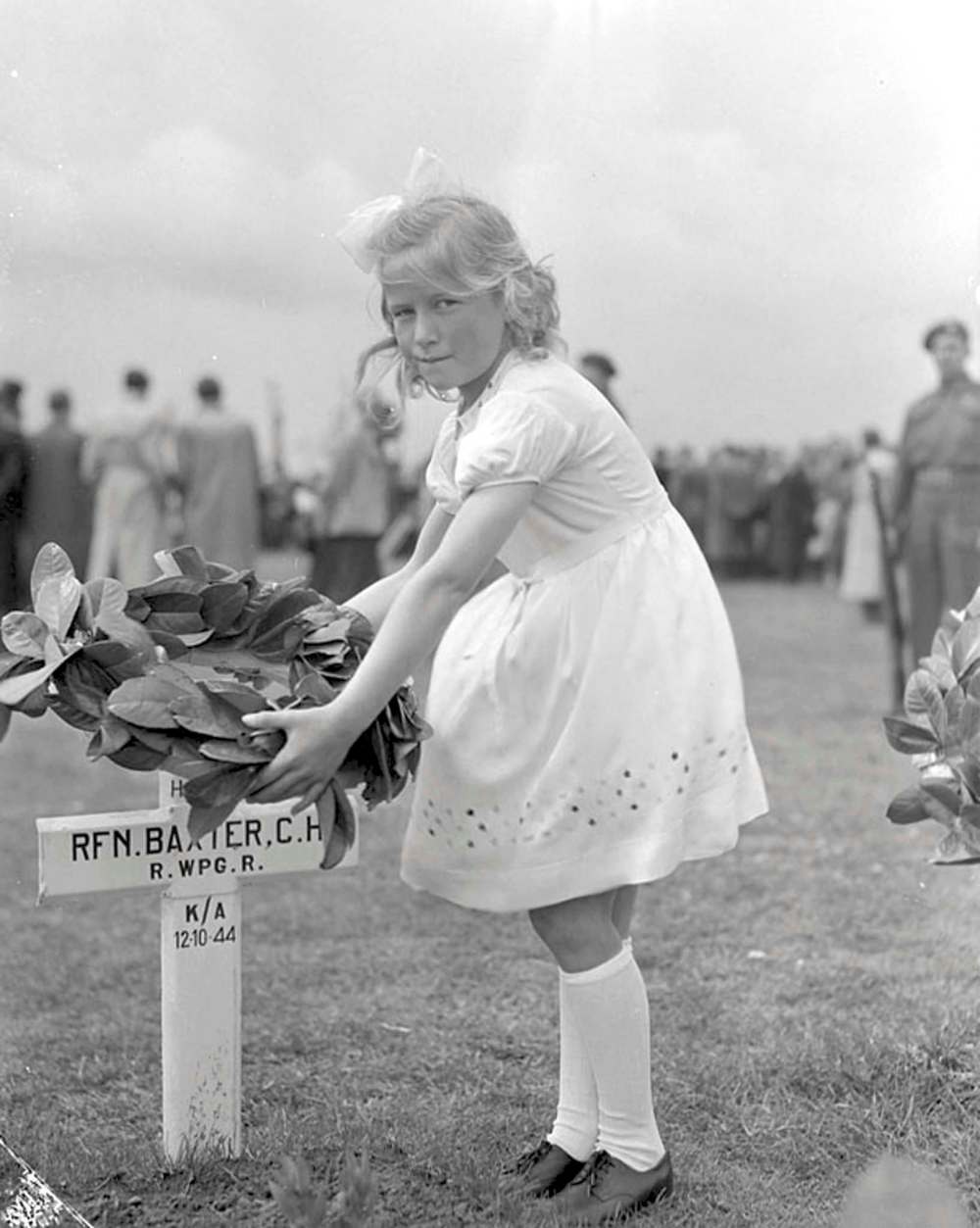
More than 500 members of the regiment were killed in action, and Stewart says only two other regiments in the Canadian army suffered more than the Rifles during the war.
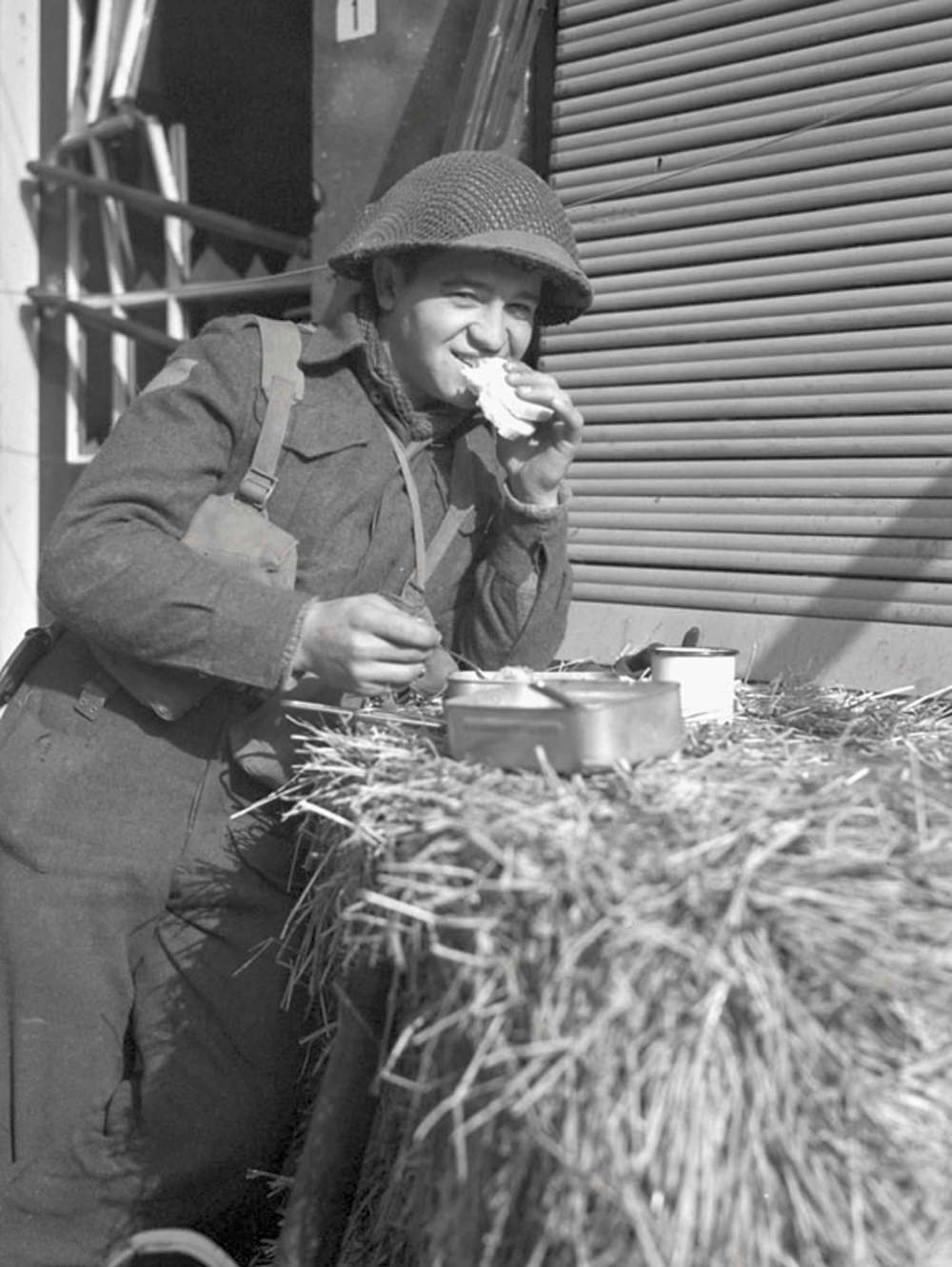
“The last Rifles that were killed were killed just days before the ceasefire in May 1945. It was constant fighting and constant danger right until the very end,” he says.
This is Stewart’s third book of military remembrances but his first on the Second World War. Previously he had written about the First World War in Up the Line, about the 44th Manitoba Battalion and Holding Their Bit, about the 90th Winnipeg Rifles.
“I got into researching World War One when I found a picture of a soldier at my mother’s house that I’d never seen before. It was her cousin. I never knew there were any soldiers from her side of the family,” Stewart says, adding he went on to learning about his father’s side of the family and their service in the First World War.
Stewart earned a master’s degree in history — his thesis was on the Holocaust — but afterward he went into teaching with the Winnipeg School Division, where he worked in specialized reading programs for Grade 1 and 2 students.

“So when I finished my MA, it was either go into education and get a job where I could make some money or get a PhD and not make any money,” Stewart says with a chuckle.
Retirement allowed him to spend time on research, and that led to becoming curator with the Rifles’ museum and archives.
“Actually getting into this business with the museum is what I wanted to do 30 years ago after my MA, is being a historian. Now I’m doing what I want to do.”
alan.small@freepress.mb.ca
Twitter:@AlanDSmall
Alan Small has been a journalist at the Free Press for more than 22 years in a variety of roles, the latest being a reporter in the Arts and Life section.
Our newsroom depends on a growing audience of readers to power our journalism. If you are not a paid reader, please consider becoming a subscriber.
Our newsroom depends on its audience of readers to power our journalism. Thank you for your support.
Alan Small has been a journalist at the Free Press for more than 22 years in a variety of roles, the latest being a reporter in the Arts and Life section.
Our newsroom depends on a growing audience of readers to power our journalism. If you are not a paid reader, please consider becoming a subscriber.
Our newsroom depends on its audience of readers to power our journalism. Thank you for your support.
Related Articles
Despite COVID-19, we still remember
Advertisement Advertise With Us
Advertisement Advertise With Us