Tarantino’s latest offers up revisionist tale of golden age of Hollywood
Ode to La La Land both a love letter and critique

Advertisement
Read this article for free:
or
Already have an account? Log in here »
To continue reading, please subscribe:
Digital Subscription
One year of digital access for only $1.44 a week*
- Enjoy unlimited reading on winnipegfreepress.com
- Read the E-Edition, our digital replica newspaper
- Access News Break, our award-winning app
- Play interactive puzzles
*Billed as $5.77 plus GST every four weeks. After 52 weeks, price increases to the regular rate of $19.95 plus GST every four weeks. Offer available to new and qualified returning subscribers only. Cancel any time.
To continue reading, please subscribe:
Add Free Press access to your Brandon Sun subscription for only an additional
$1 for the first 4 weeks*
- Enjoy unlimited reading on winnipegfreepress.com
- Read the E-Edition, our digital replica newspaper
- Access News Break, our award-winning app
- Play interactive puzzles
*Your next Brandon Sun subscription payment will increase by $1.00 and you will be charged $17.95 plus GST for four weeks. After four weeks, your payment will increase to $24.95 plus GST every four weeks.
Read unlimited articles for free today:
or
Already have an account? Log in here »
Hey there, time traveller!
This article was published 26/07/2019 (2657 days ago), so information in it may no longer be current.
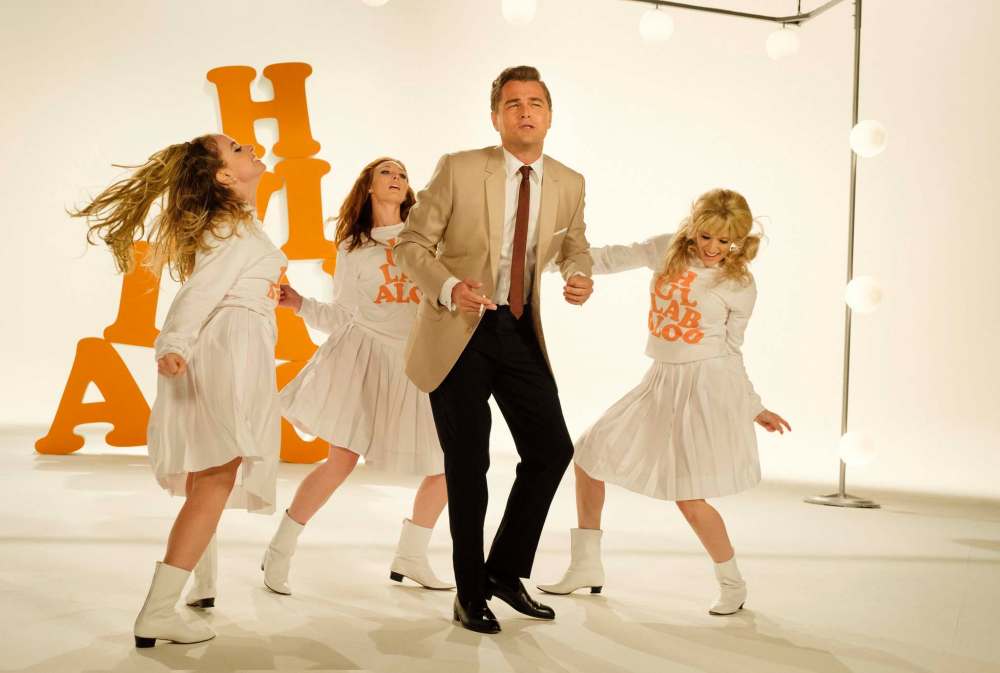
Funny, sad, perversely nostalgic, Quentin Tarantino’s obsessive ode to a lost Hollywood era is packed with visual verve, pop-culture riffs and cineaste pleasures.
Tarantino’s ninth film, set in Los Angeles in the months leading up to the 1969 Manson Family murders of Sharon Tate and her house guests, mostly avoids the provocative filmmaker’s worst instincts. With its melancholic tone and committed performances, it even gets close to some grown-up-human-being-type emotion. This is Tarantino’s most feeling film since Jackie Brown.
Many of the individual scenes in Once Upon a Time… in Hollywood fizz with nervous energy, but the overall structure has an appealingly unhurried vibe. (The movie clocks in at 161 minutes.) There are terrific extended scenes where everything just stops for some arcane argument or eccentric set-piece or — because this is an L.A. film — just a lot of driving around.
So why does it feel as if Tarantino is often squandering his profligate cinematic talents?
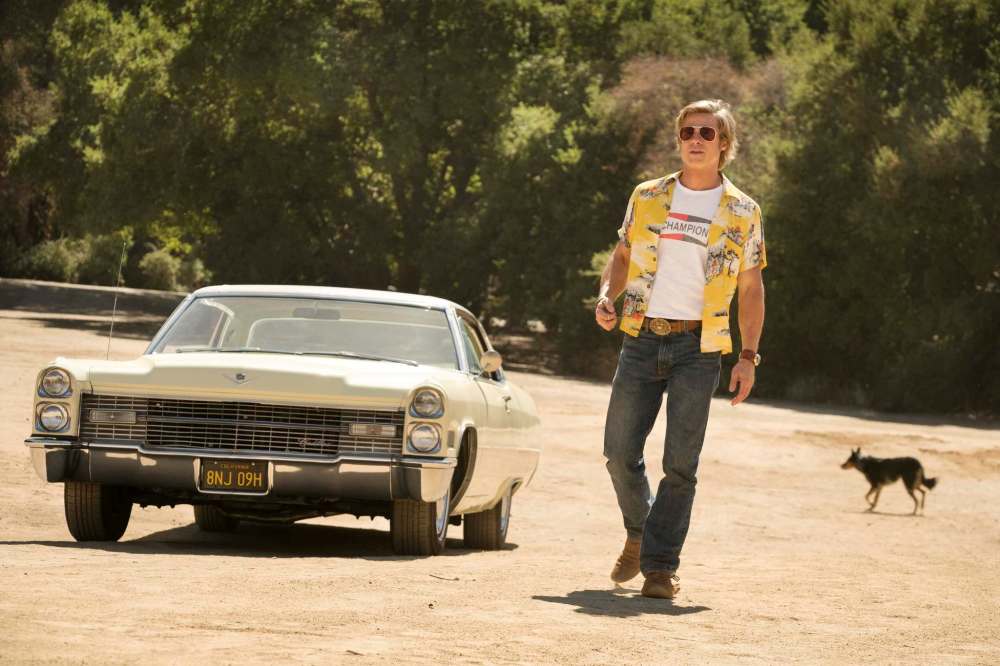
Leonardo DiCaprio is Rick Dalton, a middle-aged, semi-alcoholic, self-doubting actor who made his name in a 1950s TV western but whose star is now fading. Brad Pitt is Cliff Booth, his stunt double, driver and steady emotional support.
The two men are drifting toward irrelevance, as the good-guy/bad guy genres that brought Rick fame — war movies, old-school westerns and G-men series — head into decline and the culture around them shifts and darkens.
As with most Tarantino movies, there’s a sprawling ensemble cast — including drop-ins from some of the filmmaker’s faves — and multiple storylines that eventually connect (kind of).
Hotshot director Roman Polanski (Rafal Zawierucha in a non-speaking part) and rising star Sharon Tate (Margot Robbie) move in next door to Rick in Benedict Canyon. Cliff picks up a hitchhiker (Margaret Qualley), a Manson follower who wants him to meet “Charlie.” Proving he’s Rick’s double in more ways than one, Cliff gets into an unsettling confrontation with the young women at the Spahn Ranch, the Manson Family hangout, which mirrors Rick’s on-set showdown in a TV western.
Even the dark scenes pull off wonky humour, but they’re also shadowed by the violent August night we know is coming.
There are a lot of Tarantino trademarks — hip, fast-talking dialogue, including one standout exchange between Rick and an eight-year-old girl; lots of good-looking cars and reckless driving; shots of women’s bare feet.
Sixties L.A. is recreated with care and flair. It’s more imaginary – and cinematic — than real, perhaps, but the details are perfect: the vintage radio jingles, the neon signs, the mid-century landmarks. Everyone’s smoking their heads off and suntanning like crazy.
Movie and TV references abound, with clever, loving pastiches of Spaghetti westerns, 1950s commercials and winking in-jokes about Tarantino’s own oeuvre.
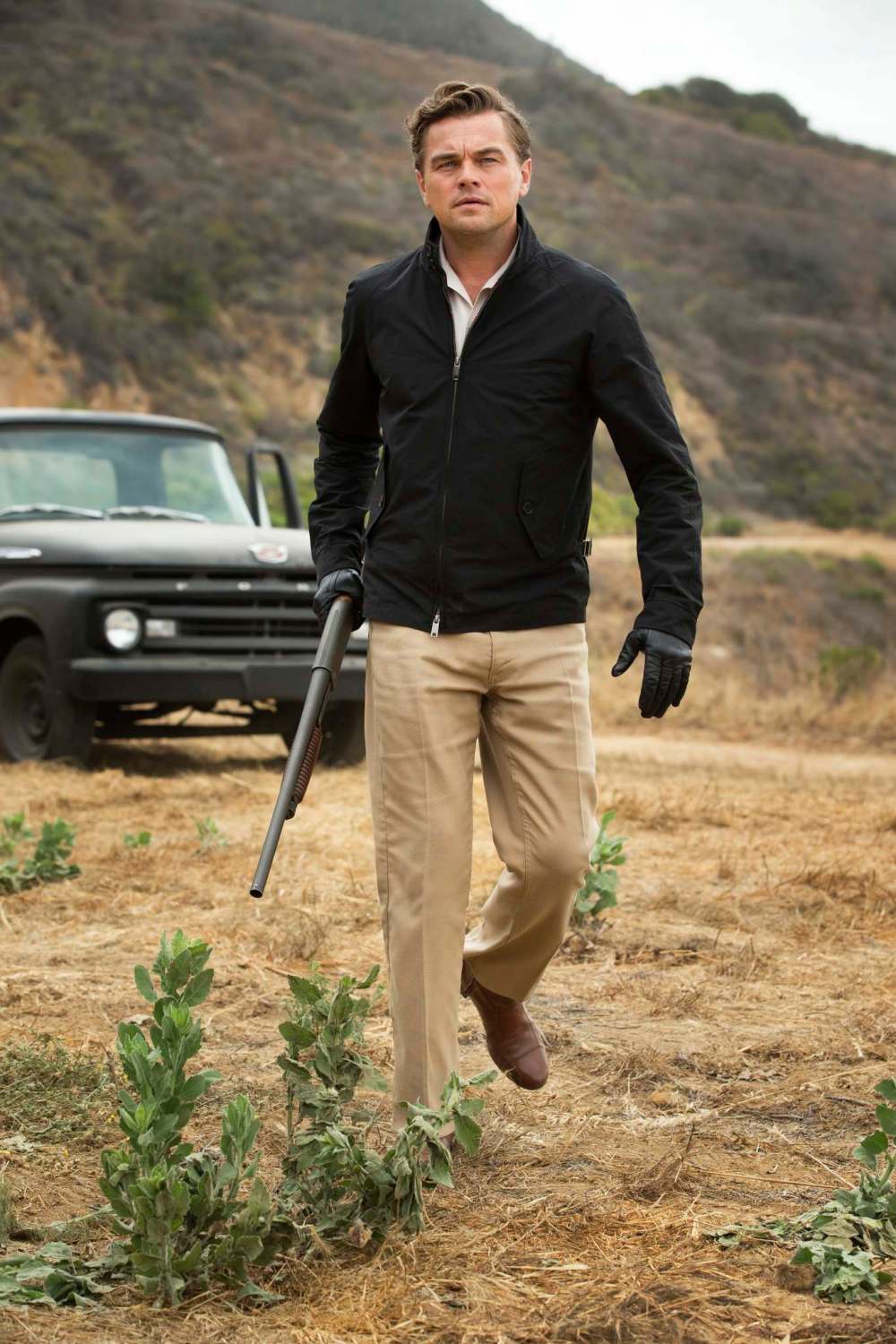
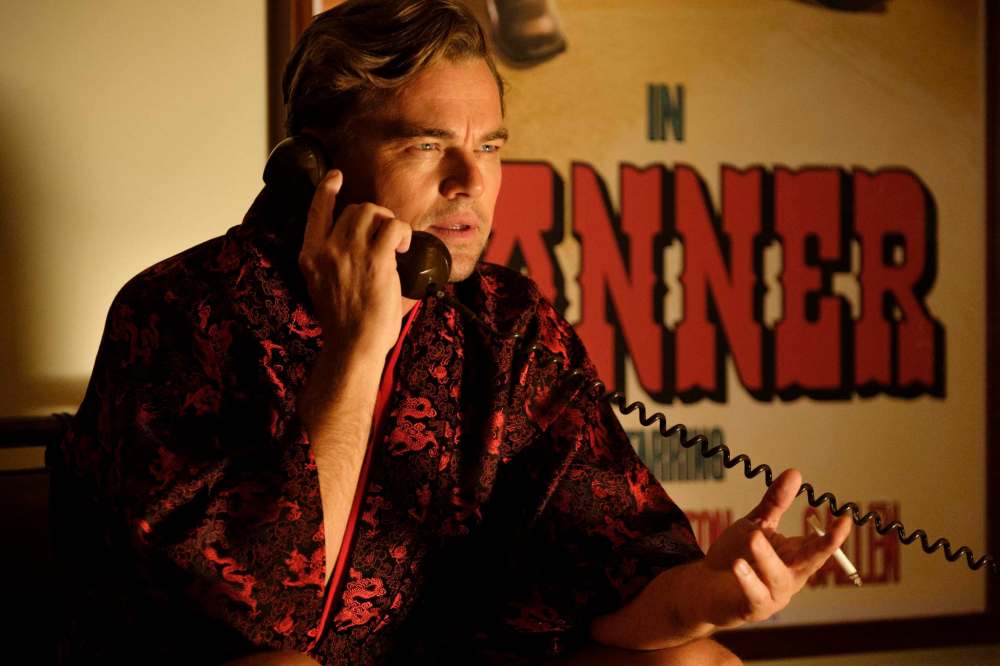
All this cleverness is anchored by DiCaprio’s work — he’s leaning into that cute-boy-gone-to-seed vibe and finding real poignancy. Pitt, in the trickier sidekick role, suggests loose-limbed charm with an underlying edge.
Robbie is a gifted actor often burdened by her beauty, and here’s she more of an idea — luminous innocence, an era-ending sacrifice — than a character.

Character — difficult, demanding, neurotic — is what men have in this film, and Rick especially has loads, carrying his own baggage and possibly Tarantino’s, too. The film is ostensibly mourning the passing of a golden age, as old Hollywood archetypes give way to something grittier and more complicated. (TV Guides keep popping up with signposting headlines: “Television in Turmoil!” “When TV Goes Nude.”) But social commentary isn’t really Tarantino’s thing, and the way he tracks the declining relevance of aging white guys feels personal.
Dropping Rick off on set, Cliff shouts, “You’re Rick Dalton!” to buck him up. Tarantino often seems to be bucking himself up. Like Lars von Trier and Woody Allen, he’s been beset by changing political and cultural forces and he’s doubling down, explicitly, even defiantly.
While Tarantino is known as a revolutionary stylist and all-round bad-boy, there is a stealth conservatism to this film. The main characters’ hippie-hatred reaches early Clint Eastwood levels, but this distrust of youth and change — and maybe femaleness — is strategically disguised by directing it against the Manson girls. No one’s going to side with a sociopathic killer cult, after all.
In his wildly revisionist finale, Tarantino offers up a quick analysis of violence: television made them do it! He’s making a stab — literally — at complexity, but it doesn’t convince. The critique feels rote, while Tarantino’s celebration of gore is insanely enthusiastic, an absolute orgy of extravagant, visually baroque ultra-violence.
After two-and-a-half hours of idiosyncratic but atmospheric filmmaking, the ending feels like a sudden tonal breakdown. This climactic bloodbath may serve Tarantino’s hardcore fans, but it guts the movie’s real accomplishments.
Studying at the University of Winnipeg and later Toronto’s York University, Alison Gillmor planned to become an art historian. She ended up catching the journalism bug when she started as visual arts reviewer at the Winnipeg Free Press in 1992.
Our newsroom depends on a growing audience of readers to power our journalism. If you are not a paid reader, please consider becoming a subscriber.
Our newsroom depends on its audience of readers to power our journalism. Thank you for your support.
MOVIE REVIEW
Once Upon a Time… in Hollywood
Starring Leonardo DiCaprio, Brad Pitt and Margot Robbie
Grant Park, Kildonan Place, McGillivray, Polo Park, St. Vital, Towne.
14A
162 minutes
★★★ 1/2 out of five
Studying at the University of Winnipeg and later Toronto’s York University, Alison Gillmor planned to become an art historian. She ended up catching the journalism bug when she started as visual arts reviewer at the Winnipeg Free Press in 1992.
Our newsroom depends on a growing audience of readers to power our journalism. If you are not a paid reader, please consider becoming a subscriber.
Our newsroom depends on its audience of readers to power our journalism. Thank you for your support.
Advertisement Advertise With Us
Advertisement Advertise With Us