

Museums offer enduring connections
Advertisement
Read this article for free:
or
Already have an account? Log in here »
To continue reading, please subscribe:
Digital Subscription
One year of digital access for only $1.44 a week*
- Enjoy unlimited reading on winnipegfreepress.com
- Read the E-Edition, our digital replica newspaper
- Access News Break, our award-winning app
- Play interactive puzzles
*Billed as $5.77 plus GST every four weeks. After 52 weeks, price increases to the regular rate of $19.95 plus GST every four weeks. Offer available to new and qualified returning subscribers only. Cancel any time.
To continue reading, please subscribe:
Add Free Press access to your Brandon Sun subscription for only an additional
$1 for the first 4 weeks*
- Enjoy unlimited reading on winnipegfreepress.com
- Read the E-Edition, our digital replica newspaper
- Access News Break, our award-winning app
- Play interactive puzzles
*Your next Brandon Sun subscription payment will increase by $1.00 and you will be charged $17.95 plus GST for four weeks. After four weeks, your payment will increase to $24.95 plus GST every four weeks.
Read unlimited articles for free today:
or
Already have an account? Log in here »
I travelled to Minneapolis shortly after the U.S. midterm elections. Against a backdrop of political debate, I spent some time at the Minneapolis Institute of Art (Mia), a museum I have visited many times since first discovering it decades ago as an undergraduate student at the University of Winnipeg.
The museum’s collections have grown, exhibitions have come and gone and even the museum shop has changed locations. Yet I can still walk into familiar gallery spaces and stand before many of the same works of art I had encountered years earlier.
In a society that places such a premium on change, there is considerable value in public institutions that offer a measure of continuity in our lives.
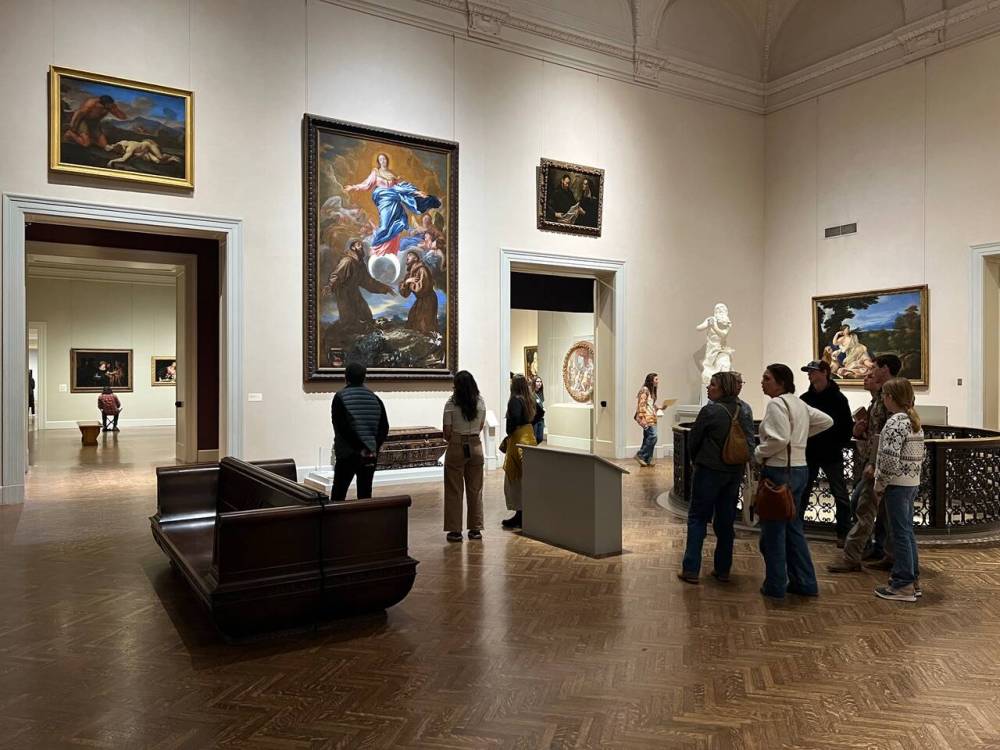
Hazel Mouzon Borys photo
The permanent collection gallery at the Minneapolis Institute of Art
We visit museums for many reasons: special exhibitions, masterworks, lectures, workshops, performances or a visit to the gift shop. These activities are essential to their cultural vitality and financial sustainability. But museums with permanent collections offer something more enduring: the opportunity to develop a relationship with art over many years, perhaps even a lifetime.
A work encountered on a school trip or family vacation may become something we seek out decades later. We return with different experiences, knowledge and perspectives. Sometimes we bring a friend or colleague, a spouse or child, hoping to share something that once moved us. The artwork becomes part of our own history.
During my years on the board of the Association of Art Museum Directors, we invited Arthur Cohen, co-founder of the New York cultural consulting firm LaPlaca Cohen, to work with our membership across North America. His firm’s Culture Track research examined how people think about culture, why they participate and what they expect from cultural institutions.
For museum directors, whose professional lives are often occupied with exhibitions, acquisitions, attendance and fundraising, the research offered an opportunity to reconsider our institutions from the visitor’s perspective.
Culture Track challenged conventional assumptions about cultural participation. People were not necessarily looking for formal education or intellectual enrichment. They sought enjoyment, social connection, personal discovery and experiences that contributed to their well-being. They wanted cultural spaces that were accessible and welcoming.
The Canadian edition of Culture Track, released in 2018, surveyed more than 6,000 cultural participants. Among its findings was the importance of reducing stress and anxiety. Sixty-seven per cent of millennials identified feeling less stressed as a reason for seeking cultural experiences, with similar results across other generations. Many saw museums as places to simply chill out.
Museums can provide places of refuge, relaxation and rejuvenation. A visit need not have a particular objective or produce a measurable educational outcome.
Permanent collection galleries are well positioned to fulfil this role. They offer something dependable: familiar surroundings, meaningful encounters and the freedom to spend time without the demands of a scheduled or structured activity.
One of my graduate school mentors encouraged me to look at the artwork first, and only then read the label, if I needed to. Before accepting someone else’s assessment of what is important, what is true or what deserves our attention, we should take the time to look for ourselves.
That advice has implications well beyond the museum.
Whether we are encountering a painting, a sculpture, a new media work or an installation, our initial response has value. It need not be immediately mediated by the institution.
Museums invest considerable resources in interpretation. Introductory and thematic panels, object labels, podcasts and digital technologies provide valuable historical and cultural context. But interpretation should enrich the encounter, not prescribe it.
The art should come first.
Art is one of the most powerful and universal means we have of connecting with one another. It introduces us to unfamiliar ideas and cultures, challenging how we see the world and one another. It allows us to share perspectives without necessarily sharing the same beliefs or experiences. It is a language that does not always need to be translated.
Few public spaces offer the opportunity to engage with such a diversity of human expression across centuries, geographies, cultures and media. Equally important, museums allow us to do so in the company of others whose responses may be quite different from our own.
We do not have to agree on the meaning of a work of art to appreciate it together.
Museums understandably devote considerable attention to attracting new audiences, developing programs and demonstrating their relevance.
Yet how much attention do we devote to creating places people want to return to, even when there is no new exhibition?
Museums measure attendance, membership and participation. These are necessary indicators of institutional health. They tell us considerably less about the difference a museum makes in someone’s life.
Accessibility is not simply about getting people through the museum’s doors. It is also about creating an environment in which people feel welcome, comfortable and sufficiently at home to return on their own terms.
Of course, permanent collections are never entirely permanent in their display. Museums acquire, conserve and lend works of art, and periodically reconsider how their collections are presented. New scholarship and changing perspectives can transform our understanding of familiar artworks.
Permanence should not be confused with stagnation, nor familiarity with a lack of discovery.
Watching groups of students moving through the collection galleries at Mia, I wondered which works might remain in their memories and whether, years from now, they might return to those same galleries, perhaps with their own children. Nearby, a father was sharing a story with his young daughter about a painting. It was clear that he knew the work well and had returned to see it before.

In an increasingly polarized world, we need public spaces where people can come together without being required to think alike, where curiosity is encouraged and where there is room for both individual reflection and shared experience.
Museums have an extraordinary capacity to be such places. Their collections are not simply repositories of our cultural inheritance; they are civic resources that can enrich our lives across generations.
Sometimes the most rewarding museum experience is not encountering something we have never seen before, but discovering something new in an artwork we have known for years.
The art may remain the same. We do not.
Stephen Borys is president and CEO of Civic Muse, an arts and cultural consulting practice based in Winnipeg.