

Winnipeg short 300 new housing units per year: report

Advertisement
Read this article for free:
or
Already have an account? Log in here »
To continue reading, please subscribe:
Digital Subscription
One year of digital access for only $1.44 a week*
- Enjoy unlimited reading on winnipegfreepress.com
- Read the E-Edition, our digital replica newspaper
- Access News Break, our award-winning app
- Play interactive puzzles
*Billed as $5.77 plus GST every four weeks. After 52 weeks, price increases to the regular rate of $19.95 plus GST every four weeks. Offer available to new and qualified returning subscribers only. Cancel any time.
To continue reading, please subscribe:
Add Free Press access to your Brandon Sun subscription for only an additional
$1 for the first 4 weeks*
- Enjoy unlimited reading on winnipegfreepress.com
- Read the E-Edition, our digital replica newspaper
- Access News Break, our award-winning app
- Play interactive puzzles
*Your next Brandon Sun subscription payment will increase by $1.00 and you will be charged $17.95 plus GST for four weeks. After four weeks, your payment will increase to $24.95 plus GST every four weeks.
Read unlimited articles for free today:
or
Already have an account? Log in here »
The Winnipeg Regional Real Estate Board is calling for more home builds to keep Winnipeg prices down.
The city could use an extra 300 housing units per year — beyond what is projected to be built — for the next four years to maintain prices, according to an analysis commissioned by the real estate board.
Ecoverity Incorporated analyzed 10 years of listing data the board provided, and statistics from the Canada Mortgage and Housing Corp.
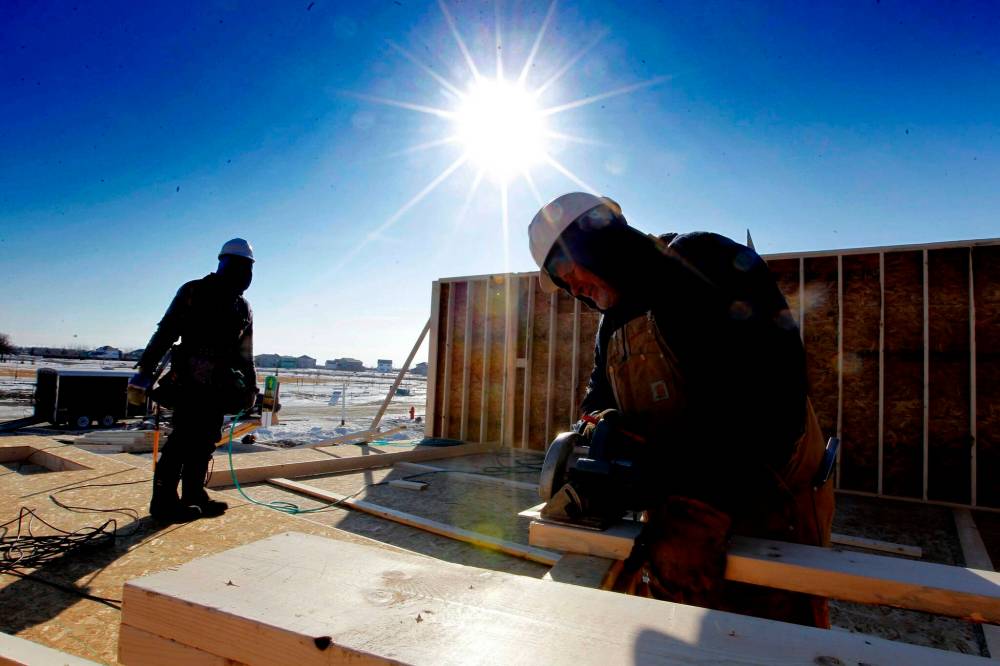
BORIS MINKEVICH / FREE PRESS FILES
Winnipeg needs to increase it’s new home construction rate by 300 housing units per year for the next four years to maintain prices, according to the real estate board.
“If we are to maintain a relatively good affordability, we really do need more units built for sale,” said Dan O’Brien, the board’s president.
Winnipeg is on track to add 4,800 houses for ownership through to 2030. That falls 1,200 short of the 6,000 builds required to keep pace, the report says.
The numbers hinge on a projected annual population growth of roughly 6,000 people.
There’s a lack of residential detached homes and a “missing middle” of lower-cost options, such as townhouses, O’Brien said.
Meantime, the share of homes built for ownership has been decreasing; rentals have gained popularity.
The real estate board’s analysis found ownership-oriented construction, including of condominiums, has dropped from about 78 per cent in the early 2010s to 41 per cent by 2020-25.
Rental construction rose to more than 50 per cent from below 25 per cent during that time frame.
O’Brien pointed to government incentives spurring rental development. Ottawa’s Housing Accelerator Fund, for example, has been funnelled to rental creation in Winnipeg.
“Developers … build for profit,” O’Brien said. “If there’s incentivized programs from the government, they will use them.”
He’s advocating for a homeownership version of MLI Select, a federal program tackling mortgage loan insurance. People want to own homes, he said.
Winnipeg needs housing at all levels, including rentals, said Mayor Scott Gillingham.
“Specific to homeownership opportunities, I agree that we, as a city, need to continue to work on that,” Gillingham said, adding he’s in regular talks with other levels of government, developers and groups such as the Manitoba Home Builders’ Association.
The city’s creation of a housing accelerator fund team, and zoning changes, have helped expedite homebuilding, Gillingham said.
His 2026 election campaign included a statement that Winnipeg has logged more housing starts over the past four years than any other point in city history.

Municipal and provincial governments must foot servicing costs of new land development to fast-track housing projects, said Lanny McInnes, president of the Manitoba Home Builders’ Association.
This year appears to be “strong” for housing starts — largely because of incentives to build rental units, steady interest and mortgage rates and a relatively stable economy, despite tariffs and uncertainty, McInnes said.
Housing start numbers for 2026 haven’t been finalized.
McInnes expects building to slow next year due to reduced immigration.
gabrielle.piche@winnipegfreepress.com
Gabby is a big fan of people, writing and learning. She graduated from Red River College’s Creative Communications program in the spring of 2020.
Our newsroom depends on a growing audience of readers to power our journalism. If you are not a paid reader, please consider becoming a subscriber.
Our newsroom depends on its audience of readers to power our journalism. Thank you for your support.
Advertisement Advertise With Us
Advertisement Advertise With Us