

AI realty ads not our most pressing issue
Advertisement
Read this article for free:
or
Already have an account? Log in here »
To continue reading, please subscribe:
Digital Subscription
One year of digital access for only $1.44 a week*
- Enjoy unlimited reading on winnipegfreepress.com
- Read the E-Edition, our digital replica newspaper
- Access News Break, our award-winning app
- Play interactive puzzles
*Billed as $5.77 plus GST every four weeks. After 52 weeks, price increases to the regular rate of $19.95 plus GST every four weeks. Offer available to new and qualified returning subscribers only. Cancel any time.
To continue reading, please subscribe:
Add Free Press access to your Brandon Sun subscription for only an additional
$1 for the first 4 weeks*
- Enjoy unlimited reading on winnipegfreepress.com
- Read the E-Edition, our digital replica newspaper
- Access News Break, our award-winning app
- Play interactive puzzles
*Your next Brandon Sun subscription payment will increase by $1.00 and you will be charged $17.95 plus GST for four weeks. After four weeks, your payment will increase to $24.95 plus GST every four weeks.
Read unlimited articles for free today:
or
Already have an account? Log in here »
Anyone shopping for a house in Winnipeg has seen it: you go online and look at 20 or 30 pictures of a house you’re interested in, and notice how things can change between different photos of the same spaces.
The first photo of the kitchen can show a range in the foreground and a similar-model fridge further back. But the range is oddly distorted, so that it looks three times the size of its companion appliance.
Or two angles of the same living room, where doorways and the fireplace look impossibly wide in one picture, and somehow normal-sized in the other.
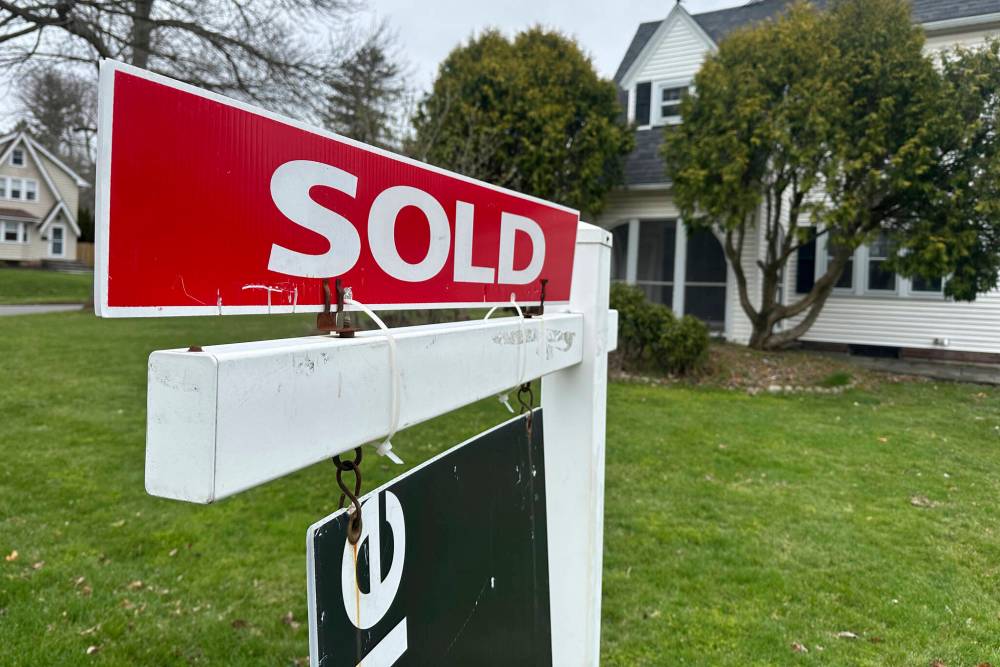
Mark Humphrey / The Associated Press files
AI ads can mask a home’s flaws.
A wide-angle photograph lets you see a whole room in one picture — it also makes a room look larger, and distorts things close to the camera. It’s why you can love the size that rooms seem to be when you look at them online, and yet be sorely disappointed when you get to see the real thing.
Now, there’s a new game in town — altering house photos using artificial intelligence to stage rooms with new or different furniture, or improve the street view. A realtor can show what a house could look like with a design makeover, and photos that show small imperfections can be adjusted.
Sometimes, it’s much larger than that, edging well across the line into false advertising.
This past summer, a realty advertisement even edited a mountain range into an exterior photo of a Scotia Street home, a location far, far from any mountains.
It’s fair to say that if you’re using photos to sell something, those photos should be a true representation of what you’re selling.
It’s been an issue for the Manitoba Real Estate Association, which already bans misleading advertising.
It’s clearly also an issue for Manitoba’s premier.
“When you get taken for a ride and you rent a bunk apartment (and) you’re misled, you’re getting ripped off,” Premier Wab Kinew said Nov. 17 as the government announced action to regulate AI use in realty advertising.
The move was announced high up in Tuesday’s throne speech — on page 3— as a way of helping to lower costs for Manitobans.
“The technology is evolving so rapidly. We want to make sure that we stay ahead of it to protect Manitobans,” New Technology Minister Mike Moroz said Wednesday. “Nothing hinders tech adoption like public mistrust.”
Should AI use and potential alterations be clearly disclosed? Absolutely. False advertising is false advertising.

But this smacks, quite frankly, of being a boutique issue — a bee in some cabinet member’s bonnet — when there are far more important issues to be dealt with in this province.
To be fair, the move is outlined just 15 words — “Plus we will put a stop to the use of AI images in real estate” — in a 2,698-word package of new promises and the requisite overweening self-congratulation that today’s throne speeches have become. Subsequent explanations for what form the regulation is actually expected to take are thin on details, so we will have to wait and see.
By all means, stop inaccurate advertising anywhere you can — even though, in this case, that advertising is going to reveal itself with buyers who do something as simple as making a visit to the property in question. After all, if you’re buying a house — one of the largest investments of your life — you’re not going to make that decision without actually taking the time to thoroughly go through the place.
Be aware: with the growth of AI, there will be more and more online cases where your eyes and ears will deceive you, and legislation won’t stop it all.
The fact is that there are far, far larger legislative fish to be frying than this.