

African Ebola outbreak affects the world
Advertisement
Read this article for free:
or
Already have an account? Log in here »
To continue reading, please subscribe:
Digital Subscription
One year of digital access for only $1.44 a week*
- Enjoy unlimited reading on winnipegfreepress.com
- Read the E-Edition, our digital replica newspaper
- Access News Break, our award-winning app
- Play interactive puzzles
*Billed as $5.77 plus GST every four weeks. After 52 weeks, price increases to the regular rate of $19.95 plus GST every four weeks. Offer available to new and qualified returning subscribers only. Cancel any time.
To continue reading, please subscribe:
Add Free Press access to your Brandon Sun subscription for only an additional
$1 for the first 4 weeks*
- Enjoy unlimited reading on winnipegfreepress.com
- Read the E-Edition, our digital replica newspaper
- Access News Break, our award-winning app
- Play interactive puzzles
*Your next Brandon Sun subscription payment will increase by $1.00 and you will be charged $17.95 plus GST for four weeks. After four weeks, your payment will increase to $24.95 plus GST every four weeks.
Read unlimited articles for free today:
or
Already have an account? Log in here »
It’s far away, but it’s a measure of both the world’s interconnectedness and the way decisions in North America can be far-reaching.
In many ways, it’s been flying under the radar: while the developed world focuses on trade and tariffs, along with wars between Iran and the United States, and between Ukraine and Russia, another issue that has direct ties to decisions made by the administration of U.S. President Donald Trump is surfacing in Africa.
The Democratic Republic of Congo (DRC) is one of the worst places for an outbreak of the often-deadly hemorrhagic Ebola virus: decades of corruption have left its medical resources in tatters and its bureaucracy weak and unable to respond to a serious medical threat.
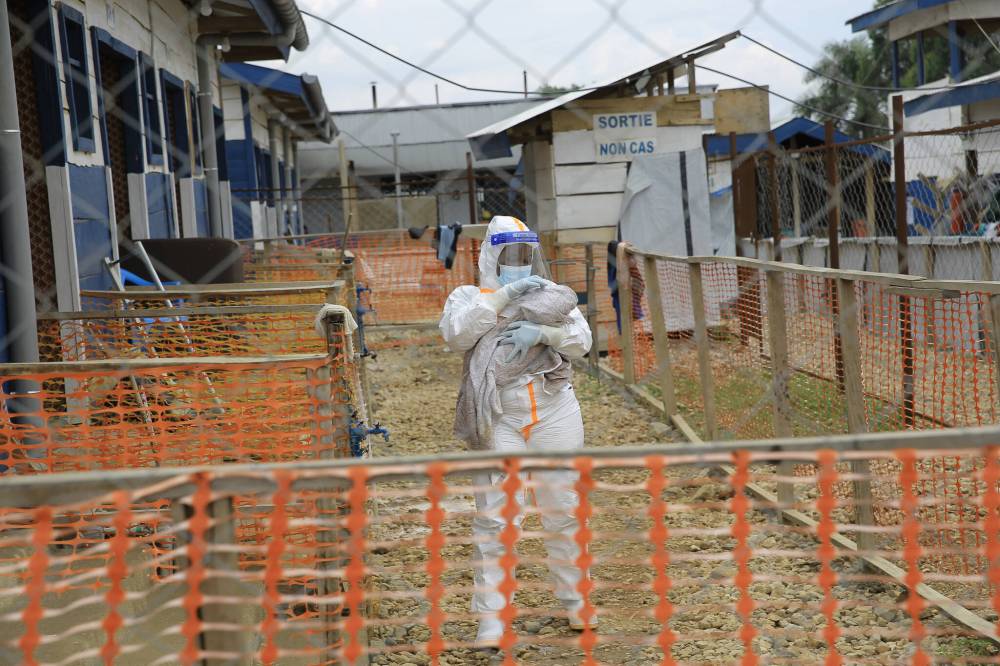
Sebastien Kitsa Musayi / The Associated Press
Ebola is sweeping the Democratic Republic of Congo.
Couple that with a weakened international response — particularly because of the Trump administration’s cuts to the United States Agency for International Aid and the U.S. Centers for Disease Control and Prevention, and the United States’ withdrawal from the World Health Organization — and the DRC is now facing the largest Ebola outbreak in its history.
More than 5,500 people have died in the DRC, and cases have occurred in Uganda, Nigeria and Kenya.
Delays in identifying and treating cases and ongoing armed conflict in part of the Congo have meant as many as 65 per cent of Ebola deaths are occurring before the victims have been identified as having the disease, meaning many stay in their communities instead of receiving treatment or being put into isolation to lessen transmission.
It’s not even clear if the number of deaths from Ebola are being accurately counted. And the outbreak is spreading to different parts of the country. Ebola has also surfaced in the city of Kisangani, which has a population of 1.5 million.
All of that is a recipe for an outbreak that is likely to continue to spread, and that’s even more likely because the particular strain of Ebola that’s at the heart of the outbreak — the Bundibugyo strain — has no effective vaccine. That strain also has a mortality rate of between 30 and 50 per cent. And this particular outbreak is spreading faster than any previous Ebola outbreak.
Observers now caution that the outbreak may wind up being the largest in history. Dr. Jean Kaseya, the director-general of the Africa CDC, said on social media: “If we don’t stop it now, it will be the worst outbreak the world has known.”
One of the biggest fears right now is that the outbreak might spread across the DRC’s border into South Sudan, which has similar health-system challenges as the DRC, along with armed conflict. There are also concerns that the virus might spread to Kinshasa, one of the largest cities in Africa.

The United States has pledged aid to fight the current outbreak — the U.S. State Department committed US$780 million to fund a “rapid and comprehensive response” — but the response came months after cases began, and well after the outbreak was fully entrenched in several parts of the DRC.
Foreign aid is not just charity. It’s also a form of self-protection. Preventing pandemics or epidemics protects your own citizens as much as it helps those facing deadly illnesses directly.
When you turn your back on the rest of the world, you run the risk of losing both good will and the strategic advantage of being at the leading edge of recognizing and preventing what could be looming disasters.
Stopping this outbreak of Ebola in the DRC may not specifically protect western countries from an outbreak of Ebola. But it will save human lives, and in the process, buy time and protection for all of us.
It is the right thing to do.