

Tools, technology required to retain doctors
Advertisement
Read this article for free:
or
Already have an account? Log in here »
To continue reading, please subscribe:
Digital Subscription
One year of digital access for only $1.44 a week*
- Enjoy unlimited reading on winnipegfreepress.com
- Read the E-Edition, our digital replica newspaper
- Access News Break, our award-winning app
- Play interactive puzzles
*Billed as $5.77 plus GST every four weeks. After 52 weeks, price increases to the regular rate of $19.95 plus GST every four weeks. Offer available to new and qualified returning subscribers only. Cancel any time.
To continue reading, please subscribe:
Add Free Press access to your Brandon Sun subscription for only an additional
$1 for the first 4 weeks*
- Enjoy unlimited reading on winnipegfreepress.com
- Read the E-Edition, our digital replica newspaper
- Access News Break, our award-winning app
- Play interactive puzzles
*Your next Brandon Sun subscription payment will increase by $1.00 and you will be charged $17.95 plus GST for four weeks. After four weeks, your payment will increase to $24.95 plus GST every four weeks.
Read unlimited articles for free today:
or
Already have an account? Log in here »
Manitoba has made some encouraging progress in addressing its doctor shortage. But attracting more physicians to the province will accomplish only so much if the health-care system can’t give them the tools, technology and working conditions they need to do their jobs.
A new report from Doctors Manitoba suggests the province is making progress in growing its physician workforce. But serious gaps remain.
The organization’s annual Physicians in Manitoba report contains some welcome news. The province now has a record number of physicians practising here, with 235 doctors per 100,000 residents. That’s getting closer to the national average of 245.
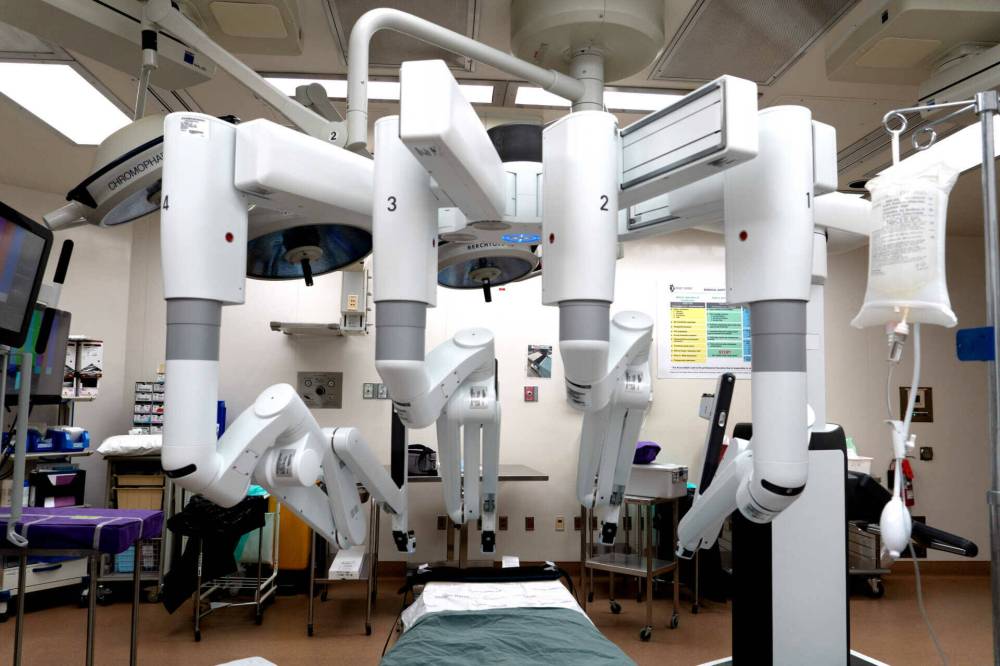
SUPPLIED
The da Vinci Xi is Manitoba’s only surgical robot.
The overall physician shortage has also been cut nearly in half from its peak three years ago, when Manitoba needed 445 additional doctors to reach the national average. It now needs 229.
That’s meaningful progress and the provincial government’s recruitment efforts deserve some credit. Its physician recruitment office has helped bring 137 doctors to Manitoba since 2024.
But the report also exposes a troubling weakness in the province’s health-care strategy. More than 90 per cent of Manitoba’s doctor shortage involves specialists. The province is short 217 of them, contributing to delays in consultations, diagnostic testing and surgeries.
One of the reasons specialists are reluctant to practise here is that Manitoba is falling behind in medical technology.
As Doctors Manitoba spokesperson Keir Johnson put it, physicians are “trained in the medicine of today” but arrive in Manitoba to find “the tools of yesterday.”
That’s a damning assessment of a health-care system that is supposed to provide modern, high-quality care.
Consider robotic surgery. Manitoba has just one surgical robot, which must be shared among several medical specialties. Other provinces have invested in more equipment, allowing their specialists greater access to the technology.
There are several Manitoba urologists trained to use robotic surgery, but limited access means procedures can’t be scheduled as efficiently as they could be. The technology can also reduce operating times and shorten patient recovery periods, potentially freeing up hospital beds. But doctors need access to that technology.
When specialists don’t have adequate equipment, the consequences extend beyond recruitment. Patients wait longer, hospital resources are tied up and some people eventually leave the province to seek treatment elsewhere.
The shortages are particularly concerning in fields such as emergency medicine, cardiology, vascular surgery, radiology, pathology, nuclear medicine and geriatrics. An aging population will only increase demand for many of those services.
The province also needs to pay closer attention to retaining the doctors it already has.

Doctors Manitoba estimates that 658 physicians are considering retirement or leaving the province over the next three years. That’s a significant potential loss, particularly when 158 doctors already left Manitoba during the last fiscal year, up from 138 the year before.
Even more concerning, only 63 per cent of medical residents who completed their training in Manitoba are still practising here five years later. The national average is 73 per cent.
That should be a wake-up call. Manitoba is training doctors, but too many are deciding to build their careers somewhere else.
Doctors Manitoba points to administrative burdens, excessive paperwork, inadequate team-based care and shortcomings in equipment and facilities as factors contributing to that decision. Those are not minor workplace irritants. They affect morale, productivity and the quality of care physicians can provide.
The government cannot solve every problem overnight, and it shouldn’t be expected to. But it needs a much more comprehensive approach than simply announcing recruitment initiatives and celebrating increases in physician numbers.