

The landscape that taught us to see
Advertisement
Read this article for free:
or
Already have an account? Log in here »
To continue reading, please subscribe:
Digital Subscription
One year of digital access for only $1.44 a week*
- Enjoy unlimited reading on winnipegfreepress.com
- Read the E-Edition, our digital replica newspaper
- Access News Break, our award-winning app
- Play interactive puzzles
*Billed as $5.77 plus GST every four weeks. After 52 weeks, price increases to the regular rate of $19.95 plus GST every four weeks. Offer available to new and qualified returning subscribers only. Cancel any time.
To continue reading, please subscribe:
Add Free Press access to your Brandon Sun subscription for only an additional
$1 for the first 4 weeks*
- Enjoy unlimited reading on winnipegfreepress.com
- Read the E-Edition, our digital replica newspaper
- Access News Break, our award-winning app
- Play interactive puzzles
*Your next Brandon Sun subscription payment will increase by $1.00 and you will be charged $17.95 plus GST for four weeks. After four weeks, your payment will increase to $24.95 plus GST every four weeks.
Read unlimited articles for free today:
or
Already have an account? Log in here »
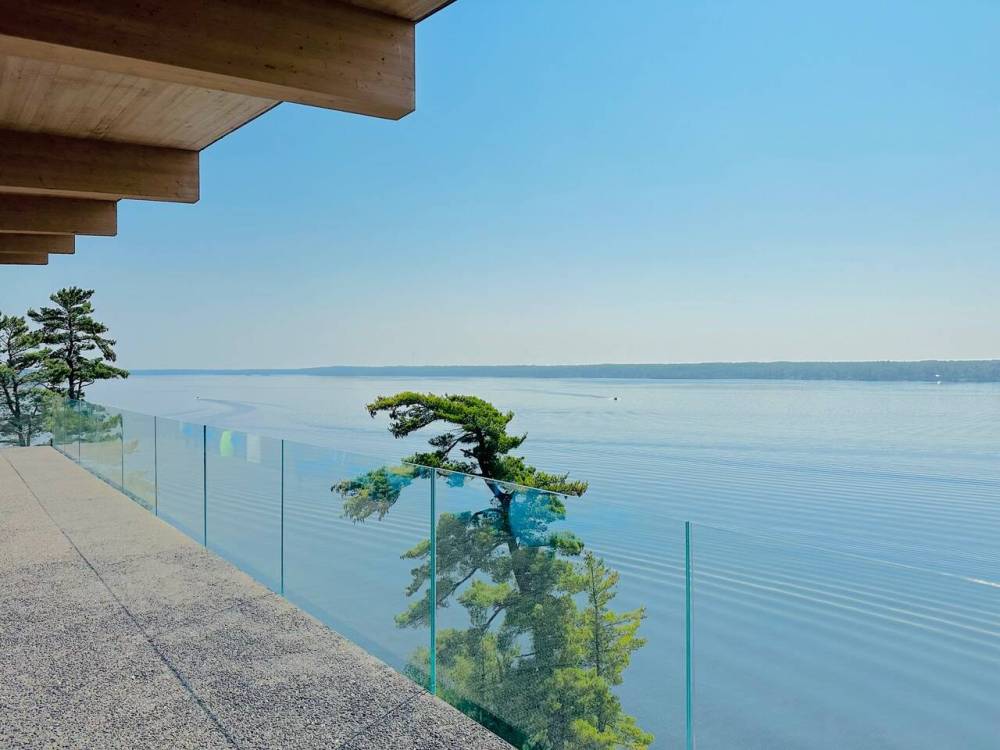
The white pine stood at the edge of the lake, leaning out over the water, its branches bent by years of wind and weather. Beyond it stretched an expanse of blue water beneath a clear sky, a distant tree line and other pines rising along the rocky shoreline. From the deck above, the landscape seemed both expansive and remarkably still.
I had been looking at it for only a few moments when Tom Thomson and the Group of Seven entered the picture. Not literally, of course. But once the association appeared, I could not unsee it. The pine became The Jack Pine and The West Wind. The surrounding rocks, water and sky called up A.Y. Jackson, Arthur Lismer, Franklin Carmichael and Lawren Harris. A landscape I had been looking at all weekend suddenly became part of a visual history Canadians have carried with them for more than a century.
Perhaps that is the Group of Seven’s greatest achievement. They did not simply paint the Canadian landscape. They changed the way we see it.
Stephen Borys photo
Lake view with white pine.
I was at the lake for a quiet weekend, reflecting on the cultural, community and development projects that occupy much of my work through Civic Muse. Increasingly, I see these pursuits as part of the same conversation — place and identity, how we understand it, care for it and decide what is worth carrying forward.
That weekend, the Group of Seven seemed newly relevant. Formed in 1920, three years after Thomson’s death, its members included Jackson, Lismer, Carmichael, Harris, J.E.H. MacDonald, Frederick Varley and Frank Johnston, with others joining later.
What strikes me now is the audacity of their project. Several were newcomers to Canada. MacDonald, Lismer and Varley were born in England and arrived with European artistic traditions and training. But inherited conventions were insufficient for the country they were encountering. Canada demanded something different, so they went looking.
They travelled by train, canoe and on foot, carrying small panels into Algonquin Park, Georgian Bay, Algoma, Lake Superior, the Rockies and the Arctic. They looked hard at crooked trees, exposed rock, autumn forests, snow, ice, clouds and immense stretches of water, making something new from what they saw.
Their relationship with landscape was also shaped by war. Several served or worked as war artists during the First World War, witnessing forests shattered, fields cratered and communities destroyed. Canada’s lakes, forests and rocky shorelines must have carried particular resonance afterward — places of endurance and renewal, simultaneously ancient and vulnerable.
Their paintings were not neutral records. Harris reduced mountains, ice and northern lakes to powerful, almost spiritual forms. Jackson found rhythm in rolling hills and autumn forests. Carmichael transformed lakes and rocky outcrops into crystalline patterns of colour. Winnipeg’s L.L. FitzGerald, a later Group member, found monumentality in Manitoba’s trees, fields and immense skies. They were interpreting the land and telling Canadians it deserved attention.
In that sense, I think they were conservationists before we commonly used the word as we do today. They could not have anticipated climate change, nor should we retrofit contemporary environmental politics onto artists working a century ago. But their paintings insisted that forests, lakes and shorelines possessed value beyond extraction or development. A tree was not merely timber, a rocky shoreline undeveloped real estate, or a northern lake simply a resource. The land possessed character, mystery and power of its own.
That proposition is increasingly urgent. Wildfire, development, warming temperatures and pressures on lakes and forests threaten landscapes they could scarcely have imagined losing. Their work reminds us of a simple truth: before we protect something, we have to notice it.
There is a lesson here for education. Imagine what our K–12 students can learn by looking at Canada’s natural landscape through the eyes of artists such as the Group of Seven — not simply as art history, but as a way of understanding the country itself. Put a century-old painting beside a photograph of the same region today and ask: What has changed? What remains? What has disappeared? What has recovered? What is in danger of being lost?
These paintings can also prompt us to ask what — and who — is absent from the picture. Landscapes presented as wilderness were, and remain, Indigenous lands, shaped by histories and relationships extending back thousands of years. Learning to see also means recognizing what earlier ways of seeing may have left out.
Art becomes evidence as well as expression, opening conversations about history, geography, ecology, climate and our relationship with the land. Conservation begins not only with regulations and protected areas, but with attention and attachment. We are more likely to protect what we have learned to notice, and to mourn what we have learned to love.
That connection between seeing, understanding and caring is central to my work through Civic Muse. A few weeks before Winnipeg’s municipal election, I joined a Storefront Manitoba forum at The Forks, as its arts and culture voice. After an evening of debate about infrastructure, public space, safety, development and livability, I left encouraged that many people understood something we too often have to defend: arts and culture are not extras, “nice to haves,” or simply grant-based activities. They are part of the social, economic and physical infrastructure of sustainable communities.
Museums, galleries, libraries, heritage buildings and gathering places help us understand where we are and how we arrived here, while creating belonging and animating neighbourhoods. We shouldn’t build a city first and then ask where culture fits; culture should help determine what kind of city we build.

This column appears the morning after Winnipeg’s municipal election. Elections ask us to choose among competing priorities and visions. This morning, however, we still wake up together in the same place. Cities and countries are not built only through platforms, policies, and construction. They are also built through acts of attention and stewardship — through deciding what we value, what we protect and what we leave for those who come after us.
Looking again at the white pine at the lake, I saw resilience: a tree shaped by decades of wind, snow, drought and storms, irregular, tenacious and alive. And because generations of Canadian artists had looked closely at trees like it, I saw more than I might otherwise have seen.
A century later, that may be the Group of Seven’s enduring gift. They taught Canadians that landscape was not merely the space between destinations. It was part of who we were becoming.
The challenge now is not simply to keep looking. It is to decide what, having learned to see, we are prepared to protect.
Stephen Borys is president and CEO of Civic Muse, an arts and cultural consulting practice based in Winnipeg.