

Wasteful operations should be held accountable
Advertisement
Read this article for free:
or
Already have an account? Log in here »
To continue reading, please subscribe:

Digital Subscription
One year of digital access for only $205*
- Enjoy unlimited reading on winnipegfreepress.com
- Read the E-Edition, our digital replica newspaper
- Access News Break, our award-winning app
- Play interactive puzzles
*First annual payment billed as $205.00 + GST for one year. This annual subscription will automatically renew at $233.00 + GST every 52 weeks (10% off the regular annual price of $259.35). Offer available to new and qualified returning subscribers only. Cancel any time.
To continue reading, please subscribe:
Add Free Press access to your Brandon Sun subscription for only an additional
$1 for the first 4 weeks*
- Enjoy unlimited reading on winnipegfreepress.com
- Read the E-Edition, our digital replica newspaper
- Access News Break, our award-winning app
- Play interactive puzzles
*Your next Brandon Sun subscription payment will increase by $1.00 and you will be charged $17.95 plus GST for four weeks. After four weeks, your payment will increase to $24.95 plus GST every four weeks.
Read unlimited articles for free today:
or
Already have an account? Log in here »
Rising water bills are a top-of-mind issue for residents of Winnipeg going into the fall election. Management of the water and waste system is under question, with citizen’s groups, as well as the Free Press, calling for proper oversight of rates (Time for the PUB to review Winnipeg water rates, Editorial, Sept. 26).
The need to increase rates to build the North End sewage plant is understandable. Siphoning off utility proceeds to make up other tax revenue shortfalls is another matter. But it is not the only questionable practice. If there was Public Utilities Board oversight of Winnipeg’s water and sewer rates, it would certainly be asking why the city is spending more than $3 million annually to operate the 164-kilometre-long, Greater Winnipeg Water District railway (GWWD) on ratepayers’ behalf.
The GWWD has come to the attention of the Railway Relocation Study, led by Lloyd Axworthy. All existing rail lines within the city are under review, as is the feasibility of a new railway bypass.
Russell Wangersky / Free Press
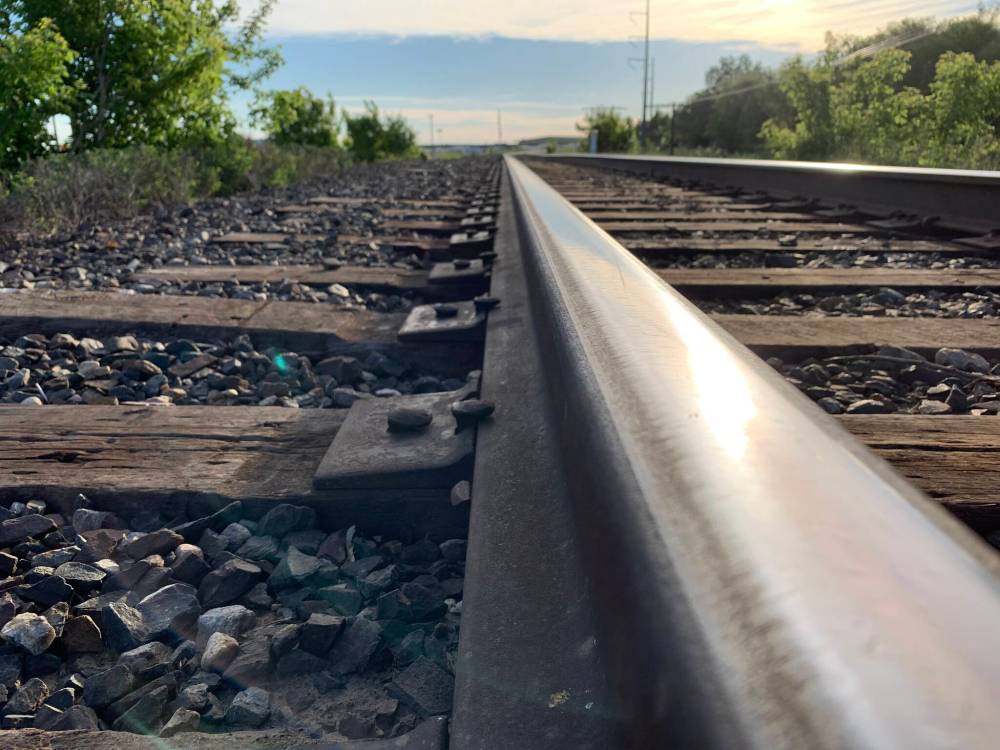
Spending more than $3 million a year to move 175 rail cars down 13 kilometres of track seems like an unreasonable City of Winnipeg expense.
The GWWD is an example of a railway that has outlived its usefulness and sits on a pocket of land close to downtown that could be converted to higher-value uses.
The GWWD railway was built in 1914 in order to construct the 156-kilometre aqueduct from Shoal Lake to St. Boniface. Construction of the aqueduct was completed in 1919 and the GWWD sought other customers to help defray its costs. Forest products, sand and gravel, and some general freight were carried for a while. The forest product shipments terminated in the 1950s and the last sand and gravel movements ended in 1993.
Since then, the entire cost of the GWWD has been sustained by the water bills of users.
Notwithstanding the nostalgia of having a 112-year-old railway, two arguments are made for keeping the GWWD as is — security and maintenance operations. The physical barrier of the rail line running parallel to the aqueduct is seen to protect and limit public access to the water system. Certainly, the aqueduct must be secure, but any protection offered by a seldom-used rail line is debatable.
As for maintenance, the only reason a road was not built in 1914 is that trucks couldn’t do the job.
Converting the rail bed into a gravel road and using trucks would be much less expensive than maintaining 164 kilometres of track to make the few trips required per year.
The protection of the water inlet is certainly important, but a rail line won’t stop ATVs, drones, Ski-Doos or even cross-country skiers. Fences, cameras and Wi-Fi communications are the elements of modern security.
The GWWD railway does have a regular transportation function. About once per week, it moves four or five rail cars of chemicals from the St. Boniface station to the Deacon Reservoir. In 2025, the GWWD handled 175 rail cars. At $3 million per year, that’s over $17,000 to move each rail car 13 kilometres. For comparison, each GWWD rail car costs about four times more than the cost of sending a rail car 2,300 kilometres from Winnipeg to Vancouver.
Not only is the operation of the GWWD outrageously expensive but the entire move could also be done as part of the long-haul delivery of a Class 1 railway that originates the rail car.
The GWWD station and yard occupy about 29 acres of developable land three kilometres from downtown at the northwestern edge of the St. Boniface Industrial Park. While rezoning would be necessary, the GWWD yard could provide 180 to 200 building lots. In addition to the $15-plus million generated by the land sale, the city would collect $1 million annually in additional property taxes. This would help close the taxation deficit made up by inflating water rates

Another consideration to be addressed is the fate of the GWWD right-of-way within the city. The main water supply for Winnipeg parallels the rail track, and this must be protected from encroachment or disturbance.
Several alternatives for the abandoned right-of-way are possible. Urban renewal may result in much of the western part of the St. Boniface Industrial Park being turned over to residential usage. The GWWD right-of-way could be become a recreational path, or a new rapid transit route.
Elections are good times to bring issues to the public forum that are overdue for change. The acceleration of water bills is stressing residents in Winnipeg, who are calling for accountability and transparency in rate setting — specifically, that rates for water and sewer should be subject to an independent review by the Public Utilities Board.
The skimming of water rates to shore up tax revenues, and the wasteful continuation of an obsolete railway are more than enough reasons to ask all candidates where they stand on a PUB oversight.
Barry E. Prentice is director of the Transport Institute at the Asper School of Business, University of Manitoba.