

Legislation needed on vacant buildings
Advertisement
Read this article for free:
or
Already have an account? Log in here »
To continue reading, please subscribe:

Digital Subscription
One year of digital access for only $205*
- Enjoy unlimited reading on winnipegfreepress.com
- Read the E-Edition, our digital replica newspaper
- Access News Break, our award-winning app
- Play interactive puzzles
*First annual payment billed as $205.00 + GST for one year. This annual subscription will automatically renew at $233.00 + GST every 52 weeks (10% off the regular annual price of $259.35). Offer available to new and qualified returning subscribers only. Cancel any time.
To continue reading, please subscribe:
Add Free Press access to your Brandon Sun subscription for only an additional
$1 for the first 4 weeks*
- Enjoy unlimited reading on winnipegfreepress.com
- Read the E-Edition, our digital replica newspaper
- Access News Break, our award-winning app
- Play interactive puzzles
*Your next Brandon Sun subscription payment will increase by $1.00 and you will be charged $17.95 plus GST for four weeks. After four weeks, your payment will increase to $24.95 plus GST every four weeks.
Read unlimited articles for free today:
or
Already have an account? Log in here »
There is something deeply backwards about a system that lets a property owner keep a building boarded up indefinitely while neighbours are left to live with the consequences.
In Winnipeg, as long as the owner pays the taxes, follows the city’s vacant-building rules and pays the required fees, there is no hard deadline for the building to be dealt with.
The building can remain a neighbourhood eyesore. It can attract drug use and crime. It can become a fire hazard. And the people living nearby can be left wondering how long they are expected to put up with it.
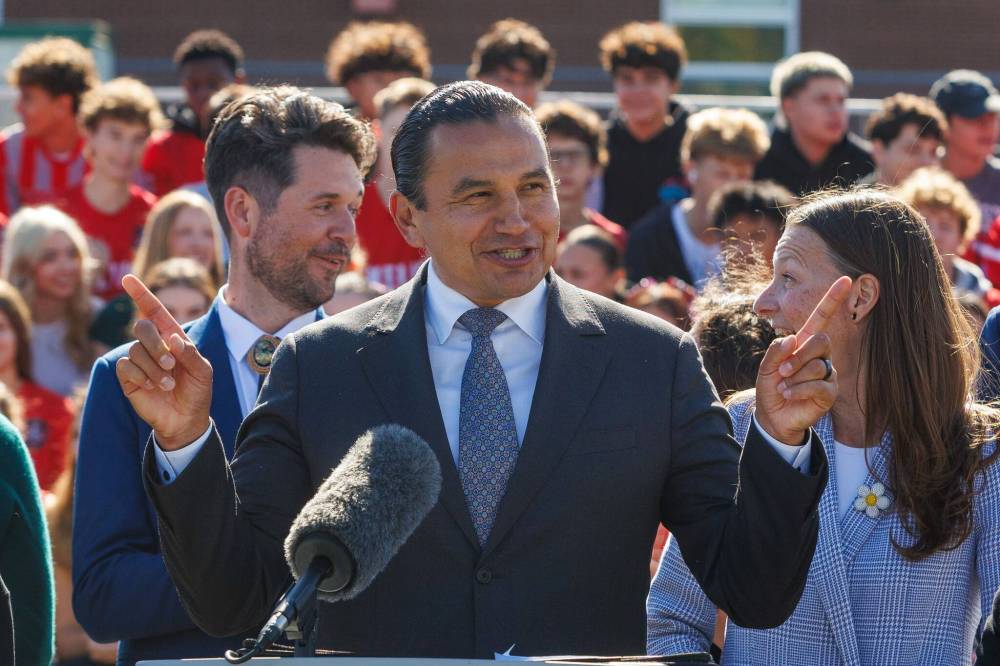
MIKE DEAL / FREE PRESS
Premier Wab Kinew
Yet when Premier Wab Kinew was asked Friday whether his government would change provincial legislation to give Winnipeg the power to impose a time limit on such properties, he declined to answer.
“It’s a civic election question — I’m sorry,” Kinew said.
That’s a cop-out.
It is particularly unsatisfactory when residents are already telling governments exactly what is happening in their neighbourhoods.
On Furby Street, residents say a boarded-up house has become a magnet for people using drugs and committing theft. They describe people coming and going from the property, repeated calls to 911 and a fire at the front of the house.
The building also sits beside a home under construction, where a family is preparing to move in.
These residents aren’t asking for a lecture about municipal jurisdiction. They’re asking why a dangerous, chronically vacant property can be allowed to remain a problem year after year.
The answer is that the province has not given the city a particularly effective way to force the issue.
Winnipeg can require vacant buildings to be boarded up. Owners have to comply with various regulations and pay fees, including vacant-building and boarded-up-building fees.
But there is no hard time limit.
An owner can essentially keep the property in this state indefinitely — and many do — provided the rules are followed and the bills are paid.
There is a mechanism for the city to seize a vacant property without compensation, but it is hardly a simple solution. It generally requires the owner to be convicted of violating relevant bylaws, followed by a lengthy legal process that can be difficult and, in some cases, unsuccessful.
That is not much of a deterrent for an owner who is prepared, for whatever reason, to let a building deteriorate while showing no concern for the safety and welfare of nearby residents.
A change to provincial legislation could alter that overnight.
The province could establish a maximum period during which a property could remain vacant and boarded up before the city is empowered to seize it without compensation. There could be reasonable exemptions, appeals and safeguards for legitimate circumstances.
But there would also be a deadline. That is what is missing now.
The issue is not simply about ugly buildings. Vacant, boarded-up structures can become magnets for drug use, theft, squatting and vandalism. They can — and many do — become dangerous fire hazards.

The premier isn’t being asked to pick a mayor. He isn’t being asked to interfere in the campaign. He is being asked whether his government will consider changing a provincial law.
Calling that a civic-election question is simply passing the buck.
Residents should not have to accept a boarded-up building as a permanent fixture simply because its owner is willing to pay the taxes and fees.
The province can give Winnipeg a better tool. It should.
And the premier should have the political courage to say whether he intends to use it.