


Voter turnout suggests most of us don’t care who makes decisions about city services that affect our daily lives

Advertisement
Read this article for free:
or
Already have an account? Log in here »
To continue reading, please subscribe:

Digital Subscription
One year of digital access for only $205*
- Enjoy unlimited reading on winnipegfreepress.com
- Read the E-Edition, our digital replica newspaper
- Access News Break, our award-winning app
- Play interactive puzzles
*First annual payment billed as $205.00 + GST for one year. This annual subscription will automatically renew at $233.00 + GST every 52 weeks (10% off the regular annual price of $259.35). Offer available to new and qualified returning subscribers only. Cancel any time.
To continue reading, please subscribe:
Add Free Press access to your Brandon Sun subscription for only an additional
$1 for the first 4 weeks*
- Enjoy unlimited reading on winnipegfreepress.com
- Read the E-Edition, our digital replica newspaper
- Access News Break, our award-winning app
- Play interactive puzzles
*Your next Brandon Sun subscription payment will increase by $1.00 and you will be charged $17.95 plus GST for four weeks. After four weeks, your payment will increase to $24.95 plus GST every four weeks.
Read unlimited articles for free today:
or
Already have an account? Log in here »
How bad would things have to get in Winnipeg to improve voter turnout in municipal elections?
It’s an important question as Winnipeggers get set to vote for a mayor and city council in the upcoming Oct. 28 election.
For more than two decades, most Winnipeggers have decided that municipal elections aren’t important enough to warrant their attention. The numbers are remarkably consistent: turnout has never reached much beyond half of eligible voters, and in the last election, it didn’t even come close.
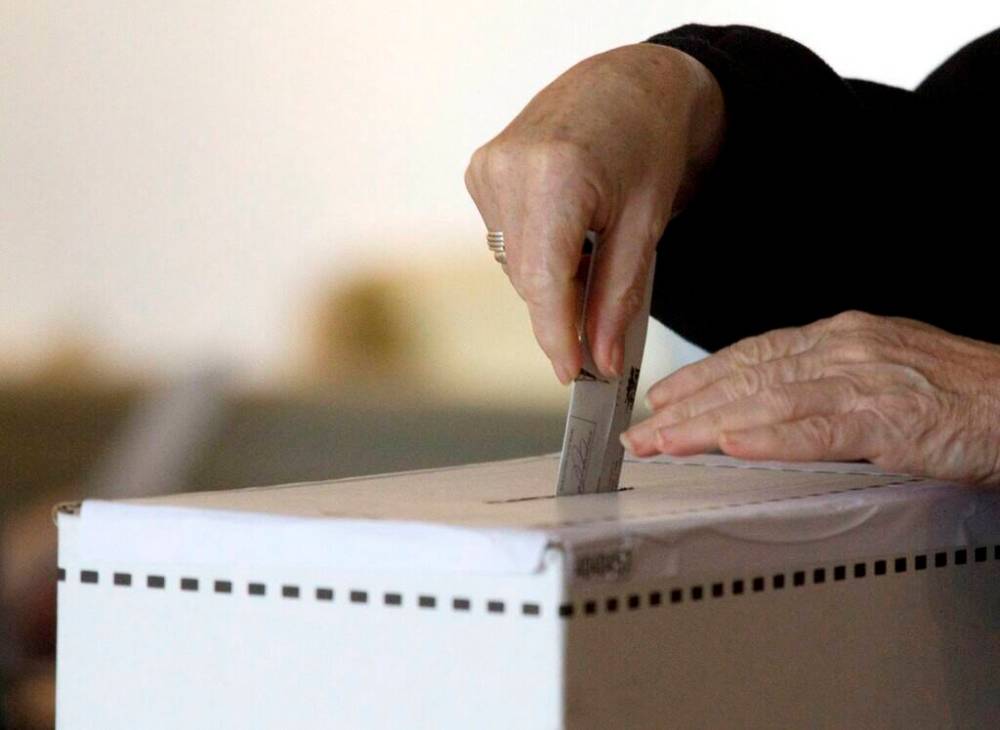
CHRIS YOUNG / THE CANADIAN PRESS FILES
Nearly two-thirds of eligible voters stayed home in the last municipal election in 2022. What will it take to increase voter turnout in Winnipeg?
Only 37.5 per cent of eligible voters cast a ballot in 2022.
That’s not because it wasn’t a competitive race, or because there weren’t important issues on the table. It was a wide-open mayoral race, with Scott Gillingham and former mayor Glen Murray among the principal contenders. There were also competitive council races across the city and no shortage of civic issues to debate.
Still, only 195,530 people voted. Nearly two-thirds of eligible voters stayed home.
That should be a sobering number, considering city council is responsible for so many of the services people depend on every day.
City hall runs the police and fire services, it maintains the streets, it collects garbage and recycling, it operates public transit.
It maintains libraries, parks, recreation centres and other public facilities.
It also determines how much residents pay in property taxes to provide those services.
When someone calls 911, when a firefighter responds to a house fire, when a pothole damages a vehicle, when a bus is late or doesn’t show up, when garbage isn’t collected, city government matters.
And it also matters when property tax and sewer and water bills arrive in the mail.
Yet municipal elections continue to attract less interest than those for provincial or federal governments.
The voting figures tell the story. In 2002, turnout was 48.7 per cent. In 2006, it fell to 38.2 per cent. It climbed to 47.1 per cent in 2010 and 50.23 per cent in 2014. Then it dropped again to 42.33 per cent in 2018 and 37.5 per cent in 2022.
Over six elections, turnout has remained trapped between roughly 38 and 50 per cent.
Many people, when asked, say they intend to vote. A recent Abacus Data poll found 65 per cent of respondents in Winnipeg said they are very likely to vote in the upcoming election. Another 12 per cent said they are somewhat likely to cast a ballot. That’s just over three-quarters of people who say they will probably vote.
But when election day comes, it’s likely turnout won’t be anywhere near that number.
There are several possible explanations for that. Some people may genuinely believe their vote doesn’t make much difference. Others may be reasonably satisfied with the way the city is being run and can’t be bothered to vote.
Some may be cynical about politics or simply too busy with work, family and everything else competing for their attention. And some may not pay much attention until something directly affects them.
That’s often how politics works. People notice government when something goes wrong.
They notice when taxes rise. They notice when streets deteriorate. They notice when transit becomes unreliable or when public safety becomes a concern.
The problem is many people complain about city services but don’t necessarily make the connection that’s it’s elected officials that are responsible for them.
A pothole is not just a pothole, it’s the result of a municipal spending decision. An unreliable bus service is not just an inconvenience, it’s a lack of funding and poor planning, for which elected officials are ultimately responsible.
That’s why candidates have an obligation to make this election about something more than personalities and campaign slogans.
Voters should be given clear choices about policing, fire protection, street maintenance, transit, garbage collection, libraries, recreation and infrastructure.
They should know what candidates would change, what they would protect and what those choices would cost. Telling people to vote because voting is a civic responsibility isn’t enough.
If it were, turnout wouldn’t have fallen to 37.5 per cent in the last election.
There is also a responsibility on city hall to make government more visible and understandable throughout the four-year term. Municipal politics shouldn’t disappear from public view until campaign signs go up.
But voters have a responsibility, too. They don’t have to love city hall or approve of council.
They simply have to recognize that the people they elect make decisions about some of the most important services in their daily lives.

Maybe Winnipeg is not yet bad enough to make that connection. Maybe most residents are satisfied with the status quo.
Maybe it will take something more dramatic to shake people out of their political indifference. Whatever the reason, the record is clear: In 2022, nearly two-thirds of eligible voters didn’t vote.
For a city government responsible for so many important services that affect people’s daily lives, that’s an extraordinary level of disengagement.
And it leaves the city with a simple challenge: find a way to make more people believe that choosing who runs Winnipeg is worth the trouble.
tom.brodbeck@freepress.mb.ca
Tom has been covering Manitoba politics since the early 1990s and joined the Winnipeg Free Press news team in 2019.
Our newsroom depends on a growing audience of readers to power our journalism. If you are not a paid reader, please consider becoming a subscriber.
Our newsroom depends on its audience of readers to power our journalism. Thank you for your support.
Tom has been covering Manitoba politics since the early 1990s and joined the Winnipeg Free Press news team in 2019.
Our newsroom depends on a growing audience of readers to power our journalism. If you are not a paid reader, please consider becoming a subscriber.
Our newsroom depends on its audience of readers to power our journalism. Thank you for your support.
Advertisement Advertise With Us
Advertisement Advertise With Us