

Is Trump about to poke Quebec’s political beehive?
Advertisement
Read this article for free:
or
Already have an account? Log in here »
To continue reading, please subscribe:

Digital Subscription
One year of digital access for only $205*
- Enjoy unlimited reading on winnipegfreepress.com
- Read the E-Edition, our digital replica newspaper
- Access News Break, our award-winning app
- Play interactive puzzles
*First annual payment billed as $205.00 + GST for one year. This annual subscription will automatically renew at $233.00 + GST every 52 weeks (10% off the regular annual price of $259.35). Offer available to new and qualified returning subscribers only. Cancel any time.
To continue reading, please subscribe:
Add Free Press access to your Brandon Sun subscription for only an additional
$1 for the first 4 weeks*
- Enjoy unlimited reading on winnipegfreepress.com
- Read the E-Edition, our digital replica newspaper
- Access News Break, our award-winning app
- Play interactive puzzles
*Your next Brandon Sun subscription payment will increase by $1.00 and you will be charged $17.95 plus GST for four weeks. After four weeks, your payment will increase to $24.95 plus GST every four weeks.
Read unlimited articles for free today:
or
Already have an account? Log in here »
When was the last time that a U.S. president seriously stirred the hornet’s nest of Quebec politics?
My best recollection is former U.S. president Bill Clinton. During the 1994 Quebec referendum campaign, Clinton made clear that the U.S. wholly endorsed a united and strong federal Canada — as opposed to a dismembered one. He went on to add that an independent Quebec would have no guarantee of joining the North American Free Trade Agreement as a full-fledged member.
Today, we see U.S. President Donald Trump inserting himself — unwittingly or wittingly — into the electoral and sovereignty politics of Quebec. It’s pretty clear that the resurgent Coalition Avenir Québec government is trying to make the Oct. 5 provincial election about anything other than its own governmental record and more about Trump’s economic coercion against Canada. Of course, the Parti Québécois, the odds-on-favourite, wants to make the electoral contest a referendum on the CAQ and its party leader, Christine Fréchette.
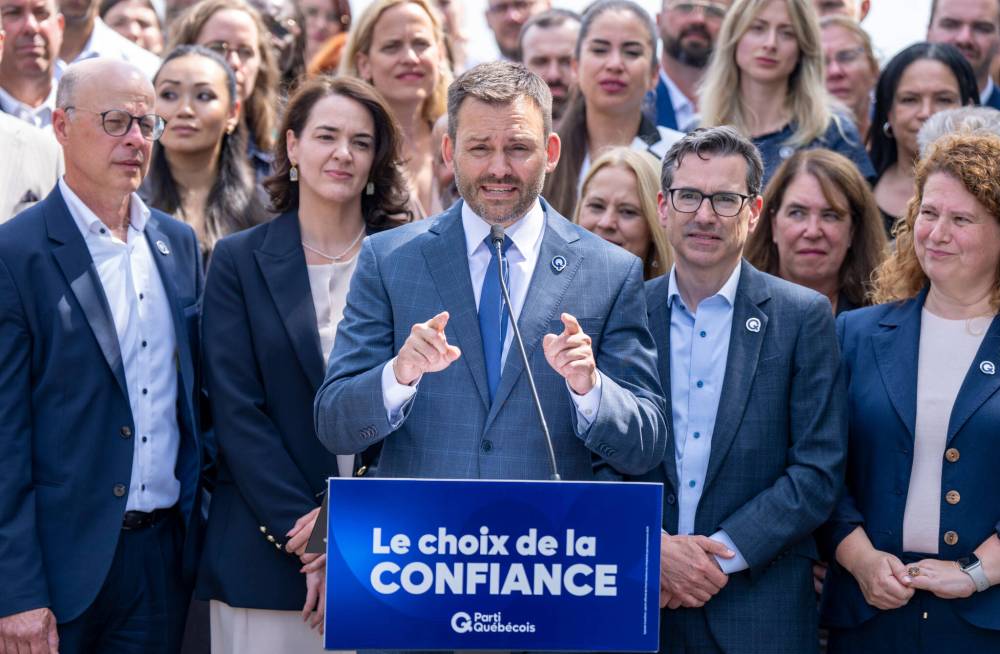
FILE
If U.S. President Donald Trump publicly endorsed the Parti Québécois and its leader, Paul St-Pierre Plamondon, the front-running party would be horrified.
But what if Trump really wanted to make his presence felt in Quebec’s political life? How much influence could he have on shaping political outcomes in Quebec? How much of an “X factor” could he be?
The PQ has even altered its own referendum strategy. Rather than postponing a third sovereignty referendum for a year or so (should it gain power), it now wants to hold off until after Trump has left public office (assuming he will leave the White House in early 2029). The PQ brain trust is obviously worried that staging a sovereignty referendum during a period of Trumpian turbulence would spell very bad news for the “Yes” side.
We all know that Trump has a penchant for disregarding presidential norms, breaking rules and demolishing U.S. political customs. Maybe he understands that disrupting Quebec’s provincial election would be crossing a huge red line. But would anyone really be shocked to see him enter Quebec’s political fray?
Think about the many ways that Trump could shift the Quebec voting public. Which party in Quebec would benefit the most if Trump suddenly decides to impose more trade tariffs on Canadian exports? What happens if he singles out French language product labelling and content provisions (on U.S. streaming services) as somehow a discriminatory trade practice?
There are also a number of avenues in which Trump could seek to influence Quebec’s election landscape. He could issue a series of pointed remarks through his Truth Social platform. And he could undertake wider outreach on any given day: through friendly online news outlets, various influencers and podcasters (think Joe Rogan) and news organizations along the U.S.-Quebec border.
Additionally, he could unleash a tirade against any Quebec party or its leader during his multiple daily press availabilities in Washington. He could even contact prominent journalists in Quebec to make his political intentions more widely known.
I wonder how things would shake out electorally if Trump turned his attention to attacking Quebec Liberal Leader Charles Milliard. Could that benefit the provincial Liberals and put the PQ and the CAQ on the political defensive?
What if Trump chooses to express publicly his endorsement of the PQ and its leader, Paul St-Pierre Plamondon? You could well imagine that the front-running PQ would be horrified by such an outburst. It could easily have the effect of turning Quebec voters away from the PQ in droves.
Clearly, Trump’s involvement in the sub-national level of politics in this country would undoubtedly rattle governing provincial parties and respective premiers. If he could interfere in Quebec politics, he could do so in other areas — such as Alberta’s forthcoming independence referendum and its 2027 provincial election (or in the internal affairs of other provinces as well, including Manitoba).
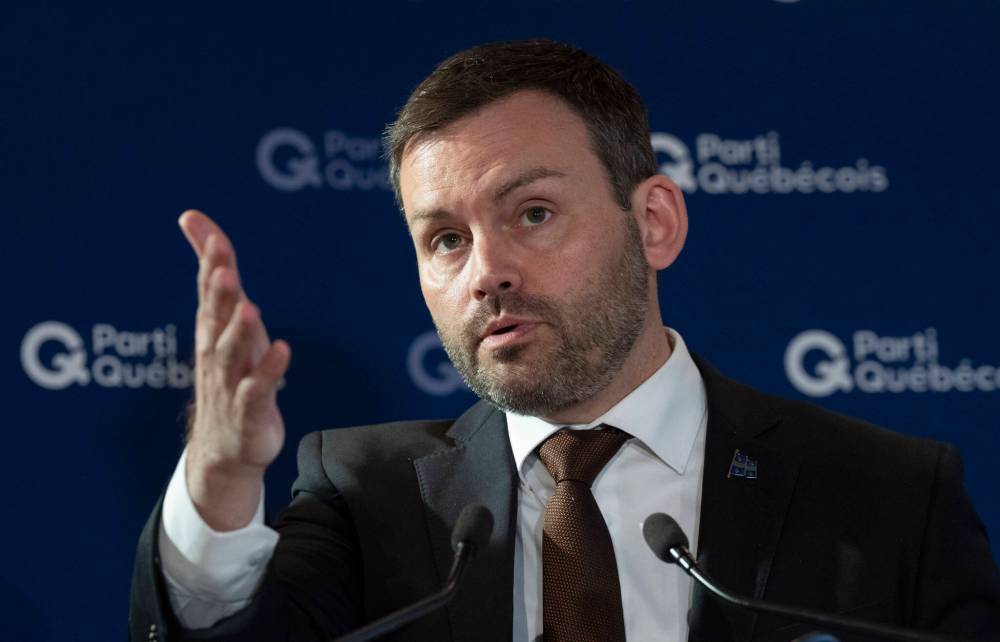
FILE
If U.S. President Donald Trump publicly endorsed the Parti Québécois and its leader, Paul St-Pierre Plamondon, the front-running party would be horrified.
Parti Québécois Leader Paul St-Pierre Plamondon says he’s “just specifying the timeline” on a referendum by waiting until U.S. President Donald Trump leaves office in 2029 to hold the vote. (The Canadian Press files)
Trump’s interventions would obviously have serious ramifications for the Canadian-American bilateral relationship. It would surely place political, economic and diplomatic relations in a deep freeze for who knows how long.

No sitting Canadian prime minister could tolerate a U.S. president who blatantly interfered in Canada’s electoral processes. I don’t know exactly what the response would be — especially given the unprecedented nature of such an infraction — but it would certainly need to be something substantial. I would not, however, advise Canadian politicians responding in kind by openly inserting themselves into the November U.S. midterms.
Taunting Canada, so it seems, plays well with the MAGA crowd of Trump loyalists. It may also serve as another means of instrumentalizing “Trump distraction syndrome.”
Besides, Trump loves to stir the political pot whenever he gets a chance. And he knows full well that egregious election interference would really rile up Canadians. Let’s face it: he gets his kicks from doing it.
Many of us have heard about the so-called “October surprise” during various U.S. election cycles. But could we see such a jolt — call it the Trump surprise — prior to Quebec’s October provincial election? Let’s hope not.
Peter McKenna is professor of political science at the University of Prince Edward Island in Charlottetown.