

9 to 5:
Advertisement
Read this article for free:
or
Already have an account? Log in here »
To continue reading, please subscribe:

Digital Subscription
One year of digital access for only $205*
- Enjoy unlimited reading on winnipegfreepress.com
- Read the E-Edition, our digital replica newspaper
- Access News Break, our award-winning app
- Play interactive puzzles
*First annual payment billed as $205.00 + GST for one year. This annual subscription will automatically renew at $233.00 + GST every 52 weeks (10% off the regular annual price of $259.35). Offer available to new and qualified returning subscribers only. Cancel any time.
To continue reading, please subscribe:
Add Free Press access to your Brandon Sun subscription for only an additional
$1 for the first 4 weeks*
- Enjoy unlimited reading on winnipegfreepress.com
- Read the E-Edition, our digital replica newspaper
- Access News Break, our award-winning app
- Play interactive puzzles
*Your next Brandon Sun subscription payment will increase by $1.00 and you will be charged $17.95 plus GST for four weeks. After four weeks, your payment will increase to $24.95 plus GST every four weeks.
Read unlimited articles for free today:
or
Already have an account? Log in here »
I watched the 1980 comedy 9 to 5 for the first time this week.
I know: I’m an HR consultant. I’ve been doing this work for 13 years, I write about workplaces for a living, and somehow I had never actually watched the movie that gave us one of the most recognizable workplace songs of all time.
I knew the premise, of course. I knew American music icon Dolly Parton was in it. I knew there was a terrible boss and three women who eventually decided they had enough.
TWENTIETH CENTURY-FOX
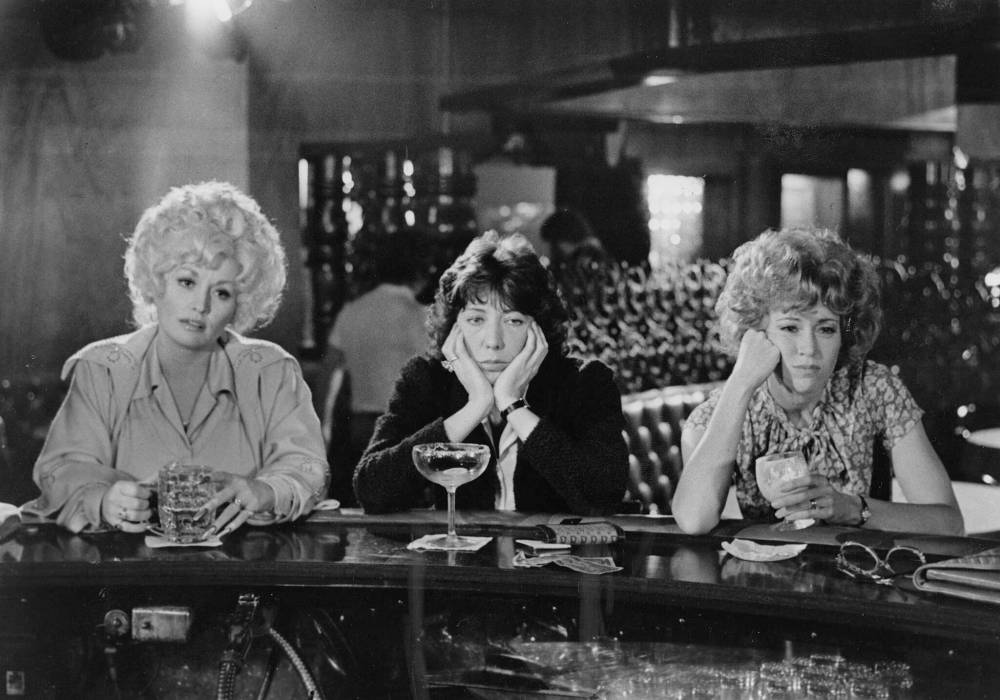
Fed up with their lowly professional status, office workers Dolly Parton (from left), Lily Tomlin and Jane Fonda commiserate over drinks in the 1980 hit comedy 9 to 5.
I expected a funny, somewhat dated movie about three women getting revenge on an awful boss. What I didn’t expect was to spend the next two hours thinking about how much has changed in the workplace since 1980 — and how much really hasn’t.
9 to 5 stars Jane Fonda, Lily Tomlin and Parton as women working in an office under an arrogant, sexist boss.
The movie was inspired by the real 9to5 movement in the 1970s, which began with female clerical workers organizing around issues including unfair pay, lack of advancement and sexual harassment. At the time, those were not conversations that were happening openly in every workplace. For many women, the movie was a wake-up call because they recognized their own experiences in it.
Watching it 46 years later, I found myself doing something I suspect many HR people do when watching workplace movies: I kept stopping the movie in my head and thinking, “That would absolutely be an HR issue.”
There was harassment. There was favouritism. There was unequal treatment. There were assumptions about women’s abilities and ambitions. There was a boss who took credit for other people’s work and created an environment where people were afraid to speak up. There were women doing the work while men received the recognition.
It was exaggerated for comedy, but not so exaggerated that it was difficult to believe.
And then there were the solutions.
The women eventually introduce changes that we still talk about today as though they are innovative workplace ideas: flexible hours, job sharing, better opportunities for women, equal pay, child care and programs to support employees dealing with addiction.
These are not presented as outrageous demands. They are presented as things that might make the workplace function better for the people who actually work there.
Yet, here we are in 2026, and some of those ideas still aren’t common.
We have spent decades talking about work-life balance. We talk about flexibility, working parents, employee well-being, inclusion and creating workplaces where people can be successful at work without sacrificing their entire lives outside of it. We’ve become much better at understanding the relationship between a person’s life and their ability to succeed at work.
But having the language for something doesn’t necessarily mean we’ve solved it.
Flexible work arrangements can still depend heavily on the individual manager. Job sharing remains relatively uncommon. Child care is still a significant barrier for many working parents. Women continue to navigate issues around advancement, pay and leadership. And employees are still sometimes expected to prove their commitment by being available at all hours, even when the work itself could be organized differently.
So I found myself watching this movie and thinking: how is it possible that some of the workplace improvements portrayed as progressive in 1980 can still feel progressive today?
Of course, a tremendous amount has changed. We have legislation and human rights protections that provide employees with rights that simply weren’t understood or enforced decades ago. We have workplace harassment policies, accommodation obligations, employment standards and much greater awareness of discrimination. Employers are generally much more conscious of the importance of creating respectful workplaces.
But policies don’t automatically create good workplaces. People do.
And that brings me to Dolly Parton.
I have always appreciated Parton, but watching her in 9 to 5 made me look at her a little differently. Her character, Doralee Rhodes, is funny, warm, glamorous and underestimated. Her boss assumes because she is attractive and friendly, she must also be easy to dismiss. Instead, she proves herself to be smart, capable and much tougher than anyone expected.
What struck me was Parton didn’t have to become someone else to make the point. She didn’t have to stop being feminine. She didn’t have to become stern or intimidating. She didn’t have to adopt some stereotypical image of what a powerful woman was supposed to look like. She was Dolly Parton. And somehow, that made the message even more powerful.
Parton (who died last month at age 80) built an extraordinary career (49 studio albums, plus a lengthy TV and film resumé) while consistently leading with kindness, acceptance, humility and generosity. She was enormously successful without seeming to need other people to feel unsuccessful. She was confident without making confidence look like arrogance. She was ambitious without making ambition her entire personality.
In HR, we talk a lot about accountability, difficult conversations, performance management, setting expectations and dealing with conflict. All of those things matter. Sometimes, being a good leader means making a difficult decision or telling someone something they don’t want to hear.
But kindness isn’t the opposite of accountability. Humility isn’t the opposite of confidence. And being generous doesn’t mean you aren’t ambitious.
Parton seemed to understand you could be successful and still make room for other people.
Maybe that’s part of the reason she connected with so many people over so many decades. She never seemed particularly interested in making success feel exclusive. She made people feel welcome and complicated things feel accessible. She laughed at herself and stood up for herself without making anyone else feel small.
That is a good leadership lesson.
There is also something particularly interesting about having Parton play a working woman in 9 to 5. She wasn’t what everyone might have expected when they thought about someone challenging workplace stereotypes. She was glamorous and unapologetically feminine. She had a distinctive voice and appearance, and was incredibly smart.
That combination challenged assumptions about what intelligence and competence were supposed to look like.
Watching the movie now, I think that’s part of its lasting appeal. It wasn’t just telling women they should demand better treatment. It was showing there wasn’t just one way to be a strong woman at work.
Fonda’s, Tomlin’s and Parton’s characters were completely different. They didn’t need to become the same person to work together. They brought different personalities, strengths and experiences to the problem. Together, they were stronger than they were individually.
That feels relevant today, too.
Maybe the biggest lesson I took from 9 to 5 isn’t about revenge or even workplace sexism. It’s about questioning the things we accept simply because they have always been done that way.
And perhaps that is why a 1980 movie still feels surprisingly relevant in 2026.
Some of it made me laugh because it was so dated. Some of it made me uncomfortable because it wasn’t dated enough. And some of it made me wonder why we haven’t gotten further.
But mostly, I finished the movie thinking about how powerful it is when someone can make people listen.
Parton took serious issues about women and work and helped put them in the spotlight through a comedy, character, and song people couldn’t stop singing. She made the message entertaining without making it meaningless.
The movie (the second-highest grossing film of 1980 in the U.S. behind Star Wars: The Empire Strikes Back) didn’t solve workplace inequality. Obviously, no movie could. But it helped people see it — and sometimes seeing a problem is the beginning of changing it.
As an HR professional, I spend a lot of time thinking about what makes a workplace healthy, fair and sustainable. We have more research, more policies and more sophisticated tools than the women in 9 to 5 could ever have imagined.

But maybe we could still use a little more of what Parton brought to the table: kindness, humility, generosity, acceptance and the confidence to be yourself.
Tory McNally, CPHR, B.Sc., vice-president,
professional services at TIPI Legacy HR+
(formerly Legacy Bowes), is a human resource
consultant, relationship builder and problem solver. She can be reached at tmcnally@tipipartners.com