

Climate change, capable ships could extend Churchill shipping season by months, studies show

Advertisement
Read this article for free:
or
Already have an account? Log in here »
To continue reading, please subscribe:

Digital Subscription
One year of digital access for only $205*
- Enjoy unlimited reading on winnipegfreepress.com
- Read the E-Edition, our digital replica newspaper
- Access News Break, our award-winning app
- Play interactive puzzles
*First annual payment billed as $205.00 + GST for one year. This annual subscription will automatically renew at $233.00 + GST every 52 weeks (10% off the regular annual price of $259.35). Offer available to new and qualified returning subscribers only. Cancel any time.
To continue reading, please subscribe:
Add Free Press access to your Brandon Sun subscription for only an additional
$1 for the first 4 weeks*
- Enjoy unlimited reading on winnipegfreepress.com
- Read the E-Edition, our digital replica newspaper
- Access News Break, our award-winning app
- Play interactive puzzles
*Your next Brandon Sun subscription payment will increase by $1.00 and you will be charged $17.95 plus GST for four weeks. After four weeks, your payment will increase to $24.95 plus GST every four weeks.
Read unlimited articles for free today:
or
Already have an account? Log in here »
Climate change and ice-strengthened ships — but not the most expensive icebreakers — could enable a much longer shipping season through the Port of Churchill, new studies released Friday suggest.
However, the studies flagged concerns including unpredictable sea ice conditions and tricky navigation to the northern Manitoba port.
The provincial government shared results of studies from the University of Manitoba, Arctic Research Foundation and Fednav, Canada’s largest international dry bulk shipping company.
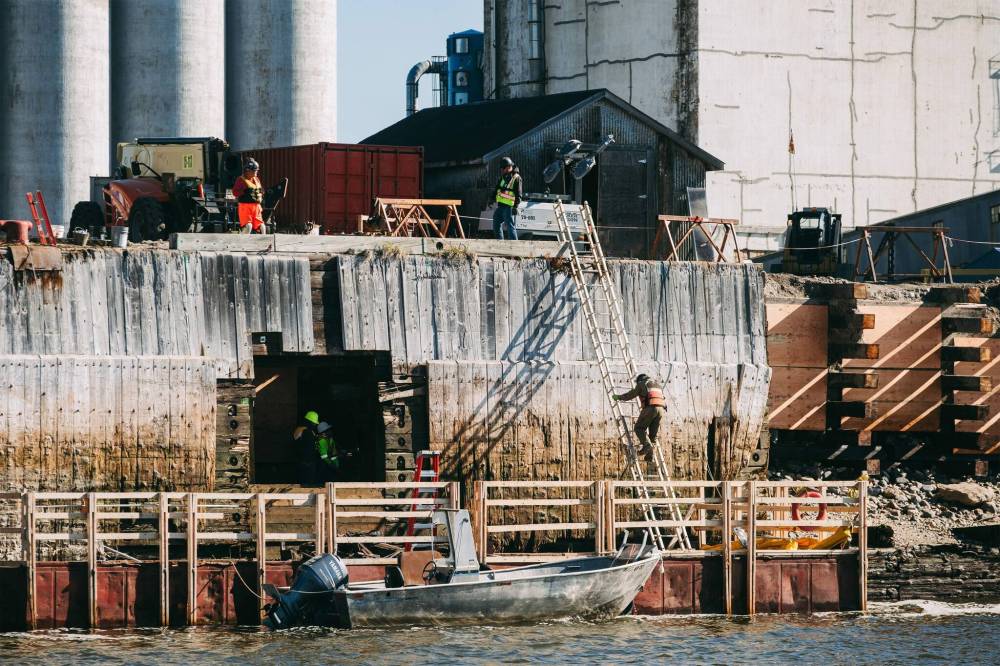
The Port of Churchill is undergoing wharf refacing as part of its multimillion-dollar upgrades. (Renaud Philippe photo)
“Churchill could be a year-round port right now, with current technology and using icebreakers and ships that are a lot cheaper, a lot more affordable than we previously thought,” Premier Wab Kinew said.
“What that means is a longer shipping season, more economic opportunity.”
Open-water ships can travel through the Port of Churchill for five months of the year, new U of M findings show.
That season could extend to seven months by 2100 — or up to 10 months, depending on climate change, researchers found.
Currently, traffic travels through the Port of Churchill during a four-month window between mid-July and October.
The study analyzes historical sea ice data and climate modelling. It says the port’s navigable period will extend by roughly two weeks for every 0.5 C of global warming.
As the Hudson Bay changes, billion-dollar icebreakers aren’t needed for year-round shipping, according to Fednav.
The Montreal-based company has been shipping through the Arctic for more than seven decades. It and Arctic Gateway Group, the port’s owner, announced a partnership on the Churchill study in August 2025.
Fednav recommends Polar Class 4 vessels. The bulk carriers could cost up to $130 million new and up to $85 million used. Operating costs could range from $10 million to $14 million.
Other types of bulk carriers could be used at a lesser cost, with a potential nine to 10 month shipping season, according to the Arctic Research Foundation. The foundation’s study is preliminary; results should be finalized in March 2027.
The provincial government is determining which vessels it would consider purchasing, Kinew said: “I’m like you — I want the best possible vehicle for the lowest possible price. Then we’ll get to work in terms of landing all that investment.”
The studies were released as Kinew prepares for the Canada Investment Summit. The September event will draw major global investors, such as banks and sovereign wealth funds, to Toronto.
Kinew said he’ll pitch the Port of Churchill Plus plan. The proposed expansion includes an all-weather road, upgraded rail line, new energy corridor and ice-breaking vessels.
Shipping challenges to note include a tricky final approach to the port, Fednav’s report says. Vessels must navigate a shallow shoal and narrow channel with several sharp turns.
“Until comprehensive simulation-based studies demonstrate otherwise, approaches to the Port of Churchill should only be conducted in open water or minimal ice conditions,” the report says.
It calls the approach a “significant, yet potentially manageable operational constraint.”
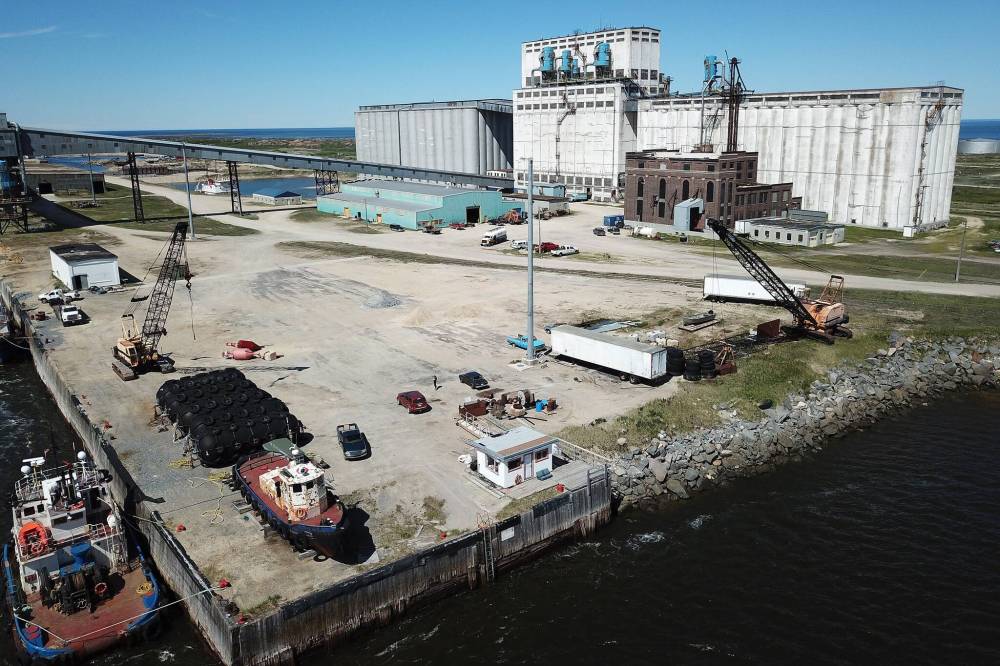
John Woods / THE CANADIAN PRESS FILES
Currently, ship traffic travels through the Port of Churchill during a four-month window but that could extend to seven months by 2100 — or up to 10 months, depending on climate change, researchers have found.
Ice cover on the Hudson Bay and Hudson Strait is “highly dynamic,” Fednav’s report adds. It points to wind, currents and ice circulation — the pressure and deformation often are a “greater operational challenge” than ice thickness alone.
“These projects could have really extensive environmental risks … whether that’s impacts on local wildlife or air pollution and noise pollution,” said James Wilt, Climate Action Team Manitoba’s policy manager.
Underwater noise, spills from shipping and effects on marine animals were among the preliminary concerns the Arctic Research Foundation identified.
Politicians’ tones around the studies’ release Friday were “celebratory, and that’s something we are quite disturbed by given what’s causing this,” Wilt said.
Government and decision-makers have a role to play in guarding the environment, Churchill Mayor Mike Spence said.
“At the same time, we want an opportunity. We want Churchill to flourish,” he said. “The fact of the matter is, there are strong possibilities.”
Year-round shipping is a “prerequisite” for the level of investment needed to move liquefied natural gas through the deepwater port, Kinew said.
He estimates an LNG terminal and related infrastructure, including the creation of an offshore port, would cost somewhere between $70 billion and $80 billion.

Government can work with First Nations on their environmental concerns, Kinew added. Thirty northern communities have been consulted through the Arctic Research Foundation’s study.
The Port of Churchill Plus is being examined by the federal government’s Major Projects Office. It hasn’t yet been added to the list of national projects for expediting.
Meantime, Arctic Gateway Group has been inking deals to increase shipments through the deep-water hub. The first grain shipment in six years is set for export next week, with potash to follow later this year, Spence said.
Manitoba launched a market-sounding study on how the Hudson Bay Railway and port might attract business. Findings haven’t been publicly released. The study concluded in March.
gabrielle.piche@winnipegfreepress.com
Gabby is a big fan of people, writing and learning. She graduated from Red River College’s Creative Communications program in the spring of 2020.
Our newsroom depends on a growing audience of readers to power our journalism. If you are not a paid reader, please consider becoming a subscriber.
Our newsroom depends on its audience of readers to power our journalism. Thank you for your support.
Gabby is a big fan of people, writing and learning. She graduated from Red River College’s Creative Communications program in the spring of 2020.
Our newsroom depends on a growing audience of readers to power our journalism. If you are not a paid reader, please consider becoming a subscriber.
Our newsroom depends on its audience of readers to power our journalism. Thank you for your support.
Advertisement Advertise With Us
Advertisement Advertise With Us
History
Updated on Friday, August 21, 2026 5:14 PM CDT: Adds edits, second photo