

It may be frustrating, but it’s necessary
Advertisement
Read this article for free:
or
Already have an account? Log in here »
To continue reading, please subscribe:

Digital Subscription
One year of digital access for only $205*
- Enjoy unlimited reading on winnipegfreepress.com
- Read the E-Edition, our digital replica newspaper
- Access News Break, our award-winning app
- Play interactive puzzles
*First annual payment billed as $205.00 + GST for one year. This annual subscription will automatically renew at $233.00 + GST every 52 weeks (10% off the regular annual price of $259.35). Offer available to new and qualified returning subscribers only. Cancel any time.
To continue reading, please subscribe:
Add Free Press access to your Brandon Sun subscription for only an additional
$1 for the first 4 weeks*
- Enjoy unlimited reading on winnipegfreepress.com
- Read the E-Edition, our digital replica newspaper
- Access News Break, our award-winning app
- Play interactive puzzles
*Your next Brandon Sun subscription payment will increase by $1.00 and you will be charged $17.95 plus GST for four weeks. After four weeks, your payment will increase to $24.95 plus GST every four weeks.
Read unlimited articles for free today:
or
Already have an account? Log in here »
The Greek philosopher Socrates famously said the unexamined life is not worth living.
Critical analysis and self-reflection, he argued, are a necessary part of human life.
In a strange way, you can say that Canada’s electrical utility giants have that same basic Socratic necessity: a need for open-minded analysis and reflection.
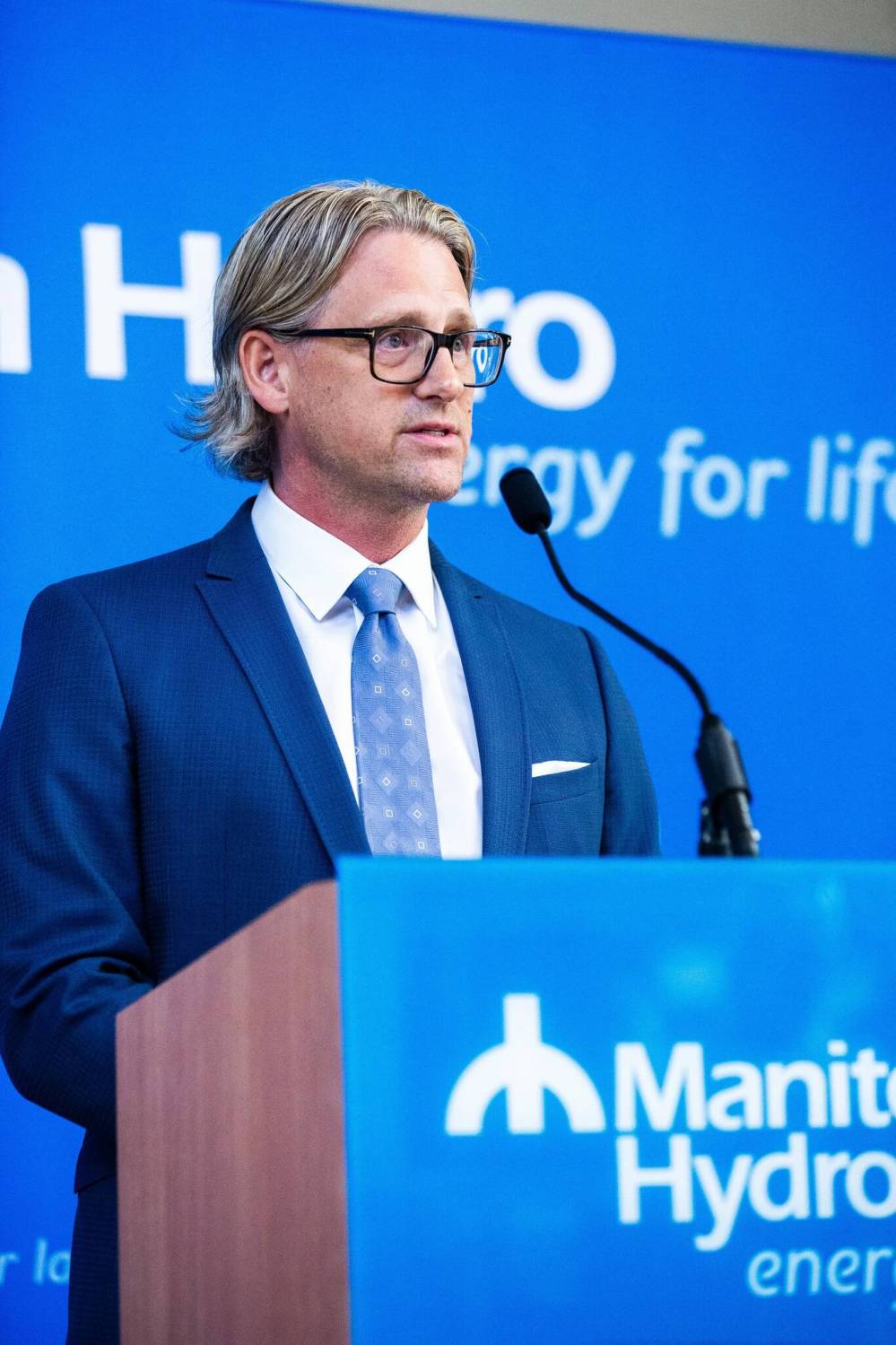
MIKAELA MACKENZIE / FREE PRESS
Allan Danroth, president and CEO of Manitoba Hydro
Many of this country’s public utilities are virtual monopolies, and because of that, their ability to set rates and their long-term capital plans need review in order to protect their ratepayers. And that review comes from public utilities boards — and interveners who appear at public hearings, challenging the directions utilities want to take — across the country.
Which brings us to Monday’s edition of the frustration chronicles.
You can understand Manitoba Hydro president and CEO Allan Danroth blowing off a little steam about what he classed as the “constant, uninformed criticism” of opponents to Hydro’s plans to spend $3 billion building natural gas combustion turbines to handle this province’s growing electrical demands.
You can even understand why the issue is so clear-cut in his mind: buying power to cover the peaking needs of high-demand days from the Midcontinent Independent System Operator grid means not only buying ever-more expensive electricity and passing those costs on to Manitoba consumers, but also buying power generated using coal or natural gas.
“So you can see why adding gas-fired generation that will make a small shift in our overall energy portfolio is not something anyone should get too wound up over if you truly care about the environment and truly are the self-avowed expert you claim to be in media story after media story,” Danroth said Monday.
Hydro has made up its mind which way to go: “New combustion turbines remain the only proven resource that delivers firm, dispatchable capacity that can be developed within the required time frame,” it told the PUB in a filing. The turbines would theoretically be in use for just five per cent of the time, providing up to 750 megawatts of power, but operating for roughly 18.25 days of the year, and essentially being part of the power plan for the decade between 2030 and 2040.
Manitoba Hydro’s planners, engineers and executives are certainly experts in their fields and understandably have great confidence in their ability to look to the future and forecast electrical demand, capital costs and the effects of future technology on Manitoba’s transmission and generation needs.
But you also have to understand that being an expert in a field, safely ensconced among like-minded colleagues, means you can face clear risks of succumbing to tunnel vision and confirmation bias.

And it’s not as if Manitoba Hydro hasn’t fallen prey to overconfidence in the past.
Past capital projects have been met with unexpected and massive cost increases, delays and even sequential, climate-based drought effects that have limited the utility’s ability to generate hydroelectric power. Those capital missteps have helped saddle the utility with $25.34 billion in debt — a debt that currently costs the utility over $1 billion a year in financing expenses.
So, it’s more than a little understandable that people with questions about the combustion turbines would like to have answers — especially about whether there are other options.
No one likes criticism. No one likes having their detailed analysis questioned, whether it’s by what Danroth cites as “self-avowed experts,” interest groups or regulatory commissions such as the PUB itself.
Danroth said Monday that misinformation has eroded public trust in Manitoba Hydro. A little self-reflection and critical analysis might lead an executive to admit that Hydro’s past record has played a significant role in eroding that public trust as well.