Grandiose garb

Deep dive into Royal couture reflects social, political context throughout first half of 20th century

Advertisement

Advertise with us

Once upon a time, British royals didn’t angst much about their raunchy misdeeds being headlined in the media. Any connection to questionable characters or inappropriate events was more likely dismissed, diminished or ignored by kowtowing newshounds. Publishers turning a blind eye to sketchy royal shenanigans was de rigueur, and everyone liked it that way.

Read this article for free:


or

Already have an account? Log in here »

To continue reading, please subscribe:

Subscribe and receive a limited-edition Free Press branded hat or tote.

Digital Subscription

One year of digital access for only $205*

  • Enjoy unlimited reading on winnipegfreepress.com
  • Read the E-Edition, our digital replica newspaper
  • Access News Break, our award-winning app
  • Play interactive puzzles

*First annual payment billed as $205.00 + GST for one year. This annual subscription will automatically renew at $233.00 + GST every 52 weeks (10% off the regular annual price of $259.35). Offer available to new and qualified returning subscribers only. Cancel any time.

To continue reading, please subscribe:

Add Free Press access to your Brandon Sun subscription for only an additional

$1 for the first 4 weeks*

  • Enjoy unlimited reading on winnipegfreepress.com
  • Read the E-Edition, our digital replica newspaper
  • Access News Break, our award-winning app
  • Play interactive puzzles
Start now

*Your next Brandon Sun subscription payment will increase by $1.00 and you will be charged $17.95 plus GST for four weeks. After four weeks, your payment will increase to $24.95 plus GST every four weeks.

Once upon a time, British royals didn’t angst much about their raunchy misdeeds being headlined in the media. Any connection to questionable characters or inappropriate events was more likely dismissed, diminished or ignored by kowtowing newshounds. Publishers turning a blind eye to sketchy royal shenanigans was de rigueur, and everyone liked it that way.

Fast forward 80 years. Today, royal drama and sketchy miscues do the rounds on social media 24-7; it’s the sustenance that scandal-hungry consumers feast on and biographers happily cater to.

Case in point are two recent U.K. titles that became bestsellers weeks before a dustjacket even hit a bookstore: Tom Bower’s Betrayal: Power, Deceit & the Fight for the Future of the Royal Family, and Andrew Lownie’s Entitled: The Rise and Fall of the House of York, a look at the pre-Epstein rise and smutty fall of Andrew Mountbatten-Windsor (formerly Prince Andrew) and Sarah Ferguson.
Canadian Press photo archive
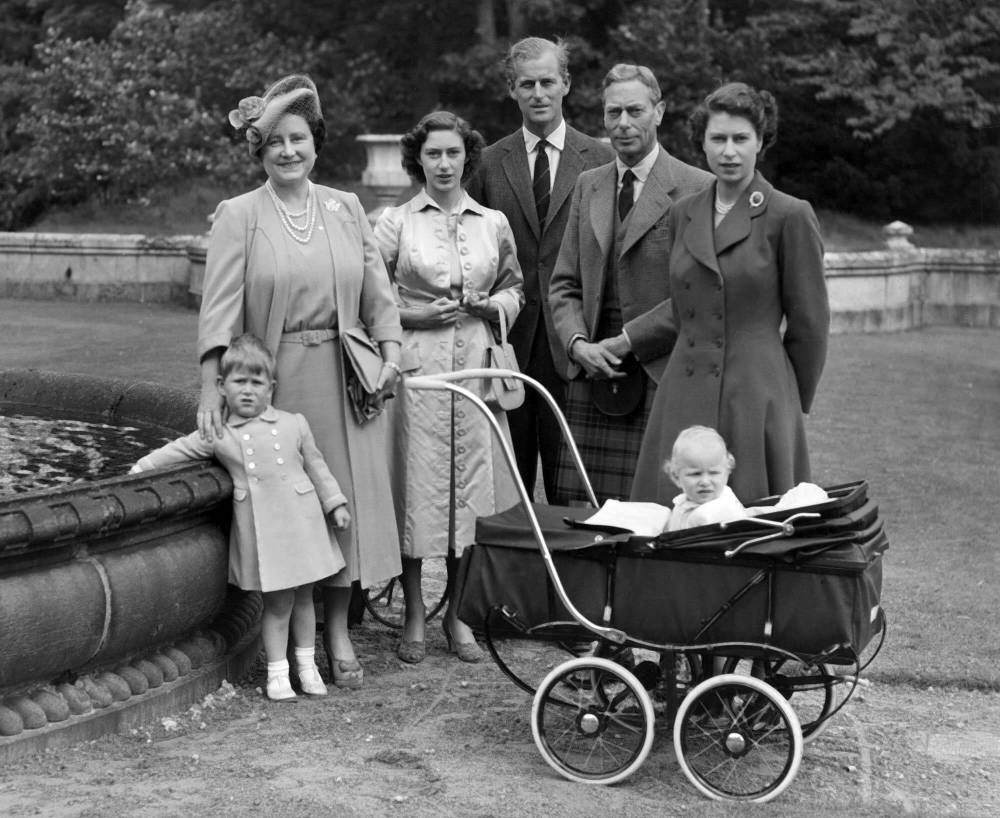
                                In this 1951 photo, the Royal family (from left: Prince Charles, Queen Elizabeth, Princess Margaret, the Duke of Edinburgh, King George VI, Princess Elizabeth and Princess Anne pose for a photo.

Canadian Press photo archive

In this 1951 photo, the Royal family (from left: Prince Charles, Queen Elizabeth, Princess Margaret, the Duke of Edinburgh, King George VI, Princess Elizabeth and Princess Anne pose for a photo.

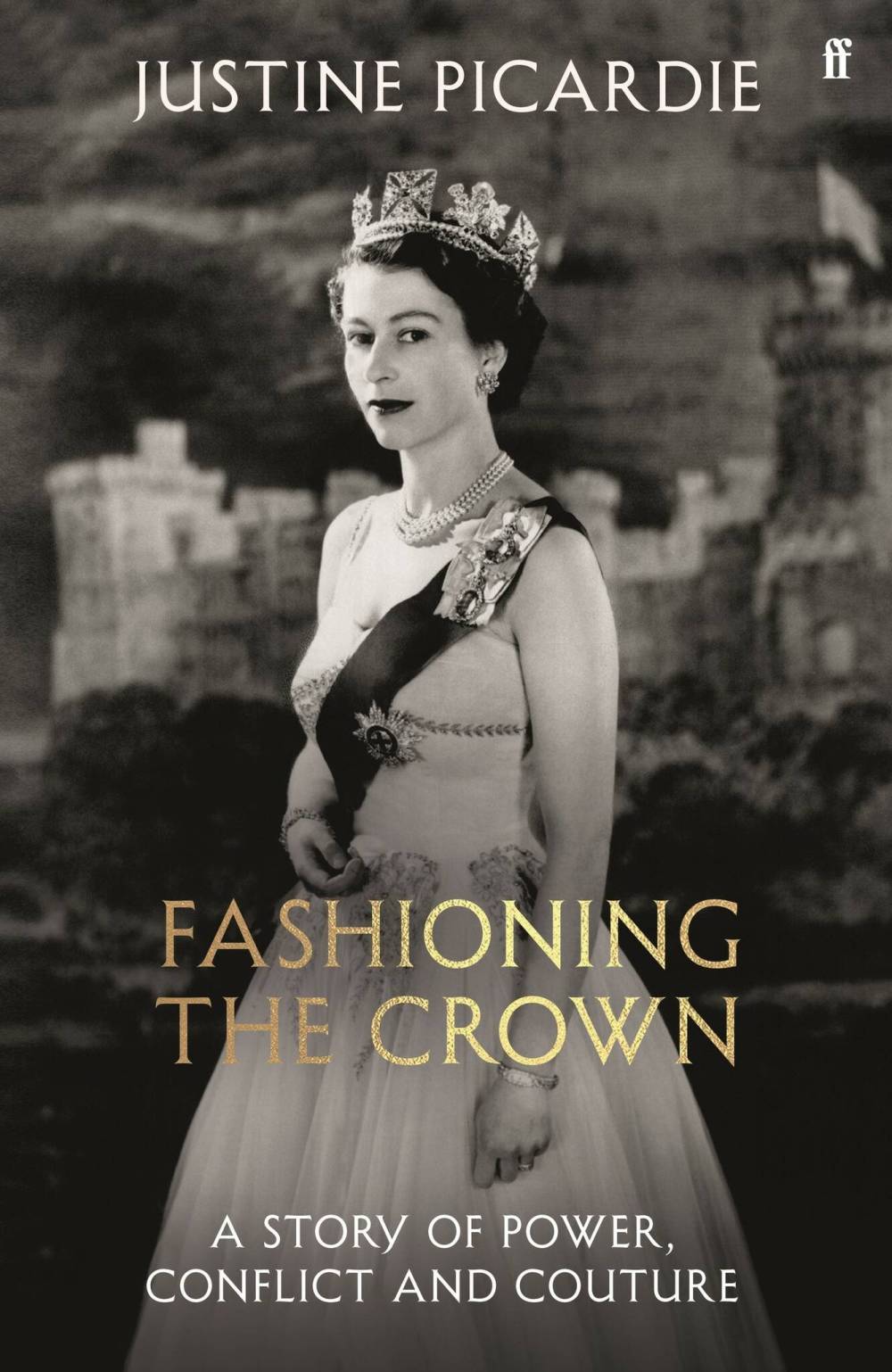
Buried in the current nest of royal tell-alls is Fashioning the Crown: A Story of Power, Conflict and Couture, a serious, hefty book, recently launched with little fanfare and even less hype. And its author Justine Picardie isn’t nettled in the slightest about that.

“I wouldn’t want people to get the wrong idea about this book, that it’s just about pleats and petticoats,” she said in a recent Country Life podcast. “I’ve always been interested in fashion as a way of looking at a wider historical, political and cultural context.”

Fashioning The Crown is no mindless holiday read; it’s for diehard history buffs. Picardie, a British-born fashion writer, biographer and investigative journalist, delivers a well-researched, serious book that connects some of the 20th century’s most turbulent times with the fashion trends of those decades — and the famous couturiers from the 1940s who created those looks while receiving clandestine spy training.

Picardie lives in London with her husband, a godson of the late Prince Philip. That proximity to the British crown helped facilitate unfettered access to the royal information and textile archives stored in Windsor Castle.

While she spent months there perusing thousands of documents and photographs, a bonus, she says, was seeing and handling the late queen’s wardrobe while it was being catalogued for posterity, something Picardie calls “an incredible privilege.”
Canadian Press photo archive
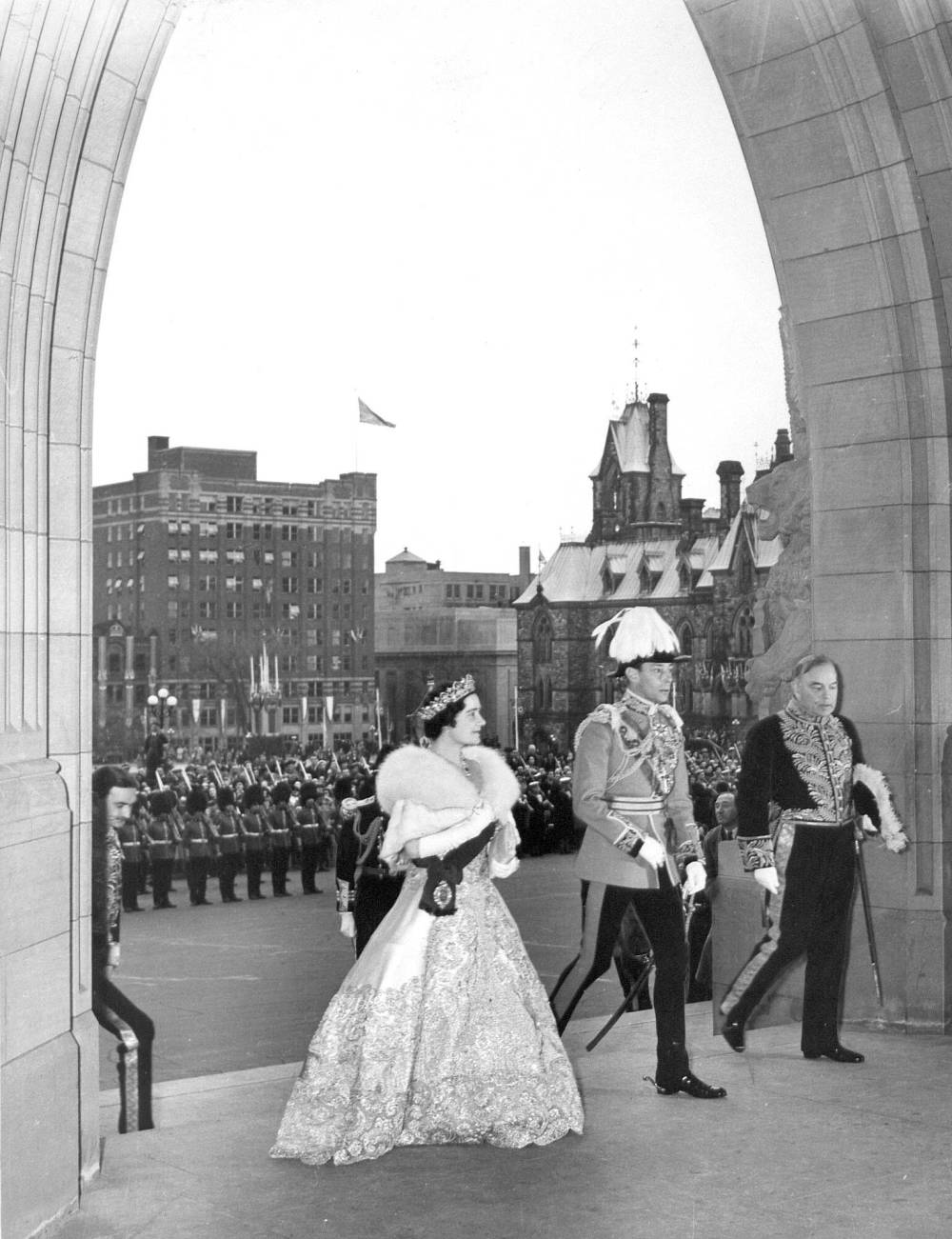
                                In this 1939 photo, Queen Elizabeth (the Queen Mother) and King George VI (centre) enter the Parliament Buildings in Ottawa with then-prime minister Mackenzie King. Two extra rail cars were needed to accommodate the Queen’s 40 trunks of tour clothes and accessories.

Canadian Press photo archive

In this 1939 photo, Queen Elizabeth (the Queen Mother) and King George VI (centre) enter the Parliament Buildings in Ottawa with then-prime minister Mackenzie King. Two extra rail cars were needed to accommodate the Queen’s 40 trunks of tour clothes and accessories.

“The link between fashion and Second World War espionage is something I’ve long been interested in,” says Picardie, 65, who even once queriedQueen Elizabeth II on the topic during a stay at Balmoral.

“I knew that there would be an interesting story to tell because of (British couturier) Hardy Aimes’ links to war intelligence,” she says of the famed designer, who she met in the 1990s. Picardie adds that Aimes (1909-2003) never spoke of his spy work during his lifetime and, mysteriously, his official war records are “laundered.”

Fashioning the Crown begins in 1917 when George V, sensing strong anti-German sentiment in England, “fashioned” the new House of Windsor from its previous House of Saxe- Coburg-Gotha Germanic roots. He was one of few male royals to recognize what Picardie calls “the soft power” of regal clothing on public perception. Colour, quantity and quality all mattered equally, Picardie writes, citing the 1939 visit to North America of George VI and Queen Elizabeth (Queen Mother), where two extra rail cars were needed to accommodate the Queen’s 40 trunks of tour clothes and accessories.

Picardie’s book dives deeply into the House of Windsor’s connection to seismic global events, including both world wars, the rise of fascism, the threat of Nazi invasion throughout Europe and the abdication of England’s Edward VIII to marry American divorcée Wallis Simpson. A good chunk of Fashioning is devoted to the flighty, pre- and post-abdication life of the Duke and Duchess of Windsor, as they became known. The book concludes shortly after the 1953 coronation of Elizabeth II.

Of special interest in Picardie’s book are the stunning Cecil Beaton photographs and designer sketches of royal femmes wearing designs by Aimes, Norman Hartnell, Elsa Schiaparelli and Anna Wolkoff. The images dispel any doubt about the connection between a royal’s wardrobe, their character and the times in which they lived.

Richard Phibbs photo
                                Justine Picardie

Richard Phibbs photo

Justine Picardie

GC Cabana-Coldwell is a Winnipeg freelance writer. For fashion-loving history buffs, in April, 200 of the late Queen’s outfits will appear in a Buckingham Palace exhibit called “Queen Elizabeth II: Her Life and Style.”
Fashioning the Crown

Fashioning the Crown

Report Error Submit a Tip

More Stories

Silver linings at Canadian Lawn Bowling Championships

Grace Penner 1 minute read Preview

Silver linings at Canadian Lawn Bowling Championships

Grace Penner 1 minute read 2:01 AM CDT

There were multiple Manitoban bowls players in the 2026 Canadian Lawn Bowling Championships last week.

Sam Forrest placed silver in the U18 boys’ Canadian Youth and Junior Championships in Hanover, Ont., that was held from Aug. 10-14.

And in the North Vancouver, B.C., leg of the championships that was held Aug. 16-23, the 13-year-old competed with his grandfather, John Bjornson, as well as Rod Rose and Wayne Trindall in the men’s fours. Forrest was honoured with the Spirit Award.

Women’s pairs Shirley Fitzpatrick-Wong and her mother Clarice Fitzpatrick won silver falling short to the B.C. duo they faced.

Read
2:01 AM CDT

Judge decries ‘senseless acts’ during sentencing for killers in Berens River manslaughter

Erik Pindera 4 minute read Preview

Judge decries ‘senseless acts’ during sentencing for killers in Berens River manslaughter

Erik Pindera 4 minute read Yesterday at 4:37 PM CDT

Two men have admitted their guilt in the beating death of a 45-year-old father in Berens River First Nation last winter.

Michael Oliver Franklin, 32, and Thomas Bryton Goosehead, 24, pleaded guilty to manslaughter Thursday in the Feb. 13, 2025 killing of Leslie Neil Mason.

“These types of senseless acts happen far too often in Berens River and every other small community in Manitoba, including here in Winnipeg,” Court of King’s Bench Justice Kenneth Champagne said.

The men had been charged with second-degree murder, but admitted to the lesser offence as part of a plea bargain struck between their defence lawyers and Crown prosecutor Thomas Boult, largely due to concerns with the strength of the case Boult developed after meeting with witnesses in Berens River.

Read
Yesterday at 4:37 PM CDT

Allen misses out on league MVP award

Taylor Allen 4 minute read Preview

Allen misses out on league MVP award

Taylor Allen 4 minute read Thursday, Aug. 20, 2026

Winnipeg Sea Bears guard Teddy Allen has come up short in his bid to win a second career CEBL Most Valuable Player award — and he’s not happy about it.

The league revealed its award winners Thursday, with Scarborough Shooting Stars guard Myles Powell taking home the MVP honours over Allen who was the finalist out of the Western Conference.

Powell, who was also named the Clutch Player of the Year with nine target score winners, averaged 22.9 points, 3.3 rebounds and 4.5 assists while leading Scarborough to a historic 20-4 record.

“A dude who averaged 23 on 38 per cent. You will never see me again. Lost ya credibility,” Allen commented on Instagram.

Read
Thursday, Aug. 20, 2026

Global spy games heat back up

Kyle Volpi Hiebert 5 minute read Preview

Global spy games heat back up

Kyle Volpi Hiebert 5 minute read Yesterday at 2:00 AM CDT

In 2013, whistleblower Edward Snowden exposed a massive dragnet of U.S. surveillance programs built to intercept the data and communications of targets worldwide. By comparison, human intelligence work suddenly seemed clumsy and antiquated. Perhaps even unnecessary.

Yet espionage is now making a comeback. Governments are rediscovering the value of covertly undermining rivals and dealing with risks abroad before they pose security threats at home.

Israeli and American forces swiftly decapitated Iran’s leadership in March thanks to Mossad agents penetrating the regime in Tehran and tracking officials’ daily movements beforehand. Russian and Ukrainian operatives have staged at least 150 assassination attempts on each other’s soil since 2022.

North Korean spies are using fake IT credentials and AI-generated profiles to get hired at Fortune 500 companies. The goal: steal trade secrets and divert lucrative tech salaries toward Pyongyang’s nuclear weapons program.

Read
Yesterday at 2:00 AM CDT

Private governance or public good

David Nutbean 5 minute read Yesterday at 2:00 AM CDT

The Manitoba government recently held public forums to discuss regulations for Bill 51, the Public Sector Artificial Intelligence and Cybersecurity Governance Act. I was able to participate in the meeting in Brandon and there was also a session in Winnipeg.

I was a bit fired up, ready to rail about data centres and phone terms and conditions and generally give it to big tech. The discussion, however, was focused on what the public sector responses should be regarding cybersecurity, data and privacy protections, and AI usage in government.

With all the recent attention on social media bans, the harms of AI, misinformation and the like, I was somewhat disappointed that these would not be tackled directly in this meeting. Those issues may be discussed at future forums.

At this event, as focus groups developed responses, the discussion between private companies and public governance kept getting mixed in, pointing out the reliance of government services on private companies in running their digital operations. As government operations become more dependent on digital infrastructure and towards AI agency and control, rethinking how technology is implemented may be crucial to our democracy.

Educated people vote

John R. Wiens 5 minute read Yesterday at 2:00 AM CDT

I add my voice to Erna Buffie’s Think Tank piece “Democracy is a civic election issue” (Aug. 13) by asserting that democracy is a public education issue. Put another way, this fall’s municipal and school board elections are a test of public education — educating democratic citizens who appreciate our democratic inheritance enough to take responsibility for renewing it.

Voter turnouts for elections in Canada are abysmal. Where there should be 100 per cent participation, it often approaches 50 per cent federally and provincially, 25 per cent in local elections. The explanations given seem insufficient and unsatisfying, as are the reasons given by those who decide not to bother.

Some say they feel disempowered and alienated from the political process, feeling they have no say in governmental decisions which rule their lives.

Others appear resigned to the fact that, if they were to speak, they would simply be passed over or ignored, choosing not to vote because their votes, like their voices, make no difference and count for nothing. Still others say they’re too busy or just don’t care.