Pioneering scientist Suzuki reflects on his life’s work

Advertisement

Advertise with us

It is hard to believe that Vancouver’s David Suzuki, an internationally renowned geneticist and environmental activist best-known in Canada for his popular television series The Nature of Things with David Suzuki, turns 90 years old on March 24.

Read this article for free:


or

Already have an account? Log in here »

To continue reading, please subscribe:

Subscribe and receive a limited-edition Free Press branded hat or tote.

Digital Subscription

One year of digital access for only $205*

  • Enjoy unlimited reading on winnipegfreepress.com
  • Read the E-Edition, our digital replica newspaper
  • Access News Break, our award-winning app
  • Play interactive puzzles

*First annual payment billed as $205.00 + GST for one year. This annual subscription will automatically renew at $233.00 + GST every 52 weeks (10% off the regular annual price of $259.35). Offer available to new and qualified returning subscribers only. Cancel any time.

To continue reading, please subscribe:

Add Free Press access to your Brandon Sun subscription for only an additional

$1 for the first 4 weeks*

  • Enjoy unlimited reading on winnipegfreepress.com
  • Read the E-Edition, our digital replica newspaper
  • Access News Break, our award-winning app
  • Play interactive puzzles
Start now

*Your next Brandon Sun subscription payment will increase by $1.00 and you will be charged $17.95 plus GST for four weeks. After four weeks, your payment will increase to $24.95 plus GST every four weeks.

Hey there, time traveller!
This article was published 14/03/2026 (207 days ago), so information in it may no longer be current.

It is hard to believe that Vancouver’s David Suzuki, an internationally renowned geneticist and environmental activist best-known in Canada for his popular television series The Nature of Things with David Suzuki, turns 90 years old on March 24.

Co-authored with Ian Hanington, David Suzuki: Lessons from a Lifetime is part autobiography and part celebratory tribute to Suzuki’s long and accomplished life. Both informative and entertaining, it is absolutely brimming with photographs, letters and tributes from friends, family and colleagues.

At times, Suzuki’s contributions are intimate glimpses into his personal life, beginning from when he was a young boy in an internment camp for Japanese-Canadians “housed in rotting buildings with glassless windows.”
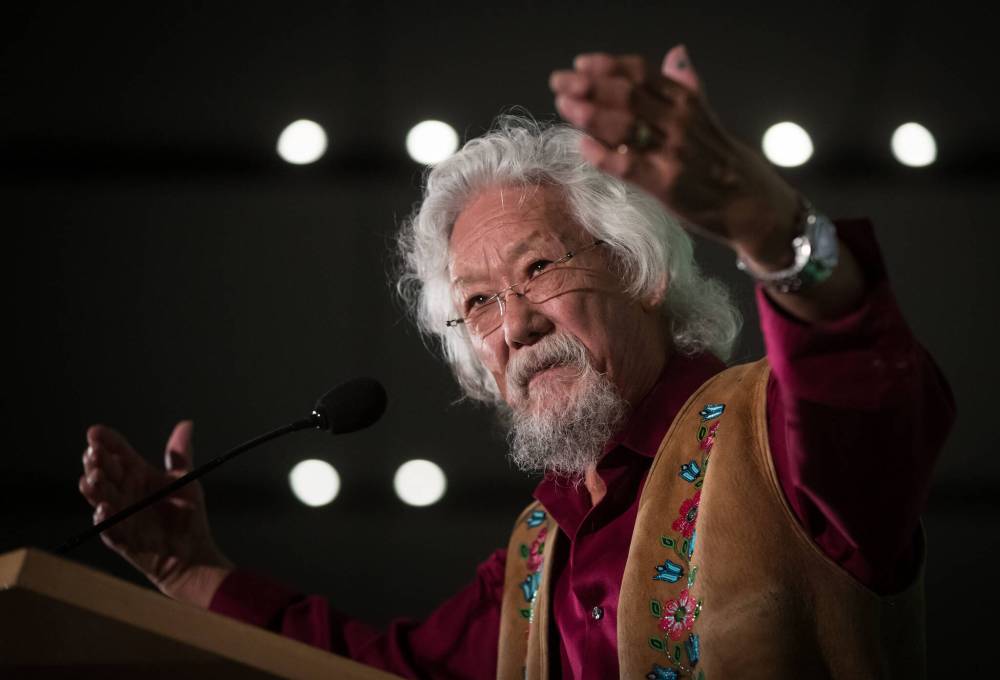
Darryl Dyck / The Canadian Press files
                                In his latest, David Suzuki reflects on his personal life, his accomplishments and the state of the environment and science today.

Darryl Dyck / The Canadian Press files

In his latest, David Suzuki reflects on his personal life, his accomplishments and the state of the environment and science today.

In other later sections Suzuki shares his thoughts and reflections on science and the environment and where we are today.

These sections on scientific matters can be a bit more academic and challenging to read for the novice or general reader. The language used and the information expressed is a tad more technical and complex.

In the more personal sections, Suzuki writes about his own children, five in all from two different marriages. His second and current marriage to Tara Cullis has lasted over 50 years.

“Getting Tara to marry me was the greatest achievement of my life,” Suzuki says, also writing lovingly about his children and grandchildren.

In 2015, Suzuki dedicated the beautiful and moving book Letters to my Grandchildren, also an enjoyable read, to his grandchildren.
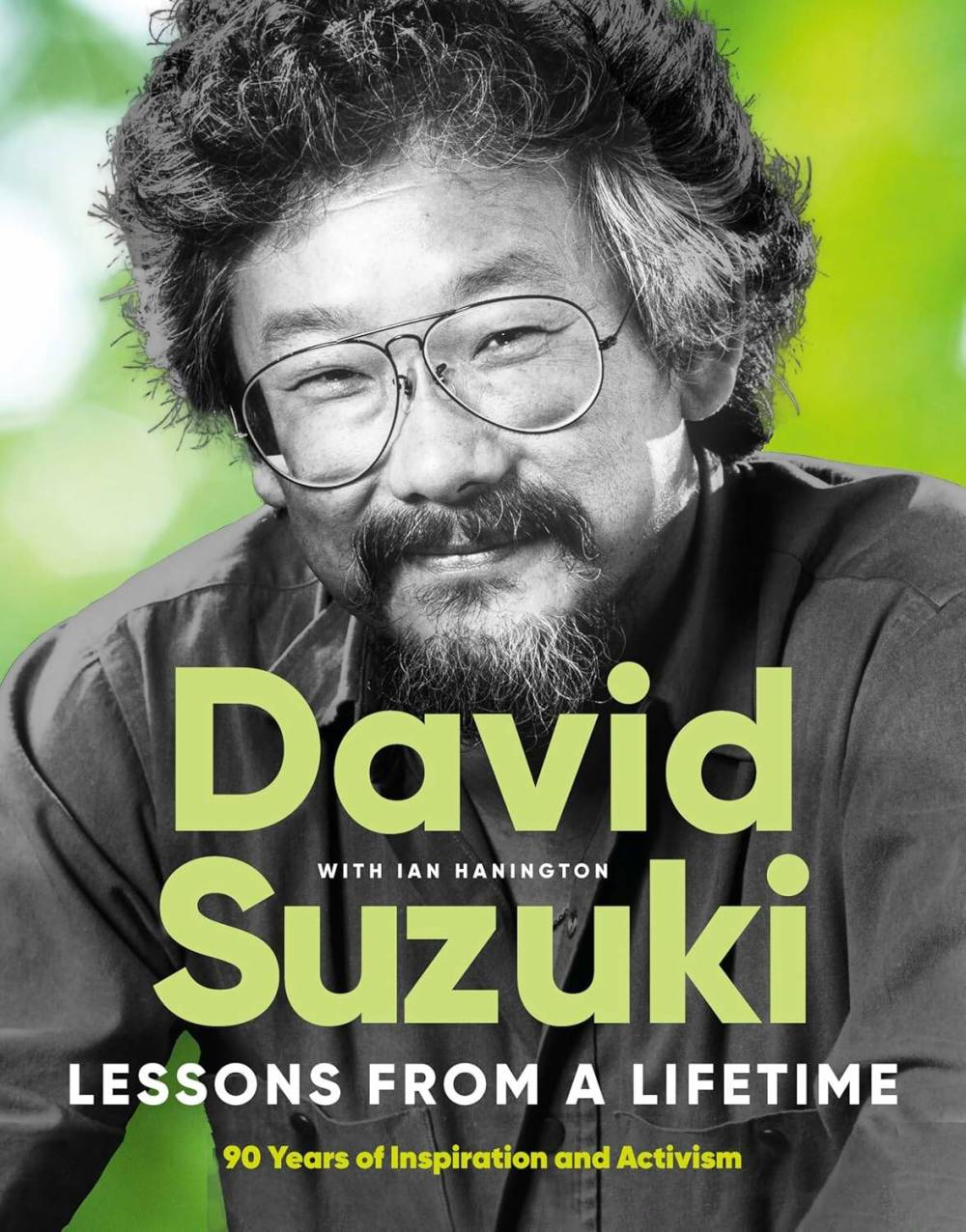
Lessons from a Lifetime

Lessons from a Lifetime

This celebratory new book highlights many of Suzuki’s amazing accomplishments. Aside from being a geneticist and a renowned environmental activist, he is also the author of more than 50 books and the founder of the David Suzuki Foundation, which is dedicated to protecting the natural environment and of which Cullis is president. He has received countless awards and honours.

Accompanying Suzuki’s own words and thoughts on the environment are numerous photographs and letters (mainly tributes) from family as well as politicians, celebrities, friends and colleagues including Neil Young, Margaret Atwood, Justin Trudeau and many more.

In his reflections, Suzuki cannot help but leave us with a warning. “This is a sad time to depart from this life,” he writes. “I have witnessed the disappearance and destruction of so much of the natural world that I loved. Our trajectory to dominance of the planet has been spectacular, but we have not fully comprehended the price of that success.”

Suzuki’s fans will surely enjoy and treasure this latest celebration of his outstanding achievements over so many years on this amazing planet we call Earth.

Cheryl Girard is an Interlake writer.
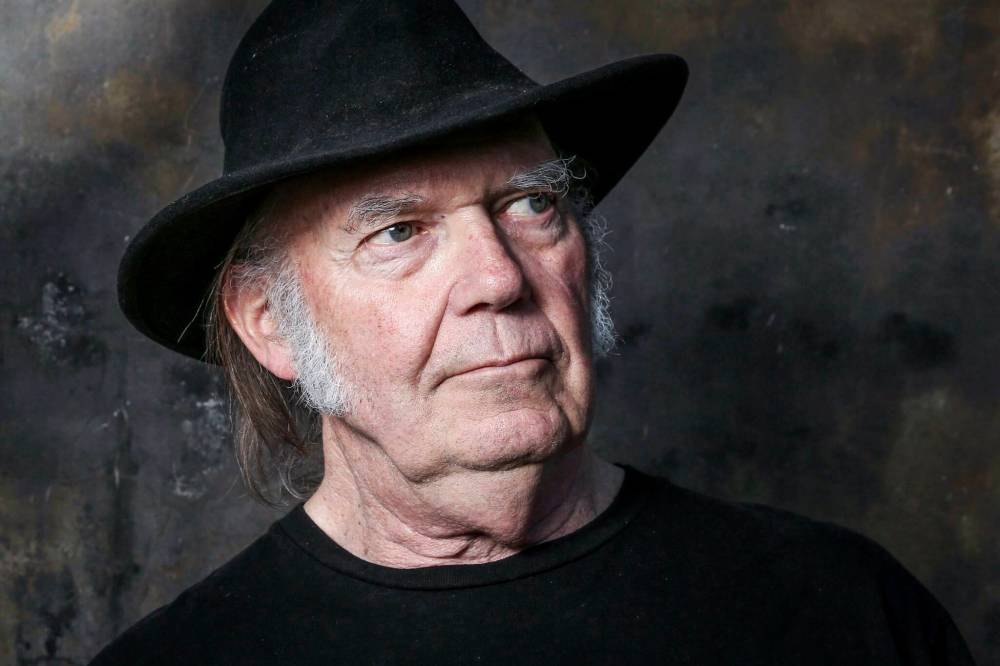
Rich Fury / The Canadian Press files
                                Neil Young is one of many who pays tribute to Suzuki in Lessons from a Lifetime.

Rich Fury / The Canadian Press files

Neil Young is one of many who pays tribute to Suzuki in Lessons from a Lifetime.
Report Error Submit a Tip

More Stories

Horoscope

Georgia Nicols 4 minute read Preview

Horoscope

Georgia Nicols 4 minute read Tuesday, Sep. 29, 2026

Moon alert: Avoid shopping (except food and gas) and important decisions until 1 p.m. After that, there are no restrictions to shopping or important decisions. The moon is in Gemini.

Aries (March 21-April 19)

A busy, chatty day. Your communication skills are excellent. Wait until the moon alert is over to commit to any important decisions or ideas. Tap into your creative talents. It’s also a lovely day to schmooze and enjoy sports and kids’ activities.

Taurus (April 20-May 20)

Read
Tuesday, Sep. 29, 2026

Gov. Gen. Arbour embarks on first official visit to Manitoba

Chris Kitching 2 minute read Preview

Gov. Gen. Arbour embarks on first official visit to Manitoba

Chris Kitching 2 minute read Updated: 1:04 PM CDT

Gov. Gen. Louise Arbour began her first official visit to Manitoba on Wednesday with a welcoming ceremony before private meetings with Premier Wab Kinew, Indigenous leaders and others.

Arbour’s three-day stop in Winnipeg and Gimli will focus on activities related to civil engagement, youth and reconciliation while she also spends time meeting with cadets and members of the Royal Canadian Air Force, an official itinerary said.

Arbour was greeted by Lt.-Gov. Anita Neville, Premier Wab Kinew, Chief Justice Marianne Rivolan, Speaker Tom Lindsey and Mayor Scott Gillingham as she entered the Manitoba Legislative Building at 12:15 p.m., after meeting privately with Neville at Government House, the official residence of the lieutenant governor.

“Bienvenue au Manitoba,” Kinew said while welcoming Arbour.

Read
Updated: 1:04 PM CDT

Essential workers ruling raises questions

Editorial 4 minute read Preview

Essential workers ruling raises questions

Editorial 4 minute read Yesterday at 2:00 AM CDT

Ever been to a Dynacare clinic? Most of us have been. It’s an amazing demographic and ethnic slice of the city we’ve become. Old patients. Young patients. New arrivals. Long-time Canadians. People who know the ropes — others who are startled by the crowds and the noise and the lockstep forward motion of professionals doing what they have been trained to do. It seems, all at the same time, both chaotic and diagnostic, as names of patients are steadily called out and thousands of tests are performed.

But Dynacare is at the centre of a new kind of test and this time, we’re all in the test tube together.

It’s the first real test for new labour law put in place by the government of Premier Wab Kinew in 2024 — a law that redefined what essential services are for provincially-regulated workplaces. Under this law, companies and their employee and unions must have an agreement of which employees are essential — which ones must stay on the job during a legal strike for the protection of the health and safety of the public.

Dynacare had that kind of essential employee agreement with its staff and union — the company and the union had agreed the employees were not essential.

Read
Yesterday at 2:00 AM CDT

Climate change a clear and present danger to the already-shrinking polar bear population

Sarah Lawrynuik 18 minute read Preview

Climate change a clear and present danger to the already-shrinking polar bear population

Sarah Lawrynuik 18 minute read Friday, Oct. 30, 2020

The rocks fly out from beneath the tires of Angela Mak’s Ford F-150 as she cruises down the gravel road along the coast of Hudson Bay just east of Churchill.

It’s a routine. Every day from July until November she comes out here looking for polar bears.

Mak and her husband Bill Fong are originally from Hong Kong, but moved to Vancouver in the early ‘90s. In 2017 they travelled to Churchill during bear season — October and November, when the bears move out onto the sea ice.

After that one trip, their hearts were set on Churchill. First they bought a house in town to host friends and other guests, then they bought a small hotel when it went on the market in 2019.

Read
Friday, Oct. 30, 2020

Scare up some social reconnection this fall

Maureen Scurfield 4 minute read Yesterday at 2:00 AM CDT

DEAR MISS LONELYHEARTS: I’m an emotional mess. My lesbian girlfriend and I broke up in August, and now I hold the lease on the apartment we shared. It’s a great big old place with two spacious balconies.

I just got new roommates — two younger friends who really love it here — but secretly I’m still feeling lonely. Every minute of living here reminds me of my girlfriend because we decorated the place together and hung out on the balconies to sunbathe in the summer.

Would it help to move out of my beloved old block with its memory triggers? Maybe, but what if I died of loneliness in a new place? I need people around me, and no one but my ex-girlfriend has really been the right person. Please help. I feel sick about this.

— Love-Nest Sadness, Winnipeg

AI governance: Canada’s next structural test

Anne Thompson 4 minute read 2:00 AM CDT

Artificial intelligence is accelerating faster than the governance structures meant to contain it. Canada now faces a structural test — whether our institutions can protect autonomy, dignity, and continuity in an era when decision-making is increasingly mediated by systems we did not design, cannot fully audit, and do not yet constitutionally constrain.

This is not a technological problem. It is a governance problem.

AI systems influence how information flows, how institutions behave, and how decisions are made. They shape the conditions under which harm becomes predictable. They amplify both the strengths and weaknesses of the systems into which they are deployed. And they do all of this at a scale and speed that outpaces traditional regulatory tools.

Canada’s current approach to AI governance relies heavily on policy, guidelines, and sector-specific regulation. These are important, but they are not sufficient. What is missing is structural clarity — a constitutional-grade framework that defines authority, responsibility, accountability, and the minimum conditions under which AI systems may operate without undermining human dignity or institutional credibility.