WEATHER ALERT

Chronicle of Canada’s maple-syrup industry a sweet treat

Advertisement

Advertise with us

The story of Canadian maple syrup is full of unsavoury characters: malicious colonizers, conniving capitalists, brazen thieves.

Read this article for free:


By clicking the button above, an account will be created and you will begin to receive some of our recommended newsletters. You may opt out of any newsletter by visiting your Email and Communication Preferences page or by clicking "unsubscribe" at the bottom of any email.

or

Already have an account? Log in here »

To continue reading, please subscribe:

Digital Subscription

One year of digital access for only $1.44 a week*

  • Enjoy unlimited reading on winnipegfreepress.com
  • Read the E-Edition, our digital replica newspaper
  • Access News Break, our award-winning app
  • Play interactive puzzles

*Billed as $5.77 plus GST every four weeks. After 52 weeks, price increases to the regular rate of $19.95 plus GST every four weeks. Offer available to new and qualified returning subscribers only. Cancel any time.

To continue reading, please subscribe:

Add Free Press access to your Brandon Sun subscription for only an additional

$1 for the first 4 weeks*

  • Enjoy unlimited reading on winnipegfreepress.com
  • Read the E-Edition, our digital replica newspaper
  • Access News Break, our award-winning app
  • Play interactive puzzles
Start now

*Your next Brandon Sun subscription payment will increase by $1.00 and you will be charged $17.95 plus GST for four weeks. After four weeks, your payment will increase to $24.95 plus GST every four weeks.

Hey there, time traveller!
This article was published 15/11/2025 (352 days ago), so information in it may no longer be current.

The story of Canadian maple syrup is full of unsavoury characters: malicious colonizers, conniving capitalists, brazen thieves.

In Maple Syrup: A Short History of Canada’s Sweetest Obsession, author Peter Kuitenbrouwer draws on this rich well of personalities to create an informative, entertaining account of one of the country’s most iconic natural resources.

It’s a story Kuitenbrouwer is uniquely positioned to tell.

Maple Syrup

Maple Syrup

A longtime journalist and former National Post columnist, Kuitenbrouwer grew up tending a sugar maple bush with his family in rural Quebec. Tapping trees and boiling sap was a stabilizing annual tradition following a chaotic early childhood. He’s now a registered forester with his own small-scale syrup operation outside of Toronto.

Kuitenbrouwer’s personal sugar shack experiences weave their way into reported vignettes about reconciliation, technology, religion, economics, regional politics and climate change.

The people-focused narrative keeps the momentum flowing through an occasionally dense forest of facts and figures. Delightful line drawings by Winnipeg illustrator Jonathan Dyck (Shelterbelts) bring the book and the sugar bush to life.

Maple Syrup covers a lot of ground but focuses on the syrup industries in Ontario, New Brunswick and Quebec — and the global dominance of the latter. It’s a slice of social and environmental history told through the sugar maple tree, the leaves and sap of which have become an engrained part of Canada’s flannel-coded national identity.

Kuitenbrouwer deftly addresses the sticky bits of that real and imagined identity.

An early chapter covers Indigenous maple syrup production — practiced in parts of North America since time immemorial — and the lasting impact of the government’s Indian Act, which forced communities onto reserves and systematically cut access to traditional resources, including large swaths of maple forest felled for settler agriculture.

Later on, he delves into the tension between Canada’s logging and syrup lobbies, and eco-friendliness of an industry that requires vast amounts of fuel to turn sap (which is 98 per cent water) into maple syrup.

Kuitenbrouwer also looks at the benefits and pitfalls of Quebec’s maple syrup federation (a.k.a “cartel”), which controls production in the province and, by extension, 72 per cent of the world’s syrup supply.

Readers might be familiar with the federation as the victim of Canada’s biggest criminal heist, during which thieves stole 3,000 tonnes of syrup from the organization’s stockpile. Kuitenbrouwer revisits the stereotypifying incident — dubbed the “Great Canadian Maple Syrup Heist” by international media — in satisfying detail.

Despite being described as a “short history,” Maple Syrup takes a seemingly niche topic and makes it a national concern filled with intriguing stories. Fair warning: reading may also induce cravings for maple-flavoured treats.

Eva Wasney is a food, arts and life reporter with the Free Press.

Eva Wasney

Eva Wasney
Arts Reporter

Eva Wasney is a reporter for the Winnipeg Free Press.

Our newsroom depends on a growing audience of readers to power our journalism. If you are not a paid reader, please consider becoming a subscriber.

Our newsroom depends on its audience of readers to power our journalism. Thank you for your support.

Report Error Submit a Tip

More Stories

Taxi and ride-hailing services receive 58 complaints since March

Jessica Botelho-Urbanski 5 minute read Preview

Taxi and ride-hailing services receive 58 complaints since March

Jessica Botelho-Urbanski 5 minute read Friday, Aug. 17, 2018

The City of Winnipeg has fielded 58 formal complaints about vehicle-for-hire operations since taking over industry oversight from the province in March.

According to freedom of information request results, the city mostly received complaints about taxi operations, and the two largest companies – Duffy’s Taxi and Unicity Taxi – were the main culprits.

From March 1, 2018 to July 13, 2018, the Winnipeg Parking Authority received 20 complaints about Duffy’s, mostly to do with driver road habits (five complaints), driver conduct (three), service refusal (three) or poor service (three), among other issues.

During the same period, Unicity had 19 complaints, five of them related to poor service and three about driver conduct, plus other misdeeds.

Read
Friday, Aug. 17, 2018

Winnipeg novelist's latest offering a riveting fictional account of missionaries' plight

Reviewed by Julienne Isaacs 5 minute read Preview

Winnipeg novelist's latest offering a riveting fictional account of missionaries' plight

Reviewed by Julienne Isaacs 5 minute read Saturday, Sep. 7, 2019

In 1955, five American missionary couples set out to evangelize the Waorani, an Indigenous people group of the Ecuadorian rainforest that had never had contact with the outside world. They dubbed their mission “Operation Auca.”

After a few months of airdropping gifts, the five men — Jim Elliot, Peter Fleming, Nate Saint, Ed McCully and Roger Youderian — opted to set up camp on a beach near a Waorani settlement. Just a few days later, they were all speared to death. Thanks to the swift arrival of a Life magazine photographer, the brutal conclusion to Operation Auca became global news.

In her new novel, Five Wives, Winnipeg writer Joan Thomas tells this story again.

“In the missionaries’ memoirs, ‘God’s leading’ explains almost every impulse,” Thomas writes in a postscript. “I set out to peer behind that, to explore in human terms actions that astonished me.”

Read
Saturday, Sep. 7, 2019

The new normal in Canadian politics

David McLaughlin 5 minute read Preview

The new normal in Canadian politics

David McLaughlin 5 minute read Yesterday at 2:01 AM CDT

“Nothing happening, all at once.”

Welcome to the new normal of Canadian politics, where normality is the new normal. Routine and stable are in; disruptive and excessive are out. Exhibits A and B are the Alberta referendum and the British Columbia election. Voters opted for stability over volatility.

The opposite of being normal is being different from the norm. In politics that means different from where we’ve been and what we’ve come to expect. Two competing trends have dominated our politics for the past decade and a half — progressivism and populism. Think Justin Trudeau and liberal, progressive identity politics in Canada, and Donald Trump and conservative, populist MAGA politics in America. We are now experiencing a swing away from both those trends.

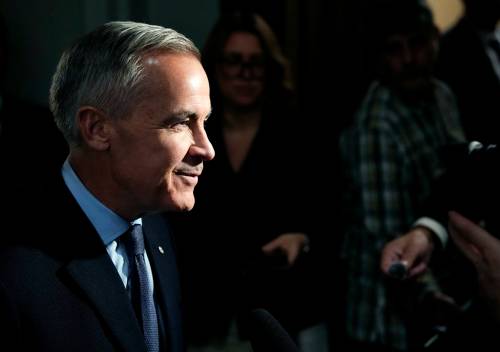
Representing this “new normal” are Prime Minister Mark Carney, for one, and newly elected British Columbia premier, Lorne Doerksen, for another. Both are considered normal because they talk and act like adults in a childish political world. Their political flair is to not have any political flair. They stand out for not standing out.

Read
Yesterday at 2:01 AM CDT

RRC Polytech program cuts take bite out of hospitality, tourism sector

Maggie Macintosh 4 minute read Preview

RRC Polytech program cuts take bite out of hospitality, tourism sector

Maggie Macintosh 4 minute read Saturday, May. 2, 2026

Manitoba’s tourism industry is bracing for the disappearance of hospitality training programs — once-popular courses among international students.

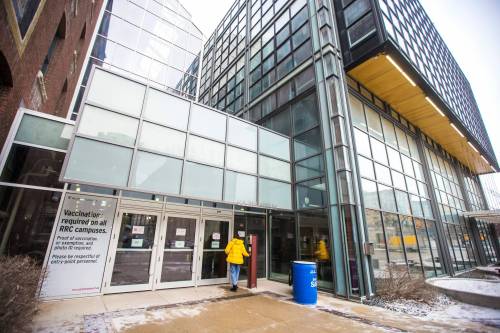
Citing budgetary challenges related to a shift in federal immigration policy, Red River College Polytechnic is scrapping 11 programs and scaling back three others in 2026-27. Its hospitality business management diploma is one of seven permanent casualties.

The announcement, while unsurprising, is but the latest blow to a sector trying to “build back the workforce” in the wake of the COVID-19 pandemic, said Michael Juce, president of the Manitoba Hotel Association.

“Are people going to go outside of Manitoba for training? And if they leave, are they going to come back?” Juce said, adding that rural hotels in particular are already grappling with staffing shortages.

Read
Saturday, May. 2, 2026

SNC planned U.S. move if no deal: documents

Jordan Press and Christopher Reynolds, The Canadian Press 5 minute read Preview

SNC planned U.S. move if no deal: documents

Jordan Press and Christopher Reynolds, The Canadian Press 5 minute read Thursday, Mar. 28, 2019

OTTAWA - SNC-Lavalin warned federal prosecutors last fall about a possible plan to split the company in two, move its offices to the United States and eliminate its Canadian workforce if it didn't get a deal to avoid criminal prosecution, newly obtained documents show.

The documents, part of a PowerPoint presentation obtained by The Canadian Press, describe something called "Plan B" — what Montreal-based SNC might have to do if it can't convince the government to grant a so-called remediation agreement to avoid criminal proceedings in a fraud and corruption case related to projects in Libya.

Under that plan, SNC would move its Montreal headquarters and corporate offices in Ontario and Quebec to the U.S. within a year, cutting its workforce to just 3,500 from 8,717, before eventually winding up its Canadian operations.

“The government of Canada needs to weigh the public interest impact of the prosecution of SNC-Lavalin," the presentation reads.

Read
Thursday, Mar. 28, 2019

Province changes Thompson ‘Vaxport’ plan

Carol Sanders 5 minute read Preview

Province changes Thompson ‘Vaxport’ plan

Carol Sanders 5 minute read Thursday, Jan. 14, 2021

The Manitoba government has changed its plans for a vaccination "super site" for the North — just days after it was announced — after local officials argued the original proposal was unworkable.

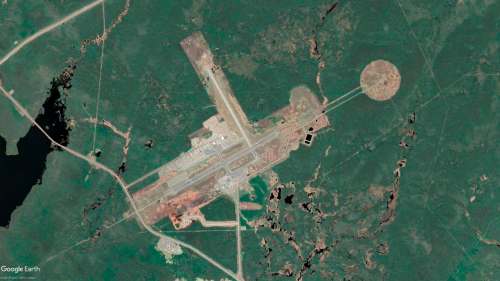
Some northern residents will still get their COVID-19 shots at Thompson's airport, but "Vaxport" will be less super than originally planned, providing injections only to residents of fly-in communities.

Most northern residents will get their shots at the Thompson Community Recreation Centre, which is centrally located in the city of about 13,000.

"This makes much more sense logistically, and for the citizens of Thompson," Mayor Colleen Smook said Thursday after touring the airport site, which is located 10 kilometres from the city and isn't serviced by public transportation.

Read
Thursday, Jan. 14, 2021