Living longer can mean more dementia but there are ways to reduce the risk

Advertisement

Advertise with us

WASHINGTON (AP) — About a million Americans a year are expected to develop dementia by 2060, roughly double today’s toll, researchers reported Monday.

Read this article for free:


By clicking the button above, an account will be created and you will begin to receive some of our recommended newsletters. You may opt out of any newsletter by visiting your Email and Communication Preferences page or by clicking "unsubscribe" at the bottom of any email.

or

Already have an account? Log in here »

To continue reading, please subscribe:

Digital Subscription

One year of digital access for only $1.44 a week*

  • Enjoy unlimited reading on winnipegfreepress.com
  • Read the E-Edition, our digital replica newspaper
  • Access News Break, our award-winning app
  • Play interactive puzzles

*Billed as $5.77 plus GST every four weeks. After 52 weeks, price increases to the regular rate of $19.95 plus GST every four weeks. Offer available to new and qualified returning subscribers only. Cancel any time.

To continue reading, please subscribe:

Add Free Press access to your Brandon Sun subscription for only an additional

$1 for the first 4 weeks*

  • Enjoy unlimited reading on winnipegfreepress.com
  • Read the E-Edition, our digital replica newspaper
  • Access News Break, our award-winning app
  • Play interactive puzzles
Start now

*Your next Brandon Sun subscription payment will increase by $1.00 and you will be charged $17.95 plus GST for four weeks. After four weeks, your payment will increase to $24.95 plus GST every four weeks.

Hey there, time traveller!
This article was published 13/01/2025 (643 days ago), so information in it may no longer be current.

WASHINGTON (AP) — About a million Americans a year are expected to develop dementia by 2060, roughly double today’s toll, researchers reported Monday.

That estimate is based on a new study that found a higher lifetime risk than previously thought: After age 55, people have up to a 4 in 10 chance of eventually developing dementia — if they live long enough.

It’s a sobering number but there are steps people can take to reduce that risk, such as controlling high blood pressure and other bad-for-the-brain health problems. And it’s not too late to try even in middle age.

“All of our research suggests what you do in midlife really matters,” said Dr. Josef Coresh of NYU Langone Health, who coauthored the study in the journal Nature Medicine.

Dementia isn’t only Alzheimer’s

Taking longer to recall a name or where you put your keys is typical with older age. But dementia isn’t a normal part of aging — it’s a progressive loss of memory, language and other cognitive functions. Simply getting older is the biggest risk and the population is rapidly aging.

Alzheimer’s is the most common form, and silent brain changes that eventually lead to it can begin two decades before symptoms appear. Other types include vascular dementia, when heart disease or small strokes impair blood flow to the brain. Many people have mixed causes, meaning vascular problems could exacerbate brewing Alzheimer’s symptoms.

Measuring the risk from a certain age over the potential remaining life span can guide public health recommendations and medical research.

“It’s not a guarantee that someone will develop dementia,” cautioned Dr. James Galvin, a University of Miami Alzheimer’s specialist. He wasn’t involved with the new study but said the findings fit with other research.

Dementia risk is different by age

Prior studies estimated about 14% of men and 23% of women would develop some form of dementia during their lifetime. Coresh’s team analyzed more recent data from a U.S. study that has tracked the heart health and cognitive function of about 15,000 older adults for several decades.

Importantly, they found the risk changes with the decades.

Only 4% of people developed dementia between the ages of 55 and 75, what Coresh calls a key 20-year window for protecting brain health.

For people who survive common health threats until 75, the dementia risk then jumped — to 20% by age 85 and 42% between ages 85 and 95.

Overall, the lifetime dementia risk after age 55 was 35% for men and 48% for women, the researchers concluded. Women generally live longer than men, a main reason for that difference, Coresh noted. Black Americans had a slightly higher risk, 44%, than white people at 41%.

Yes, there are ways to help lower dementia risk

There are some risk factors people can’t control, including age and whether you inherited a gene variant called APOE4 that raises the chances of late-in-life Alzheimer’s.

But people can try to avert or at least delay health problems that contribute to later dementia. Coresh, for example, wears a helmet when biking because repeated or severe brain injuries from crashes or falls increase the risk of later-in-life dementia.

Especially important: “What’s good for your heart is good for your brain,” added Miami’s Galvin. He urges people to exercise, avoid obesity, and control blood pressure, diabetes and cholesterol.

For example, high blood pressure can impair blood flow to the brain, a risk not just for vascular dementia but also linked to some hallmarks of Alzheimer’s. Similarly, the high blood sugar of poorly controlled diabetes is linked to cognitive decline and damaging inflammation in the brain.

Stay socially and cognitively active, too, Galvin said. He urges people to try hearing aids if age brings hearing loss, which can spur social isolation.

“There are things that we have control over, and those things I think would be really, really important to build a better brain as we age,” he said.

___

The Associated Press Health and Science Department receives support from the Howard Hughes Medical Institute’s Science and Educational Media Group and the Robert Wood Johnson Foundation. The AP is solely responsible for all content.

Report Error Submit a Tip

More Stories

Today’s horoscope

Georgia Nicols 4 minute read 2:00 AM CDT

MOON ALERT: Caution! Avoid shopping (except food and gas) and important decisions from 10:45 a.m. until 9 p.m. today. After that, the moon moves from Capricorn into Aquarius.

ARIES (March 21-April 19)

Cut yourself some slack, because it’s a bit lacklustre due to the moon alert. Cope as best you can. Socialize in a low-key way. Focus on hobbies and creative self-expression. Baby steps.

TAURUS (April 20-May 20)

No shame in family’s help with young one

Maureen Scurfield 4 minute read Yesterday at 2:01 AM CDT

DEAR MISS LONELYHEARTS: My husband hates it that I didn’t want to go back to work right after having our child. I still don’t want to farm out our sweet breastfeeding baby girl to a babysitter!

I’ve been staying home to be with her, but I just found two hidden unpaid utility bills in my husband’s truck, that could get us in very big trouble. No wonder my guy doesn’t like me going into his truck alone these days.

Now I don’t know what to do. Should I talk to my parents about borrowing money from them before we get our utilities cut off? My husband says that will make him “look bad,” like he couldn’t take care of me and our child. Well, he can’t!

— Desperate Mom, St. Boniface

There's worse ways to go than dying while doing what you love

Doug Speirs 11 minute read Preview

There's worse ways to go than dying while doing what you love

Doug Speirs 11 minute read Saturday, Apr. 20, 2019

All comedians dream of leaving them laughing — and that’s exactly what Ian Cognito did.

The British comedian made headlines around the world earlier this month when he dropped dead onstage minutes after joking with the audience about dying.

Cognito, 60, a British comedy veteran whose real name was Paul Barbieri, died during his stand-up show at the Atic bar in Bicester, an English town north of Oxford.

The show’s host, Andrew Bird, told the BBC that Cognito was not feeling well before going onstage, but insisted on performing. He said the comic even joked onstage: “Imagine if I died in front of you lot here.”

Read
Saturday, Apr. 20, 2019

The threat from outside Canada

Dan Lett 4 minute read Preview

The threat from outside Canada

Dan Lett 4 minute read Yesterday at 2:01 AM CDT

The 10-question referendum being held in Alberta on Monday, Oct. 19, is not the first time the unity of Canada has been threatened by a vote within one province. It is, however, the first referendum of this type to take place in an age of unfettered social media misinformation and deliberate foreign interference.

From mischievous comments by U.S. President Donald Trump about making Canada the 51st state to technology trillionaire Elon Musk’s urgings to Quebec and Alberta to separate, there are clear signs foreign interests are trying to influence Monday’s vote. But there are also less-obvious efforts at work to influence the referendum and destabilize Canada.

The Canadian Security Intelligence Service (CSIS) and independent think-tanks such as the Centre for Artificial Intelligence, Data and Conflict at the University of Regina have documented incidents involving Russian-linked automated content farms posting thousands of misleading articles about the referendum campaign on social media platforms. The content, CSIS has said, focuses on erroneous claims about the benefits of separation and the liabilities of remaining in Canada.

In the face of all that activity, Prime Minister Mark Carney has been alarmingly unconcerned. Campaigning in Alberta this week, Carney said Ottawa is closely monitoring disinformation campaigns. He added that, in his conversations with foreign governments, all have agreed to stand down from any activities that might be perceived as threats to democracy.

Read
Yesterday at 2:01 AM CDT

Endling wins Amazon’s $60K first novel prize

Ben Sigurdson 4 minute read Preview

Endling wins Amazon’s $60K first novel prize

Ben Sigurdson 4 minute read Saturday, Jun. 13, 2026

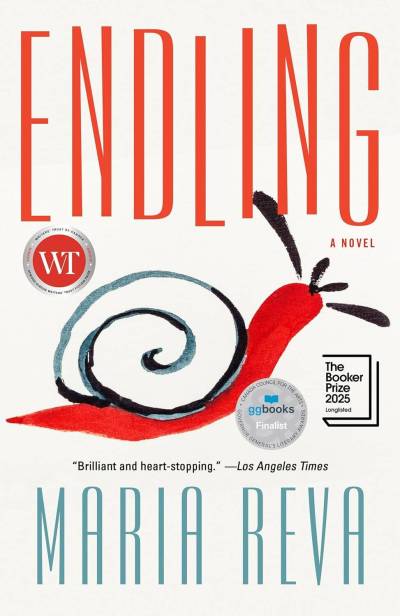
Ukraine-born, Vancouver-based author Maria Reva has landed another prize for her debut novel Endling, which follows a snail scientist in Ukraine who teams up with a pair of sisters to break up a mail-order bride operation in the country before Russia’s invasion throws them all for a loop.

Reva’s novel, which was published in June 2025 and released in paperback in May 2026, won the $60,000 Amazon Canada First Novel Award at a June 4 ceremony in Toronto which revealed the winner. Endling also won Reva the $60,000 Writers’ Trust Atwood Gibson Fiction Prize, was a finalist for the Governor General’s Literary Award for fiction and was long-listed for the Booker Prize.

● ● ●

On Thursday at 6:30 p.m., retired Concordia University film and sexuality scholar Thomas Waugh will be at the Cornish Library (20 West Gate) to read from his memoir Writing in the Flesh: Essays on My Lives, My Bodies, My Families, My Place, My Movies, published in December 2025 by McGill-Queen’s University Press.

Read
Saturday, Jun. 13, 2026

If every child matters, why no public inquiry?

Marion Willis 5 minute read Yesterday at 2:01 AM CDT

It is shocking to find children living in encampments with their parents. It is deeply disturbing to find young people who have aged out of child welfare living in encampments with their families of origin.

As founder and executive director of St. Boniface Street Links, I have encountered both. These are experiences that stay with me. They leave me asking what happened to these children and families, what help they received and what support might have prevented their homelessness.

They also make the Manitoba government’s rejection of a public inquiry into Child and Family Services difficult to accept.

On Oct. 8, the NDP defeated a motion calling for an inquiry into systemic failures in child welfare. This is a puzzling position for a government committed to advancing Indigenous issues, particularly when Indigenous children and families are so profoundly overrepresented in the system.