WEATHER ALERT

States trashing troves of masks and pandemic gear as huge, costly stockpiles linger and expire

Advertisement

Advertise with us

When the coronavirus pandemic took hold in an unprepared U.S., states scrambled for masks and other protective gear.

Read this article for free:


By clicking the button above, an account will be created and you will begin to receive some of our recommended newsletters. You may opt out of any newsletter by visiting your Email and Communication Preferences page or by clicking "unsubscribe" at the bottom of any email.

or

Already have an account? Log in here »

To continue reading, please subscribe:

Digital Subscription

One year of digital access for only $1.44 a week*

  • Enjoy unlimited reading on winnipegfreepress.com
  • Read the E-Edition, our digital replica newspaper
  • Access News Break, our award-winning app
  • Play interactive puzzles

*Billed as $5.77 plus GST every four weeks. After 52 weeks, price increases to the regular rate of $19.95 plus GST every four weeks. Offer available to new and qualified returning subscribers only. Cancel any time.

To continue reading, please subscribe:

Add Free Press access to your Brandon Sun subscription for only an additional

$1 for the first 4 weeks*

  • Enjoy unlimited reading on winnipegfreepress.com
  • Read the E-Edition, our digital replica newspaper
  • Access News Break, our award-winning app
  • Play interactive puzzles
Start now

*Your next Brandon Sun subscription payment will increase by $1.00 and you will be charged $17.95 plus GST for four weeks. After four weeks, your payment will increase to $24.95 plus GST every four weeks.

Hey there, time traveller!
This article was published 20/12/2023 (1048 days ago), so information in it may no longer be current.

When the coronavirus pandemic took hold in an unprepared U.S., states scrambled for masks and other protective gear.

Three years later, as the grips of the pandemic have loosened, many states are now trying to deal with an excess of protective gear, ditching their supplies in droves.

With expiration dates passing and few requests to tap into its stockpile, Ohio auctioned off 393,000 gowns for just $2,451 and ended up throwing away another 7.2 million, along with expired masks, gloves and other materials. The now expiring supplies had cost about $29 million in federal money.
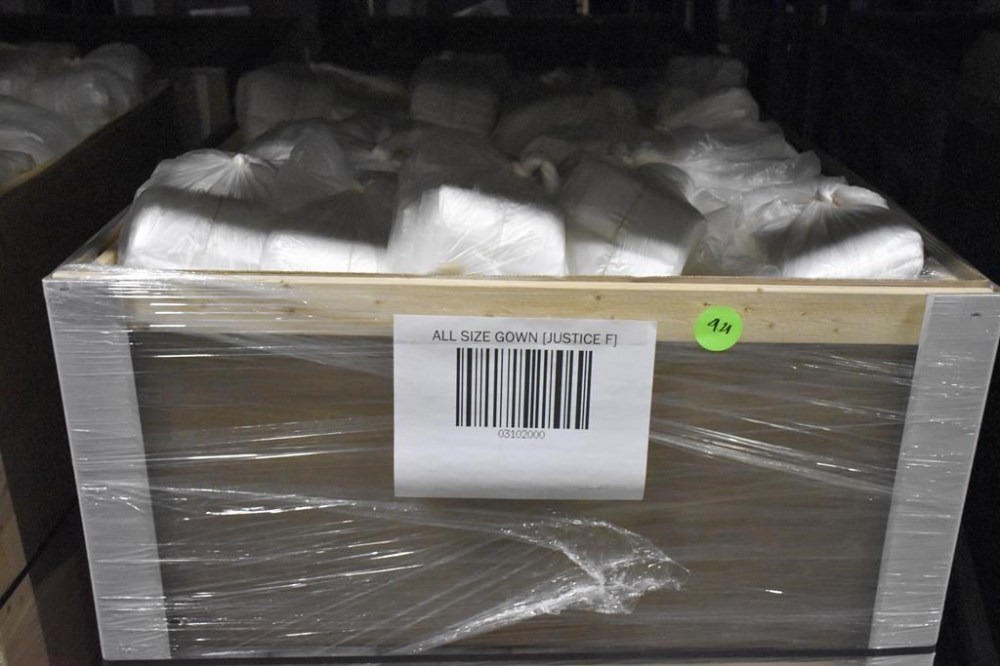
Boxes of personal protection equipment maintained by the Missouri Department of Health and Senior Services are shown stacked in a warehouse in Jefferson City, Mo., on Dec. 1, 2023. (Brad Bashore/Missouri Department of Health and Senior Services via AP)

A similar reckoning is happening around the country. Items are aging, and as a deadline to allocate federal COVID-19 cash approaches next year, states must decide how much to invest in maintaining warehouses and supply stockpiles.

An Associated Press investigation found that at least 15 states, from Alaska to Vermont, have tossed some of their trove of PPE because of expiration, surpluses and a lack of willing takers.

Into the trash went more than 18 million masks, 22 million gowns, 500,000 gloves, and more. That’s not counting states that didn’t give the AP exact figures or responded in cases or other measures. Rhode Island said it got rid of 829 tons of PPE; Maryland disposed of over $93 million in supplies.

“What a real waste. That’s what happens when you don’t prepare, when you have a bust-and-boom public health system,” where a lack of planning leads to panicked over-purchasing in emergencies, said Dr. Georges Benjamin, executive director of the American Public Health Association. “It shows that we really have to do a better job of managing our stockpiles.”

The AP sent inquiries about PPE stockpiles to all 50 states over the past several months. About half responded.

FILE - New York Gov. Andrew Cuomo, center, speaks while practicing social distancing against a backdrop of medical supplies during a news conference at the Jacob Javits Center that will house a temporary hospital in response to the COVID-19 outbreak, Tuesday, March 24, 2020, in New York. Some states that stockpiled millions of masks and other personal protective equipment during the coronavirus pandemic are now throwing the items away. (AP Photo/John Minchillo, File)

States emphasize that they distributed far more gear than they discarded and have gone to great lengths to donate the leftovers. Washington state sent hundreds of thousands of supplies to the Marshall Islands last year, yet ended up throwing out millions more items after they expired.

Many states are keeping at least a portion, and sometimes all, of their remaining protective gear. Some even plan to update their stockpiles.

But others say the vagaries of the pandemic and the PPE supply left no choice but to acquire the items, and now to throw them out, however reluctantly. Expiration dates are set because materials can degrade and might not work as intended. The Federal Emergency Management Agency has set the fair market value of expired supplies at zero dollars.

“Anytime you’re involved in a situation where you’re recalling how difficult it was to get something in the first place, and then having to watch that go or not be used in the way it was intended to be used, certainly, there’s some frustration in that,” said Louis Eubank, who runs the South Carolina health department’s COVID-19 coordination office. The state has discarded over 650,000 expired masks.

When the virus struck, demand skyrocketed for N95 masks, gloves and gowns. The U.S government’s Strategic National Stockpile was underequipped, and states plunged into global bidding wars.
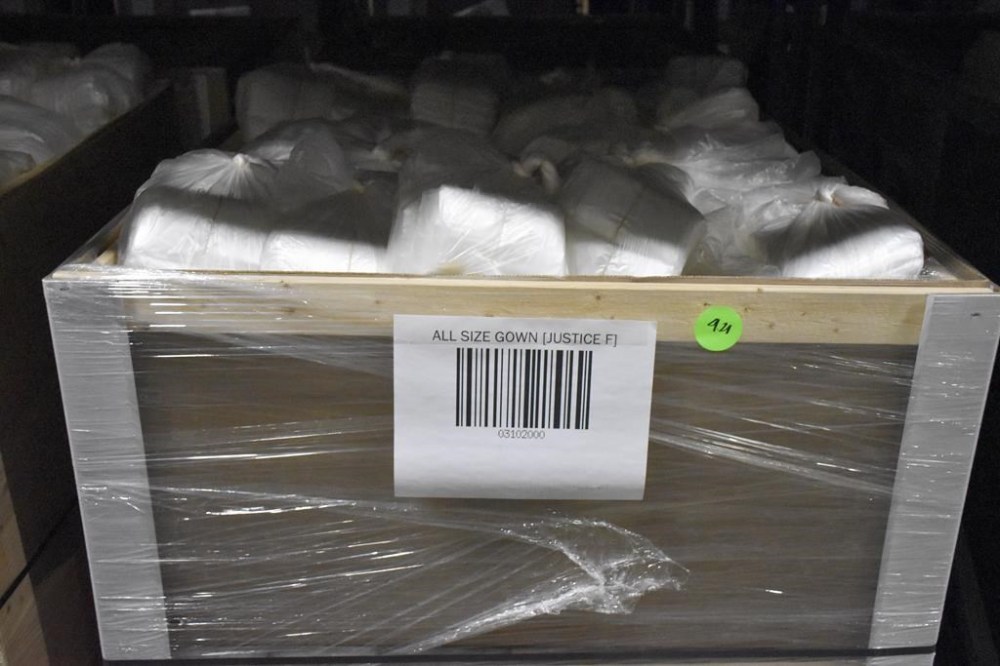
Boxes of personal protection equipment maintained by the Missouri Department of Health and Senior Services are shown stacked in a warehouse in Jefferson City, Mo., on Dec. 1, 2023. (Brad Bashore/Missouri Department of Health and Senior Services via AP)

The AP found in 2020 that states spent over $7 billion in a few months on PPE, ventilators and some other high-demand medical devices in a seller’s market. Ultimately, the federal government paid for many of the supplies.

“There was no way to know, at the time of purchase, how long the supply deficit would last or what quantities would be needed,” Ohio Department of Health spokesperson Ken Gordon said.

Ohio distributed more than 227 million pieces of protective equipment during the pandemic. But as the supply crunch and the health crisis eased, demand faded, especially for gowns.

Now, “states, hospitals, manufacturers – everybody in the whole system — has extra product,” said Linda Rouse O’Neill of the Health Industry Distributors Association.

Given the glut, stockpiled items are selling for bargain prices, if at all. Vermont got $82.50 for 105,000 boot covers and 29 cents apiece for thousands of safety goggles.

FILE - New York Gov. Andrew Cuomo, center, speaks while practicing social distancing against a backdrop of medical supplies during a news conference at the Jacob Javits Center that will house a temporary hospital in response to the COVID-19 outbreak, Tuesday, March 24, 2020, in New York. Some states that stockpiled millions of masks and other personal protective equipment during the coronavirus pandemic are now throwing the items away. (AP Photo/John Minchillo, File)

Striking a balance between preparedness and surpluses is “a major dilemma” for governments, said Scott Amey of the Project on Government Oversight, a Washington, D.C.-based watchdog group. And while politicians vowed in 2020 never to be caught off guard again, “memories are short, budgets are tight,” Amey noted.

In Wisconsin, a legislative committee axed from the budget $17.2 million that would have funded a warehouse with an ongoing 60-day supply of PPE for two years.

The state Department of Health Services said it is now “demobilizing the warehouse” and trying to donate the supplies. Already, Wisconsin has tossed nearly 1.7 million masks and almost 1 million gowns.

Minnesota’s Department of Health was allocated some money this year for retaining and restocking PPE and is strategizing. For now, emergency response official Deb Radi says the agency expects to dispose of a few expiring gowns.

The Health Industry Distributors Association recommends that product distributors maintain a 60-to-90-day supply to guard against demand spikes. But the group says it’s probably unnecessary for everyone in the system — from manufacturers to doctors’ offices — to have such a large cushion.
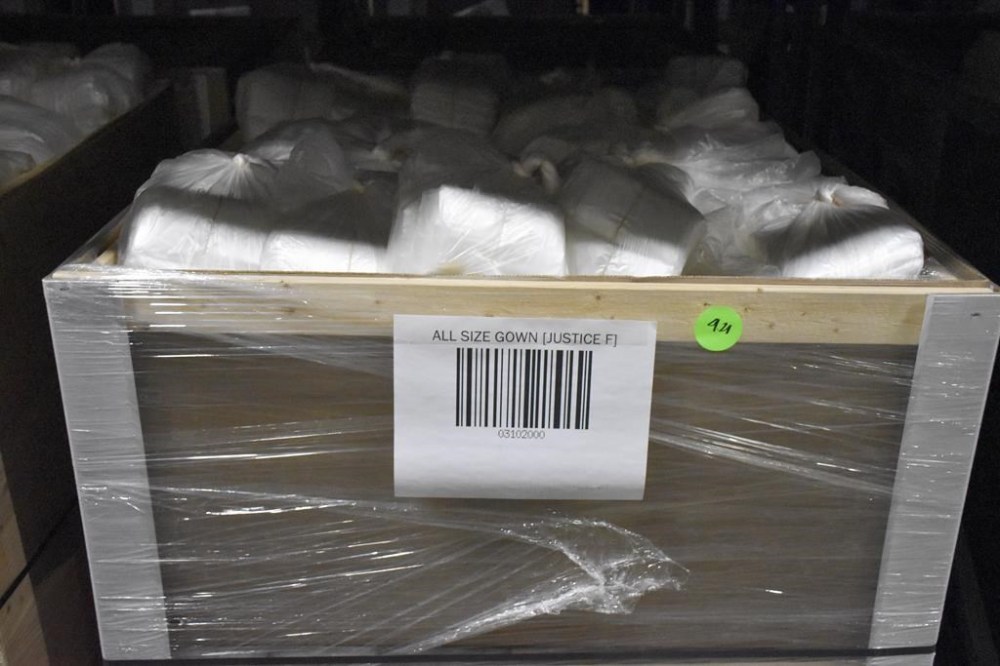
Boxes of personal protection equipment maintained by the Missouri Department of Health and Senior Services are shown stacked in a warehouse in Jefferson City, Mo., on Dec. 1, 2023. (Brad Bashore/Missouri Department of Health and Senior Services via AP)

Missouri’s health department has maintained a 90-day supply, keeping even expired materials on the presumption that the federal government will OK their use in an emergency. That happened during COVID-19.

“If you don’t make the investment – and perhaps the investment that is never used – then you may not be prepared to assist the public when it’s needed,” Missouri health director Paula Nickelson said.

Pennsylvania officials, by contrast, are aiming for a 15-day stockpile after frank conversations about what they can afford not only to keep, but to keep replacing as items expire, said Andy Pickett, the Health Department’s emergency preparedness and response director.

And Nevada can’t give its aging PPE away fast enough.

Department of Administration Director Jack Robb said the state is endeavoring to shed the supplies safely and without wasting money but already has discarded some.

FILE - New York Gov. Andrew Cuomo, center, speaks while practicing social distancing against a backdrop of medical supplies during a news conference at the Jacob Javits Center that will house a temporary hospital in response to the COVID-19 outbreak, Tuesday, March 24, 2020, in New York. Some states that stockpiled millions of masks and other personal protective equipment during the coronavirus pandemic are now throwing the items away. (AP Photo/John Minchillo, File)

But Robb said officials “made the best decisions that they could” when confronted with a disease that has killed nearly 7 million people worldwide, including some of his close friends.

“And I hope we never see anything like that again in our lifetime,” he said.

Report Error Submit a Tip

More Stories

Province’s first female dentist took skill, insight wherever needed

David Sanderson    25 minute read Preview

Province’s first female dentist took skill, insight wherever needed

David Sanderson    25 minute read Saturday, Apr. 3, 2021

Some stories take longer to get around to than others.

In the fall of 2011 I hooked up with Fiona Odlum at an Academy Road Starbucks for a lighthearted feature about people who report on traffic for a living. Odlum, currently a contributor at CBC Saskatchewan, was working for 680 CJOB at the time, clueing rush-hour commuters in on stalls, lane closures and fender-benders they’d be wise to avoid.

Odlum turned the tables at one point by asking a few questions of her own including, “So, what’s your main beat?”

I don’t really have one, I told her, but if pressed, I would probably go with human-interest pieces.

Read
Saturday, Apr. 3, 2021

Imperialist crusades: 21st-century style

John R. Wiens 5 minute read Preview

Imperialist crusades: 21st-century style

John R. Wiens 5 minute read Wednesday, Jul. 8, 2026

In the 11th century and lasting into the 13th, the papacy launched a series of at least eight military campaigns we now refer to as the Crusades, or Holy Wars. They were an imperialistic call to arms for Christians to retake Jerusalem, which was at the time under Muslim rule.

Spiritual rewards for participation were implied, and other incentives offered, to dull the extra taxation demanded to fund the campaigns. Over time, the “crusades” morphed to become massacres of not only Muslims but also Jews and Christian dissidents — in other words, any enemies of the papacy. If today’s news sounds like déjà vu all over again, it probably should.

The stories keep repeating themselves in many forms. We now know that two 20th century world wars, global in scope, were caused by imperialistic ambitions, changes in the balance of international powers and corresponding arms races. The first was attributed to the assassination of the heir to the Austro-Hungarian throne by a Bosnian Serb, a kind of “regime change” initiative. The second resulted from rising tensions between Allied and Axis powers, triggered by the rise of European fascism and Japanese militarism. The human toll of both was unimaginable.

In the First World War, 15 to 22 million people, including soldiers and civilians, were killed and another 23 million were wounded. These numbers do not account for those otherwise affected — victims of chemical warfare whose compromised health shortened their lives; of the subsequent Spanish flu epidemic amplified by the displacement of peoples; others who died from other diseases caused by war conditions; and those who were malnourished or starved. Nor do they account for the ongoing trauma and resentments passed on intergenerationally to this day.

Read
Wednesday, Jul. 8, 2026

Teemu Selanne living the good life in southern California

Mike McIntyre 19 minute read Preview

Teemu Selanne living the good life in southern California

Mike McIntyre 19 minute read Friday, Oct. 15, 2021

LAGUNA BEACH — He likes his coffee black. His steak “medium rare plus.” And he’s an extremely generous pour, especially when it comes to a Moscow mule.

His left knee is giving him all sorts of trouble these days, he’s admittedly almost always running behind schedule and his biggest pride and joy are his four children, who keep him and his wife Sirpa hopping with their numerous athletic pursuits.

He is Teemu Selanne, the beloved Winnipeg Jets legend who, you’ll be happy to know, is still living the good life just a stone’s throw from the Pacific Ocean in this little piece of southern California paradise.

Despite being nearly eight years removed from the end of a Hall of Fame hockey career, the Finnish Flash remains a big deal around here. That was clear as we sat down earlier this week for an exclusive chat inside “Selanne’s Steak Tavern” — a high-end eatery he owns that sits along the stunning Pacific Coast Highway.

Read
Friday, Oct. 15, 2021

Bob Saget, beloved TV dad of 'Full House,' dead at 65

Lynn Elber, The Associated Press 7 minute read Preview

Bob Saget, beloved TV dad of 'Full House,' dead at 65

Lynn Elber, The Associated Press 7 minute read Monday, Jan. 10, 2022

LOS ANGELES (AP) — Bob Saget, the actor-comedian known for his role as beloved single dad Danny Tanner on the sitcom “Full House” and as the wisecracking host of “America’s Funniest Home Videos,” died while on a stand-up tour. He was 65.

Deputies in Orange County, Florida, were called Sunday about an “unresponsive man” in a hotel room at the Ritz-Carlton in Orlando and found Saget dead, according to a sheriff’s statement on Twitter. Detectives found “no signs of foul play or drug use in this case.”

Saget was in Florida as part of his “I Don't Do Negative Comedy Tour.” After warm audience receptions to his gigs Friday in Orlando and Saturday in the Ponte Vedra Beach resort area, he celebrated online.

“I’m back in comedy like I was when I was 26. I guess I’m finding my new voice and loving every moment of it,” he posted Saturday on Instagram.

Read
Monday, Jan. 10, 2022

Brandon manufacturer says Canadian steel in demand, but high costs, long delivery times hit hard

Gabrielle Piché 6 minute read Preview

Brandon manufacturer says Canadian steel in demand, but high costs, long delivery times hit hard

Gabrielle Piché 6 minute read Yesterday at 2:01 AM CDT

Something’s different in a Brandon plant.

Building envelope panels — or shells for homes and commercial buildings — keep being produced at Greenstone Building Products.

But the galvanized steel used by workers has been arriving later and the price is constantly increasing, according to company leadership.

“It’s just a little bit nerve-wracking for us to hear the opposite narrative,” said Tilda Fortier, Greenstone Building Products’ business manager.

Read
Yesterday at 2:01 AM CDT

‘We’re just all thankful to have some baseball’

Mike McIntyre 6 minute read Preview

‘We’re just all thankful to have some baseball’

Mike McIntyre 6 minute read Wednesday, Jun. 24, 2020

Driving more than 2,000 kilometres in less than a day might seem like the equivalent of getting a root canal to many. But it's a journey Winnipeg Goldeyes manager Rick Forney was happy to make this week, one that started from his residence in Maryland and ended in his most unusual temporary baseball home of Fargo, N.D.

Unable to play games at Shaw Park this summer owing to COVID-19 restrictions banning large gatherings for sporting events until at least September, the Fish will instead fly in enemy territory. An abbreviated spring training gets underway Thursday followed by an abbreviated 60-game American Association baseball season starting July 3.

Forney's 24th season with the Goldeyes, including the past 15 as skipper, is going to be unlike any other.

"It's not ideal, but it's not a reason to not work. If the Goldeyes are going to operate in any fashion, then I want to be a part of it," Forney said by telephone as he passed the midway point of his solo trek just outside Chicago.

Read
Wednesday, Jun. 24, 2020