Trudeau says he’s not willing to kick health-care reform down the road any longer
Advertisement
Read this article for free:
or
Already have an account? Log in here »
To continue reading, please subscribe:
Digital Subscription
One year of digital access for only $1.44 a week*
- Enjoy unlimited reading on winnipegfreepress.com
- Read the E-Edition, our digital replica newspaper
- Access News Break, our award-winning app
- Play interactive puzzles
*Billed as $5.77 plus GST every four weeks. After 52 weeks, price increases to the regular rate of $19.95 plus GST every four weeks. Offer available to new and qualified returning subscribers only. Cancel any time.
To continue reading, please subscribe:
Add Free Press access to your Brandon Sun subscription for only an additional
$1 for the first 4 weeks*
- Enjoy unlimited reading on winnipegfreepress.com
- Read the E-Edition, our digital replica newspaper
- Access News Break, our award-winning app
- Play interactive puzzles
*Your next Brandon Sun subscription payment will increase by $1.00 and you will be charged $17.95 plus GST for four weeks. After four weeks, your payment will increase to $24.95 plus GST every four weeks.
Read unlimited articles for free today:
or
Already have an account? Log in here »
Hey there, time traveller!
This article was published 13/12/2022 (1419 days ago), so information in it may no longer be current.
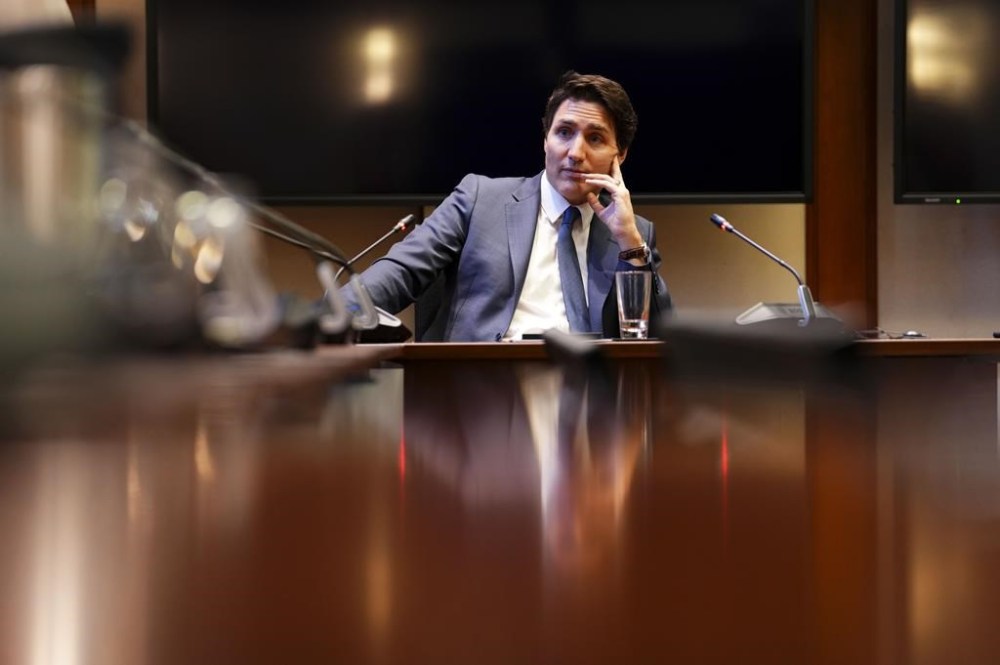
OTTAWA – The federal and provincial governments appear deadlocked in their negotiations on the future of health care in Canada, and Prime Minister Justin Trudeau’s latest comments suggest he will not be the one to blink first.
In a year-end interview with The Canadian Press on Monday, Trudeau said he’s not willing to kick health-care reform down the road any further, even as provincial premiers clamour for more federal funds to bolster their ailing health systems.
“It wouldn’t be the right thing to do to just throw more money at the problem and sit back and watch the problem not get fixed because we didn’t use this moment to say, ‘No, no, no, it’s time to improve the system,'” Trudeau said.
The stalemate is happening while children’s hospitals across the country are inundated with kids suffering from respiratory diseases. In some cases, hospitals have been overwhelmed by the calamitous combination of record numbers of sick patients and critically low numbers of staff to treat them.
The problem goes back to more than a year ago, when provinces first demanded a sit-down with the prime minister to talk about long-term and sustainable funding increases after pandemic strain left them with large backlogs and a burnt-out workforce.
They want to see Ottawa cover 35 per cent of health-care costs across the country, up from the current 22 per cent, by increasing the Canada Health Transfer.
Trudeau told them those discussions should wait until after the pandemic but dedicated $2 billion in one-time funding to tide them over during the Omicron wave.
Now the prime minister says the system needs reform, and he’s not going to give up the money unless the provinces commit to change.
“Canadians are right to look at all orders of government and say, ‘This is terrible. You guys really need to solve this,'” Trudeau said.
Reform is already underway in most provinces, but the federal government does not seem willing to join them at the table yet, British Columbia Health Minister Adrian Dix said in an interview Tuesday.
His province has embarked on primary-care reform, made spaces for more nurses and signed new collective agreements with health workers, all while coping with an extraordinary increase in demand for services, he said. And Trudeau praised many of the recent changes B.C. has undertaken.
“I would think that the federal government would want to be part of that and to contribute its share, and that’s what we’re asking,” Dix said.
Health Minister Jean-Yves Duclos made an overture to the provinces last month, offering an increase to the federal health transfer in exchange for improved data sharing across the country.
But the meeting ended without progress. Dix said Duclos came to the table with no specifics, and conversations about the health transfer have continued to be elusive with the Liberals.
“It’s always a new moving excuse, a new line in the sand that drifts away after the tide comes in,” he said.
Imposing performance measures on the provinces that affect their access to the Canada Health Transfer is more or less unheard of, said Haizhen Mou, a professor at the University of Saskatchewan who studies health policy.
It’s understandable that provincial leaders don’t want to change that precedent, she said in an interview Tuesday.
“I don’t think the federal government has the right to impose such performance indicators on the broad kind of health transfer,” she said, but added that she understands why the Liberals don’t want to continue to put money toward a system that’s not working.
A more politically palatable situation might be to offer targeted funds for specific priorities and sign individual agreements with each province, she said, rather than treating them all the same way.
That’s what the Paul Martin government did in 2005 to address wait times, and what Trudeau did in 2016 to fund mental-health and home-care services in the face of similar circumstances.
In 2016, the provinces were united as they pushed for an unconditional increase to the health transfer, “but in the end they broke apart, the alliance broke,” Mou said.
That year, the government first signed a bilateral agreement with New Brunswick and other provinces then followed suit individually. Mou said she thinks it’s only a matter of time before that happens again.
“I’m not sure how long they can hold out, because the revenue, the power of the fiscal capacity, is still in the federal government’s hands,” she said.
Health-care advocates, including nurses and doctors’ associations, have echoed Trudeau’s call for a plan to transform Canada’s broken system and to do it quickly.
“Patient care is suffering while health-care working conditions for nurses and other health workers deteriorate,” said Canadian Federation of Nurses Unions president Linda Silas, after talks between health ministers ended last month.
“It is absolutely critical that we put aside politicking and get down to productive discussions around concrete solutions to the health-care staffing crisis.”
Dix said that can’t happen until the prime minister is willing to come to the table for an open discussion. He said Trudeau has not committed to that.

Trudeau tends to speak to premiers often about health care on a one-on-one basis, and his ministers are working bilaterally with their provincial and territorial counterparts, too.
Asked Monday how he plans to kick-start the negotiations if he won’t sit down with premiers as a group, Trudeau seemed to suggest that it’s up to provincial and territorial leaders to take the next step.
“We’re absolutely willing to invest much more in health care, but there has to be clear commitments and results that are going to change things for Canadians,” he said.
For now, each side appears to believe that the ball is in the other’s court.
This report by The Canadian Press was first published Dec. 13, 2022.