China vows to drop some travel tracking in COVID rule easing

Advertisement

Advertise with us

BEIJING (AP) — China said it would stop tracking some travel, potentially reducing the likelihood people will be forced into quarantine for visiting COVID-19 hot spots, as part of an uncertain exit from the strict pandemic policies that helped fuel widespread protests.

Read this article for free:


By clicking the button above, an account will be created and you will begin to receive some of our recommended newsletters. You may opt out of any newsletter by visiting your Email and Communication Preferences page or by clicking "unsubscribe" at the bottom of any email.

or

Already have an account? Log in here »

To continue reading, please subscribe:

Digital Subscription

One year of digital access for only $1.44 a week*

  • Enjoy unlimited reading on winnipegfreepress.com
  • Read the E-Edition, our digital replica newspaper
  • Access News Break, our award-winning app
  • Play interactive puzzles

*Billed as $5.77 plus GST every four weeks. After 52 weeks, price increases to the regular rate of $19.95 plus GST every four weeks. Offer available to new and qualified returning subscribers only. Cancel any time.

To continue reading, please subscribe:

Add Free Press access to your Brandon Sun subscription for only an additional

$1 for the first 4 weeks*

  • Enjoy unlimited reading on winnipegfreepress.com
  • Read the E-Edition, our digital replica newspaper
  • Access News Break, our award-winning app
  • Play interactive puzzles
Start now

*Your next Brandon Sun subscription payment will increase by $1.00 and you will be charged $17.95 plus GST for four weeks. After four weeks, your payment will increase to $24.95 plus GST every four weeks.

Hey there, time traveller!
This article was published 12/12/2022 (1419 days ago), so information in it may no longer be current.

BEIJING (AP) — China said it would stop tracking some travel, potentially reducing the likelihood people will be forced into quarantine for visiting COVID-19 hot spots, as part of an uncertain exit from the strict pandemic policies that helped fuel widespread protests.

Once midnight hit Monday, the part of a smart phone app that recorded a person’s travel between cities and provinces showed an out-of-service message. Another app used to restrict the movement of those who test positive or enter an area with a recent outbreak remains in effect. They’re part of a package of pandemic apps, some of which have also been used by local governments to suppress protests.

The move follows the government’s dramatic announcement last week that it was ending many of the strictest measures, following three years during which it enforced some of the world’s tightest virus restrictions. That included near-constant testing, open-ended lockdowns and requirements that a clean bill of health be shown to access public areas.
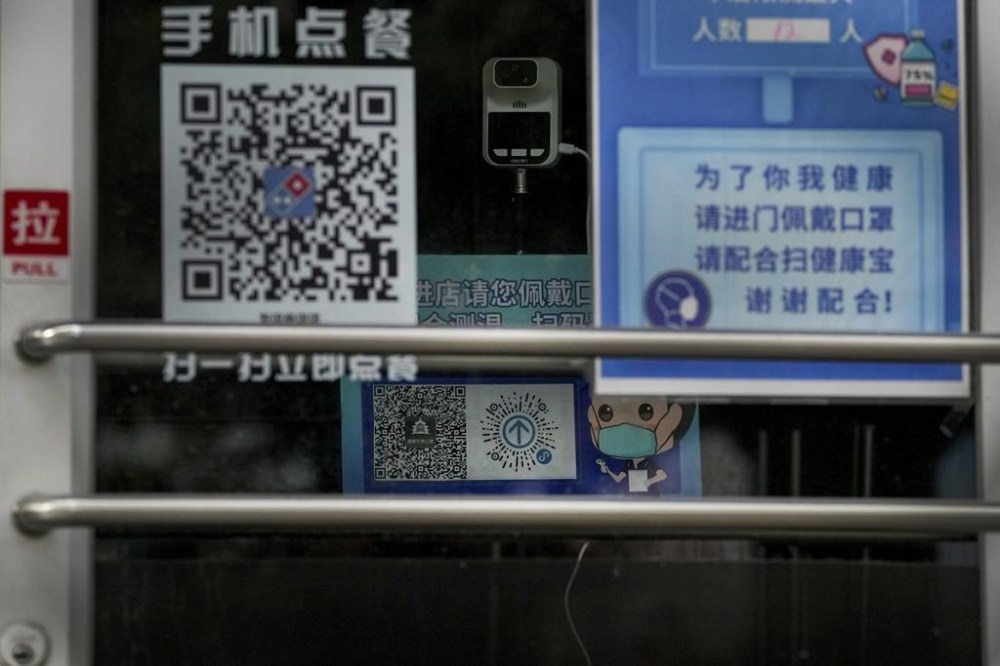
A temperature scanner stands near a display note showing a health check and travel QR codes at a closed fast-food restaurant in Beijing, Monday, Dec. 12, 2022. China will drop a travel tracing requirement as part of an uncertain exit from its strict
A temperature scanner stands near a display note showing a health check and travel QR codes at a closed fast-food restaurant in Beijing, Monday, Dec. 12, 2022. China will drop a travel tracing requirement as part of an uncertain exit from its strict "zero-COVID" policies that have elicited widespread dissatisfaction. (AP Photo/Andy Wong)

Last month in Beijing and several other cities, protests over the restrictions grew into calls for leader Xi Jinping and the Communist Party to step down — a level of public dissent not seen in decades.

While met with relief, the relaxation has also sparked concerns about a new wave of infections potentially overwhelming health care resources in some areas.

The easing of measures means a sharp drop in testing, but cases still appear to be rising rapidly. China reported 8,500 new infections on Monday, bringing the nation’s total to 365,312 — more than double the level on Oct. 1. It has recorded 5,235 deaths — compared to 1.1 million in the United States.

China’s government-supplied figures have not been independently verified and questions have been raised about whether the ruling Communist Party has sought to minimize numbers of cases and deaths.

Fever clinics at hospitals in Beijing received 22,000 patients on Sunday — 16 times higher than previous week.

Following a rush last week to buy cold and flu medicine in many major Chinese cities, pharmacies in Hong Kong have reported a run on such medications by customers supplying relatives in mainland China, according to Lam Wai-man, chairman of the pharmacy trade association in the semi-autonomous southern Chinese city. Hong Kong has already lifted most of its COVID-19 restrictions.

“Everyone on the mainland wants to buy some pills to have in reserve at home,” Lam said.

Alan Cheung, the owner of the Sands Medicine Shop in the Wan Chai district, said he was receiving around 10 inquiries about flu medication from mainland residents every day.

“Normally, no one would ask me about this kind of product,” Cheung said.
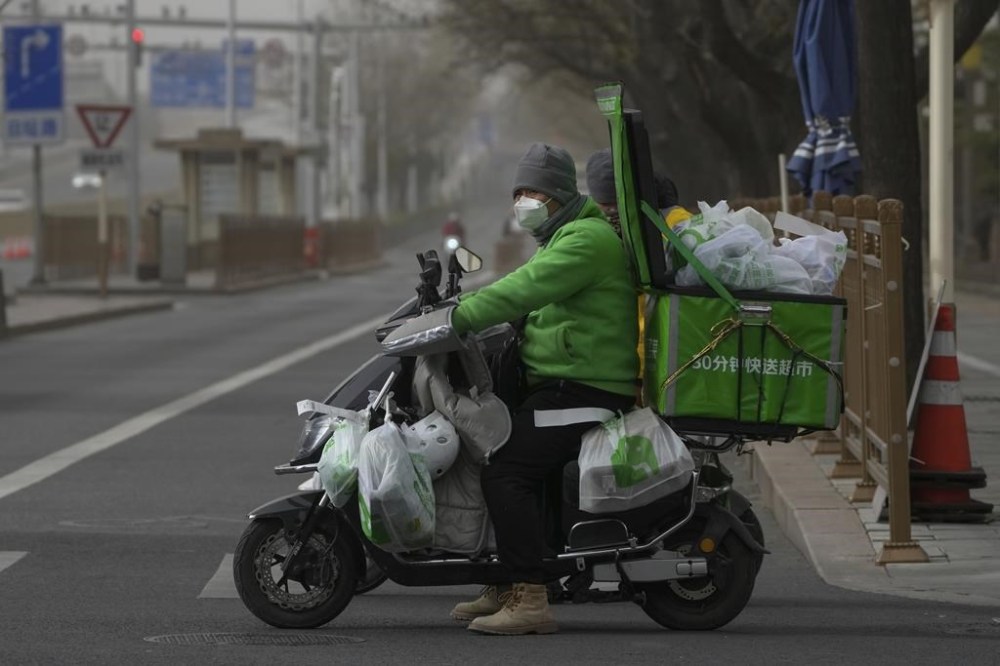
A delivery worker rides on his bike loaded with customers' online order groceries on a street in Beijing, Monday, Dec. 12, 2022. China will drop a travel tracing requirement as part of an uncertain exit from its strict
A delivery worker rides on his bike loaded with customers' online order groceries on a street in Beijing, Monday, Dec. 12, 2022. China will drop a travel tracing requirement as part of an uncertain exit from its strict "zero-COVID" policies that have elicited widespread dissatisfaction. (AP Photo/Andy Wong)

The uncertainty and apparent growing number of cases have forced the cancellation of events from foreign embassy holiday parties to next spring’s Formula One Chinese Grand Prix car race in Shanghai.

Xi’s government is still officially committed to stopping virus transmission, the last major country to try. But the latest moves suggest the party will tolerate more cases without quarantines or shutting down travel or businesses as it winds down its “zero COVID” strategy.

Facing a surge in COVID-19 cases, China is setting up more intensive care facilities and trying to strengthen hospitals’ ability to deal with severe cases. At the same time, part of the relaxation means the government will allow those with mild symptoms to recuperate at home rather than being sent to field hospitals that have become notorious for overcrowding and poor hygiene.

Reports on the Chinese internet, which is tightly controlled by the government, sought to reassure a nervous public, stating that restrictions would continue to be dropped and travel, indoor dining and other economic activity would soon be returning to pre-pandemic conditions.

China’s leaders had long praised “zero COVID” for keeping numbers of cases and deaths much lower than in other nations, but officials have recently begun to talk about the virus as far less threatening and now say the most prevalent omicron variety poses much less of a risk.

Amid the unpredictable messaging from Beijing, experts warn there still is a chance the ruling party might reverse course and reimpose restrictions if a large-scale outbreak ensues.

Last week’s announcement allowed considerable room for local governments to assign their own regulations. Most restaurants in Beijing, for example, still require a negative test result obtained over the previous 48 hours and rules are even stricter for government offices.

The change in policy comes after protests erupted Nov. 25 after 10 people died in a fire in the northwestern city of Urumqi. Many questioned whether COVID-19 restrictions impeded rescue efforts. Authorities denied the claims spread online, but demonstrators gave voice to longstanding frustration in cities such as Shanghai that have endured severe lockdowns.

The party responded with a massive show of force and an unknown number of people were arrested at the protests or in the days following.
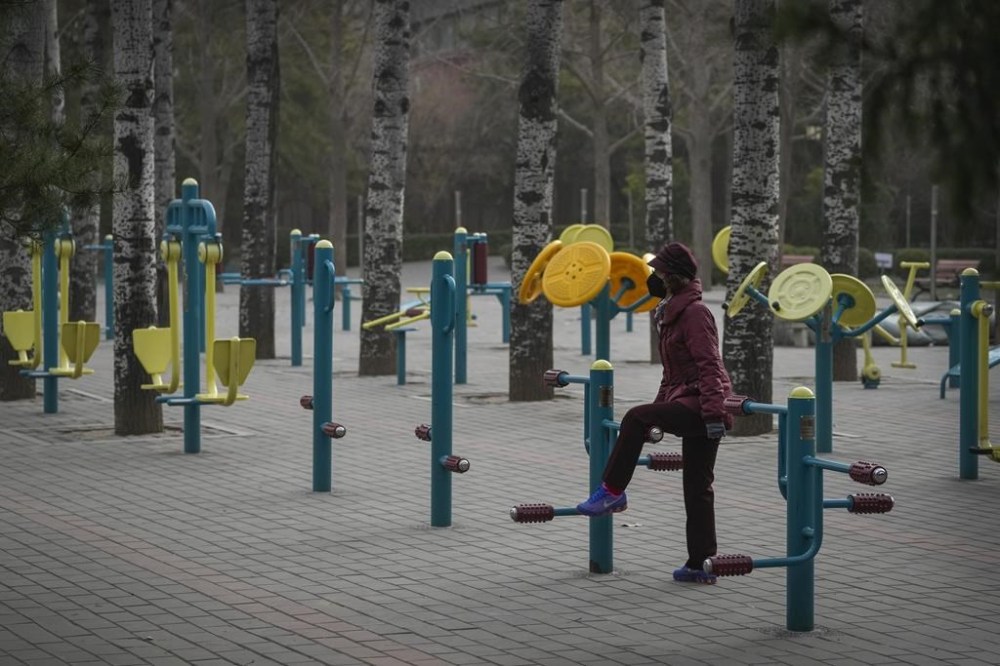
A masked resident massages her leg at a quiet gym equipments area inside a public park in Beijing, Monday, Dec. 12, 2022. China will drop a travel tracing requirement as part of an uncertain exit from its strict
A masked resident massages her leg at a quiet gym equipments area inside a public park in Beijing, Monday, Dec. 12, 2022. China will drop a travel tracing requirement as part of an uncertain exit from its strict "zero-COVID" policies that have elicited widespread dissatisfaction. (AP Photo/Andy Wong)

The relaxation began shortly after — though the government had already announced its intention to begin opening up slowly, promising to reduce the cost and disruption after the economy shrank by 2.6% from the previous quarter in the three months ending in June.

Forecasters say the economy probably is shrinking in the current quarter. Imports tumbled 10.9% from a year ago in November in a sign of weak demand.

Some forecasters have cut their outlook for annual growth to below 3%, less than half of last year’s robust 8.1% expansion.

___

Associated Press reporter Kanis Leung in Hong Kong contributed to this report.

Report Error Submit a Tip

More Stories

Herd charge out of the gate

Joshua Frey-Sam 5 minute read Preview

Herd charge out of the gate

Joshua Frey-Sam 5 minute read 10:38 PM CDT

The Manitoba Bisons have designs on finding some sustained success this season.

A solid first step was taken Friday night, as the Bisons earned a hard-fought 83-70 season-opening victory against the cross-town rival Winnipeg Wesmen in Canada West women’s hoops action at the Duckworth Centre.

Fourth-year forward Anna Miko propelled the Bisons on the strength of an 18-point, 10-rebound double-double, while Samantha Onyebuchi also supplied an 11-point, 10-rebound double-double.

“We’ve all basically played against each other for the last, what, six-ish years? So I mean it’s nice to come compete in university, but especially in their gym, it’s sweeter to get the win,” Miko said.

Read
10:38 PM CDT

A timeline of the WE Charity controversy

The Canadian Press 9 minute read Wednesday, Aug. 19, 2020

OTTAWA - A timeline of events regarding the Canada Student Service Grant program, based on public documents, events and statements from cabinet ministers, government officials, and WE Charity:

March 6, 2020: WE Charity staff prepare a concept paper on service learning for public servants at Employment and Social Development Canada.

April 5: Finance Minister Bill Morneau and Prime Minister Justin Trudeau talk over the phone about how to help students whose summer job and volunteer opportunities were vanishing due to the COVID-19 pandemic. Finance Department officials are tasked with considering options the next morning.

April 7: Small Business Minister Mary Ng and WE co-founder Craig Kielburger have an introductory phone call in which Ng asks WE to send what it calls a ``pre-established proposal'' to help young people launch businesses.

Westman to lose sole medical oncologist

Rylee Gerrard 5 minute read Preview

Westman to lose sole medical oncologist

Rylee Gerrard 5 minute read Updated: 9:26 AM CDT

BRANDON — Western Manitoba is about to lose its only medical oncologist, leaving just 22 in the province — all of whom are in Winnipeg.

Brandon West MLA Wayne Balcaen raised the issue during question period Thursday, saying the departure of Dr. Brady Anderson will be a “major loss” for the region.

After four years working out of the Western Manitoba Cancer Centre in Brandon, Anderson’s last day will be Nov. 13.

“He literally sees hundreds of patients within the Westman area, and now those individuals will have to travel to Winnipeg to get that personal service,” Balcaen said, calling Anderson’s impending departure “catastrophic.”

Read
Updated: 9:26 AM CDT

City rec facilities crumbling

Ryan Thorpe 7 minute read Preview

City rec facilities crumbling

Ryan Thorpe 7 minute read Monday, Oct. 22, 2018

Throughout Winnipeg, decades-old community assets — pools, arenas and recreation and leisure centres — are deteriorating so quickly that service disruptions are inevitable.

Meanwhile, the city’s community services department, which is responsible for managing those assets, operates with an annual deficit of roughly $80 million, meaning there are scant resources to do little more than bail water on a sinking ship.

Soon, Winnipeggers will have a choice: fewer community services or higher costs.

“It poses a huge challenge because we have very limited dollars that we have to invest in our existing facilities. We also have growing demands for new amenities in new areas. We have to be very strategic,” said Ken McKim, manager of asset management for the department.

Read
Monday, Oct. 22, 2018

Trump touts USMCA win in state of the union

James McCarten, The Canadian Press 6 minute read Preview

Trump touts USMCA win in state of the union

James McCarten, The Canadian Press 6 minute read Tuesday, Feb. 4, 2020

WASHINGTON - President Donald Trump declared his scorched-earth political style an unmitigated success Tuesday in a fiercely partisan, made-for-TV state of the union speech that made it clear he expects to be back in the White House next year on the strength of the U.S. economy and his trade deals with Canada, Mexico and China.

Trump, addressing a joint session of Congress in the very chamber where House Democrats voted to impeach him less than two months ago, became only the second president in American history — Bill Clinton was the first — to deliver a state of the union while standing trial in the Senate.

Unrepentant, he pointedly refused to shake the offered hand of House Speaker Nancy Pelosi on the dais before singing the praises of what he billed as "the great American comeback," pointing to strong job growth, a soaring stock market and low unemployment as evidence of his leadership. And when he was done, Pelosi ripped up the speech in full view of the television cameras.

"America's enemies are on the run, America's fortunes are on the rise, and America's future is blazing bright. The years of economic decay are over," Trump declared, taking full credit for the country's "roaring economy," including what he billed as seven million new jobs and the lowest jobless rate in half a century — a "blue-collar boom" that he's counting on to help his re-election chances in November.

Read
Tuesday, Feb. 4, 2020

Opera singer David Daniels no longer in singers’ union following sexual assault guilty plea

The Associated Press 2 minute read Preview

Opera singer David Daniels no longer in singers’ union following sexual assault guilty plea

The Associated Press 2 minute read Thursday, Dec. 21, 2023

NEW YORK (AP) — Countertenor David Daniels is no longer a member of the union for singers following his guilty plea to a charge of sexual assault.

The 57-year-old and his husband, Scott Walters, pleaded guilty to sexual assault of an adult, a second-degree felony, in Houston's Harris County District Court on Aug. 4. Their accuser was aspiring opera singer Sam Schultz.

They both were sentenced to eight years’ probation and required to register as sex offenders.

American Guild of Musical Artists spokesperson Alicia Cook said Wednesday that Daniels is no longer a member of the union.

Read
Thursday, Dec. 21, 2023