China vows to drop some travel tracking in COVID rule easing

Advertisement

Advertise with us

BEIJING (AP) — China said it would stop tracking some travel, potentially reducing the likelihood people will be forced into quarantine for visiting COVID-19 hot spots, as part of an uncertain exit from the strict pandemic policies that helped fuel widespread protests.

Read this article for free:


By clicking the button above, an account will be created and you will begin to receive some of our recommended newsletters. You may opt out of any newsletter by visiting your Email and Communication Preferences page or by clicking "unsubscribe" at the bottom of any email.

or

Already have an account? Log in here »

To continue reading, please subscribe:

Digital Subscription

One year of digital access for only $1.44 a week*

  • Enjoy unlimited reading on winnipegfreepress.com
  • Read the E-Edition, our digital replica newspaper
  • Access News Break, our award-winning app
  • Play interactive puzzles

*Billed as $5.77 plus GST every four weeks. After 52 weeks, price increases to the regular rate of $19.95 plus GST every four weeks. Offer available to new and qualified returning subscribers only. Cancel any time.

To continue reading, please subscribe:

Add Free Press access to your Brandon Sun subscription for only an additional

$1 for the first 4 weeks*

  • Enjoy unlimited reading on winnipegfreepress.com
  • Read the E-Edition, our digital replica newspaper
  • Access News Break, our award-winning app
  • Play interactive puzzles
Start now

*Your next Brandon Sun subscription payment will increase by $1.00 and you will be charged $17.95 plus GST for four weeks. After four weeks, your payment will increase to $24.95 plus GST every four weeks.

Hey there, time traveller!
This article was published 12/12/2022 (1419 days ago), so information in it may no longer be current.

BEIJING (AP) — China said it would stop tracking some travel, potentially reducing the likelihood people will be forced into quarantine for visiting COVID-19 hot spots, as part of an uncertain exit from the strict pandemic policies that helped fuel widespread protests.

Once midnight hit Monday, the part of a smart phone app that recorded a person’s travel between cities and provinces showed an out-of-service message. Another app used to restrict the movement of those who test positive or enter an area with a recent outbreak remains in effect. They’re part of a package of pandemic apps, some of which have also been used by local governments to suppress protests.

The move follows the government’s dramatic announcement last week that it was ending many of the strictest measures, following three years during which it enforced some of the world’s tightest virus restrictions. That included near-constant testing, open-ended lockdowns and requirements that a clean bill of health be shown to access public areas.
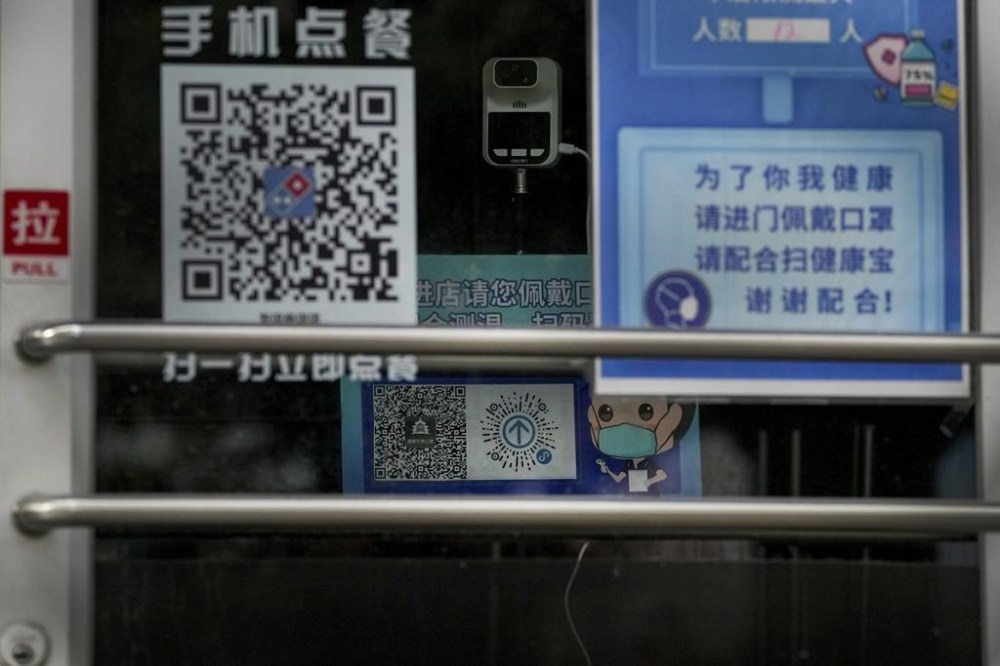
A temperature scanner stands near a display note showing a health check and travel QR codes at a closed fast-food restaurant in Beijing, Monday, Dec. 12, 2022. China will drop a travel tracing requirement as part of an uncertain exit from its strict
A temperature scanner stands near a display note showing a health check and travel QR codes at a closed fast-food restaurant in Beijing, Monday, Dec. 12, 2022. China will drop a travel tracing requirement as part of an uncertain exit from its strict "zero-COVID" policies that have elicited widespread dissatisfaction. (AP Photo/Andy Wong)

Last month in Beijing and several other cities, protests over the restrictions grew into calls for leader Xi Jinping and the Communist Party to step down — a level of public dissent not seen in decades.

While met with relief, the relaxation has also sparked concerns about a new wave of infections potentially overwhelming health care resources in some areas.

The easing of measures means a sharp drop in testing, but cases still appear to be rising rapidly. China reported 8,500 new infections on Monday, bringing the nation’s total to 365,312 — more than double the level on Oct. 1. It has recorded 5,235 deaths — compared to 1.1 million in the United States.

China’s government-supplied figures have not been independently verified and questions have been raised about whether the ruling Communist Party has sought to minimize numbers of cases and deaths.

Fever clinics at hospitals in Beijing received 22,000 patients on Sunday — 16 times higher than previous week.

Following a rush last week to buy cold and flu medicine in many major Chinese cities, pharmacies in Hong Kong have reported a run on such medications by customers supplying relatives in mainland China, according to Lam Wai-man, chairman of the pharmacy trade association in the semi-autonomous southern Chinese city. Hong Kong has already lifted most of its COVID-19 restrictions.

“Everyone on the mainland wants to buy some pills to have in reserve at home,” Lam said.

Alan Cheung, the owner of the Sands Medicine Shop in the Wan Chai district, said he was receiving around 10 inquiries about flu medication from mainland residents every day.

“Normally, no one would ask me about this kind of product,” Cheung said.
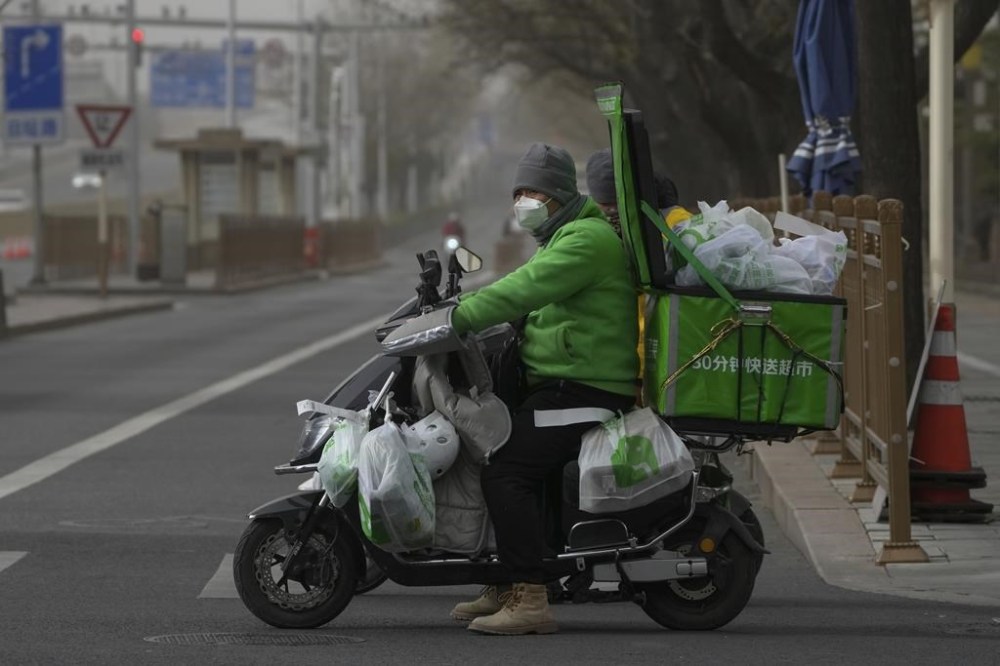
A delivery worker rides on his bike loaded with customers' online order groceries on a street in Beijing, Monday, Dec. 12, 2022. China will drop a travel tracing requirement as part of an uncertain exit from its strict
A delivery worker rides on his bike loaded with customers' online order groceries on a street in Beijing, Monday, Dec. 12, 2022. China will drop a travel tracing requirement as part of an uncertain exit from its strict "zero-COVID" policies that have elicited widespread dissatisfaction. (AP Photo/Andy Wong)

The uncertainty and apparent growing number of cases have forced the cancellation of events from foreign embassy holiday parties to next spring’s Formula One Chinese Grand Prix car race in Shanghai.

Xi’s government is still officially committed to stopping virus transmission, the last major country to try. But the latest moves suggest the party will tolerate more cases without quarantines or shutting down travel or businesses as it winds down its “zero COVID” strategy.

Facing a surge in COVID-19 cases, China is setting up more intensive care facilities and trying to strengthen hospitals’ ability to deal with severe cases. At the same time, part of the relaxation means the government will allow those with mild symptoms to recuperate at home rather than being sent to field hospitals that have become notorious for overcrowding and poor hygiene.

Reports on the Chinese internet, which is tightly controlled by the government, sought to reassure a nervous public, stating that restrictions would continue to be dropped and travel, indoor dining and other economic activity would soon be returning to pre-pandemic conditions.

China’s leaders had long praised “zero COVID” for keeping numbers of cases and deaths much lower than in other nations, but officials have recently begun to talk about the virus as far less threatening and now say the most prevalent omicron variety poses much less of a risk.

Amid the unpredictable messaging from Beijing, experts warn there still is a chance the ruling party might reverse course and reimpose restrictions if a large-scale outbreak ensues.

Last week’s announcement allowed considerable room for local governments to assign their own regulations. Most restaurants in Beijing, for example, still require a negative test result obtained over the previous 48 hours and rules are even stricter for government offices.

The change in policy comes after protests erupted Nov. 25 after 10 people died in a fire in the northwestern city of Urumqi. Many questioned whether COVID-19 restrictions impeded rescue efforts. Authorities denied the claims spread online, but demonstrators gave voice to longstanding frustration in cities such as Shanghai that have endured severe lockdowns.

The party responded with a massive show of force and an unknown number of people were arrested at the protests or in the days following.
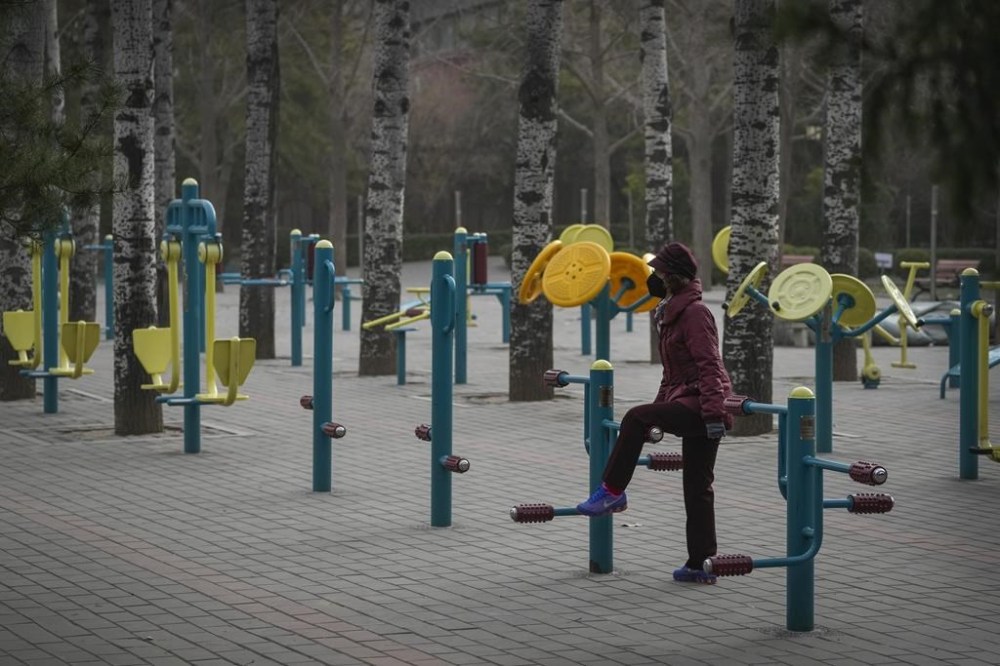
A masked resident massages her leg at a quiet gym equipments area inside a public park in Beijing, Monday, Dec. 12, 2022. China will drop a travel tracing requirement as part of an uncertain exit from its strict
A masked resident massages her leg at a quiet gym equipments area inside a public park in Beijing, Monday, Dec. 12, 2022. China will drop a travel tracing requirement as part of an uncertain exit from its strict "zero-COVID" policies that have elicited widespread dissatisfaction. (AP Photo/Andy Wong)

The relaxation began shortly after — though the government had already announced its intention to begin opening up slowly, promising to reduce the cost and disruption after the economy shrank by 2.6% from the previous quarter in the three months ending in June.

Forecasters say the economy probably is shrinking in the current quarter. Imports tumbled 10.9% from a year ago in November in a sign of weak demand.

Some forecasters have cut their outlook for annual growth to below 3%, less than half of last year’s robust 8.1% expansion.

___

Associated Press reporter Kanis Leung in Hong Kong contributed to this report.

Report Error Submit a Tip

More Stories

Incoming councillor calls for safety improvements on Main Street

Morgan Modjeski 4 minute read Preview

Incoming councillor calls for safety improvements on Main Street

Morgan Modjeski 4 minute read Updated: 8:00 PM CDT

A newly elected city councillor has called for improvements to Main Street after a man in his 60s was hit and killed while in a crosswalk at Main and Jarvis Avenue.

Natalie Smith, who was elected Wednesday to represent the Mynarski ward, attended a small vigil at the site Friday afternoon.

“I walk through here, I bike through here and I have to drive through here. I know at this intersection, I have seen so many close calls,” she said, calling the area, which is north of an underpass, “poorly designed.”

She promised to ask city administration to look into ways to slow down traffic flow on Main Street.

Read
Updated: 8:00 PM CDT

Fawcett promises growth in second term as Brandon mayor

Alex Lambert 2 minute read Preview

Fawcett promises growth in second term as Brandon mayor

Alex Lambert 2 minute read 9:39 AM CDT

BRANDON — Jeff Fawcett promises “incredible opportunities” for Brandon over the next four years.

The incumbent was handily re-elected for a second term as Brandon mayor Wednesday evening, receiving 54 per cent of the vote. He defeated his only challenger, former councillor and MLA Len Isleifson, by 907 votes.

“The next four years presents incredible opportunities for our city,” Fawcett told supporters after the victory. “We’ll continue to support responsible growth, strengthening our neighbourhoods, investing in infrastructure, supporting local businesses, and ensuring Brandon remains a place where families and future generations can thrive.”

Isleifson, a Brandon councillor from 2010 to 2014 and Brandon East Tory MLA from 2016 to 2023, called the result disappointing but said he wouldn’t change anything about his campaign.

Read
9:39 AM CDT

Kinew will listen to city request for new taxes — but no promises

Nicole Buffie 5 minute read Preview

Kinew will listen to city request for new taxes — but no promises

Nicole Buffie 5 minute read Friday, Nov. 1, 2024

Premier Wab Kinew remained coy about whether he would support a new municipal tax in Winnipeg as the city struggles to maintain services.

Kinew dodged questions on the matter Friday afternoon.

“We want to see services strong, we want to see roads getting fixed,” Kinew said. “Affordability is really top of mind … we got to keep life affordable for the average person out there.”

Some of the items being considered for a new tax are: alcohol, online deliveries, vehicle registration, vacant homes, commercial parking and land transfers with an exemption for first-time homebuyers.

Read
Friday, Nov. 1, 2024

Judge halts any construction on housing project across from curling club until he rules on city’s approval

Dean Pritchard 4 minute read Preview

Judge halts any construction on housing project across from curling club until he rules on city’s approval

Dean Pritchard 4 minute read 6:58 PM CDT

A judge has ordered that preliminary construction activities at a hotly contested housing development next door to the Granite Curling Club be “paused” until after he delivers a court ruling that could decide its future.

At a hearing last June, lawyers for the curling club urged King’s Bench Justice Ami Kotler to quash a city bylaw approving the project, set to be built on a parking lot owned by the city but used for decades by the curling club, arguing the decision was rushed and significantly flawed.

Kotler has not yet delivered his decision.

On Friday, curling club lawyer James Mercury told court project developer Granite Project Holding Inc. had secured permits to begin “early works” including excavating and shoring of the site and the installation of piles, starting as early as Monday.

Read
6:58 PM CDT

Newspaper websites display fewer stories, more curation

5 minute read Tuesday, Feb. 10, 2026

A city subcommittee was provided with a routine update on the status of an ongoing administrative process Thursday, in accordance with standard reporting procedures.

City rec facilities crumbling

Ryan Thorpe 7 minute read Preview

City rec facilities crumbling

Ryan Thorpe 7 minute read Monday, Oct. 22, 2018

Throughout Winnipeg, decades-old community assets — pools, arenas and recreation and leisure centres — are deteriorating so quickly that service disruptions are inevitable.

Meanwhile, the city’s community services department, which is responsible for managing those assets, operates with an annual deficit of roughly $80 million, meaning there are scant resources to do little more than bail water on a sinking ship.

Soon, Winnipeggers will have a choice: fewer community services or higher costs.

“It poses a huge challenge because we have very limited dollars that we have to invest in our existing facilities. We also have growing demands for new amenities in new areas. We have to be very strategic,” said Ken McKim, manager of asset management for the department.

Read
Monday, Oct. 22, 2018