The challenge and stresses of young people choosing a career in a post-pandemic world

Advertisement

Advertise with us

MONTREAL - Though the winter vacation is fast approaching for students, young people across the country anxious about their post-secondary plans and possible career paths likely won't get a break from worries about the future.

Read this article for free:


By clicking the button above, an account will be created and you will begin to receive some of our recommended newsletters. You may opt out of any newsletter by visiting your Email and Communication Preferences page or by clicking "unsubscribe" at the bottom of any email.

or

Already have an account? Log in here »

To continue reading, please subscribe:

Digital Subscription

One year of digital access for only $1.44 a week*

  • Enjoy unlimited reading on winnipegfreepress.com
  • Read the E-Edition, our digital replica newspaper
  • Access News Break, our award-winning app
  • Play interactive puzzles

*Billed as $5.77 plus GST every four weeks. After 52 weeks, price increases to the regular rate of $19.95 plus GST every four weeks. Offer available to new and qualified returning subscribers only. Cancel any time.

To continue reading, please subscribe:

Add Free Press access to your Brandon Sun subscription for only an additional

$1 for the first 4 weeks*

  • Enjoy unlimited reading on winnipegfreepress.com
  • Read the E-Edition, our digital replica newspaper
  • Access News Break, our award-winning app
  • Play interactive puzzles
Start now

*Your next Brandon Sun subscription payment will increase by $1.00 and you will be charged $17.95 plus GST for four weeks. After four weeks, your payment will increase to $24.95 plus GST every four weeks.

Hey there, time traveller!
This article was published 06/12/2022 (1426 days ago), so information in it may no longer be current.

MONTREAL – Though the winter vacation is fast approaching for students, young people across the country anxious about their post-secondary plans and possible career paths likely won’t get a break from worries about the future.

Eighteen-year-old Juliet Keeley is a first-year psychology student at Concordia University.

For Keeley, the decision to begin a major in psychology came naturally, she said, “after the pandemic and the mental health crisis … we definitely need a lot more counsellors.”
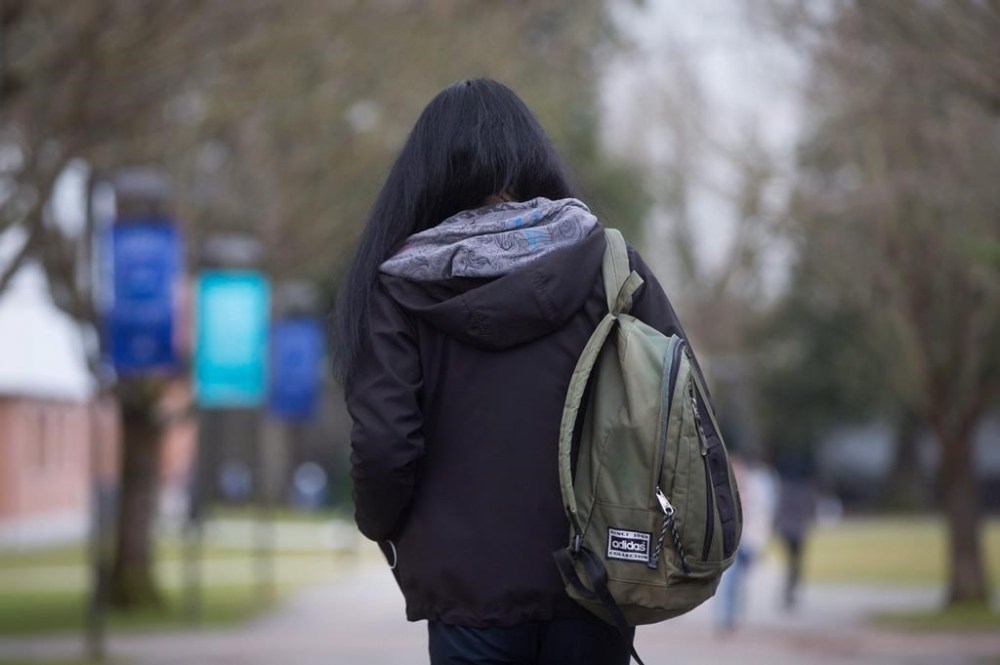
Though the winter vacation is fast approaching for students, young people across the country anxious about their post-secondary plans and possible career paths likely won't get a break from worries about the future. A student carrying a backpack walks on campus at Trinity Western University in Langley, B.C., on Wednesday, February 22, 2017. THE CANADIAN PRESS/Darryl Dyck

This time of life has always been a difficult transition for young people, but making decisions right now is particularly fraught because of economic worries and the effects of the COVID-19 pandemic.

While the pandemic solidified Keeley’s interest in psychology, it also made others question their initial career aspirations.

For example, the additional stress factors have made some of Keeley’s peers reassess their career aspirations in fields such as nursing, which has been under the spotlight during the past few years.

Erjona Mulellari, program manager at the Youth on the Rise work placement program in Montreal, said inflation and the rising cost of living have given young people even more to consider.

Keeley said many of her colleagues have chosen tech industry majors such as computer science in the hope of stronger financial security.

She said the prevalence of technology, climate change and the economy are all external factors to consider.

Abby Walter, program manager at Good2Talk, a service that provides confidential support for post-secondary students, said choosing a career is one of many stressors for young people.

“No matter if you’re in first year or fifth year of university or college, there are times of transition that you’ll have to deal with that still brings discomfort and overwhelm even if you’ve gone through it before,” said Walker.

Keeley said many of her peers entering the exam period for the first time have considered leaving university because the stress and pressure is too high.

Walker said it is normal for post-secondary students to feel homesick, anxious and overwhelmed and that it is important to create a network of support.

“With exams and assignments and having COVID as an added layer on top of that for even more stress, students are really feeling (overwhelmed),” said Walker.

She said the most important thing a young person struggling with mental health can do is to reach out to friends, trusted adults, counsellors or support organizations like Good2Talk.

Returning to class after two years of online and hybrid classes can be a big adjustment. Walker said there are additional stresses that in-person teaching brings such as the social anxiety of being back in a large group of people.

“Next semester I have four online classes out of five,” said Keeley, who is undecided whether she prefers online or in-person classes. “Clearly COVID is still having effects on education today.”

In addition to navigating the world after more than two years of the pandemic, Mulellari said young people also have to navigate the challenging economy. Many students are “chasing higher-paying jobs” to account for inflationary costs while coping with financial anxiety.

This is especially the case for young people who do not have additional financial support, said Mulellari.

“A lot of people in my hometown at least, didn’t end up going to post-secondary or they went to trade school instead,” said Keeley. “They were like, ‘Oh, it’s getting more expensive, I can’t afford that.'”

Mulellari said concerns are less about not finding a job at all, and more about not finding a job that will pay enough.

“There is the fear of hating a job but having to stay in it to afford basic living,” said Mulellari. “They’re afraid of committing because they don’t know what the future will bring.”

Another fear preventing the commitment to a role is the overwhelming number of options to choose from, said Mulellari.

Mulellari has some advice for young people looking to get into the job market while being afraid of not liking a position.

“My advice to them is that they shouldn’t be fearful and scared of new opportunities,” said Mulellari. “They should consider every job as a door to an opportunity, and they should give it a try.”

In addition to providing the possibility to build connections and network with people, it is through trying new roles that a young person can gain work experience while learning their employment preferences.

“There’s nothing wrong with trying and failing and starting all over again,” said Mulellari.

This report by The Canadian Press was first published Dec. 6, 2022.

Report Error Submit a Tip

More Stories

SNC planned U.S. move if no deal: documents

Jordan Press and Christopher Reynolds, The Canadian Press 5 minute read Preview

SNC planned U.S. move if no deal: documents

Jordan Press and Christopher Reynolds, The Canadian Press 5 minute read Thursday, Mar. 28, 2019

OTTAWA - SNC-Lavalin warned federal prosecutors last fall about a possible plan to split the company in two, move its offices to the United States and eliminate its Canadian workforce if it didn't get a deal to avoid criminal prosecution, newly obtained documents show.

The documents, part of a PowerPoint presentation obtained by The Canadian Press, describe something called "Plan B" — what Montreal-based SNC might have to do if it can't convince the government to grant a so-called remediation agreement to avoid criminal proceedings in a fraud and corruption case related to projects in Libya.

Under that plan, SNC would move its Montreal headquarters and corporate offices in Ontario and Quebec to the U.S. within a year, cutting its workforce to just 3,500 from 8,717, before eventually winding up its Canadian operations.

“The government of Canada needs to weigh the public interest impact of the prosecution of SNC-Lavalin," the presentation reads.

Read
Thursday, Mar. 28, 2019

Ottawa announces $500 million for North End sewage plant upgrade

Joyanne Pursaga 4 minute read Preview

Ottawa announces $500 million for North End sewage plant upgrade

Joyanne Pursaga 4 minute read Friday, Oct. 30, 2026

The federal government will provide $500 million to help complete the major upgrade to Winnipeg’s North End sewage treatment plant.

Winnipeg South MP Terry Duguid confirmed the total funding at a news conference at the plant Friday, calling the work critical to Winnipeg’s future.

“The stakes could not be higher. Without expanded wastewater treatment, Winnipeg would run out of capacity to build new homes and accommodate new industries within six years,” said Duguid.

The commitment offers the final funding needed to cover the $1.57-billion third and final phase of the upgrade. The city and province will also pay $500 million each for the work.

Read
Friday, Oct. 30, 2026

Taxi and ride-hailing services receive 58 complaints since March

Jessica Botelho-Urbanski 5 minute read Preview

Taxi and ride-hailing services receive 58 complaints since March

Jessica Botelho-Urbanski 5 minute read Friday, Aug. 17, 2018

The City of Winnipeg has fielded 58 formal complaints about vehicle-for-hire operations since taking over industry oversight from the province in March.

According to freedom of information request results, the city mostly received complaints about taxi operations, and the two largest companies – Duffy’s Taxi and Unicity Taxi – were the main culprits.

From March 1, 2018 to July 13, 2018, the Winnipeg Parking Authority received 20 complaints about Duffy’s, mostly to do with driver road habits (five complaints), driver conduct (three), service refusal (three) or poor service (three), among other issues.

During the same period, Unicity had 19 complaints, five of them related to poor service and three about driver conduct, plus other misdeeds.

Read
Friday, Aug. 17, 2018

Walkout creates chaos at St. James Smitty’s

Morgan Modjeski 3 minute read Preview

Walkout creates chaos at St. James Smitty’s

Morgan Modjeski 3 minute read Yesterday at 2:01 AM CDT

Gordon Sharpe wanted to eat a meal at the St. James Smitty’s Wednesday, but he got a helping of bad news instead.

He saw several workers walk out of the restaurant, at 1017 St. James St.

“(The waiter) came back about 10 minutes later and stood over the table, looking a little distraught and said, ‘I’m quitting right now and so is everybody else,’” Sharpe said. “He said, ‘This is my last time serving you,’ and he was quite choked up.”

“I’ve never seen anything like it,” he said, adding that the managers scrambled to serve patrons.

Read
Yesterday at 2:01 AM CDT

Brandon manufacturer says Canadian steel in demand, but high costs, long delivery times hit hard

Gabrielle Piché 6 minute read Preview

Brandon manufacturer says Canadian steel in demand, but high costs, long delivery times hit hard

Gabrielle Piché 6 minute read Yesterday at 2:01 AM CDT

Something’s different in a Brandon plant.

Building envelope panels — or shells for homes and commercial buildings — keep being produced at Greenstone Building Products.

But the galvanized steel used by workers has been arriving later and the price is constantly increasing, according to company leadership.

“It’s just a little bit nerve-wracking for us to hear the opposite narrative,” said Tilda Fortier, Greenstone Building Products’ business manager.

Read
Yesterday at 2:01 AM CDT

The new normal in Canadian politics

David McLaughlin 5 minute read Preview

The new normal in Canadian politics

David McLaughlin 5 minute read Yesterday at 2:01 AM CDT

“Nothing happening, all at once.”

Welcome to the new normal of Canadian politics, where normality is the new normal. Routine and stable are in; disruptive and excessive are out. Exhibits A and B are the Alberta referendum and the British Columbia election. Voters opted for stability over volatility.

The opposite of being normal is being different from the norm. In politics that means different from where we’ve been and what we’ve come to expect. Two competing trends have dominated our politics for the past decade and a half — progressivism and populism. Think Justin Trudeau and liberal, progressive identity politics in Canada, and Donald Trump and conservative, populist MAGA politics in America. We are now experiencing a swing away from both those trends.

Representing this “new normal” are Prime Minister Mark Carney, for one, and newly elected British Columbia premier, Lorne Doerksen, for another. Both are considered normal because they talk and act like adults in a childish political world. Their political flair is to not have any political flair. They stand out for not standing out.

Read
Yesterday at 2:01 AM CDT