China vows crackdown on ‘hostile forces’ as public tests Xi

Advertisement

Advertise with us

BEIJING (AP) — China’s ruling Communist Party has vowed to “resolutely crack down on infiltration and sabotage activities by hostile forces,” following the largest street demonstrations in decades by citizens fed up with strict anti-virus restrictions. A massive show of force by the security services Wednesday sought to deter further protests.

Read this article for free:


or

Already have an account? Log in here »

To continue reading, please subscribe:

Subscribe and receive a limited-edition Free Press branded hat or tote.

Digital Subscription

One year of digital access for only $205*

  • Enjoy unlimited reading on winnipegfreepress.com
  • Read the E-Edition, our digital replica newspaper
  • Access News Break, our award-winning app
  • Play interactive puzzles

*First annual payment billed as $205.00 + GST for one year. This annual subscription will automatically renew at $233.00 + GST every 52 weeks (10% off the regular annual price of $259.35). Offer available to new and qualified returning subscribers only. Cancel any time.

To continue reading, please subscribe:

Add Free Press access to your Brandon Sun subscription for only an additional

$1 for the first 4 weeks*

  • Enjoy unlimited reading on winnipegfreepress.com
  • Read the E-Edition, our digital replica newspaper
  • Access News Break, our award-winning app
  • Play interactive puzzles
Start now

*Your next Brandon Sun subscription payment will increase by $1.00 and you will be charged $17.95 plus GST for four weeks. After four weeks, your payment will increase to $24.95 plus GST every four weeks.

Hey there, time traveller!
This article was published 29/11/2022 (1405 days ago), so information in it may no longer be current.

BEIJING (AP) — China’s ruling Communist Party has vowed to “resolutely crack down on infiltration and sabotage activities by hostile forces,” following the largest street demonstrations in decades by citizens fed up with strict anti-virus restrictions. A massive show of force by the security services Wednesday sought to deter further protests.

The statement from the Central Political and Legal Affairs Commission released late Tuesday followed protests that broke out over the weekend in Beijing, Shanghai, Guangzhou and several other cities.

While it did not directly address the protests, the statement was a reminder of the party’s determination to enforce its rule.
A protester holds up a paper which reads
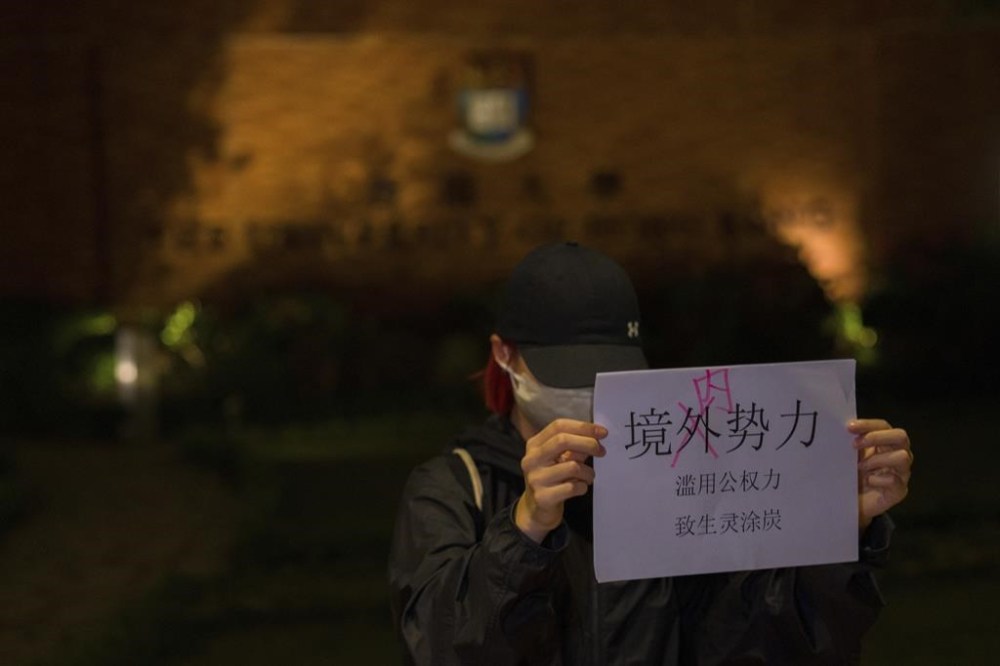
A protester holds up a paper which reads "Not foreign forces but internal forcers" and "Abuse of Government power plunge the people into misery and suffering" during a gathering at the University of Hong Kong in Hong Kong, Tuesday, Nov. 29, 2022. On Tuesday, about a dozen people gathered at the University of Hong Kong, chanting against virus restrictions and holding up sheets of paper with critical slogans. Most were from the mainland, which has a separate legal system from the Chinese territory of Hong Kong, and some spectators joined in their chants. (AP Photo/Bertha Wang)

Hundreds of SUVs, vans and armored vehicles with flashing lights were parked on city streets while police and paramilitary forces conducted random ID checks and searched people’s mobile phones for photos, banned apps or other potential evidence that they had taken part in the demonstrations.

The number of people detained at the demonstrations and in follow-up police actions is not known.

While reports and video of the protests have flourished online before being scrubbed by government censors, they have been ignored entirely by the strictly controlled state media.

Further diverting attention was Wednesday evening’s national news dominated by the death of former president and Communist Party leader Jiang Zemin at the age of 96.

Jiang was installed as leader just ahead of the bloody suppression of the 1989 student-led pro-democracy movement centered on Beijing’s Tiananmen Square, and later presided over an era of breakneck economic growth during the 1990s and early 2000s while still maintaining rigid party control.

The commission’s statement, issued after an expanded session Monday presided over by its head Chen Wenqing, a member of the party’s 24-member Politburo, said the meeting aimed to review the outcomes of October’s 20th party congress.

At that event, Xi granted himself a third five-year term as secretary general, potentially making him China’s leader for life, while stacking key bodies with loyalists and eliminating opposing voices.
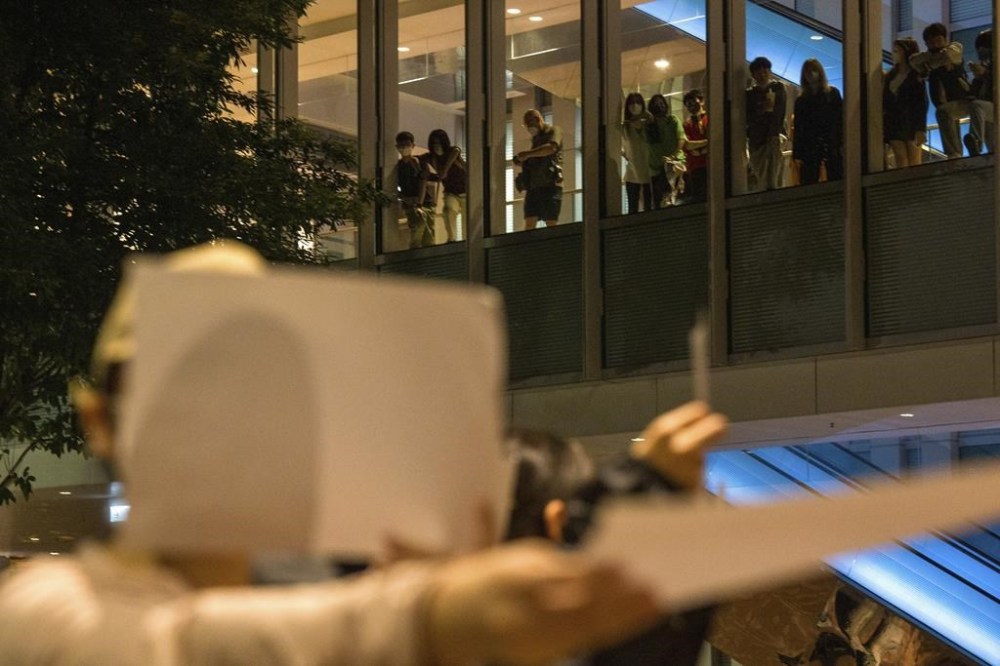
People watch from above at a protest gathering at the University of Hong Kong in Hong Kong, Tuesday, Nov. 29, 2022. On Tuesday, about a dozen people gathered at the University of Hong Kong, chanting against virus restrictions and holding up sheets of paper with critical slogans. Most were from the mainland, which has a separate legal system from the Chinese territory of Hong Kong, and some spectators joined in their chants. (AP Photo/Bertha Wang)

“The meeting emphasized that political and legal organs must take effective measures to … resolutely safeguard national security and social stability,” the statement said.

“We must resolutely crack down on infiltration and sabotage activities by hostile forces in accordance with the law, resolutely crack down on illegal and criminal acts that disrupt social order and effectively maintain overall social stability,” it said.

Yet, less than a month after seemingly ensuring his political future and unrivaled dominance, Xi, who has signaled he favors regime stability above all, is facing his biggest public challenge yet.

He and the party have yet to directly address the unrest, which spread to college campuses and the semi-autonomous southern city of Hong Kong, as well as sparking sympathy protests abroad.

Most protesters focused their ire on the “zero-COVID” policy that has placed millions under lockdown and quarantine, limiting their access to food and medicine while ravaging the economy and severely restricting travel. Many mocked the government’s ever-changing line of reasoning, as well as claims that “hostile outside foreign forces” were stirring the wave of anger.

Yet bolder voices called for greater freedom and democracy and for Xi, China’s most powerful leader in decades, as well as the party he leads, to step down — speech considered subversive and punishable with long prison terms. Some held up blank pieces of white paper to demonstrate their lack of free speech.

The weekend protests were sparked by anger over the deaths of at least 10 people in a fire on Nov. 24 in China’s far west that prompted angry questions online about whether firefighters or victims trying to escape were blocked by anti-virus controls.
A Chinese security person steps out from a police vehicle as they monitor near the site of last weekend's protest in Beijing, Wednesday, Nov. 30, 2022. China's ruling Communist Party has vowed to
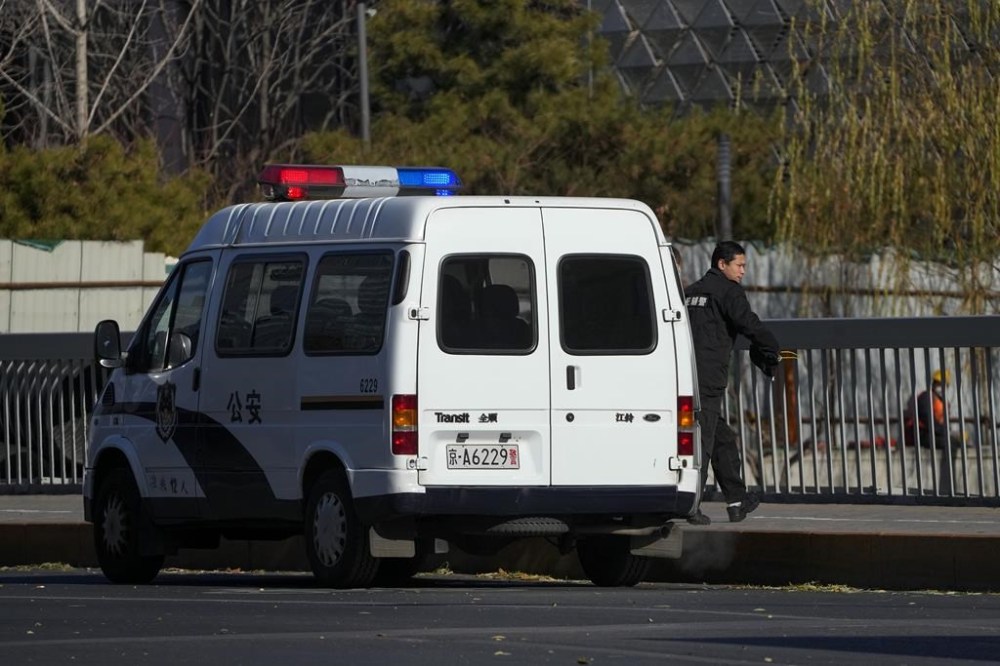
A Chinese security person steps out from a police vehicle as they monitor near the site of last weekend's protest in Beijing, Wednesday, Nov. 30, 2022. China's ruling Communist Party has vowed to "resolutely crack down on infiltration and sabotage activities by hostile forces," following the largest street demonstrations in decades staged by citizens fed up with strict anti-virus restrictions. (AP Photo/Andy Wong)

Authorities eased some controls and announced a new push to vaccinate vulnerable groups after the demonstrations, but maintained they would stick to the “zero-COVID” strategy.

The party had already promised last month to reduce disruptions, but a spike in infections swiftly prompted party cadres under intense pressure to tighten controls in an effort to prevent outbreaks. The National Health Commission on Wednesday reported 37,612 cases detected over the previous 24 hours, while the death toll remained unchanged at 5,233.

Beijing’s Tsinghua University, where students protested over the weekend, and other schools in the capital and the southern province of Guangdong sent students home in an apparent attempt to defuse tensions. Chinese leaders are wary of universities, which have been hotbeds of activism including the Tiananmen protests.

Police appeared to be trying to keep their crackdown out of sight, possibly to avoid encouraging others by drawing attention to the scale of the protests. Videos and posts on Chinese social media about protests were deleted by the party’s vast online censorship apparatus.

“Zero COVID” has helped keep case numbers lower than those of the United States and other major countries, but global health experts including the head of the World Health Organization increasingly say it is unsustainable. China dismissed the remarks as irresponsible.

Beijing needs to make its approach “very targeted” to reduce economic disruption, the head of the International Monetary Fund told The Associated Press on Tuesday.
A police vehicle patrols along the riverbank near the site of last weekend's protest in Beijing, Wednesday, Nov. 30, 2022. China's ruling Communist Party has vowed to
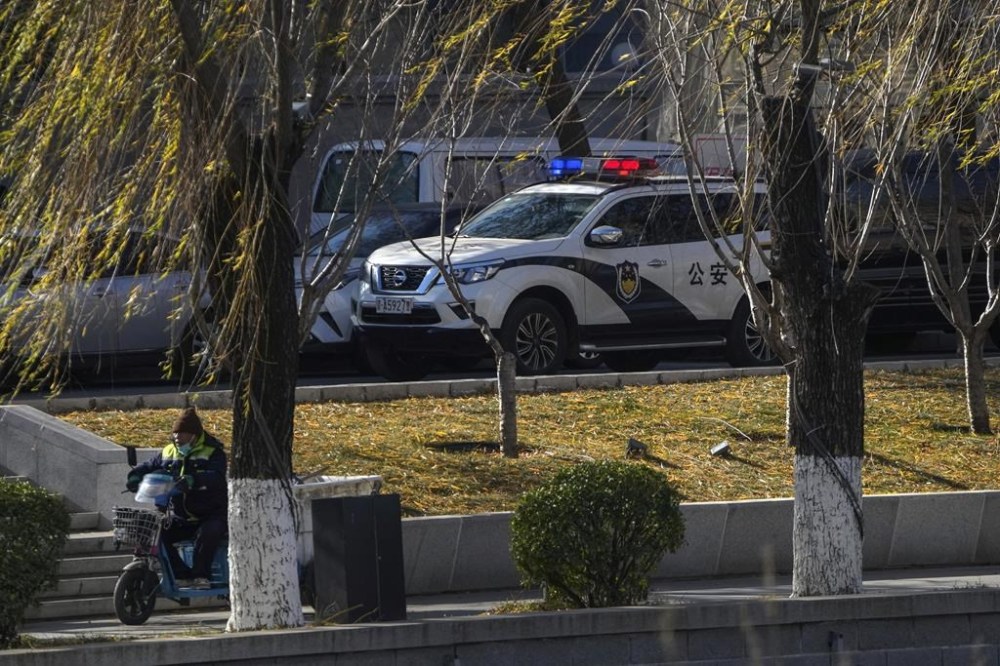
A police vehicle patrols along the riverbank near the site of last weekend's protest in Beijing, Wednesday, Nov. 30, 2022. China's ruling Communist Party has vowed to "resolutely crack down on infiltration and sabotage activities by hostile forces," following the largest street demonstrations in decades staged by citizens fed up with strict anti-virus restrictions. (AP Photo/Andy Wong)

Economists and health experts, however, warn that Beijing can’t relax controls that keep most travelers out of China until tens of millions of older people are vaccinated. They say that means “zero COVID” might not end for as much as another year.

On Wednesday, U.S. Ambassador to China Nicholas Burns said restrictions were, among other things, making it impossible for U.S. diplomats to meet with American prisoners being held in China, as is mandated by international treaty. Because of a lack of commercial airline routes into the country, the embassy has to use monthly charter flights to move its personnel in and out.

“COVID is really dominating every aspect of life” in China, he said in an online discussion with the Chicago Council on Global Affairs.

On the protests, Burns said the embassy was observing their progress and the government’s response, but said, “We believe the Chinese people have a right to protest peacefully.”

“They have a right to make their views known. They have a right to be heard. That’s a fundamental right around the world. It should be. And that right should not be hindered with, and it shouldn’t be interfered with,” he said.

Burns also referenced instances of Chinese police harassing and detaining foreign reporters covering the protests.

“We support freedom of the press as well as freedom of speech,” he said.
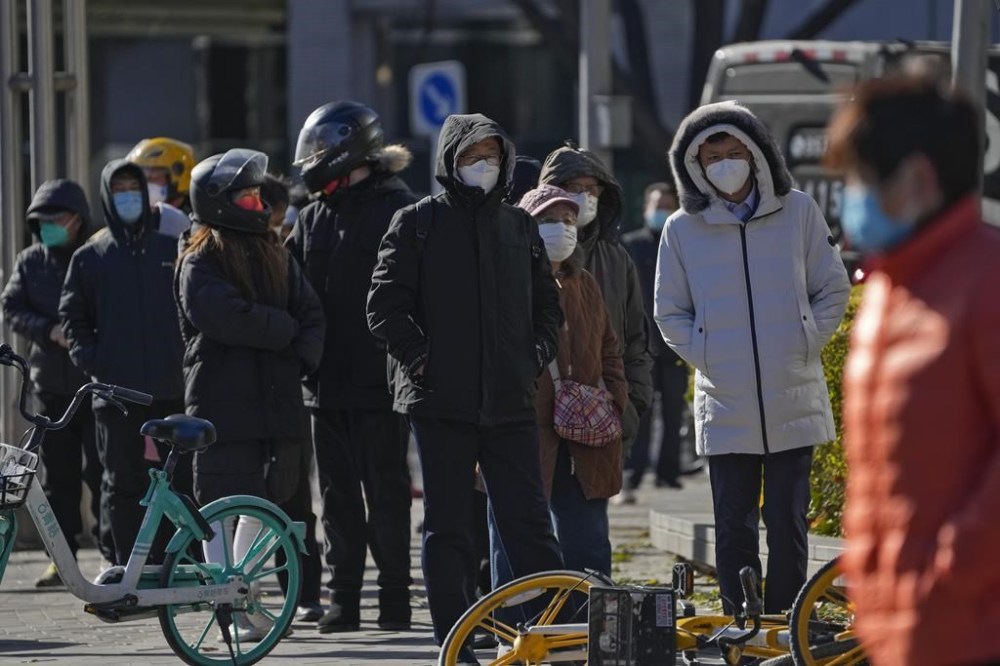
Residents stand in line for their routine COVID-19 tests in the freezing cold weather near the site of last weekend's protest in Beijing, Wednesday, Nov. 30, 2022. China's ruling Communist Party has vowed to
Residents stand in line for their routine COVID-19 tests in the freezing cold weather near the site of last weekend's protest in Beijing, Wednesday, Nov. 30, 2022. China's ruling Communist Party has vowed to "resolutely crack down on infiltration and sabotage activities by hostile forces," following the largest street demonstrations in decades staged by citizens fed up with strict anti-virus restrictions. (AP Photo/Andy Wong)

In Tokyo, scores of protesters took to the streets Wednesday to support the Chinese demonstrations. Dozens of them, mostly Chinese, held signs in Japanese, Chinese and English that said “Xi Jinping step down” and “Crush the Communist Party.”

Asked about the foreign expressions of support for the protesters, Chinese Foreign Ministry spokesperson Zhao Lijian defended his country’s COVID-19 measures and said other nations should mind their own business.

“We hope they will first heed their own peoples’ voices and interests instead of pointing fingers at others,” Zhao said at a daily briefing.


Report Error Submit a Tip

More Stories

Free Press staff 2 minute read Yesterday at 2:01 AM CDT

Advance voting for civic and school board elections begins next week.

Voters can cast early ballots for the Oct. 28 election in certain locations from Monday through Oct. 23.

Eligible voters can use their address to search for a convenient location.

Early votes can be cast at the council building at city hall (510 Main St.) every day, except weekends and Thanksgiving, from Monday to Oct. 23.

Brandonmeat packer thriving on its own

Abiola Odutola 3 minute read Preview

Brandonmeat packer thriving on its own

Abiola Odutola 3 minute read Yesterday at 2:01 AM CDT

BRANDON — Canada Packers has strengthened its business and laid the foundation for future growth during its first year as an independent company, its president says.

The Brandon-based pork producer, separated from Maple Leaf Foods in October 2025, established its own leadership, strategy, systems, culture and identity while continuing operations across its hog production farms and regional hog barns in southern and eastern Manitoba.

The company’s first year was focused on building a successful standalone business while continuing to serve customers, communities and shareholders, president Dennis Organ said.

“Market conditions over the past year have been more challenging than we anticipated when we became a separate entity,” he said in an email. “Despite that, we continued to execute against our priorities, including increasing processing volumes, maintaining disciplined operations and strengthening the business.”

Read
Yesterday at 2:01 AM CDT

May be whiff of truth to ex’s odour ardour

Maureen Scurfield 5 minute read Yesterday at 2:01 AM CDT

DEAR MISS LONELYHEARTS: I ran into an old boyfriend I used to curl on a team with, and we went for drinks. We’ve been almost eight years apart, and I couldn’t remember why we broke up, as we always had such a great time together.

It wasn’t until the second date — this time on a weekend — that it came back to me, with a jolt. Pee-yew! I remembered he doesn’t use deodorant on weekends. Why? He enjoys his own body odour. I recalled that a bit too late, and it was just as awful as ever! I went home early.

Tonight, he called and I refused him another date. I said, “Think back. You remember why we broke up?” Then he said, “Oh yeah, you hated my no-deodorant weekend policy. Well, guess what? Some women don’t mind!” I said I really doubted that, and that ended the conversation. Miss L., wouldn’t any women find stinky underarms offensive?

— Sensitive Nose, Fort Richmond

‘Detrimental to the growth of female hockey in Manitoba’

Joshua Frey-Sam 7 minute read Preview

‘Detrimental to the growth of female hockey in Manitoba’

Joshua Frey-Sam 7 minute read Friday, Oct. 2, 2026

She lived the best of both worlds.

For the last three years, the 17-year-old wore a sweater for two different hockey programs — her high school team and AAA club in the Manitoba Female Hockey League — and was preparing to flourish in both colours again this winter.

Recently, however, the blue-liner was disappointed to learn she is no longer eligible to play her Grade 12 season with her school owing to a new policy imposed by Hockey Manitoba that bans players from participating in the Manitoba Women’s High School Hockey League if they are rostered on a U18 AAA team.

The rule applies to all athletes who play for both Winnipeg-based and rural AAA teams.

Read
Friday, Oct. 2, 2026

Manitoba marks end of sending simple workplace problems to doctor’s office

Tory McNally 7 minute read Preview

Manitoba marks end of sending simple workplace problems to doctor’s office

Tory McNally 7 minute read Yesterday at 2:01 AM CDT

There are some changes in the workplace that make you think: “Well, it’s about time.”

This is one of them.

Starting Oct. 1, Manitoba changed the rules around sick notes. I think it is going to be a wonderful change — not just for doctors and patients, but for employers, employees and the way we think about accountability at work.

The change comes from Bill 11, the Employment Standards Code Amendment Act (Sick Notes for Employee Absences), which received royal assent on June 1 and came into force Thursday. Under the new rules, employers generally cannot require a sick note for an illness or injury unless the employee is away for more than one week or has been absent because of illness or injury for more than 10 scheduled workdays in the calendar year.

Read
Yesterday at 2:01 AM CDT

Letters, Oct. 3

7 minute read Yesterday at 2:01 AM CDT

A morning in the life …

My very first lesson does not start when I walk into that lecture hall, oh no — it starts long before. It begins when I walk to my car, check the estimated arrival time to the University of Manitoba and hope that Winnipeg traffic agrees with it.

A drive that appears completely manageable changes almost immediately when I’m greeted by a tsunami of orange pylons and a line of cars that appears to go on forever. Traffic moves by the inch, lanes magically disappear and the detour I took yesterday now has a detour of its own. These factors make me do a calculation that I have become all too familiar with. How late can I arrive and still find parking, run to my class across campus and get to class with enough time left to make it worth it?

I have grown used to people saying, “Why not just leave earlier?” I do. But when I’m already leaving for my 8:30 a.m. class at 7 a.m., there’s only so much I can do. This drive that some would think is relaxing is one that feels like an assignment that I didn’t know I had to complete and is due at 8:30 a.m.