Positive Poilievre polling leads to talk of easing border restrictions: Tories

Advertisement

Advertise with us

OTTAWA - The government was motivated to reconsider COVID-19 restrictions at Canada's border because of the growing popularity of new Conservative leader Pierre Poilievre, MPs from his caucus said Wednesday.

Read this article for free:


By clicking the button above, an account will be created and you will begin to receive some of our recommended newsletters. You may opt out of any newsletter by visiting your Email and Communication Preferences page or by clicking "unsubscribe" at the bottom of any email.

or

Already have an account? Log in here »

To continue reading, please subscribe:

Digital Subscription

One year of digital access for only $1.44 a week*

  • Enjoy unlimited reading on winnipegfreepress.com
  • Read the E-Edition, our digital replica newspaper
  • Access News Break, our award-winning app
  • Play interactive puzzles

*Billed as $5.77 plus GST every four weeks. After 52 weeks, price increases to the regular rate of $19.95 plus GST every four weeks. Offer available to new and qualified returning subscribers only. Cancel any time.

To continue reading, please subscribe:

Add Free Press access to your Brandon Sun subscription for only an additional

$1 for the first 4 weeks*

  • Enjoy unlimited reading on winnipegfreepress.com
  • Read the E-Edition, our digital replica newspaper
  • Access News Break, our award-winning app
  • Play interactive puzzles
Start now

*Your next Brandon Sun subscription payment will increase by $1.00 and you will be charged $17.95 plus GST for four weeks. After four weeks, your payment will increase to $24.95 plus GST every four weeks.

Hey there, time traveller!
This article was published 21/09/2022 (1494 days ago), so information in it may no longer be current.

OTTAWA – The government was motivated to reconsider COVID-19 restrictions at Canada’s border because of the growing popularity of new Conservative leader Pierre Poilievre, MPs from his caucus said Wednesday.

Several Liberal ministers confirmed they were discussing whether to continue the mandatory use of the ArriveCan app for international travellers and COVID-19 border restrictions like face masks which are set to expire on Sept. 30.

The cabinet has not made any final decisions but is set to meet Thursday afternoon.
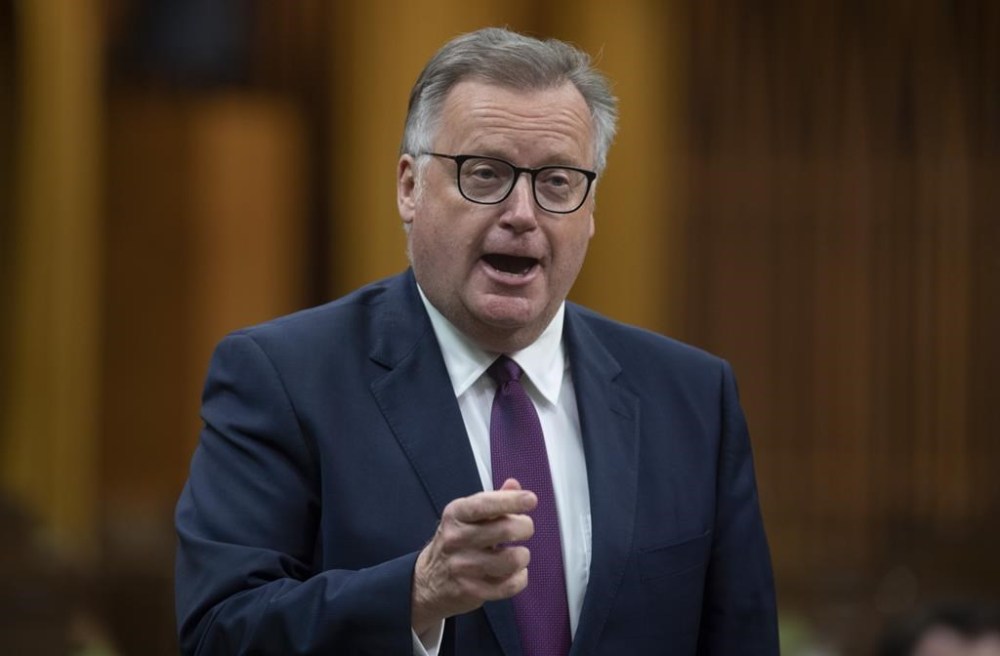
Conservative MP Kevin Waugh rises during Question Period in the House of Commons Tuesday April 13, 2021 in Ottawa. Conservative members of Parliament say the Liberals are playing politics with COVID-19 border restrictions, and talk of scrapping those restrictions may have something to do with the new Conservative leader.THE CANADIAN PRESS/Adrian Wyld

That is when Prime Minister Justin Trudeau returns from the UN General Assembly, where he did not confirm whether his government is ready to lift, or change, any of pandemic measures.

“Every step of the way we have followed the recommendations and the best advice of medical experts, of public health experts, and we will continue to do that,” Trudeau said at a news conference at the United Nations on Wednesday night.

“I can assure you that when we make decisions on how we can move forward and change the situation around various tools that we have in place to keep Canadians safe, Canadians will be the first to know,” he said.

Tourism Minister Randy Boissonnault also said Wednesday the government would “follow the science” when asked about the plans on Parliament Hill.

“We’re going to continue to make sure that as we open up the economy we do so in a systematic and respectful way,” he said.

Current border restrictions mean most foreign nationals are not allowed to travel to Canada unless they have completed a primary series of an approved COVID-19 vaccine, unless they qualify for an exemption. For most vaccines that means at least two doses.

Unvaccinated foreigners who fall into specific categories, such as temporary foreign workers, health-care workers, or crew on airlines or ships, are subject to mandatory arrival tests and a 14-day quarantine.

Vaccinated travellers, including Canadians, may also be selected for mandatory random testing — a system that public health officials have used as an “early warning system” for new variants of the virus entering the country.

Several Conservative MPs welcomed the possibility of ending COVID-19 restrictions for travellers Wednesday, but said they don’t understand what has triggered these discussions — aside from changing political tides.

“I think it might have something to do with the science changing Saturday night when Pierre (Poilievre) was coronated,” quipped Ontario MP Marilyn Gladu on her way into a Conservative caucus meeting.

Poilievre is a staunch opponent of vaccine mandates, and his position on COVID-19 restrictions was a popular element of his leadership campaign.

Saskatoon—Grasswood MP Kevin Waugh said the possible change could have something to do with the latest poll figures.

“Finally they have woken up, because we have a new leader and the polls are not favourable for the Liberals,” Waugh said. “I mean, they’re in trouble.”

Boissonnault rejected the Conservatives’ suggestions outright.

“The measures that we put in place during COVID have nothing to do with the Conservative party and leadership at that time, and nothing that they’re doing on their side affects how we’re governing, or the steps we’re taking to keep Canadians safe,” he said on his way into the Liberal caucus meeting Wednesday.

“As minister of tourism, I want to see as many people come here as safely as possible and so we’re going to continue to discuss this inside government.”

Federal ministers won’t say what recommendations they plan to bring to their cabinet meeting, but assured their decisions will be directed by science rather than politics.

“As everyone knows, these measures are always being reviewed on the basis of the evidence, prudence and the epidemiology,” Health Minister Jean-Yves Duclos said Wednesday.

Conservatives have criticized the government for the lack of transparency about the evidence used to inform COVID-19 public health decisions.

A case study by international research group Pandemics and Borders published in April highlighted similar concerns.

“Claims about the use of scientific evidence to guide decisions have been extensively made but with limited disclosure of what constitutes that scientific evidence,” the researchers concluded after examining Canada’s pandemic border policies.

“The reliance on science-driven narratives, in this context, increased politicization in ways that ultimately undermined the use of science.”

This report by The Canadian Press was first published Sept. 21, 2022.

— With files from Stephanie Taylor and Mia Rabson in Ottawa and James McCarten in New York.

Report Error Submit a Tip

More Stories

Province chips in $15M to bring Pantages Playhouse back to life

Gabrielle Piché 4 minute read Preview

Province chips in $15M to bring Pantages Playhouse back to life

Gabrielle Piché 4 minute read Tuesday, May. 5, 2026

A string quartet performed at the Pantages Playhouse Theatre Tuesday in celebration of a $15-million contribution from the province to raise the curtain at the historic landmark again.

The musicians provided the backdrop to Premier Wab Kinew’s announcement of the cash injection to “help bring the Pantages Playhouse back to life.”

The theatre — which opened in 1914 and was once a hub for vaudeville performers, including Charlie Chaplin — has been closed for eight years.

“This is a tremendous project to advance arts and culture in Winnipeg and across Manitoba, but it’s also a big investment in our downtown,” Kinew said.

Read
Tuesday, May. 5, 2026

Alberta: More federalist than you thought

David McLaughlin 5 minute read Preview

Alberta: More federalist than you thought

David McLaughlin 5 minute read 2:02 AM CDT

Avert your eyes if you don’t like hard-core. This is a hard-core column about the hard-core Alberta separatists who hijacked a party, corrupted a process and failed in their fevered fervour to break up Canada.

First, be of good cheer. Canada won Monday night’s referendum in Alberta. Decisively. Three-quarters of the votes cast were for Option 1: “Alberta should remain a province of Canada.” Only one in four Alberta voters opted for a referendum on separation.

Alberta won, too. That strong vote against separation means the province can look ahead, confident the independence fever dream is boxed. A true win-win and a sad rarity in politics these days.

Be warned, though. Those hard-core separatists are hard dogs to keep on the porch, as the expression goes. They are already agitating to be taken more seriously than the votes warrant. They intend to flex whatever muscle memory remains to depose Premier Danielle Smith from her leadership of the United Conservative Party. Dis-united Conservative Party, anyone?

Read
2:02 AM CDT

Trudeau's climate file gets cabinet shakeup

Mia Rabson, The Canadian Press 5 minute read Preview

Trudeau's climate file gets cabinet shakeup

Mia Rabson, The Canadian Press 5 minute read Tuesday, Oct. 26, 2021

OTTAWA - Prime Minister Justin Trudeau is sending a signal that combating climate change and transforming Canada's economy will fall to more than just one department in his government, say environmental groups.

Jonathan Wilkinson was shuffled from environment to natural resources in a cabinet shakeup Tuesday and Steven Guilbeault moved to environment after spending the last two years as minister of heritage.

Wilkinson, whose background before politics was as the CEO of multiple clean technology companies, will helm a department that has to oversee a transformation for Canada from an oil and gas country to a clean-tech economy, said Caroline Brouillette, director of domestic policy at Climate Action Network Canada.

Guilbeault, who helped found Equiterre during the very first United Nations climate conference in 1992 and was the director for Greenpeace in Quebec, will take on implementing a range of new climate promises including emissions caps on the oil and gas sector, tougher regulations for methane leaks and phasing out subsidies to fossil fuel companies by the end of next year.

Read
Tuesday, Oct. 26, 2021

With 18,000 students in 59 government-funded schools, independent schools are playing an increasingly important role in Manitoba.

Many of these schools are religious schools like The King’s School, Dasmesh School, Springs Christian Academy, Mennonite Brethren Collegiate Institute, Beautiful Saviour Lutheran School, Linden Christian School, Steinbach Christian School and IQRA Islamic School.

On its website, the provincial government says it “strongly supports the rights of parents and guardians to choose their child’s education. Parents choose independent schools for reasons such as faith, philosophy of teaching and learning, and tradition.”

This is quite a contrast to 110 years ago. That’s when the province passed the School Attendance Act of 1916 as a way, during wartime, to promote integration and social cohesion.

Building generational equity

Joel Schlesinger 6 minute read Preview

Building generational equity

Joel Schlesinger 6 minute read 2:02 AM CDT

Ayobimpe Omisore is a Winnipeg single mother of four who knows all too well about working just to make the rent.

A little more than a year ago, she was struggling to pay $2,400 a month for a two-bedroom unit in St. Norbert.

She picked up extra shifts whenever she could as a health-care aide to keep up with the costs.

“I was lamenting about it at work one day, and a colleague said, ‘If you’re paying this much on rent, I think you can afford a mortgage,’” says Omisore, who came to Canada four years ago from Nigeria where she worked as a logistics manager.

Read
2:02 AM CDT

Feds to suspend COVID-19 vaccine mandates

Laura Osman, The Canadian Press 6 minute read Preview

Feds to suspend COVID-19 vaccine mandates

Laura Osman, The Canadian Press 6 minute read Tuesday, Jun. 14, 2022

OTTAWA - The Canadian government will "suspend" COVID-19 vaccine mandates for domestic and outbound international travellers and federally regulated workers, ministers announced Tuesday.

The new rules will come into effect on June 20, though the requirements for foreign nationals coming to Canada will not change.

Several ministers lauded Canada's high vaccination rate at a news conference to announce the changes, but Intergovernmental affairs Minister Dominic LeBlanc warned the government is prepared to "bring back" necessary policies if there's a resurgence of the virus in the fall.

Travel industry groups have blamed federal public health measures and mandates for slowdowns at airport customs that have contributed to long waits for passengers and forced flight delays and cancellations.

Read
Tuesday, Jun. 14, 2022