‘The Fabelmans’ wins People’s Choice, ‘Riceboy Sleeps’ snags Platform Prize at TIFF
Advertisement
Read this article for free:
or
Already have an account? Log in here »
To continue reading, please subscribe:
Digital Subscription
One year of digital access for only $1.44 a week*
- Enjoy unlimited reading on winnipegfreepress.com
- Read the E-Edition, our digital replica newspaper
- Access News Break, our award-winning app
- Play interactive puzzles
*Billed as $5.77 plus GST every four weeks. After 52 weeks, price increases to the regular rate of $19.95 plus GST every four weeks. Offer available to new and qualified returning subscribers only. Cancel any time.
To continue reading, please subscribe:
Add Free Press access to your Brandon Sun subscription for only an additional
$1 for the first 4 weeks*
- Enjoy unlimited reading on winnipegfreepress.com
- Read the E-Edition, our digital replica newspaper
- Access News Break, our award-winning app
- Play interactive puzzles
*Your next Brandon Sun subscription payment will increase by $1.00 and you will be charged $17.95 plus GST for four weeks. After four weeks, your payment will increase to $24.95 plus GST every four weeks.
Read unlimited articles for free today:
or
Already have an account? Log in here »
Hey there, time traveller!
This article was published 18/09/2022 (1504 days ago), so information in it may no longer be current.
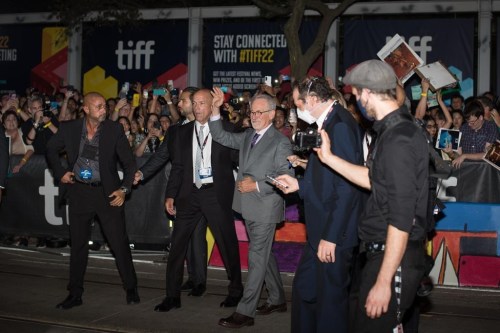
TORONTO – Steven Spielberg’s debut at the Toronto International Film Festival proved to be a hit with audiences, as his semi-autobiographical film “The Fabelmans” snagged the coveted People’s Choice prize on Sunday.
Canadian films also saw a strong showing at TIFF’s award breakfast, with “Riceboy Sleeps” winning the prestigious Platform Prize.
But in what observers saw as an auspicious start to an Academy Awards campaign, the viewer-selected People’s Choice Award went to “The Fabelmans,” a coming-of-age ode to cinema that Spielberg described as “the most personal film I’ve made.”
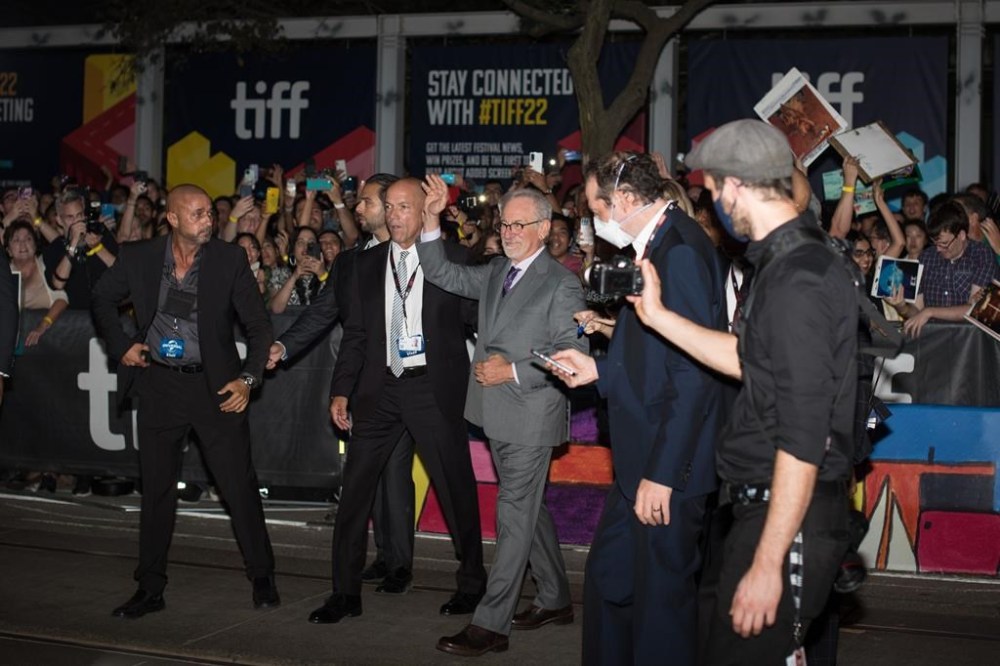
“Above all, I’m glad I brought this film to Toronto,” Spielberg said in a statement shared during Sunday’s presentation at the TIFF Bell Lightbox.
“The warm reception from everyone in Toronto made my first visit to TIFF so intimate and personal for me and my entire ‘Fabelman’ family.”
In the vein of “Belfast” and “Roma,” “The Fabelmans” is an auteur filmmaker’s retelling of his own childhood and the family dynamics that shaped him.
Set in midcentury Arizona, the drama stars Michelle Williams and Paul Dano as the parents of teenage cinephile Sammy Fabelman, while Seth Rogen takes on the role of a close family friend.
The People’s Choice Award, which is chosen by the public through online votes, is often seen as a predictor of Academy Award success.
Among the previous People’s Choice winners that have nabbed best picture are “Nomadland,” “Green Book,” “12 Years a Slave,” “The King’s Speech” and “Slumdog Millionaire.”
The first runner-up for this year’s prize was Canadian filmmaker Sarah Polley’s adaptation of Miriam Toews’ novel “Women Talking,” which centres on a remote religious community grappling with how to respond to a serial problem of sexual abuse.
The second runner-up was “Glass Onion: A Knives Out Mystery,” Rian Johnson’s star-studded followup to his 2019 TIFF hit about the adventures of drawling detective Benoit Blanc, played by Daniel Craig.
Sunday’s awards show capped off TIFF’s in-person comeback as a global cinematic destination featuring 10 days of filmgoing and festivities.
The festival celebrated homegrown talent in both dedicated Canadian categories and worldwide competitions.
Vancouver writer-director Anthony Shim’s breakout second feature “Riceboy Sleeps” was honoured with the Platform Prize, chosen by an international jury headed by Canadian filmmaker Patricia Rozema.
In announcing the winner of the $20,000 prize, Rozema said “Riceboy Sleeps” stood out among the diverse field of international contenders for its “deeply moving story” about navigating a “specifically Canadian version of racism.”
Set in the 1990s, the film explores the ruptures that form between a South Korean single mom and her teenage son as they start anew in Canada.
As he took to the stage to accept the award, Shim choked back tears while thanking his mother and little sister “who always believed that I could do things like this, even at my lowest points.”
Shim said in an interview that it was “surreal” to receive so much acknowledgment for a story that means so much to him.
“I just figured that the smartest thing I could do making this film is to be as personal as I can,” said Shim. “To bare as much of my own self and my heart into this. And hopefully that will help this film not become redundant and find its own life.”
Oscar-nominated Canadian filmmaker Hubert Davis’s “Black Ice,” which looks at how anti-Black racism has shaped hockey, picked up the People’s Choice Documentary Award.
“We would like to thank all the players who opened up their stories to us in order to try and make meaningful change in the game of hockey,” Davis said in a statement read at the ceremony.
“This journey to uncover often untold stories of the Black contribution to not only hockey but this country is just beginning. And we are honoured this film can play a small role in contributing to that conversation.”
Canadian-Italian filmmaker Luis De Filippis’s debut feature, “Something You Said Last Night,” took the Shawn Mendes Foundation’s Changemaker Award, which comes with a $10,000 cash prize. The Canadian-Swiss drama follows a young transgender woman who accompanies her family on vacation.
In an interview, De Filippis said the recognition felt like coming full circle.
“It’s cool to be back and to be honoured by the institution that I used to serve popcorn for and tickets for,” De Filippis said.

The Amplify Voices Award for Best Canadian Feature Film, worth $10,000, went to Toronto-raised director Nisha Pahuja’s documentary ”To Kill a Tiger,” about a farmer in India who is fighting for justice in the gang rape of his 13-year-old daughter.
TIFF CEO Cameron Bailey said the festival’s conclusion marked the culmination of months of work to navigate a shifting COVID-19 landscape.
But after two years of programming hampered by the pandemic, Bailey said he was pleased to see movie lovers from around the world return to Toronto.
“Some of the things we talked about … is that we had to come back strong. But the principle was bringing people back together,” Bailey said. “It’s not a festival as we know it if you don’t have people together in large numbers.”
This report by The Canadian Press was first published Sept. 18, 2022.
Related Articles
Spielberg delivers his own origin story in personal film
Advertisement Advertise With Us
Advertisement Advertise With Us