International partners had concern about Canada’s ‘ability to handle’ convoy protests

Advertisement

Advertise with us

OTTAWA - Two days before the Emergencies Act was invoked last February to quell anti-government convoy protests, Prime Minister Justin Trudeau warned cabinet ministers that international partners were concerned Canada wasn't able to control the situation.

Read this article for free:


or

Already have an account? Log in here »

To continue reading, please subscribe:

Subscribe and receive a limited-edition Free Press branded hat or tote.

Digital Subscription

One year of digital access for only $205*

  • Enjoy unlimited reading on winnipegfreepress.com
  • Read the E-Edition, our digital replica newspaper
  • Access News Break, our award-winning app
  • Play interactive puzzles

*First annual payment billed as $205.00 + GST for one year. This annual subscription will automatically renew at $233.00 + GST every 52 weeks (10% off the regular annual price of $259.35). Offer available to new and qualified returning subscribers only. Cancel any time.

To continue reading, please subscribe:

Add Free Press access to your Brandon Sun subscription for only an additional

$1 for the first 4 weeks*

  • Enjoy unlimited reading on winnipegfreepress.com
  • Read the E-Edition, our digital replica newspaper
  • Access News Break, our award-winning app
  • Play interactive puzzles
Start now

*Your next Brandon Sun subscription payment will increase by $1.00 and you will be charged $17.95 plus GST for four weeks. After four weeks, your payment will increase to $24.95 plus GST every four weeks.

Hey there, time traveller!
This article was published 12/08/2022 (1494 days ago), so information in it may no longer be current.

OTTAWA – Two days before the Emergencies Act was invoked last February to quell anti-government convoy protests, Prime Minister Justin Trudeau warned cabinet ministers that international partners were concerned Canada wasn’t able to control the situation.

The warning is contained in heavily redacted summaries of three meetings of the government’s incident response group and one meeting of the full cabinet, which were released through the Federal Court as part of a challenge of the government’s use of the act.

Trudeau’s comments on Feb. 12 came the day after he spoke with U.S. President Joe Biden. According to the White House, Biden expressed concerns about the impact of blockades at border crossings, including the Ambassador Bridge in Windsor, Ont., on U.S. companies and workers.
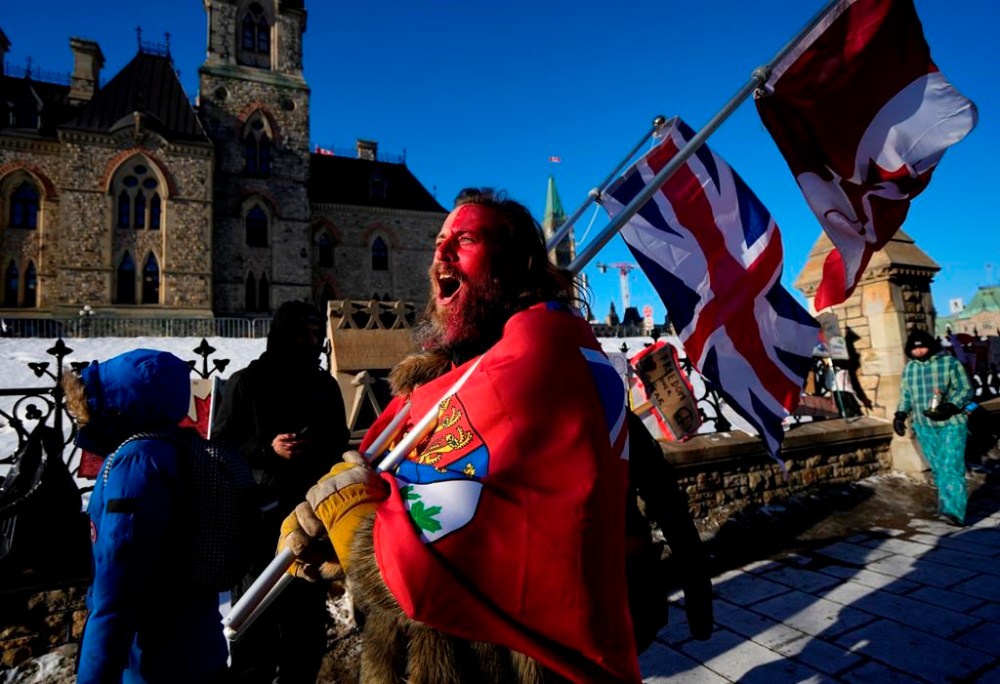
A protester yells “freedom” towards a person who attempted to stick a paper sign on a truck criticizing the so called “Freedom Convoy,” a protest against COVID-19 measures that has grown into a broader anti-government protest, on its 18th day, in Ottawa, on Monday, Feb. 14, 2022. THE CANADIAN PRESS/Justin Tang

“The prime minister promised quick action in enforcing the law and the president thanked him for the steps he and other Canadian authorities are taking,” the White House said on Feb. 11.

At the time, Trudeau was speaking to a number of world leaders about the buildup of Russian military forces near the border with Ukraine. In the first 12 days of February, he spoke with leaders from the EU, Norway, Poland, Japan, Germany and Ukraine. Readouts from the Prime Minister’s Office for those meetings do not mention the ongoing protests.

But that was top of mind for cabinet, the documents show. The weekend before invoking the Emergencies Act, the government was busy weighing the consequences of using the legislation while also assessing other tools.

By Saturday, Feb. 12, protesters were using social media to co-ordinate, beginning “slow roll” protests, and involving children in their actions by bringing them to blockades to prevent police activity and engaging schools in walkouts, the documents say.

The meeting minutes show cabinet and senior government, military and RCMP officials were told there was the possibility of engagement with the protest leaders, and even a potential “breakthrough” in clearing the protest in Ottawa.

But the same briefings warned ministers the protesters in the capital were becoming increasingly hostile to police, and were showing a “significant escalation in boldness.”

Ottawa police released a statement Feb. 12 saying there were more than 4,000 people in the downtown area and there had been “aggressive, illegal behaviour.” The Ottawa Police Service, Ontario Provincial Police and RCMP then established an enhanced Integrated Command Centre to co-ordinate.

Behind the scenes, RCMP Commissioner Brenda Lucki told the federal incident group that there were challenges working with the other forces, citing concerns with communication and with Ottawa police chief Peter Sloly — who resigned the following week.

Meanwhile, police enforcement began Saturday at the Ambassador Bridge after an attempt by the Ontario government to negotiate with protesters failed, the documents say, but it stalled as the number of protesters swelled to more than 500.

Public Safety Minister Marco Mendicino told his colleagues there seemed to be two distinct movements involved: a “relatively harmless and happy” faction with a “strong relationship to faith communities,” and a more concerning group “of harder extremists trying to undermine government institutions and law enforcement.”

He also noted there were reports of ex-military members advising and instructing the blockade leaders, the documents say.

Transport Minister Omar Alghabra was working to secure tow trucks and drivers. The federal government has said that tow companies were unwilling to move the big rigs choking Ottawa’s downtown streets, and invoking the Emergencies Act gave police powers to compel them to help.

It was Sunday that federal officials were told there was a “potential for a breakthrough in Ottawa.”

According to Keith Wilson, lawyer for the “Freedom Convoy” group, that breakthrough was a deal he had been working to negotiate with city officials. Tamara Lich, one of the protest leaders, and Ottawa Mayor Jim Watson exchanged letters on Feb. 12, discussing an arrangement that would see the truckers move their vehicles outside the residential areas.

“Many of the citizens and businesses in Ottawa have been cheering us on but we are also disturbing others. That was never our intent,” Lich wrote to Watson.

The group printed flyers explaining that they planned to reposition trucks beginning Monday, “so we don’t give the prime minister the excuse he desperately wants to use force and seize our trucks.”

“The block captains started going truck to truck and handing these documents out saying, ‘We need to de-escalate,'” Wilson said in an interview.

But the protest was not a unified group.

On Sunday evening, Feb. 13, prominent protester Pat King said on social media that there was no deal, and suggested counter-protesters were spreading misinformation. He told demonstrators not to move.

Some vehicles began moving on Feb. 14, Wilson said, clearing two blocks.

But he said several misunderstandings and miscommunications in the “chaotic environment” slowed what was already likely to be a multi-day effort to move truckers onto Wellington Street and the Sir John A MacDonald Parkway.

“We thought we had communication challenges,” Wilson said. “Oh my God, did the police ever have terrible communications. So we go to move trucks, and then the police wouldn’t let us move.”

That afternoon, Trudeau announced the decision to invoke the Emergencies Act.

By Feb. 19, following days of warnings from police for protesters to leave, an operation involving hundreds of officers began clearing vehicles and people from Ottawa’s downtown core.

This report by The Canadian Press was first published Aug. 12, 2022.

Report Error Submit a Tip

More Stories

Canada overlooks scores of workers

Krista Carr and Jonathan Lai 4 minute read Wednesday, Jul. 22, 2026

Canada has a labour shortage and a labour surplus at the same time. Canada’s labour force shortages are no longer a temporary challenge. Across the country, “help wanted” signs are everywhere.

A report this spring by RBC Economics said the situation will be exacerbated by retirements and changes in immigration policy.

Employers across the country say they can’t find enough workers. There is a solution, however, that continues to be overlooked. Roughly three-quarters of working-age Canadians with an intellectual disability or autism remain unemployed or underemployed despite being ready, willing and able to work. These two realities should not exist side by side.

For decades, many employers have overlooked this talented and motivated group of workers, often due to misconceptions about workplace accommodations or assumptions about productivity. The result is a labour market that is leaving approximately 500,000 capable individuals on the sidelines while businesses simultaneously report difficulty finding reliable employees.

Feds chip in $27M for Winnipeg sewage project

Joyanne Pursaga 3 minute read Preview

Feds chip in $27M for Winnipeg sewage project

Joyanne Pursaga 3 minute read 3:00 PM CDT

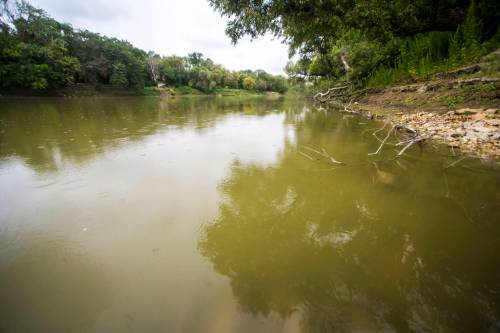
The federal government is offering Winnipeg $27 million to help reduce combined sewer overflows, its first financial contribution to the major environmental project.

The City of Winnipeg is provincially mandated to complete a $1.15-billion master plan by 2045 that reduces such sewage spills. The municipal government has so far paid for that work alone, however, as provincial and federal funding focused on the city’s separate $3.1-billion upgrade of the north end sewage treatment plant.

“It’s wonderful to see the federal government (do this) … It’s going to make a difference on the (combined sewer overflow) projects. We’ve got a lot of them to do in the city … With the rain events we saw this year, the importance of accelerating combined sewer projects across the city is more (pressing) than ever,” said Coun. Jeff Browaty (North Kildonan), chairman of finance.

Older combined sewers still serve about one third of Winnipeg, collecting both precipitation and wastewater in a single pipe. Heavy rain or snow can cause the pipes to overflow, which releases billions of litres of diluted sewage into Winnipeg rivers each year.

Read
3:00 PM CDT

Staying away to keep the heat on

Editorial 4 minute read Preview

Staying away to keep the heat on

Editorial 4 minute read 2:00 AM CDT

It’s a tough sell these days for U.S. tourism groups seeking to attract Canadian visitors as tension, tariffs and traded verbal barbs continue to rise between the two countries.

Or, as one Canadian marketing executive put it, “It’s just a wasted effort.”

Indeed, it does seem as if — for a sizable percentage of the Canadian population, anyway — there’s nothing U.S. tourism officials can say that will rekindle interest in vacation visits to American destinations, as long as President Donald Trump remains in office and continues to actively antagonize what was once his country’s closest trading partner and most steadfast ally.

With Canada having applied, as promised by Prime Minister Mark Carney, reciprocal tariffs on $28 billion worth of U.S. goods crossing into this country, there’s no reason to believe relations between the governments of the two nations will improve soon.

Read
2:00 AM CDT

Nothing wrong with planting trees, but it won’t get province very far on path to net zero

Dan Lett 5 minute read Preview

Nothing wrong with planting trees, but it won’t get province very far on path to net zero

Dan Lett 5 minute read 2:39 PM CDT

Manitoba’s new plan to achieve net zero carbon emissions by 2050 is a lot of things.

It’s detailed. It’s certainly comprehensive in scope. But when it is all said and done, it is still very much a work in progress.

There are 90 individual actions listed in the Path to Net Zero action plan released last week. Together, the government is pledging to put up to $350 million toward what it calls “current forecast government investments.” In short, it is a term that captures actual approved expenditures and additional spending that is not yet approved but which the government would like to make in the future.

Is that all new money? Not really.

Read
2:39 PM CDT

250 years ago Thomas Jefferson and the American Declaration of Independence

Allan Levine 5 minute read Preview

250 years ago Thomas Jefferson and the American Declaration of Independence

Allan Levine 5 minute read Saturday, Jul. 4, 2026

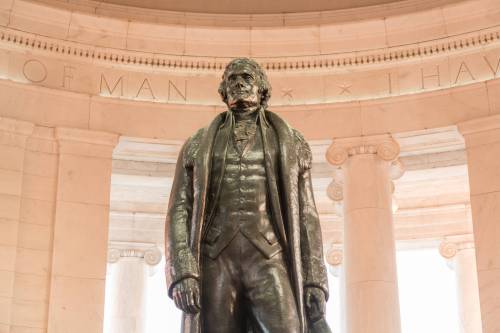
In the 16th and 17th centuries, countries and territories such as the Netherlands and Portugal boldly declared their independence from Spain. But 250 years ago, on July 4, 1776, the American Declaration of Independence — marked in the U.S. by the semiquincentennial celebrations — was the first time an overseas colony (the 13 colonies, in this case) had set out in an official document its reasons for breaking away from its mother country.

Because the Declaration ultimately gave birth to the United States, it is considered one of the greatest of historical treatises. Thomas Jefferson, its primary author, later explained that his main aim was “not to find out new principles, or new arguments, never before thought of … but to place before mankind the common sense of the subject; in terms so plain and firm as to command their assent.”

He did so brilliantly, creating, in theory at least, an enlightened argument for American independence based on the political, economic, social and philosophical thinking of the era.

Influenced by such philosophers as John Locke and Montesquieu, Jefferson, then 33 years old, a lawyer, landowner, Virginia politician and a delegate to the Second Continental Congress which met in Philadelphia, passionately believed in natural law — that all human beings were born free and equal and that no king or ruler could abolish these rights. It was a key point he made in the Declaration’s well-known preamble.

Read
Saturday, Jul. 4, 2026

Port of Churchill expansion could chase belugas away, U of M researcher says

Nicole Buffie 4 minute read Preview

Port of Churchill expansion could chase belugas away, U of M researcher says

Nicole Buffie 4 minute read Yesterday at 9:07 AM CDT

As plans to expand the Port of Churchill into a four-season trade corridor gathers momentum, a University of Manitoba researcher has published a report on what ship traffic could mean for the beluga whales that gather in the Churchill River estuary each summer.

Veronica Coppolaro said more vessels in the waterways bring a risk that belugas will stop using the estuary for migration, which would impact the ecological landscape, tourism and communities that rely on the animals for food and cultural purposes.

“There are studies showing that (noises) change the way they swim, they change the way (the whales) are vocalizing, they change their main activity, and so this (expansion) can have consequences at different levels,” she said.

The Churchill river estuary is a marine habitat where the Churchill River empties into Hudson Bay. During the summer months belugas gather in the area to feed and give birth.

Read
Yesterday at 9:07 AM CDT