Sweat equity
Investment in opportunities to boost physical, mental health pays economic dividends

Advertisement
Read this article for free:
or
Already have an account? Log in here »
To continue reading, please subscribe:

Digital Subscription
One year of digital access for only $205*
- Enjoy unlimited reading on winnipegfreepress.com
- Read the E-Edition, our digital replica newspaper
- Access News Break, our award-winning app
- Play interactive puzzles
*First annual payment billed as $205.00 + GST for one year. This annual subscription will automatically renew at $233.00 + GST every 52 weeks (10% off the regular annual price of $259.35). Offer available to new and qualified returning subscribers only. Cancel any time.
To continue reading, please subscribe:
Add Free Press access to your Brandon Sun subscription for only an additional
$1 for the first 4 weeks*
- Enjoy unlimited reading on winnipegfreepress.com
- Read the E-Edition, our digital replica newspaper
- Access News Break, our award-winning app
- Play interactive puzzles
*Your next Brandon Sun subscription payment will increase by $1.00 and you will be charged $17.95 plus GST for four weeks. After four weeks, your payment will increase to $24.95 plus GST every four weeks.
Read unlimited articles for free today:
or
Already have an account? Log in here »
Hey there, time traveller!
This article was published 25/07/2022 (1470 days ago), so information in it may no longer be current.
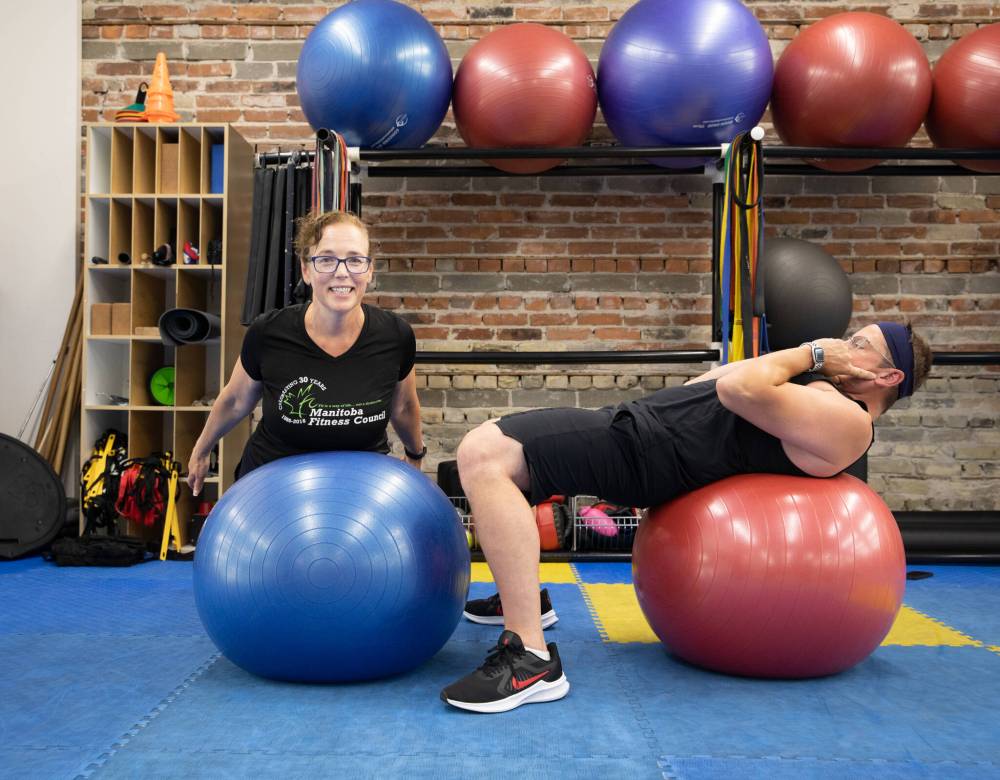
Physical activity can not only have a positive effect on your physical and mental health, it can also give the economy a boost.
According to a new report from Deloitte, the health and fitness industry has a “profound” economic and social impact on countries around the globe, noting that “inactivity is costly, and exercise means big savings.”
“We have (always) known that the fitness industry is essential and now we have substantial data to prove it,” says Sara Hodson, president of the Fitness Industry Council of Canada. “You can’t look at these numbers without implementing significant policy changes to address how to improve access to fitness for all Canadians.”
The report, Economic health and societal wellbeing: quantifying the impact of the global health and fitness sector, was commissioned by the Global Health & Fitness Alliance in collaboration with the International Health, Racquet and Sportsclub Association. It outlines the health and fitness industry’s impact on gross domestic product (GDP) and health-care systems worldwide, as well as specific activity in 46 countries, including Canada.
The report found that inactivity costs the Canadian health-care system more than $5 billion annually to treat and care for diseases linked to lack of physical activity. Of this, $2.7 billion is borne by the public health system.
It also found there is “an abundance of evidence to show that fitness centres and gyms improve the quantity and quality of exercise” and that “facilitating access to gyms and other physical conditioning increases exercise rates.”
“This is something that we have known for a long time,” says Stephanie Jeffrey, executive director of the Manitoba Fitness Council. “And we have been advocating the government to help us put more money into prevention for a really long time, too.”
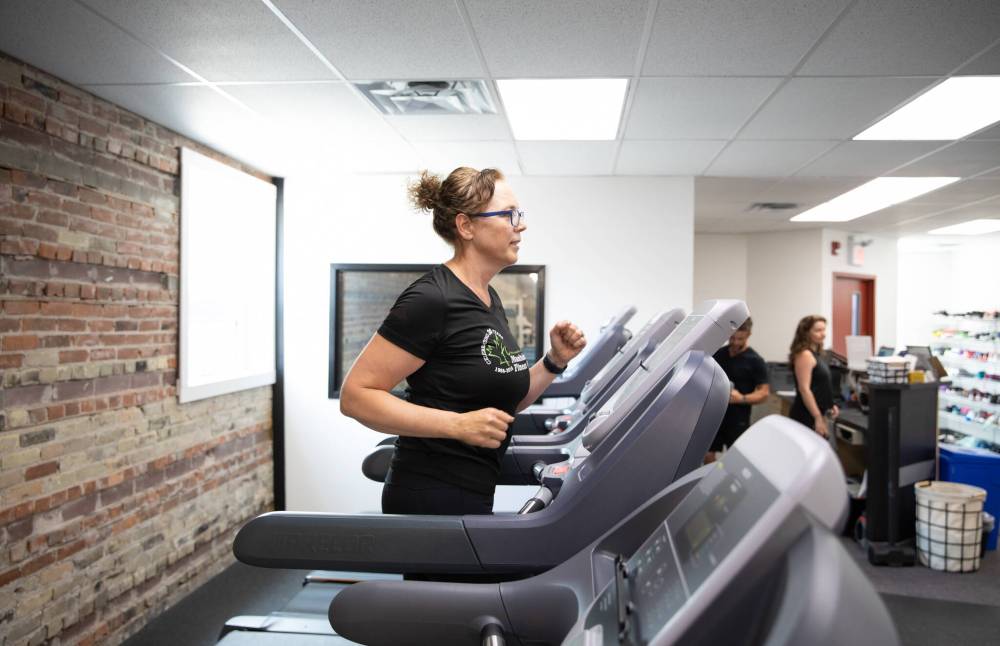
According to the Canadian Physical Activity Guidelines, adults between the ages of 18-64 should be getting an accumulation of at least 150 minutes of moderate- to vigorous-intensity aerobic exercise each week. With regular exercise comes improved health benefits, such as a reduced risk of heart disease and stroke — the largest health problem facing women — type 2 diabetes, dementia, depression, anxiety, hypertension and a range of cancers, including breast, colon, bladder, kidney, lung and stomach.
“Even moderate increases in physical activity at a population level can have significant benefits as far as a reduction in (health-care) costs,” Jeffrey says.
Investing in transitioning Canadians from inactive to active could have a profound impact on our society, Hodson says. According to the report, each insufficiently active worker costs the Canadian economy approximately $2,069 in health-care costs and lost productivity annually.
“There is a lot of exciting research coming out about moving people from ‘no-fit’ to ‘low-fit’ and breaking up movement into achievable chunks of time,” she says. “What the fitness industry does best is help people find the motivation and accountability they need with qualified exercise professionals.”
According to the Manitoba Fitness Council, about 50 per cent of people have returned to the gym since the onset of the pandemic. “Any kind of smaller gym is really struggling. And rural gyms, a lot of them closed, so they’re not coming back. People are just having a really hard time getting their participants back,” Jeffrey says.
The Canadian fitness industry directly supports more than 83,000 jobs — Jeffrey estimates that approximately 3,000 Manitobans are employed by the fitness industry in the province.
“That’s a lot of people who work really hard to help provide opportunities for people to be active,” she says.
Last year, the Fitness Industry Council of Canada (FIC) conducted a national poll asking Canadians if they would be motivated to join a fitness facility if there was a tax credit. Nearly 60 per cent of inactive Canadians said that a tax credit would incentivize them to purchase a gym membership, and 40 per cent of those surveyed said that including fitness club fees as a medical expense would motivate them to create a fitness routine.
“I think (a tax credit) would entice people to spend more money on exercise-related programming and services,” Jeffrey says.
The FIC has been lobbying provincial and federal governments to act and provide a tax credit for fitness. Last year, Newfoundland & Labrador introduced a physical activity tax credit in its budget, allowing households to claim up to $2,000 in physical activity expenses, including fitness fees, with a goal of becoming the healthiest province in Canada by 2031.
“There are people who are going to spend the money regardless and I think there are those people who say, ‘I’d really like to but I feel like I can’t afford it,’” says Jeffrey. “But if they know there’s money coming back to replace it as a tax credit, it might incentivize them to purchase things like gym memberships.”
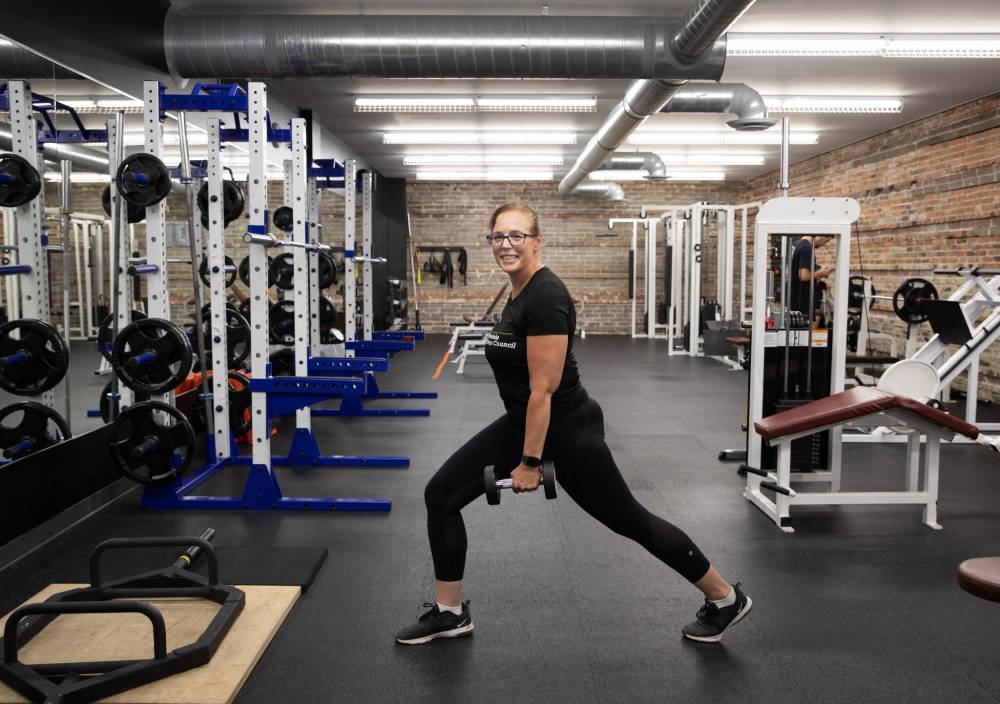
Hodson wants action taken in every province and at the national level. She is counting on other provinces to follow Newfoundland & Labrador’s lead and make decisions based on historical evidence and this global study. She says working to eliminate barriers to fitness is an important step.
“Many Canadians look at the cost of fitness as an extravagance they can’t afford,” she says. “We need to level the playing field and providing a physical activity tax credit would be one powerful way to do this.”
The study recommends that governments, industry leaders and businesses work together to find the best and most logical solution for their community. “It isn’t one person’s job to fix or one level of government. We need our local, provincial and federal governments, as well as corporations, non-profits, and businesses to work together to find the best solutions for their communities,” says Hodson. “More walkable cities and bike lanes improve our health. Companies that introduce exercise breaks and wellness accounts and encourage their employees to make time for physical activity, create more productive workers who take fewer sick days.”
Jeffrey agrees that introducing healthy habits at the workplace can have a lasting, positive impact. “There are employers in Winnipeg that have gone so far as to provide their employees with gyms on-site,” she says. “I think that speaks to the value that’s been placed on proactive care.”
So, how can we leverage these findings to build a case for investment in physical activity? Hodson says the government has been receptive to continuing conversations with the fitness industry about the physical activity tax credit proposal. It’s time for action, not words.
“Moving the needle on physical activity is not just a matter of ‘maybe we should do this’ — we need action now,” she says. “Of course, we need our government to continue to talk about how important physical activity is, but we also need them to show us. A national physical activity tax credit is the answer.”
sabrinacarnevale@gmail.com
@SabrinaCsays
Sabrina Carnevale is a freelance writer and communications specialist, and former reporter and broadcaster who is a health enthusiast. She writes a twice-monthly column focusing on wellness and fitness.
Our newsroom depends on a growing audience of readers to power our journalism. If you are not a paid reader, please consider becoming a subscriber.
Our newsroom depends on its audience of readers to power our journalism. Thank you for your support.
Sabrina Carnevale is a freelance writer and communications specialist, and former reporter and broadcaster who is a health enthusiast. She writes a twice-monthly column focusing on wellness and fitness.
Our newsroom depends on a growing audience of readers to power our journalism. If you are not a paid reader, please consider becoming a subscriber.
Our newsroom depends on its audience of readers to power our journalism. Thank you for your support.
Related Articles
Connecting bike lanes priority for political newbie

Advertisement Advertise With Us
Advertisement Advertise With Us