EXPLAINER: 37 years later, Mexican drug lord to face justice

Advertisement

Advertise with us

MEXICO CITY (AP) — The capture of fugitive drug lord Rafael Caro Quintero was hailed by U.S. authorities as an example of cooperation with Mexico in the fight against drugs. But in fact Caro Quintero had been the source of 37 years of tension between the two countries.

Read this article for free:


or

Already have an account? Log in here »

To continue reading, please subscribe:

Subscribe and receive a limited-edition Free Press branded hat or tote.

Digital Subscription

One year of digital access for only $205*

  • Enjoy unlimited reading on winnipegfreepress.com
  • Read the E-Edition, our digital replica newspaper
  • Access News Break, our award-winning app
  • Play interactive puzzles

*First annual payment billed as $205.00 + GST for one year. This annual subscription will automatically renew at $233.00 + GST every 52 weeks (10% off the regular annual price of $259.35). Offer available to new and qualified returning subscribers only. Cancel any time.

To continue reading, please subscribe:

Add Free Press access to your Brandon Sun subscription for only an additional

$1 for the first 4 weeks*

  • Enjoy unlimited reading on winnipegfreepress.com
  • Read the E-Edition, our digital replica newspaper
  • Access News Break, our award-winning app
  • Play interactive puzzles
Start now

*Your next Brandon Sun subscription payment will increase by $1.00 and you will be charged $17.95 plus GST for four weeks. After four weeks, your payment will increase to $24.95 plus GST every four weeks.

Hey there, time traveller!
This article was published 19/07/2022 (1536 days ago), so information in it may no longer be current.

MEXICO CITY (AP) — The capture of fugitive drug lord Rafael Caro Quintero was hailed by U.S. authorities as an example of cooperation with Mexico in the fight against drugs. But in fact Caro Quintero had been the source of 37 years of tension between the two countries.

Caro Quintero was one of the primary suppliers of heroin, cocaine, and marijuana to the United States in the late 1970s and early 1980s. Mexican marines captured him in the mountains of northwest Mexico Friday.

Mexico had been slow in going after the former leader of the Guadalajara cartel for killing U.S. DEA agent Enrique “Kiki” Camarena in 1985, as well as several other U.S. citizens around the same time.
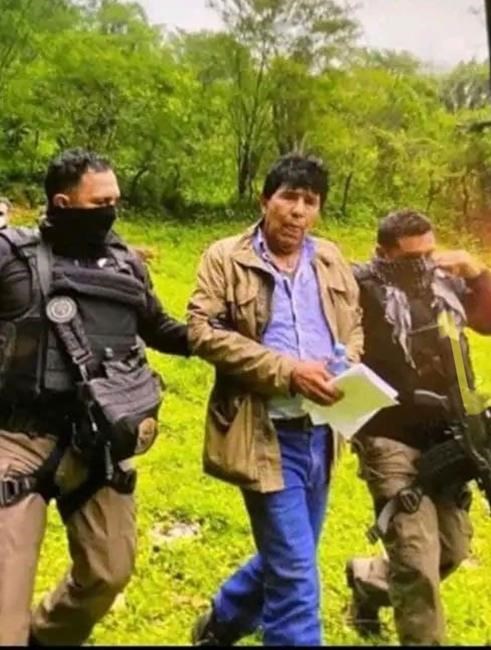
In this government handout photo provided by Mexico's Secretariat of the Navy, agents escort drug trafficker Rafael Caro Quintero, in Sinaloa state, Mexico, Friday, July 15, 2022, captured deep in the mountains of his home state. It was a 6-year-old bloodhound named “Max” who rousted Caro Quintero from the undergrowth. (Mexico's Secretariat of the Navy via AP)

The U.S. had to nearly shut down border traffic to pressure Mexico to go after Caro Quintero in the 1980s, but even then the Mexican legal system wasn’t able to hold him in jail: in 2013 he walked out of prison on an erroneous decision by a Mexican appeals court, and had returned to his drug trafficking operations.

This time, Mexico has made it clear that Caro Quintero was arrested with the intention of extradition. His lawyers, however, quickly signaled through their court filings that the extradition process will be drawn out and it could be many months before he is seen in a U.S. courtroom.

WHO WAS KIKI CAMARENA AND WHY WAS HE KILLED?

Caro Quintero had blamed Camarena, the DEA agent, for a raid on a huge marijuana plantation that Caro Quintero’s cartel ran in northern Mexico in 1984. The next year, Camarena was kidnapped in Guadalajara, allegedly on orders from Caro Quintero. “What they wanted to do is they wanted to get information from Kiki relative to the investigations that the DEA was conducting in Mexico. They wanted to know who the informants were, that they were handling. They wanted to know the addresses where the agents live,” said Mike Vigil, the DEA’s former chief of international operations. “So they wanted to extract as much information from Kiki through horrific torture. And it was finally a blunt instrument blow to the head that caused Kiki Camarena’s … death.” His tortured form was found a month later.

WHY DID CARO QUINTERO THINK HE COULD GET AWAY WITH ALL THIS?

People today are accustomed to hearing about warring drug cartels in Mexico. It is hard to imagine the first generation of drug lords in Mexico in the 1980s: there was only one big cartel, the Guadalajara Cartel, and Caro Quintero, Fonseca Carrillo and Miguel Angel Felix Gallardo ran it. People like Joaquin “El Chapo” Guzman worked for them at that point — as did as many as 4,000 agricultural workers pressed into service growing marijuana on the gang’s 1,350-acre (545 hectare) marijuana plantation. “Given the fact that the cartel was the only cartel in Mexico in the eighties, they operated with complete impunity because they were paying off many, many individuals within the Mexican government for protection,” said Vigil. “So they figured that they could do whatever they damn well please as long as they paid money for protection.”

HOW DID CARO QUINTERO ESCAPE JUSTICE?

In August 2013, an appeals court in Caro Quintero’s home state overturned his 40-year sentence in the killing of Camarena and a Mexican government pilot. The panel of judges argued a state court should have overseen the case, not a federal one, and ordered his immediate release from a maximum-security prison. Mexico’s Supreme Court annulled the order releasing him months later, saying Camarena was a registered U.S. government agent and therefore his killing was a federal crime and had been properly tried. An arrest warrant was issued for Caro Quintero, who was long gone. Questions still swirl around his late-night release: Mexican prosecutors, who by law should have been notified, weren’t notified until hours after he was released in the middle of the night and disappeared in a car that had been waiting for him.

WHAT DID CARO QUINTERO DO WHILE HE WAS ON THE RUN BETWEEN 2013 and 2022?

Caro Quintero was added to FBI’s 10 most wanted list in 2018, with a $20 million reward for his capture. Mexican security analyst David Saucedo believes that the sudden renewed interest in his arrest may have stemmed from the deadly wave of overdoses in the United States from the synthetic opioid fentanyl. “I think that the FBI did that because of the deaths being caused in the United States due to fentanyl consumption,” said Saucedo. “When Caro Quintero got out of prison he takes up drug trafficking again and established the Caborca cartel in Sonora. But his criminal activities include shipping fentanyl.”

WHAT IS LIKELY TO HAPPEN TO CARO QUINTERO NOW?

Caro Quintero was notified this weekend that a process to extradite him to the United States has begun, but his lawyers have already filed for court injunctions that could stretch the legal process out over months, and perhaps years. He will wait out the process in a maximum security prison west of Mexico City. A grand jury in the Eastern District of New York indicted Caro Quintero in 2017 on a number of drug trafficking charges, as well as for conspiring to murder those who posed a threat to his narcotics activities.

Report Error Submit a Tip

More Stories

Calm, balanced approach to game, life is what matters to unassuming Stastny

Jeff Hamilton 14 minute read Preview

Calm, balanced approach to game, life is what matters to unassuming Stastny

Jeff Hamilton 14 minute read Friday, Feb. 19, 2021

When the day comes for Paul Stastny to hang up his skates for good, ending what’s already been a sparkling pro career, he hopes to leave a lasting mark on the game he loves.

He didn’t use the word legacy, nor would he. If you’ve had the chance to speak with Stastny before, you quickly realize his discomfort in talking about personal accolades, despite possessing many. He’s been selected as an NHL all-star, and represented the United States on multiple occasions, including at two Olympics.

In 961 NHL games, Stastny has 253 goals and 482 assists for 735 points. He’s played another 97 playoff games, having reached the Western Conference final on three separate occasions over his career, adding another 25 goals and 42 assists to his point totals. He’s still chasing his first Stanley Cup.

But at 35 years old, and in the middle of his 15th NHL season, which includes a second go-around with the Winnipeg Jets, it’s not what shows up on the scoresheet that matters most to the veteran centre. Stastny is acutely aware that professional sports can be unforgiving; a good season one year doesn’t necessarily guarantee one the next. But what doesn’t have to change, he says, is how he approaches the game, and the way he treats the people around him.

Read
Friday, Feb. 19, 2021

Americanizing education is pure folly

John R. Wiens 5 minute read Thursday, Apr. 8, 2021

BILL 64, if passed, would succeed in cutting some of the last strands tying education to democracy in the English-speaking western world, a movement which had its beginnings in the post-war European continent.

Friedrich von Hayek, the founder of neoclassical economic theory, persuaded the political elite of the day that their future lay in a deregulated capitalistic marketplace, and in the reduction of government investment in public services. But even he would be shocked by the latest developments in Manitoba.

A rough timeline would have had Hayek meeting the newly elected Tory leader, Margaret Thatcher, in 1975. Immediately upon her election as prime minister in 1979, she began to implement his economic theory of mass privatization of state assets. The oil and gas industry and the national British Airways were privatized. The powerful miners’ unions were relentlessly pilloried as enemies of the state.

Public services such as health and education were methodically dismantled, systematically privatized in the name of personal choice, while taxes for the wealthy were reduced. In the name of creativity, entrepreneurship and innovation, among other public goods, airlines, telecommunications, banking, trucking and environmental protections were deregulated. Is this starting to sound familiar?

Who has been invited to the table?

Stephen Borys 6 minute read Preview

Who has been invited to the table?

Stephen Borys 6 minute read Yesterday at 2:01 AM CDT

Last Friday, I spoke at Booth University College’s inaugural Honour and Hope Harvest Dinner in support of Shelter U. I had been asked to speak about the power of art in the community, a subject I have spent much of my professional life thinking about — as a museum director, writer and teacher, and now through my consulting work with Civic Muse.

What continues to interest me is not simply what museums, universities and other public institutions do, but whether their work actually matters — whether they make a difference in the lives of the people and communities around them.

Preparing for the evening brought me back to an even more fundamental question: Who has been invited in?

One of my museum mentors used to remind me that institutions often begin the conversation about public engagement too late. Before engagement comes the welcome, and before the welcome comes the invitation. We can create extraordinary buildings, exhibitions and programs and say that everyone is welcome. But unless people believe that these places are also meant for them, many will never cross the threshold.

Read
Yesterday at 2:01 AM CDT

Who protects collegiate athletes?

Brian Ramsay 4 minute read 2:00 AM CDT

College athletes need advocacy, before another life is lost.

They need an independent voice because, as the system stands, athletes speaking out for personal safety would end their positions on their teams. They need an advocate when their voices cannot be heard — and, more importantly, when they are being ignored or silenced.

What happened on Aug. 20 — when Arizona State University hockey player Matthew Mayich collapsed during a high-intensity outdoor workout — was not an accident. Mayich is still in hospital in critical condition.

When established processes and safeguards are alleged not to have been followed, the response cannot begin and end with the institution investigating itself and declaring nothing went wrong. Serious incidents demand transparency, accountability and independent scrutiny.

Small businesses outline election priorities

Robin Bezte 5 minute read 2:00 AM CDT

Since moving to Winnipeg earlier this year, I have come to know the city through its small businesses. As a new Exchange District resident, grabbing coffee at Little Sister, walking through The Forks Market and stopping at Pho Hoang for lunch have become part of my routine. These are the places that give Winnipeg’s neighbourhoods their character and have helped make a new city feel like home.

That is why an empty storefront never feels like just vacant real estate. It represents someone’s investment and hope. When a small business disappears, the community loses a piece of itself.

On Oct. 28, Manitobans in most municipalities will choose their next mayors, reeves and councillors. While city councils may not set interest rates or negotiate global trade agreements, they do have some control over many of the barriers entrepreneurs encounter day to day, from property tax bills and permit applications to public safety and construction disruptions.

Ahead of the upcoming elections, the Canadian Federation of Independent Business (CFIB) surveyed Manitoba small business owners to get a sense of their municipal priorities and concerns.

Today’s horoscope

Georgia Nicols 4 minute read Preview

Today’s horoscope

Georgia Nicols 4 minute read 2:00 AM CDT

MOON ALERT: Caution! Avoid shopping (except food and gas) and important decisions until after 3:30 p.m. today. After that, the moon moves from Gemini into Cancer.

ARIES (March 21-April 19)

This is a creative day for you. Because you’re the artisan of the zodiac, tap into your talents and make some art or explore one of your many hobbies. However, avoid intense discussions with partners, spouses and friends. Keep things light.

TAURUS (April 20-May 20)

Read
2:00 AM CDT