Canada pledges more aid and loans to Ukraine as G7 targets Russian oil

Advertisement

Advertise with us

SCHLOSS ELMAU, GERMANY - Canada is ready to help other countries transition away from Russian oil and coal, Prime Minister Justin Trudeau said Tuesday at the end of G7 summit in Germany centred on the war in Ukraine.

Read this article for free:


By clicking the button above, an account will be created and you will begin to receive some of our recommended newsletters. You may opt out of any newsletter by visiting your Email and Communication Preferences page or by clicking "unsubscribe" at the bottom of any email.

or

Already have an account? Log in here »

To continue reading, please subscribe:

Digital Subscription

One year of digital access for only $1.44 a week*

  • Enjoy unlimited reading on winnipegfreepress.com
  • Read the E-Edition, our digital replica newspaper
  • Access News Break, our award-winning app
  • Play interactive puzzles

*Billed as $5.77 plus GST every four weeks. After 52 weeks, price increases to the regular rate of $19.95 plus GST every four weeks. Offer available to new and qualified returning subscribers only. Cancel any time.

To continue reading, please subscribe:

Add Free Press access to your Brandon Sun subscription for only an additional

$1 for the first 4 weeks*

  • Enjoy unlimited reading on winnipegfreepress.com
  • Read the E-Edition, our digital replica newspaper
  • Access News Break, our award-winning app
  • Play interactive puzzles
Start now

*Your next Brandon Sun subscription payment will increase by $1.00 and you will be charged $17.95 plus GST for four weeks. After four weeks, your payment will increase to $24.95 plus GST every four weeks.

Hey there, time traveller!
This article was published 28/06/2022 (1572 days ago), so information in it may no longer be current.

SCHLOSS ELMAU, GERMANY – Canada is ready to help other countries transition away from Russian oil and coal, Prime Minister Justin Trudeau said Tuesday at the end of G7 summit in Germany centred on the war in Ukraine.

In their final communique for the meeting, the G7 leaders said they are working to make sure Russia suffers consequences for its invasion of Ukraine and does not exploit its position as an energy producer to profit from its aggression at the expense of vulnerable countries.

“We will continue to impose severe and immediate economic costs on President Putin’s regime for its unjustifiable war of aggression against Ukraine, while stepping up our efforts to counter its adverse and harmful regional and global impacts, including with a view to helping secure global energy and food security as well as stabilizing the economic recovery,” said the document released on Tuesday.
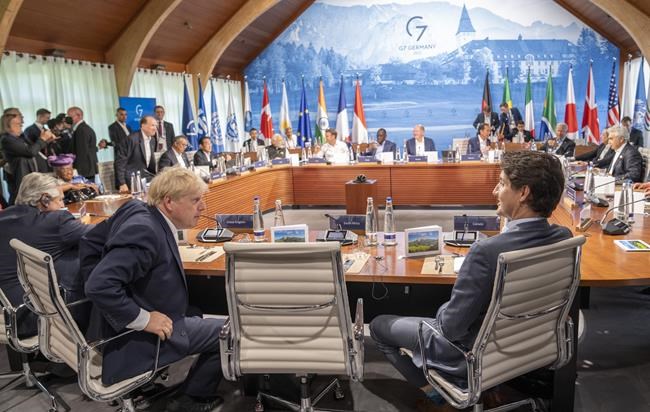
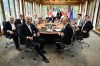
Prime Minister Justin Trudeau and British Prime Minister Boris Johnson chat prior to a meeting with Partner Countries and International Organizations at the G7 Summit in Schloss Elmau on Monday, June 27, 2022. The Canadian prime minister and his G7 counterparts are expected to end their summit in Germany with a show of support for Ukraine on before all seven leaders will head to a NATO summit in Spain. THE CANADIAN PRESS/Paul Chiasson

The G7 includes Canada, the United States, the United Kingdom, France, Germany, Italy and Japan.

The conflict has squeezed energy markets in Europe and the security of the supply around the world. Over the course of the three-day summit, the leaders agreed to consider a cap on the price of crude oil and petroleum from Russia, and even a comprehensive ban on Russian oil and coal.

“Canada, obviously as an oil and gas producer, is ensuring that in the short term we’re doing what we can to alleviate pressures,” Trudeau said at a news conference at the close of the summit.

“We’re also looking medium term at expanding some infrastructure, but in a way that hits that medium-term and long-term goal of accelerating transition, not just off Russian oil and gas, but off of all our dependence on fossil fuels.”

The leaders agreed compromising on climate and biodiversity goals was not on the table to address the growing energy crisis.

The idea to ban Russian oil is still only in discussions, and would need to be implemented carefully to mitigate the potential fallout for vulnerable countries that rely on Russia for power.

The success of a price cap would also likely depend on co-operation from as many countries as possible, including India, which has been buying up inexpensive Russian oil.

On Monday, Trudeau met with India’s Prime Minister Narendra Modi, who was invited to the G7 summit by the host, German Chancellor Olaf Scholz.

The Canadian prime minister said he and Modi had a “broad-ranging conversation” and that he is aware that Canada and India do not share the same position on Ukraine.

“I continued to impress upon him that we need to recognize the instability in the world right now was directly caused by Russia’s unprovoked attack on Ukraine, and we’re going to continue to have those conversations in a frank and direct way, because that’s what the world needs,” Trudeau said Tuesday.

Trudeau also met Italy’s Prime Minister Mario Draghi on Tuesday, who said they would discuss solutions to the energy crisis.

“Canada is a big producer and so the perspective of Prime Minister Trudeau is important,” he said.

Trudeau also said Canada remains determined to support Ukraine as it defends its sovereignty and territorial integrity.

On Sunday, just as the summit in Germany was about to begin, weeks of relative quiet in Kyiv were shattered when Russian missiles hit Ukraine’s capital city.

On Monday, a Russian missile hit a shopping mall in the central city of Kremenchuk.

“It’s important that the world doesn’t lose its attention and focus over what’s happening in Ukraine, we must and we will remain committed until Ukraine and democracy prevail,” Trudeau told a news conference.

He announced more money for Ukraine on Tuesday, including a $200-million loan through the International Monetary Fund.

In addition to the loan to the Ukrainian government, Canada is giving $75 million in humanitarian assistance to help with operations in Ukraine and in the neighbouring countries. The aid will include the provision of in-kind food assistance, emergency cash and vouchers, protection, shelter and health services.

“If and when President (Volodymyr) Zelenskyy and Ukrainians decide it’s time to negotiate or move forward to resolving, to ensure that Russia faces defeat in Ukraine, they need to be able to negotiate from a position of force, a position of strength,” Trudeau said.

Earlier in the summit, Trudeau announced $52 million in agricultural aid including mobile grain storage equipment to increase grain storage capacity as well as help to provide speedy diagnostic testing and monitoring of animal diseases to allow for export certification.

Unable to get crops to market because of Russian blockades at its ports, Ukraine needs to keep its grain viable because the potential revenue from its export would help fund the country’s defence.

“Our farmers typically face big challenges and have been proven to be inventive and creative. So we’ll bring this expertise to Ukraine to help as much as we can,” Trudeau said.

Agriculture Minister Marie-Claude Bibeau has said that Canada is also sending seeds to Ukraine, including fast-growing buckwheat, to help out with the food crisis.

By preventing Ukraine’s grain exports Russia has also intensified food scarcity, the leaders said in their final consensus agreement.

The leaders have also agreed to intensify their efforts to mitigate rising food prices and scarcity.

They also plan to expand their resettlement programs to accommodate the millions of Ukrainian refugees who have been displaced by the conflict.

Canada will also spend $15 million to help fund demining efforts and $9.7 million for those tracking human rights violations in Ukraine.

The next stop for Trudeau in his three-summit tour is Madrid, Spain.

Trudeau will meet with NATO allies there on Wednesday to discuss the military and defence implications of the war in Ukraine.

This report by The Canadian Press was first published June 28, 2022.
Report Error Submit a Tip

More Stories

Michelangelo’s David still the star in Florence

Steve Macnaull 5 minute read Preview

Michelangelo’s David still the star in Florence

Steve Macnaull 5 minute read Saturday, Jun. 15, 2024

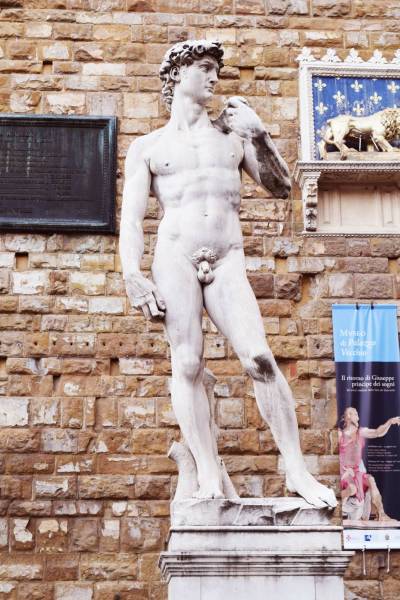
Even at 520-years-old, David is still quite the hunk.

As such, this statue of naked male perfection is the star of the show in the Piazza della Signoria.

Upon entering this massive square in Florence, Italy, my wife, Kerry, and I realize there’s no need to search out enigmatic David.

Simply join the smartphone-toting hordes of tourist jostling for prime real estate at the feet of the 5.2-metre-tall white marble sculpture by Michelangelo.

Read
Saturday, Jun. 15, 2024

Carney’s ‘counterweight’ summit strategy

David McLaughlin 5 minute read Preview

Carney’s ‘counterweight’ summit strategy

David McLaughlin 5 minute read 2:01 AM CDT

Modern summit diplomacy had very inauspicious beginnings. Winston Churchill is widely credited with coining the phrase “summit” in 1950 to describe a conference of global leaders. But it was another British prime minister, Neville Chamberlain, who initiated the first actual summit meeting 12 years earlier — with Adolf Hitler, no less.

It didn’t go well.

Over a one-month period, the two leaders met three times over the fate of Czechoslovakia. Hitler threatened war. Chamberlain threatened appeasement. Guess who won?

Chamberlain was so desperate for a peace deal and so convinced he alone could convince Hitler, that he swallowed his inhibitions and flew in an airplane for the very first time in his life. “If at first you don’t succeed, try, try again” he told reporters, explaining his tenacious summit activity. Skeptical of the spectacle, British Foreign Office wags quietly amended it to, “If at first you don’t concede, fly, fly again.”

Read
2:01 AM CDT

Temporary foreign worker at crossroads without job, alleges immigration consultant misconduct

Gabrielle Piché 6 minute read Preview

Temporary foreign worker at crossroads without job, alleges immigration consultant misconduct

Gabrielle Piché 6 minute read Thursday, Oct. 15, 2026

A temporary foreign worker says he was ensnared in an illegal system fraught with under-the-table payments, fake credentials and a firing.

“I was participating in a illegal process,” Liang Fang said. “But actually, I (didn’t) know it’s illegal before.”

Fang, 43, travelled to Winnipeg from Beijing in March. He came with a job offer to work at a Winnipeg restaurant as a marketing specialist.

However, by his account, he became a waiter. It was the latest change in a lengthy immigration process.

Read
Thursday, Oct. 15, 2026

Hydro to power down old infrastructure

Chris Kitching 5 minute read Preview

Hydro to power down old infrastructure

Chris Kitching 5 minute read Yesterday at 2:43 PM CDT

Manitoba Hydro is promising fewer power outages in Winnipeg once it replaces or converts 41 electrical substations in a project the utility says will last up to 20 years and cost as much as $1.2 billion.

Spokesman Peter Chura said upgrades to the electrical distribution system will improve safety, reliability and resiliency, and reduce maintenance costs.

“We’ve been clear for a few years now that aging infrastructure is a challenge for the province going forward, so our programs like this are solving that problem incrementally,” he said Friday.

Many substations in Winnipeg are nearing the end of their service life or operating close to capacity. The upgrades will increase capacity, said Craig Sambrooke, Hydro’s construction community liaison.

Read
Yesterday at 2:43 PM CDT

The threat from outside Canada

Dan Lett 4 minute read Preview

The threat from outside Canada

Dan Lett 4 minute read 2:01 AM CDT

The 10-question referendum being held in Alberta on Monday, Oct. 19, is not the first time the unity of Canada has been threatened by a vote within one province. It is, however, the first referendum of this type to take place in an age of unfettered social media misinformation and deliberate foreign interference.

From mischievous comments by U.S. President Donald Trump about making Canada the 51st state to technology trillionaire Elon Musk’s urgings to Quebec and Alberta to separate, there are clear signs foreign interests are trying to influence Monday’s vote. But there are also less-obvious efforts at work to influence the referendum and destabilize Canada.

The Canadian Security Intelligence Service (CSIS) and independent think-tanks such as the Centre for Artificial Intelligence, Data and Conflict at the University of Regina have documented incidents involving Russian-linked automated content farms posting thousands of misleading articles about the referendum campaign on social media platforms. The content, CSIS has said, focuses on erroneous claims about the benefits of separation and the liabilities of remaining in Canada.

In the face of all that activity, Prime Minister Mark Carney has been alarmingly unconcerned. Campaigning in Alberta this week, Carney said Ottawa is closely monitoring disinformation campaigns. He added that, in his conversations with foreign governments, all have agreed to stand down from any activities that might be perceived as threats to democracy.

Read
2:01 AM CDT

Group’s second LP made to get hearts racing

By Sheldon Birnie 6 minute read Preview

Group’s second LP made to get hearts racing

By Sheldon Birnie 6 minute read Yesterday at 2:00 AM CDT

While a live performance is a moment in time that comes and goes, a record is something that, ostensibly, lives on.

Both are important, often complementary methods of artistic expression for any band of musicians, not the least independent local artists carving out names for themselves in the dark heart of the continent.

Claire Thérèse & the Lockdown are celebrating the vinyl release of Racing Heart, its second full-length LP, with a gig tonight at Public Domain. The group’s last full-length record, Villainy!, was released in 2022.

“For me, this seems like perfect timing,” says Thérèse, primary vocalist and songwriter in the group. “This album has been done for almost two years now. I don’t even know if I would call it procrastination, (but) there are just those steps that one needs to take to actually release something into the world, and that’s how long it has taken me.”

Read
Yesterday at 2:00 AM CDT