Tokyo Olympic film debuts in Japan; headed next to Cannes

Advertisement

Advertise with us

TOKYO (AP) — The documentary film about the pandemic-delayed Tokyo Olympics premiered on Monday, shown to reporters and other invited guests in the Japanese capital.

Read this article for free:


By clicking the button above, an account will be created and you will begin to receive some of our recommended newsletters. You may opt out of any newsletter by visiting your Email and Communication Preferences page or by clicking "unsubscribe" at the bottom of any email.

or

Already have an account? Log in here »

To continue reading, please subscribe:

Digital Subscription

One year of digital access for only $1.44 a week*

  • Enjoy unlimited reading on winnipegfreepress.com
  • Read the E-Edition, our digital replica newspaper
  • Access News Break, our award-winning app
  • Play interactive puzzles

*Billed as $5.77 plus GST every four weeks. After 52 weeks, price increases to the regular rate of $19.95 plus GST every four weeks. Offer available to new and qualified returning subscribers only. Cancel any time.

To continue reading, please subscribe:

Add Free Press access to your Brandon Sun subscription for only an additional

$1 for the first 4 weeks*

  • Enjoy unlimited reading on winnipegfreepress.com
  • Read the E-Edition, our digital replica newspaper
  • Access News Break, our award-winning app
  • Play interactive puzzles
Start now

*Your next Brandon Sun subscription payment will increase by $1.00 and you will be charged $17.95 plus GST for four weeks. After four weeks, your payment will increase to $24.95 plus GST every four weeks.

Hey there, time traveller!
This article was published 22/05/2022 (1643 days ago), so information in it may no longer be current.

TOKYO (AP) — The documentary film about the pandemic-delayed Tokyo Olympics premiered on Monday, shown to reporters and other invited guests in the Japanese capital.

The work of Japanese director Naomi Kawase, the 120-minute film looks at the Olympics primarily from the point of view of the athletes — but not just the winning athletes.

After Tokyo, the film will be shown on Wednesday at the Cannes Film Festival in the Bunuel Theater, named for Spanish-born iconoclastic filmmaker Luis Bunuel.
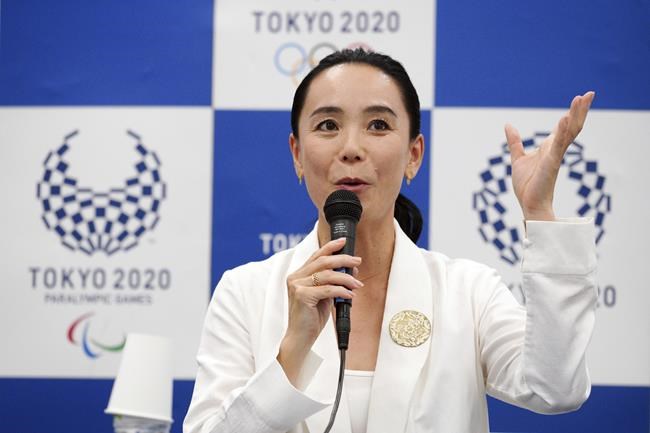
FILE - Japanese film director Naomi Kawase speaks during a press conference in Tokyo on Oct. 23, 2018. The documentary film produced by Kawase about the pandemic-delayed Tokyo Olympics premiered on Monday, May 23, 2022, shown to reporters and other invited guests in the Japanese capital. (AP Photo/Eugene Hoshiko, File)

“The Olympics are not just about getting prizes, being first and going after a victory that is right before you in the moment,” Kawase said in a recent interview. “I tried also to depict the pursuit of becoming winners in life.”

Kawase has also made another film looking at events away from the athletes, which called “Side B.” It will debut in Japanese cinemas on June 24. The film shown on Monday will open in some Japanese cinemas beginning on June 3.

Kawase said she made the film in two parts because, after the Games were postponed by the pandemic, her subject became too complex.

The film, which is only in Japanese unless speakers are using other languages, focuses much of its attention on athletes from Japan, and female athletes from all over. It also looks at refugee athletes, athletes who have defected, and athletes competing as mothers who brought their infants to Games.

The film targets a cross section of sports, particularly judo, softball, surfing, women’s basketball, and skateboarding. For the most part, it steers clear of the medal ceremonies, the flag waving and who won — and who lost — and prioritizes the drama of competing.

Yiannis Exarchos, the CEO of the Olympic Broadcasting Services, tried to sum up the mission of the documentary, speaking in the final minutes of the film before the credits rolled.

He said Olympic athletes often “do something completely unexpected. This is a moment of genius. Yes, we need to go through all these exercises in order to be able to see the world in a different way. Even for one millisecond.”

The documentary showed flashes of the controversy that dogged the Tokyo Games with protesters asking for a cancellation, and scenes that questioned the wisdom of holding the Games in the midst of a pandemic.

The “Side B” version is expected to cover more of the problems including the resignation of Yoshiro Mori as president of the local organizing committee.

Mori, a former Japanese prime minister, stepped down five months before the Olympics opened after making derogatory comments about women, saying they “talk too much.”

The documentary of the 1964 Tokyo Olympics by Kon Ichikawa, titled “Tokyo Olympiad,” is generally regarded as one of the most important in the genre. Also in that category is Leni Riefenstahl’s “Olympia” from the 1936 Berlin Games.

Kawase said she was honored to follow in the footsteps of Ichikawa and tried to show what was visible, and also what is beyond being seen.

“I was moved by how human beings achieve the pinnacle of physical beauty,” Kawase said. “I felt they were so beautiful watching them; all the athletes, not just the winners. And the time they devoted to get there was also beautiful.”

The Kawase documentary is titled simply the “Official Film of the Olympic Games Tokyo 2020.”

She was named in 2018 to direct the film, which looks briefly at the one-year postponement announced in March of 2020 and the runup to the opening ceremony — largely without fans on July 23, 2021 — and the closing on Aug. 8.

In a synopsis, Cannes said the film took 750 days to shoot with 5,000 hours of filming.

Cannes said it captures “not only the athletes gathered from all over the world, but also their families, people involved in the Games, volunteers, medial personnel, and protesters shouting for the cancellation of the Olympics. The film shows the passion and anguish that came out of these Olympic Games.”

Kawase is highly acclaimed and became the youngest director to receive the Camera d’Or prize at the Cannes Film Festival with her 1997 film “Suzaku.”

Her best known recent films are “Sweet Bean” and “Still the Water.”

The documentary is financed by the International Olympic Committee and the local organizing committee, and is a requirement under the hosting contract.

Toshiro Muto, the CEO of the Tokyo organizing committee, said when Kawase was introduced four years ago that the IOC owns the copyright to the film and “has the right to make key decisions in the creation of the film.”

Kawase said she has been affected by Russia’s invasion or Ukraine, asking herself the meaning of entertainment amid the killing in war.

“I hope when people see this film 50 years from now, 100 years from now,” Kawase said, “they will understand the importance of protecting that bit of happiness — so small it can fit in the palm of your hand.”

___

More AP sports: https://apnews.com/hub/sports and https://twitter.com/AP_Sports

Report Error Submit a Tip

More Stories

Free Press Special Features

1 minute read Monday, Mar. 30, 2026

Discover The Free Press’s special feature publications. A showcase of our most ambitious and immersive thematic publications that showcase the stories that matter most to Manitoba. Released throughout the year, each special feature explores a focused topic or moment, highlighting the voices, challenges, and ideas shaping our communities and connecting them to a wider world. New editions lead each collection, with full access to past issues, inviting readers to explore, revisit, and engage with the conversations that continue to define life in Manitoba and beyond.

Letters

7 minute read 2:00 AM EST

AI can be part of the answer

We read with interest Rebecca Chambers’ column (Tailoring our message to indulge algorithm, AI, Nov. 13), which seems to suggest that Travel Manitoba should not be working with a U.S.-based firm on our AI discoverability for American visitors and really, by extension, not be focused on AI at all.

Throughout the current period of turmoil in the Canada-U.S. relationship, Travel Manitoba and the thousands of people running tourism businesses across our province have continued to extend a warm welcome to visitors from the United States. Indeed, Manitoba was one of just a handful of provinces that saw growth in U.S. visitation in 2025.

While U.S. visitors represent only four per cent of total visitation to Manitoba, they spent $361.6 million dollars, or 15 per cent of the $2.4 billion in visitor spending in Manitoba in 2025. This tourism spending represents a tariff-free export, injecting investment into communities throughout Manitoba and supporting some of the 26,000-plus Manitoba jobs that rely on tourism.

Speed limits and safety — follow the science

Brent Bellamy 6 minute read Preview

Speed limits and safety — follow the science

Brent Bellamy 6 minute read Monday, Mar. 16, 2026

The premier of Manitoba recently appeared hesitant about collaborating with Winnipeg City Council on a public works proposal to lower the city’s default residential speed limit from 50 km/h to 40 km/h. Without a provincial amendment to the Highway Traffic Act, the city says implementing the change would require installing signs on hundreds of streets, at a cost of up to $10 million to taxpayers.

The province’s apparent reluctance to explore solutions may reflect a desire to avoid a controversial issue. The city’s approach, however, aligns with emerging best practices across Canada, as cities nationwide work to improve road safety and neighbourhood livability. In recent years, Calgary, Edmonton, and Ottawa have reduced residential speed limits to 40 km/h, while Toronto, Montreal, Vancouver, and Victoria have gone even further, lowering them to 30 km/h.

As a large, densely populated city, Winnipeg faces unique vehicle safety challenges compared with the rest of Manitoba. Approximately three-quarters of all injury related vehicle collisions in the province occur within Winnipeg, along with nearly 90 per cent of cyclist collisions and around 80 per cent of pedestrian collisions. As a government responsible for representing the needs of Winnipeggers, it’s reasonable to expect the province’s help in addressing these challenges and supporting the implementation of solutions.

The city’s recommendation to lower residential speed limits followed the 2023 Reduced-Speed Neighbourhood Pilot, which tested the safety and livability impacts of lower speed limits in selected communities.

Read
Monday, Mar. 16, 2026

Woman says suspended hockey player played exhibition game against her son

Kelly-Anne Riess 6 minute read Preview

Woman says suspended hockey player played exhibition game against her son

Kelly-Anne Riess 6 minute read 2:00 AM EST

A Manitoba mother says a hockey player — suspended until 2028 for sexually maltreating younger teammates — played in an exhibition game against her son, who was among the players he had targeted.

Hockey Manitoba can’t verify the game and acknowledges families in past cases may not have been told the full terms of suspensions, including exceptions.

The mother raised the issue at a Nov. 10 panel on hockey culture at the Canadian Museum for Human Rights, describing the lasting effects of a 2024 hazing case involving a rural Manitoba high school team.

The Free Press isn’t naming the mother to protect her son’s identity.

Read
2:00 AM EST

Public funding for True North Square rises to $45 million

Dan Lett 7 minute read Preview

Public funding for True North Square rises to $45 million

Dan Lett 7 minute read Friday, Sep. 14, 2018

Total taxpayer support for True North Square has ballooned to more than $45 million — $20 million more than original estimates — to support the construction of luxury condominium and apartment towers. It could increase even more depending on the future value of the two properties.

City and provincial officials confirmed that although there are a number of components that drove up the total public funding, the largest contribution was the decision to rebate property taxes through the city-provincial tax-increment financing program (TIF) for a residential apartment tower at 225 Carlton St., a project being led by True North Real Estate Development, and a 130-unit luxury condominium tower at 220 Carlton St., which is beside the proposed Sutton Place Hotel, which are both being developed by Northland Properties.

Despite the fact that both levels of government had agreed to expand the scope of TIF support, details of how much additional money would flow to developers appear to have been concealed from public view.

Some details of the additional tax rebates were included in a report tabled Sept. 12 at the city's executive policy committee, where the expanded TIF scope was approved. That report included an estimate for the tax rebates for the two towers of $17.2 million, split evenly by the province and city.

Read
Friday, Sep. 14, 2018

U of M science student now a Rhodes Scholarship-winning artist

Maggie Macintosh 4 minute read Preview

U of M science student now a Rhodes Scholarship-winning artist

Maggie Macintosh 4 minute read Monday, Nov. 27, 2023

The University of Manitoba’s 100th Rhodes Scholar, the first of his kind with a visual arts degree, stumbled into a creative career that has earned him one of the world’s most prestigious academic awards.

Joel Nichols, who originally planned to pursue medical school, enrolled in science courses of all sorts upon starting his post-secondary studies in 2018.

The following year, he added a life-changing elective — an introductory drawing course, during which art was treated as “a medium of communication” — to his schedule.

“I absolutely fell in love,” the 23-year-old recalled. “There was just something about art that really grabbed my soul and didn’t let go.”

Read
Monday, Nov. 27, 2023