

Woman says suspended hockey player played exhibition game against her son
Advertisement
Read this article for free:
or
Already have an account? Log in here »
To continue reading, please subscribe:
Digital Subscription
One year of digital access for only $1.44 a week*
- Enjoy unlimited reading on winnipegfreepress.com
- Read the E-Edition, our digital replica newspaper
- Access News Break, our award-winning app
- Play interactive puzzles
*Billed as $5.77 plus GST every four weeks. After 52 weeks, price increases to the regular rate of $19.95 plus GST every four weeks. Offer available to new and qualified returning subscribers only. Cancel any time.
To continue reading, please subscribe:
Add Free Press access to your Brandon Sun subscription for only an additional
$1 for the first 4 weeks*
- Enjoy unlimited reading on winnipegfreepress.com
- Read the E-Edition, our digital replica newspaper
- Access News Break, our award-winning app
- Play interactive puzzles
*Your next Brandon Sun subscription payment will increase by $1.00 and you will be charged $17.95 plus GST for four weeks. After four weeks, your payment will increase to $24.95 plus GST every four weeks.
Read unlimited articles for free today:
or
Already have an account? Log in here »
A Manitoba mother says a hockey player — suspended until 2028 for sexually maltreating younger teammates — played in an exhibition game against her son, who was among the players he had targeted.
Hockey Manitoba can’t verify the game and acknowledges families in past cases may not have been told the full terms of suspensions, including exceptions.
The mother raised the issue at a Nov. 10 panel on hockey culture at the Canadian Museum for Human Rights, describing the lasting effects of a 2024 hazing case involving a rural Manitoba high school team.
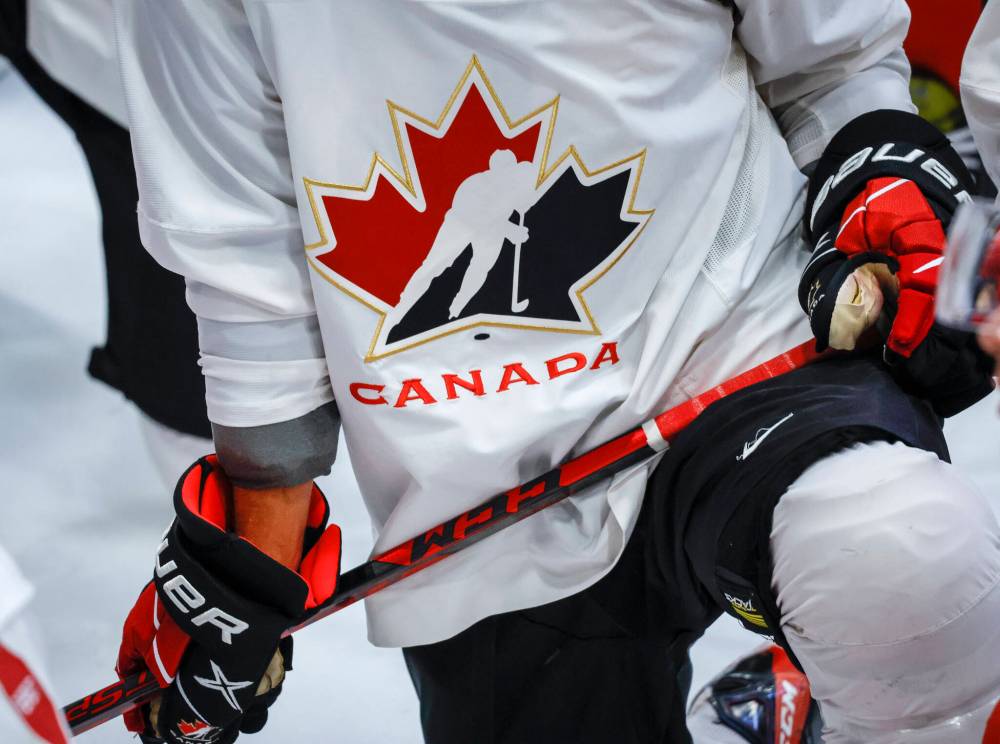
THE CANADIAN PRESS FILES/Jeff McIntosh
In 2024 a 17-year-old hocky player was suspended through a disciplinary process for Hockey Canada, after an adjudicator concluded the player had taken part in physical, psychological and sexual maltreatment of younger teammates.
The Free Press isn’t naming the mother to protect her son’s identity.
The player was suspended through an independent disciplinary process for Hockey Canada, after Hockey Manitoba filed a complaint in 2024. An adjudicator concluded the player had taken part in physical, psychological and sexual maltreatment of younger teammates.
An investigator determined he had spanked rookies, including at a tournament, and was involved in posting sexualized images meant to intimidate them. The player didn’t dispute those findings.
An adjudicator suspended him from Hockey Canada-sanctioned activities until the end of 2028. In May, an arbitrator with the Sport Dispute Resolution Centre of Canada rejected the player’s appeal.
“By any fair measure, the misconduct was very significant,” arbitrator Jeffrey Palamar wrote.
There is one exception to the suspension. The decision says the player is “permitted to attend and participate fully in tryouts during this period.”
The decision doesn’t explain what that means, including whether the suspended player can compete in exhibition games.
The Free Press hasn’t been able to confirm the game took place or whether it was part of a tryout.
Hockey Manitoba CEO Trevor Buhnai said he’s spoken with the mother since the panel discussion, reviewed Hockey Manitoba’s records and contacted Hockey Canada about how the suspension applies.
Buhnai said he needs clarification on the tryout exception before determining whether it would apply.
“We take both the concerns raised by the family and the enforcement of disciplinary sanctions seriously,” he said.
Hockey Canada said it can’t comment on specific cases because complaints are confidential.
Hockey Canada, provincial branches and local minor hockey associations are responsible for putting sanctions in place, Hockey Canada said. Sanctions are recorded in the Hockey Canada registry.
The independent body that handles complaints can impose additional discipline if someone violates a sanction, Hockey Canada said. Anyone can report a possible breach online.
Hockey Canada didn’t explain what the tryout exception covers.
The lawyer who represented the suspended player in his appeal did not respond to a request for comment.
Hockey Canada said people directly involved in a complaint receive the final decision and its terms. But Buhnai said families of players who were harmed were not necessarily part of complaints under the old system. Hockey Manitoba could file a complaint instead.
“I cannot confirm that all affected families have historically received the complete terms of sanctions, including any exceptions,” Buhnai said.
Manitoba introduced a new independent complaints system for young athletes in April. Under it, the person who files a complaint must receive a written copy of the decision and the reasons for it, Buhnai said.
The family’s concerns go beyond hockey discipline. The mother said restorative justice in the criminal case also failed to give her son the accountability he wanted.
In 2024, RCMP charged three 17-year-old players with offences including sexual assault. Police alleged they had hazed younger teammates at Winnipeg hotels during tournaments. The criminal case was separate from the hockey disciplinary process.
The case was forwarded to restorative justice, which brings together people responsible for wrongdoing and those affected by it to address what happened. The session took place in August 2025 and the Crown stayed the charges the following month.
“My son, he didn’t want an apology. He just wanted the acknowledgement that what they did was wrong,” the mother said.
Manitoba Justice says restorative justice participants must acknowledge wrongdoing and accept responsibility. The mother said that never happened.
She believes restorative justice can work. “However, all parties… have to be willing to come to the table,” she said.
She said the process was slow to start, partly because her family didn’t want to press charges against boys in their own community. She said the older players needed support too, because they had been hazed themselves.
Parents weren’t allowed in the hour-long session, she said. They watched it on video.
Some people in the community still support the players who did the hazing. “We felt like we were on an island,” the mother said.
Defence lawyer Katherine Bueti, who represented one of the accused, disputed the mother’s assessment of restorative justice.
Bueti said it “was absolutely the right process in this case.”
Jay Johnson, a University of Manitoba kinesiology professor who studies hazing in sport, said restorative justice can work in cases involving young people. He was on the Nov. 10 panel.
“If the process leaves those who were harmed feeling more isolated, then we have to ask whether meaningful restoration actually occurred,” he said.
In small communities, the harm can spread beyond the team, Johnson said.
“The initial behaviour may be followed by a second layer of harm when athletes are made to feel that they have betrayed the team by reporting what happened,” he said.
The mother said the victim services office of the justice department helped her family, but her son is still waiting for counselling.
“I had to apply and we still haven’t been taken,” she said.
Victim services offers short-term counselling and referrals. Families seeking longer-term counselling paid for by the province must apply to a the compensation for victims of crime program.
At the panel discussion, the mother asked Hockey Manitoba how it can support young victims “right away.”

Buhnai said Hockey Manitoba doesn’t provide or pay for counselling, but can connect families with support. Help through Hockey Canada’s insurance program may be possible, but isn’t guaranteed.
“Supporting affected players and families extends beyond the disciplinary process and this remains an important area for continued improvement,” he said.
The mother said her son still loves hockey, but continues to struggle with what happened.
“He’s OK, but he goes in loops,” she said. “He wants to move past this.”
kelly.riess@winnipegfreepress.com