Making it work
Time spent at home has reshaped what employees want from the office and employers are responding

Advertisement
Read this article for free:
or
Already have an account? Log in here »
To continue reading, please subscribe:

Digital Subscription
One year of digital access for only $205*
- Enjoy unlimited reading on winnipegfreepress.com
- Read the E-Edition, our digital replica newspaper
- Access News Break, our award-winning app
- Play interactive puzzles
*First annual payment billed as $205.00 + GST for one year. This annual subscription will automatically renew at $233.00 + GST every 52 weeks (10% off the regular annual price of $259.35). Offer available to new and qualified returning subscribers only. Cancel any time.
To continue reading, please subscribe:
Add Free Press access to your Brandon Sun subscription for only an additional
$1 for the first 4 weeks*
- Enjoy unlimited reading on winnipegfreepress.com
- Read the E-Edition, our digital replica newspaper
- Access News Break, our award-winning app
- Play interactive puzzles
*Your next Brandon Sun subscription payment will increase by $1.00 and you will be charged $17.95 plus GST for four weeks. After four weeks, your payment will increase to $24.95 plus GST every four weeks.
Read unlimited articles for free today:
or
Already have an account? Log in here »
Hey there, time traveller!
This article was published 09/05/2022 (1613 days ago), so information in it may no longer be current.
Office workers used to, well, work in offices. Then the pandemic hit. And since it was first declared, entire organizations have been upended.
As workplaces face down the third year of the crisis, engaging workers to return to offices or hybrid work arrangements will require both empathy and flexibility.
In February’s Statistics Canada Labour Force Survey, nearly a quarter of workers reported that they have been working exclusively at home. A little over 30 per cent are working part-time at home and part-time in the office.
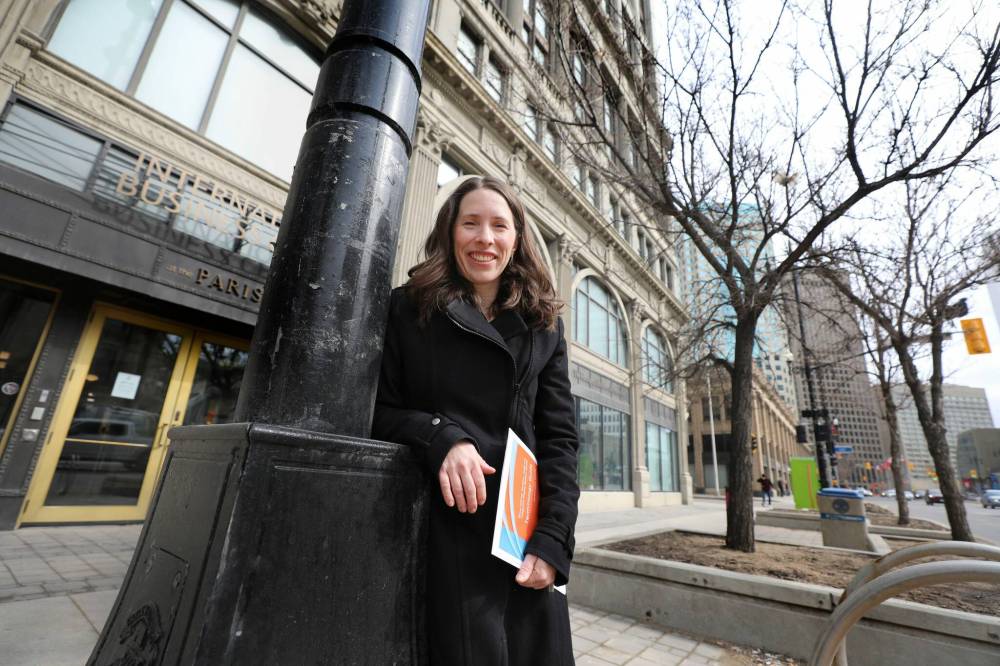
“I think people find change difficult. We got comfortable when we were forced to work remotely, which we’ve done successfully, but then the shift to going back to work is another level of change. I think that’s been difficult for people,” says Roberta Connon, principal and general manager of InterGroup Consultants in downtown Winnipeg.
Being open to new work models and adjusting along the way is key as employers and employees try to figure out what the upcoming year holds. Hybrid work models have emerged as part of the return-to-office process, and many employers have landed on providing employees with the choice of combining in-office and at-home work.
InterGroup has approximately 30 employees, including part-timers and associates. Pre-pandemic, almost everybody worked at the office. But, for now, as people transition back, InterGroup is offering a hybrid structure. Currently, about three people work in-office full-time and another 10 work out of the office three days per week. The rest either work in-office twice per week, continue to work remotely or work outside Winnipeg.
“Since March, we’ve been trying to convince people that it’s time to get back. So we started with one day a week for people to come in, and then two days a week for a couple of weeks,” Connon says. “We’re now at three days a week. But we’re pausing there and will re-evaluate what is and isn’t working. We’re definitely progressing in the right direction but we haven’t pushed it.”
According to a recent Amazon business report, which surveyed nearly 1,600 Canadian office workers, nearly three in five office workers (57 per cent) say they would prefer to either split their time equally between in-office and remote or work mostly remotely (three or more days per week).
Connon says there’s been some hesitancy about returning to the office.
“(For some people), it’s the co-ordination with childcare because they got into one set-up, and now it’s different. Others, it was partially weather,” she says. “And for some, it’s definitely mental health. They got a lot of anxiety over the pandemic so the idea of coming in to work completely freaked them out. So for them, we want them to slowly get reacquainted with coming back.”
Connon believes some office workers have yet to see the benefits of being together because things are still somewhat operating at a pandemic-level and aren’t quite back to office-normal.
“We want to get people back so they can run into people in the staff room and have organic interactions. And I think we’re on the cusp of that,” she says. “As people get more of those in-person meetings, I think that’s when they’ll start to realize that it feels really good to be around other humans.”
InterGroup also continues to maintain social distancing and mask-wearing.
“When the rules dropped, we (kept the rules) where they were before,” she says.
According to recent polling commissioned by the Downtown Winnipeg BIZ, 28 per cent of pre-pandemic downtown workers are back working full-time — that’s up four per cent from a previous survey conducted in September 2021, and the highest such statistic since the BIZ first started tracking in 2020.
“Coming back to the office needs to be about the opportunities that would come with that. Having the ability to collaborate face-to-face and interact with your co-workers on another level — I think there’s a real opportunity in that,” says Kate Fenske, CEO of the Downtown Winnipeg BIZ.
According to a LinkedIn workforce confidence survey, which polled more than 1,000 of the social networking site’s Canadian members, more than a third (66 per cent) of the respondents said, overall, the biggest draws of the physical workplace were opportunities to collaborate in person, and 65 per cent cited the chance to socialize with others in person — be it with colleagues, customers or clients.
And nearly half (48 per cent) of those polled said they were looking forward to workplace perks, advancing in their careers as quickly as possible or having meetings where other attendees are in the same room.
“It’s about grabbing coffee with your co-worker and talking about things that maybe you don’t have time to cover on a Zoom call, or going out for lunch and getting to know each other on a more personal level,” says Fenske. “I think that’s what folks are looking for and have really missed over the last couple of years.”
Time spent working from home has reshaped what employees want from the office in a post-pandemic world. To meet employees’ evolving expectations, workplaces have adapted to not only support the well-being of employees but also evolve how people connect, exchange ideas and find community in shared work environments.
“We’ve seen some really creative ideas from some workplaces. We have folks that are hosting a welcome-back week. Some are even looking at doing tours, connecting with each other and just getting outside and reconnecting with the neighbourhood,” she says.
“There’s a lot of offices that are doing team lunches and providing opportunities for people to gather safely and reconnect. We’re even seeing workplaces adding in things like lounges for people to just sort of kick back and relax.”
Fenske says it’s important to keep employees engaged and provide support through the transition back to the office, especially for those who are new to the workforce.
“The mentorship piece is a big part of it, especially for younger employees who are starting out their careers,” she says. “I think it’s really important for younger folks coming into the workforce that they are able to learn from senior leaders, get that experience and just be part of building a team.”
At home, few of us have had the potential to replicate the social connections that office amenities help foster — open spaces, boardrooms and business lounges offer ways for employees to benefit from mentorship and build both camaraderie and social networks.
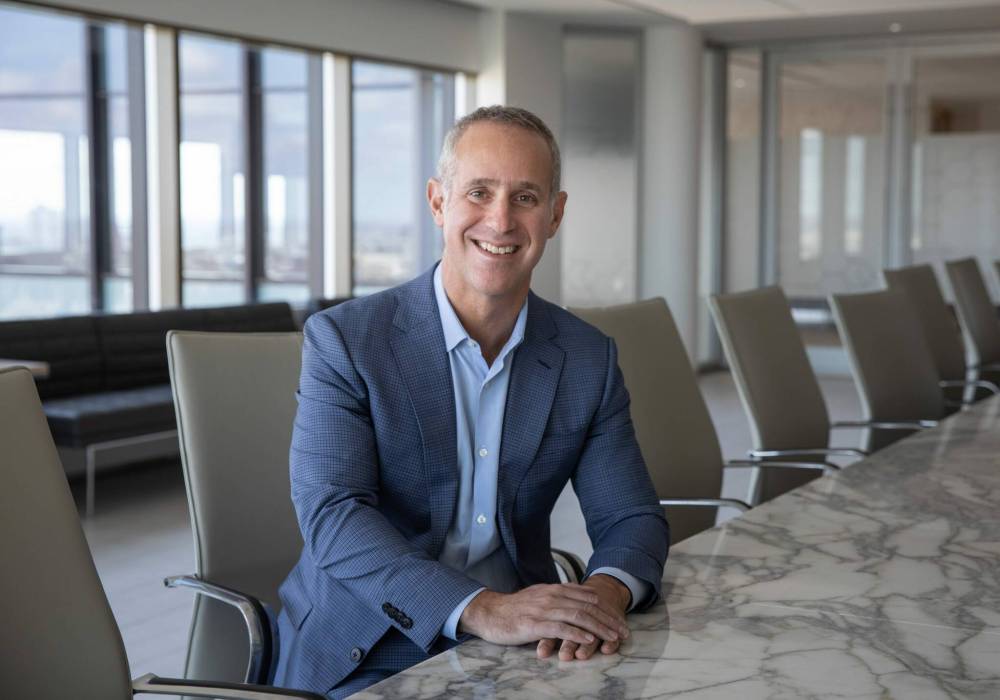
Mentorship, collaboration and building a strong culture of support is something that people are looking forward to in an office setting, says Adam Levene, partner at MLT Aikins in Winnipeg. Levene also serves on the executive board and helps form policies relating to the return to work.
“We are really happy to have lawyers back in the office who are able to train junior lawyers. I was very fortunate to work with terrific people that took me under their wing and mentored me,” Levene says. “I was in their office for hours and hours every day — that’s very hard to happen at home. That doesn’t happen spontaneously; you can’t just walk by somebody at their house.”
The lack of in-person conversations proved to make mentorship opportunities more challenging for junior lawyers, he says.
“(At home), everything had to be arranged on video calls and you missed out on a lot of great opportunities for mentorship because you weren’t around. So it was a huge loss, at least from the legal-profession perspective.”
Levene says employee surveys were conducted prior to formulating their return-to-work policy. Through that employee engagement, the team learned that junior lawyers want to be back in-office so they can work together with the senior team.

Connon agrees that in-person interaction is integral — collaborating online is not quite the same.
“In-person, I find, you can get better quality conversations and meetings; you get the body language. You can actually tackle the tougher issues or challenging problems better in-person than you can over a screen.”
Time spent working from home has transformed what employees want from the office. There’s no one-size-fits-all approach, however; the journey back to the workplace will require companies to strategically rethink how the office can accommodate new employee expectations and ways of working.
sabrinacarnevale@gmail.com
@SabrinaCsays
Sabrina Carnevale is a freelance writer and communications specialist, and former reporter and broadcaster who is a health enthusiast. She writes a twice-monthly column focusing on wellness and fitness.
Our newsroom depends on a growing audience of readers to power our journalism. If you are not a paid reader, please consider becoming a subscriber.
Our newsroom depends on its audience of readers to power our journalism. Thank you for your support.
Sabrina Carnevale is a freelance writer and communications specialist, and former reporter and broadcaster who is a health enthusiast. She writes a twice-monthly column focusing on wellness and fitness.
Our newsroom depends on a growing audience of readers to power our journalism. If you are not a paid reader, please consider becoming a subscriber.
Our newsroom depends on its audience of readers to power our journalism. Thank you for your support.
Related Articles
Pandemic has inspired businesses to embrace the four-day work week

Advertisement Advertise With Us
Advertisement Advertise With Us