Canada planning for global food emergency, as Ukraine attack risks wheat supply
Advertisement
Read this article for free:
or
Already have an account? Log in here »
To continue reading, please subscribe:

Digital Subscription
One year of digital access for only $205*
- Enjoy unlimited reading on winnipegfreepress.com
- Read the E-Edition, our digital replica newspaper
- Access News Break, our award-winning app
- Play interactive puzzles
*First annual payment billed as $205.00 + GST for one year. This annual subscription will automatically renew at $233.00 + GST every 52 weeks (10% off the regular annual price of $259.35). Offer available to new and qualified returning subscribers only. Cancel any time.
To continue reading, please subscribe:
Add Free Press access to your Brandon Sun subscription for only an additional
$1 for the first 4 weeks*
- Enjoy unlimited reading on winnipegfreepress.com
- Read the E-Edition, our digital replica newspaper
- Access News Break, our award-winning app
- Play interactive puzzles
*Your next Brandon Sun subscription payment will increase by $1.00 and you will be charged $17.95 plus GST for four weeks. After four weeks, your payment will increase to $24.95 plus GST every four weeks.
Read unlimited articles for free today:
or
Already have an account? Log in here »
Hey there, time traveller!
This article was published 07/03/2022 (1669 days ago), so information in it may no longer be current.
OTTAWA – Russia’s invasion of Ukraine has sparked major disruptions to a United Nations program that helps prevent hunger around the world, Prime Minister Justin Trudeau warned Monday during a trip to Europe aimed at working with allies to respond to the crisis.
“The challenge right now of Russia’s illegal invasion of Ukraine, is having ripple effects around the world, not just in energy prices for Canadians and for people in Europe, but for people in the global South as well,” Trudeau said Monday in London, adding that those include disruption to the UN World Food Program.
Ukraine is one of the world’s major wheat exporters and since Russia’s attack, global wheat prices have risen to levels not seen since 2008.
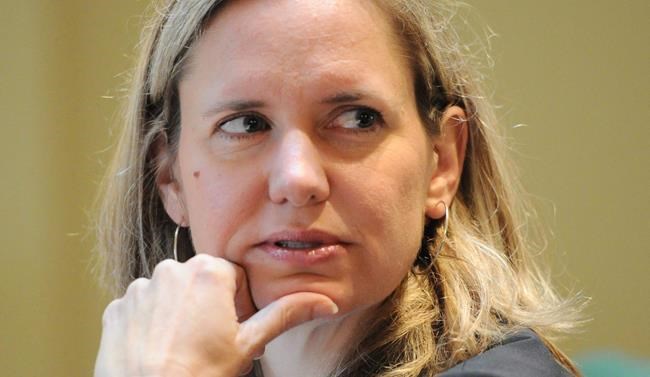
Sandra McCardell, an assistant deputy minister at Global Affairs Canada, told a Senate committee last week that there will be “a wide range of fallout” from Russia’s invasion of Ukraine, including food shortages in developing nations that import large amounts of Ukrainian wheat.
“We certainly are looking at contingencies. UN agencies are looking at contingencies,” she told the Senate foreign affairs committee on March 3. “This is not going to be just about Ukraine and Russia and we do need absolutely to be ready.”
Sen. Peter Harder, deputy chair of the committee, said in an interview that the reverberations of the Russian invasion would be felt worldwide.
In many countries, bread is a staple food and large numbers of countries in Asia and the Middle East import wheat from Russia and Ukraine. He said Lebanon imports 50 per cent of its wheat from Ukraine, Libya 43 per cent, Yemen 22 per cent and Bangladesh 21 per cent.
Ukraine’s planting season is due to start within the month. Some rely on foreign labour, which is fleeing or will not enter the country.
Canadian wheat producers warned that the Russian invasion will make it extremely difficult for Ukrainian farmers to get their seeds in the ground.
Dave Quist, executive director of the Western Canadian Wheat Growers, said Ukrainian farmers were “very concerned about not being able to get into the field at all.”
He said it is doubtful whether those that manage to plant their fields will be able to harvest in August or September.
Russia and Ukraine together export more than a quarter of global wheat supplies and the conflict has already led to a spike in wheat prices.
U.S. wheat futures rose to a 14-year high last week, with importers desperate to find supplies to fill the gap from Ukraine.
“We are already seeing wheat prices going through the roof with the potential to go up higher,” Quist said.
“If there is an overall shortage, then that will mean there is more demand in other parts of the world.”
Canada is a big exporter of wheat, along with the U.S., and farmers may benefit from the rising price of wheat. But most Canadian farmers have already bought the seed to plant this year’s crop and would find it difficult to pivot to plant more wheat if they have not prepared to do so, Quist said. Some pre-sold their crops at lower prices before the invasion, he said.
Quist said Argentina and Australia, which plant later in the year than Canada and the U.S., may have time to plant more wheat this year to cater to global demand.
With sanctions biting and the global community freezing out the regime of President Vladimir Putin, Russia’s wheat exports are likely to be disrupted as well.
Ukraine is facing its own food shortages, with the closure of shops, men called up to fight and its usual supply lines blocked by the Russian military.

NDP finance critic Daniel Blaikie said at a press conference on Friday that as a result of Russia’s invasion of Ukraine, “there are likely to be serious economic consequences felt across the world.”
Even though Canada exports wheat, the drop in global supplies is likely to mean a rise in the cost of a loaf of bread in Canada.
NDP MP Rachel Blaney said what was happening in Ukraine could make existing inequalities in Canada “more profound.”
She said Canadians were already struggling to afford groceries, with more and more people, including those with jobs, turning to food banks.
This report by The Canadian Press was first published March 7, 2022.
Related Articles
Moscow patriarch stokes Orthodox tensions with war remarks Russia underestimated Ukraine's resistance, US official says
Advertisement Advertise With Us
Advertisement Advertise With Us