Federal government invokes Emergencies Act for ‘illegal’ blockades

Advertisement

Advertise with us

The federal government has invoked the Emergencies Act to bring an end to antigovernment blockades in Ottawa and across the country.

Read this article for free:


or

Already have an account? Log in here »

To continue reading, please subscribe:

Subscribe and receive a limited-edition Free Press branded hat or tote.

Digital Subscription

One year of digital access for only $205*

  • Enjoy unlimited reading on winnipegfreepress.com
  • Read the E-Edition, our digital replica newspaper
  • Access News Break, our award-winning app
  • Play interactive puzzles

*First annual payment billed as $205.00 + GST for one year. This annual subscription will automatically renew at $233.00 + GST every 52 weeks (10% off the regular annual price of $259.35). Offer available to new and qualified returning subscribers only. Cancel any time.

To continue reading, please subscribe:

Add Free Press access to your Brandon Sun subscription for only an additional

$1 for the first 4 weeks*

  • Enjoy unlimited reading on winnipegfreepress.com
  • Read the E-Edition, our digital replica newspaper
  • Access News Break, our award-winning app
  • Play interactive puzzles
Start now

*Your next Brandon Sun subscription payment will increase by $1.00 and you will be charged $17.95 plus GST for four weeks. After four weeks, your payment will increase to $24.95 plus GST every four weeks.

Hey there, time traveller!
This article was published 15/02/2022 (1694 days ago), so information in it may no longer be current.

The federal government has invoked the Emergencies Act to bring an end to antigovernment blockades in Ottawa and across the country.

This is the first time the Emergencies Act has been invoked since it came into force in 1988.

The federal government published new cabinet orders and regulations detailing temporary but extraordinary powers under the act, including:

— A prohibition on anyone participating in blockades, bringing children to those protests or bringing aid, such as food or fuel, to people involved.

— Defining the places blockades are not allowed, including: Parliament Hill and the parliamentary precinct, official residences, federal and government buildings, war monuments, airports, harbours, border crossings, piers, lighthouses, canals, interprovincial and international bridges, hospitals and COVID-19 vaccination clinics, trade corridors and infrastructure needed for the supply of utilities including power generation and transmission.

— Giving special powers to police, banks and insurance companies to freeze accounts and cancel vehicle insurance belonging to people participating in “illegal assemblies.”

— Directing specified persons to render essential services, such as towing vehicles, to relieve impacts of blockades on Canada’s economy.

— Measures with respect to authorizing the Royal Canadian Mounted Police to enforce municipal and provincial laws by means of incorporation by reference.

— Failing to comply with the regulations can mean a fine of up to $5,000 or five years in prison for an indictable offence and a fine of up to $500 or six months in prison for a summary conviction.

Passed in 1988, the Emergencies Act is intended for use when:

— an urgent and critical situation, temporary in nature, endangers the lives, health or safety of Canadians;

— the capacity or authority of provinces to handle the situation is considered lacking; and

— the crisis cannot be defused effectively using other Canadian laws.

It also permits the regulation or prohibition of any public assembly expected to lead to a breach of the peace.

Once invoked, the Emergencies Act requires holding a public inquiry within 60 days after the crisis has ended, and the resulting report being tabled in Parliament within one year.

This report by The Canadian Press was first published Feb. 15, 2022.

Report Error Submit a Tip

More Stories

Messing credits teammates for support

Lori Ewing, The Canadian Press 5 minute read Preview

Messing credits teammates for support

Lori Ewing, The Canadian Press 5 minute read Friday, Jan. 17, 2020

MISSISSAUGA, Ont. - The rink had always felt like home for Keegan Messing. But in the days and weeks after his brother's death, the Canadian figure skater struggled to find solace on the ice.

In a sport that requires steely nerves to reel off big jumps, and the ability to dig deep to push through searing pain, Messing had lost his will.

"It was the question of: why am I doing this?" Messing said. "In the grand scheme of life, it was: should I still do this? Can I still do this?"

Less than four months after his younger brother Paxon died in a motorcycle crash in Anchorage, Messing is aiming for his first national title at the Canadian figure skating championships, and a spot on the world championship team. He credits fellow Canadian skaters Nam Nguyen and Piper Gilles for getting him to the start gate.

Read
Friday, Jan. 17, 2020

House of horrors burned for TV film

By Mike McIntyre and Keith Bonnell 3 minute read Preview

House of horrors burned for TV film

By Mike McIntyre and Keith Bonnell 3 minute read Thursday, Dec. 3, 2009

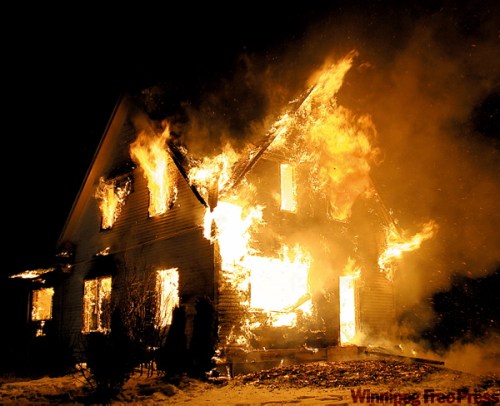
The boy watched as fire began to consume the farmhouse, while a film crew taped the blaze for a movie.

As flames engulfed the two-storey farmhouse near Kipling, Sask., the boy was looking at more than a movie moment -- he was witnessing the destruction of the house of horrors where he was held prisoner and raped three years ago by one of Canada's most notorious child molesters, Peter Robert Whitmore.

"He didn't really care about the movie," the boy's father said Wednesday, recalling the blaze that bitterly cold day in February.

"We were all glad to see the place go."

Read
Thursday, Dec. 3, 2009

Seven Wilsons, one regional spirit

Hersh Seth 5 minute read Preview

Seven Wilsons, one regional spirit

Hersh Seth 5 minute read 2:00 AM CDT

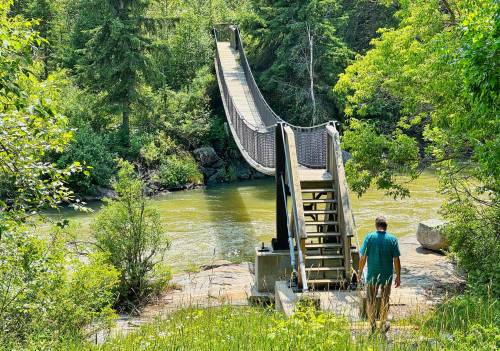
In Dryden, Ont., a 34-metre suspension bridge crosses the Wabigoon River rapids. It is named after a man who paid for a quarter of the bridge himself. A plaque recognizes Roy Wilson’s “many contributions to City Revitalization” and mentions his 40 years in the Rotary Club, whose motto is “service above self”.

My father sold business machines from the 1970s through the ’90s, during the shift from carbon copy machines and typewriters to photocopiers, fax machines, and early office computers and printers. His sales territory — which he covered mostly by car but also by propeller plane — was Saskatchewan, the Northwest Territories, Manitoba, and northwestern Ontario, though much of it really belonged to the Wilsons.

In business machines, selling the machine was only half the job — the other half was ensuring a technician would fix it in January. Wilson’s set the standard for dealers across most of my dad’s regions. My father worked with Roy’s son Greg (who would later go on to become mayor of Dryden) but really respected Roy for teaching Greg to run the company with the towns they served as the priority.

Wilson’s service routes went beyond where roads stopped. Even if customers lived north of the highway system, Wilson’s still found a way to help, using three company planes based at the Dryden airport. As a result, a stationery shop from a paper mill town served all of northwestern Ontario and later northern Manitoba. Imagine a photocopier strapped into a small plane, a technician beside it, and a gravel runway waiting at the other end.

Read
2:00 AM CDT

Pimp sentenced to 11 years in prison

Erik Pindera 4 minute read Preview

Pimp sentenced to 11 years in prison

Erik Pindera 4 minute read 2:00 AM CDT

A man who picked up a vulnerable 17-year-old child-welfare ward on the streets of Winnipeg and coerced her into providing sexual services for several months has been sent to prison for more than a decade.

After a trial, Hassan Kargbo, who’s in his early 30s, was found guilty of sexual exploitation, making child sexual abuse and exploitation material, receiving a material benefit from sexual services provided by a person under 18, procuring a person under 18 and advertising sexual services.

Provincial court Judge Julie Frederickson sentenced him to 11 years behind bars late last month.

“Mr. Kargbo picked up a young Indigenous girl walking over the Osborne Street bridge and quickly got her involved in drug use and escorting,” Frederickson said in a written decision.

Read
2:00 AM CDT

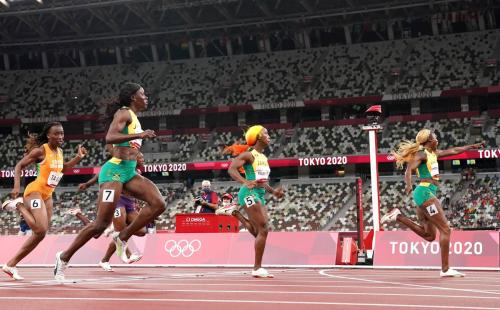
The women’s 100 metres in Tokyo ended with Elaine Thompson-Herah’s celebration. It might have cost her a world record

Rosie DiManno - Star Columnist, Toronto Star 6 minute read Preview

The women’s 100 metres in Tokyo ended with Elaine Thompson-Herah’s celebration. It might have cost her a world record

Rosie DiManno - Star Columnist, Toronto Star 6 minute read Saturday, Jul. 31, 2021

Thompson-Herah beats compatriot Fraser-Pryce and leads a Jamaican sweep of the podium.

Read
Saturday, Jul. 31, 2021

Dozen of Manitoba highways remain closed weeks after storms

Nicole Buffie 4 minute read Preview

Dozen of Manitoba highways remain closed weeks after storms

Nicole Buffie 4 minute read Thursday, Jul. 16, 2026

Thirty five highways remain closed weeks after torrential rain caused destructive flooding in several Manitoba communities.

Crews continue to assess flood damage and repair roads and highways as conditions allow, after historic precipitation washed away many routes.

Some areas in the Parkland region of the province received more than 200 millimetres of rain between June 6 and July 1.

The majority of road closures are in the Roblin area. A storm at the end of June undid a lot of repair work in the Municipality of Minitonas-Bowsman after an early June deluge, officials said.

Read
Thursday, Jul. 16, 2026