WEATHER ALERT

Olympic teams raise concerns over quarantine hotels

Advertisement

Advertise with us

BEIJING (AP) — Not enough food. Inedible meals. No training equipment. Some Olympic athletes unlucky enough to test positive for the coronavirus at the Beijing Olympics feel their quarantine conditions are making a bad situation much worse.

Read this article for free:


or

Already have an account? Log in here »

To continue reading, please subscribe:

Subscribe and receive a limited-edition Free Press branded hat or tote.

Digital Subscription

One year of digital access for only $205*

  • Enjoy unlimited reading on winnipegfreepress.com
  • Read the E-Edition, our digital replica newspaper
  • Access News Break, our award-winning app
  • Play interactive puzzles

*First annual payment billed as $205.00 + GST for one year. This annual subscription will automatically renew at $233.00 + GST every 52 weeks (10% off the regular annual price of $259.35). Offer available to new and qualified returning subscribers only. Cancel any time.

To continue reading, please subscribe:

Add Free Press access to your Brandon Sun subscription for only an additional

$1 for the first 4 weeks*

  • Enjoy unlimited reading on winnipegfreepress.com
  • Read the E-Edition, our digital replica newspaper
  • Access News Break, our award-winning app
  • Play interactive puzzles
Start now

*Your next Brandon Sun subscription payment will increase by $1.00 and you will be charged $17.95 plus GST for four weeks. After four weeks, your payment will increase to $24.95 plus GST every four weeks.

Hey there, time traveller!
This article was published 05/02/2022 (1675 days ago), so information in it may no longer be current.

BEIJING (AP) — Not enough food. Inedible meals. No training equipment. Some Olympic athletes unlucky enough to test positive for the coronavirus at the Beijing Olympics feel their quarantine conditions are making a bad situation much worse.

“My stomach hurts, I’m very pale and I have huge black circles around my eyes. I want all this to end. I cry every day. I’m very tired,” Russian biathlon competitor Valeria Vasnetsova posted on Instagram from one of Beijing’s so-called quarantine hotels.

Her problem wasn’t with any symptoms of the virus. It was the food.
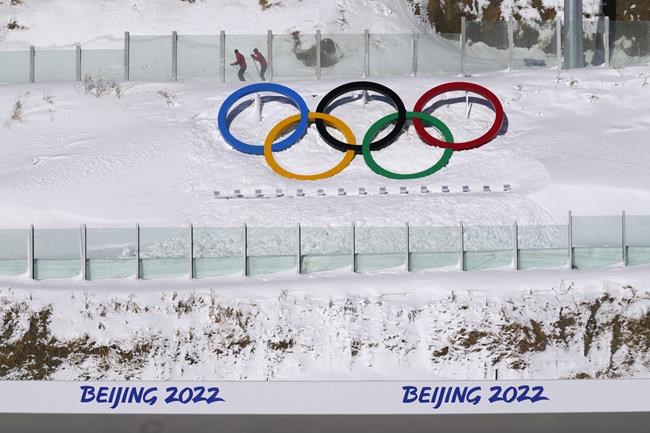
Biathletes skate above the Olympic rings during practice at the 2022 Winter Olympics, Thursday, Feb. 3, 2022, in Zhangjiakou, China. (AP Photo/Kirsty Wigglesworth)

Vasnetsova posted a picture Thursday of what she said was “breakfast, lunch and dinner for five days already” — a tray with food including plain pasta, an orange sauce, charred meat on a bone, a few potatoes and no greens.

She said she mostly survived on a few pieces of pasta because it was “impossible” to eat the rest, “but today I ate all the fat they serve instead of meat because I was very hungry.” She added she lost a lot of weight and “my bones are already sticking out.”

The quarantine hotels are increasingly the target of criticism from athletes and their teams, who are lobbying organizers for improvements. There’s a lack of transparency, too, with only some virus-positive athletes forced into quarantine hotels where their teams don’t have access, while teammates in similar situations are allowed to isolate within the Olympic village.

The rules for athletes who test positive say those without symptoms go to a dedicated hotel for isolation. Anyone who has COVID-19 with symptoms will go to a hospital. In both cases, they’ll be unable to compete until cleared for discharge.

Teams have started going public with criticism.

After Eric Frenzel, a three-time gold medalist in Nordic combined, tested positive, German delegation head Dirk Schimmelpfennig lambasted the “unreasonable” living conditions. Germany wants larger, more hygienic rooms, and more regular food deliveries so athletes who are eventually released are still fit to compete, Schimmelpfennig said in comments reported by the FAZ newspaper.

The pressure can pay off. Belgian skeleton racer Kim Meylemans was brought back from a quarantine hotel to isolation in the athletes’ village after she made a tearful post on social media. Her main gripe was the lack of information. She was loaded into an ambulance and transported from one quarantine facility to another on a day she thought she was being released.

Vasnetsova passed her time in quarantine with a little detective work. When fetching the food left outside her door, she took a glance at the boxes left outside other rooms in her corridor, whose doors were labeled with signs to distinguish Olympians from other people working at the Games who tested positive, such as team staff.

She concluded the athletes were getting worse food, and underlined it with a picture of food served to her team doctor, who had also tested positive and was living two floors below. He had fresh fruit, a salad and prawns with broccoli.

“I honestly don’t understand, why is there this attitude to us, the athletes?!” she wrote.

Two days on from her criticism, Vasnetsova is still in quarantine but things are looking up.

Russian biathlon team spokesperson Sergei Averyanov posted a picture of what he said was an improved meal delivered to Vasnetsova’s room including salmon, cucumbers, sausages and yogurt. A stationary bike will be delivered soon, he added.

Vasnetsova, he wrote, “is already smiling, and that’s the main thing.”

___

More AP Olympics: https://apnews.com/hub/winter-olympics and https://twitter.com/AP_Sports

Report Error Submit a Tip

More Stories

Another new year starts with hope

Niigaan Sinclair 5 minute read Preview

Another new year starts with hope

Niigaan Sinclair 5 minute read Tuesday, Dec. 29, 2020

The year began with hope that many long-standing challenges for Indigenous communities could be overcome.

For example, on Jan. 1, Bill C-92 came into effect, enabling Indigenous communities to take control of child and family services, making them “free to develop policies and laws based on their particular histories, cultures, and circumstances.”

This followed the 2019 passing of Bill C-91 and the creation of a federal Indigenous languages office — committing the government to support and fund “Indigenous-led language reclamation, revitalization, maintenance and strengthening activities.”

January also marked the opening of the Indian day school settlement process, offering more than 200,000 survivors compensation for harms perpetuated at 699 schools, and a $200-million education, healing and commemoration fund.

Read
Tuesday, Dec. 29, 2020

Olympic teams raise concerns over quarantine hotels

James Ellingworth, The Associated Press 4 minute read Preview

Olympic teams raise concerns over quarantine hotels

James Ellingworth, The Associated Press 4 minute read Saturday, Feb. 5, 2022

The longer the Bank of Canada waits to raise its key lending rate, the bigger and more painful its rate hikes will have to be, David Olive writes.

Read
Saturday, Feb. 5, 2022

A Winnipeg family is urging others to pay close attention to their prescriptions after a highly-potent pill — 10 times the strength it was supposed to be — made their child seriously ill.

Andrea Thidrickson and Kevin Barkley’s 10-year-old daughter is shaken after experiencing an accidental overdose and subsequent visit to the emergency room last week.

Their daughter’s pediatrician has, for several months now, prescribed two milligrams of the medication in question on a daily basis, the duo said.

On Aug. 14, the girl took a single pill containing 20 milligrams of it.

RCMP defends N.S. shooting response

Michael MacDonald and Keith Doucette, The Canadian Press 6 minute read Preview

RCMP defends N.S. shooting response

Michael MacDonald and Keith Doucette, The Canadian Press 6 minute read Wednesday, Apr. 22, 2020

HALIFAX - Under fire for how they alerted the public to a 12-hour massacre that took the lives of 22 people, the Nova Scotia RCMP defended their actions Wednesday, saying their use of Twitter was effective.

Since the horrific string of killings started Saturday night and stretched into Sunday morning, questions have been raised as to why the province did not use an emergency alert system to transmit warnings to Nova Scotians' cellphones and television screens.

RCMP Chief Supt. Chris Leather said Twitter messages from the RCMP started Saturday at 10:26 p.m., when the Mounties warned of a firearms complaint in Portapique, a tiny village about a 130-kilometre drive north of Halifax.

Leather read from a statement Wednesday making it clear he was aware the RCMP's communication with the public was under scrutiny.

Read
Wednesday, Apr. 22, 2020

Mr. Track and Field: Jim Daly devoted his life to developing the sport

Devon Shewchuk 6 minute read Preview

Mr. Track and Field: Jim Daly devoted his life to developing the sport

Devon Shewchuk 6 minute read Monday, Sep. 9, 2019

It’s been said the true measure of a runner isn’t in time, but rather the effort it took along the way.

James ‘Jim’ Daly only spent about 10 years racing track and field, but it was enough to make him fall in love with the sport. He dedicated the rest of his life to helping young track athletes from across Manitoba strive for their own personal bests.

Dubbed “Mr. Track and Field” by friends and family, Jim never met a track athlete he didn’t like, no matter their level of talent. His commitment to track and field went far beyond the results of any meet.

Daly died on May 16 at the age of 92.

Read
Monday, Sep. 9, 2019

Virus testing the new normal as China sticks to 'zero-COVID'

Ken Moritsugu, The Associated Press 5 minute read Preview

Virus testing the new normal as China sticks to 'zero-COVID'

Ken Moritsugu, The Associated Press 5 minute read Thursday, Jun. 9, 2022

BEIJING (AP) — Thousands of coronavirus testing sites have popped up on sidewalks across Beijing and other Chinese cities in the latest development in the country's “zero-COVID” strategy.

Lines form every day, rain or shine, even where the spread of the virus has largely stopped. Some people need to go to work. Others want to shop. All are effectively compelled to get tested by a requirement to show a negative test result to enter office buildings, malls and other public places.

Liu Lele, who works for a live-streaming company, has no problem getting tested regularly but said the daytime operating hours don't always fit his schedule.

“Sometimes I get held up at work," he said after finishing a test Thursday near Beijing's historic Bell and Drum towers. "I wish there were sites open 24 hours or not closing until 7 or 8 p.m.”

Read
Thursday, Jun. 9, 2022