Quebec, Ontario, P.E.I. introduce new measures in hopes of slowing Omicron spread

Advertisement

Advertise with us

Several provinces on Tuesday issued new health orders to slow the spread of the Omicron variant of the novel coronavirus, which is disrupting holiday plans across the country and threatening governments' abilities to control COVID-19 transmission.

Read this article for free:


or

Already have an account? Log in here »

To continue reading, please subscribe:

Subscribe and receive a limited-edition Free Press branded hat or tote.

Digital Subscription

One year of digital access for only $205*

  • Enjoy unlimited reading on winnipegfreepress.com
  • Read the E-Edition, our digital replica newspaper
  • Access News Break, our award-winning app
  • Play interactive puzzles

*First annual payment billed as $205.00 + GST for one year. This annual subscription will automatically renew at $233.00 + GST every 52 weeks (10% off the regular annual price of $259.35). Offer available to new and qualified returning subscribers only. Cancel any time.

To continue reading, please subscribe:

Add Free Press access to your Brandon Sun subscription for only an additional

$1 for the first 4 weeks*

  • Enjoy unlimited reading on winnipegfreepress.com
  • Read the E-Edition, our digital replica newspaper
  • Access News Break, our award-winning app
  • Play interactive puzzles
Start now

*Your next Brandon Sun subscription payment will increase by $1.00 and you will be charged $17.95 plus GST for four weeks. After four weeks, your payment will increase to $24.95 plus GST every four weeks.

Hey there, time traveller!
This article was published 14/12/2021 (1753 days ago), so information in it may no longer be current.

Several provinces on Tuesday issued new health orders to slow the spread of the Omicron variant of the novel coronavirus, which is disrupting holiday plans across the country and threatening governments’ abilities to control COVID-19 transmission.

Ontario imposed new restrictions on visits to long-term care homes, and Quebec ordered many civil servants home and recommended employers prioritize remote work, effective immediately. Prince Edward Island, meanwhile, imposed limits on private indoor gatherings.

The new rules came hours before a scheduled virtual meeting between Prime Minister Justin Trudeau and provincial and territorial premiers to discuss the spread of Omicron. Federal Health Minister Jean-Yves Duclos told reporters in Ottawa discussions would include new travel recommendations for Canadians.
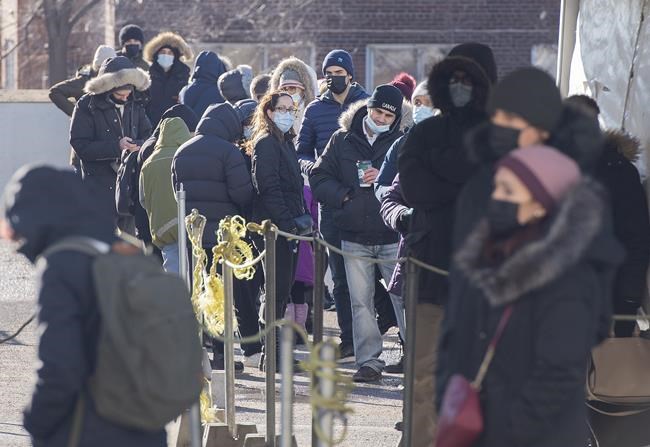
People wait to receive a COVID-19 test in Montreal, Sunday, Dec. 12, 2021. Ontario and Quebec are both reporting more than 1,000 new cases of COVID-19 today, ahead of scheduled updates from the top doctors in both provinces.THE CANADIAN PRESS/Graham Hughes

“We are very concerned about those that would be travelling abroad at this particular time,” he said Tuesday. “What we’re seeing is an incredibly rapidly spreading variant, and we are worried about Canadians that might end up either stranded or sick abroad.”

Duclos would not say whether the federal government would follow the lead of the United Kingdom and lift the border restrictions on African countries that were imposed when the variant was first identified. Canada has limited travel from 10 African countries because of the variant, the presence of which has been confirmed in at least 77 countries and in 30 U.S. states.

“We are considering all options and all actions, and that requires a conversation between the premiers and the prime minister,” he said.

Dr. Kieran Moore, Ontario’s chief medical officer of health, said he expected the Omicron variant to account for all new COVID-19 cases in the province by the end of the month. “It is rapidly becoming the dominant strain in Ontario,” he told reporters in Toronto on Tuesday.

“While there is still some uncertainty around the virulence of Omicron, we have good evidence that it is more transmissible than the Delta variant,” Moore said. “This means even if it is less severe, with so many people infected, there may be significant demands on the health-care system.” There were 95 confirmed cases of the variant in the province.

Earlier on Tuesday, Ontario’s long-term care minister, Rod Phillips, said his province would increase COVID-19 testing in long-term care homes and tighten restrictions on visitors and resident activities.

Moore said he would recommend further provincewide measures to slow the spread of the variant. Regional public health authorities in several parts of the province, including Peterborough, Kingston and Waterloo, have already implemented their own restrictions.

Quebec’s public health institute said Tuesday it had confirmed 11 cases of the variant in the province and identified 11 more suspected cases, but Health Minister Christian Dubé said he believed those figures may be underestimations.

Dubé said all positive COVID-19 tests identified on Tuesday would be screened for the new variant and that the province would hire more vaccinators. “With the rising cases and the potential of Omicron, we want to accelerate booster vaccinations,” Dubé told reporters in Montreal.

He recommended employers prioritize remote work and pledged to issue free rapid tests to the public next week. Dubé said 30 per cent of dedicated COVID-19 beds in the province’s hospitals were occupied.

Dr. Heather Morrison, Prince Edward Island’s chief public health officer, said Tuesday the province had detected its first case of the Omicron variant.

Morrison said new restrictions on private indoor gatherings would come into effect on Friday and that people arriving on the Island would be required to isolate until they received a negative COVID-19 test result. The province requires everyone aged eight and older to be tested on arrival.

Morrison said the Omicron case is linked to a COVID-19 outbreak at St. Francis Xavier University in Nova Scotia.

British Columbia said it had identified 44 cases of the variant as of Sunday as health officials recommended against large holiday parties with COVID-19 cases poised to rise because of Omicron.

Provincial health officer Dr. Bonnie Henry said B.C. won’t likely roll out free at-home rapid tests before January because the province ordered a different type of test than its counterparts that are distributing tests in time for the holidays.

The bulk of rapid tests that B.C. already has on hand — about 1.3 million — must be administered by a medical professional using a special machine.

“Our testing strategy has been different from those used in other provinces all along,” Henry said, adding B.C. has been focused on “making sure we get the right person the right test at the right time.”

Those who have tested positive for Omicron are between the ages of five and 72. None have been hospitalized and all but seven were vaccinated, she said. The Health Ministry said 20 of those infected recently travelled to Nigeria, South Africa, Zimbabwe, Egypt, Iran, Mexico, Germany, Portugal or the United States.

The Omicron variant appears to cause less severe disease compared with previous versions of the novel coronavirus, according to an analysis by South Africa’s largest private health insurer and by the South African Medical Research Council. The variant, however, is believed to be more transmissible.

The analysis, which has not been peer-reviewed, indicated that the Pfizer-BioNTech vaccine may offer less protection against infection from the variant compared with previous strains but that it continues to offer a high level of protection against hospitalization.

This report by The Canadian Press was first published Dec. 14, 2021.

— With files from Holly McKenzie-Sutter in Toronto, Amy Smart in Vancouver and The Associated Press.

———

This story was produced with the financial assistance of the Facebook and Canadian Press News Fellowship.

Report Error Submit a Tip

More Stories

Man who killed two Indigenous women, was accused of killing third, back in prison less than year after statutory release

Erik Pindera 5 minute read Preview

Man who killed two Indigenous women, was accused of killing third, back in prison less than year after statutory release

Erik Pindera 5 minute read 4:06 PM CDT

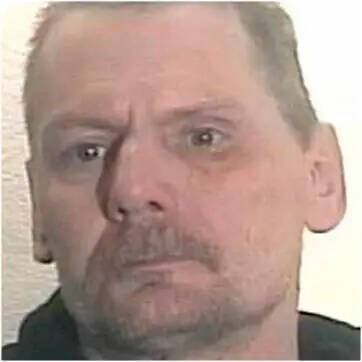
A Winnipeg man convicted of killing two First Nations women more than a decade ago — with charges stayed in a third slaying — has been sent back to prison less than a year after he left under conditions.

Parole Board of Canada officials revoked 67-year-old Shawn Lamb’s statutory release after a hearing last week.

“Your actions are not beyond your control, yet you continue to wilfully make poor decisions that place the public at risk,” board member Arun Kundu-Thomsen wrote in a decision released this week.

Lamb gained statutory release — a legislated conditional release most federal inmates automatically qualify for after serving two-thirds of their sentence — in November last year and lived in several Ontario facilities for federal offenders.

Read
4:06 PM CDT

Time to clean up a world of ‘slop’

Editorial 4 minute read Preview

Time to clean up a world of ‘slop’

Editorial 4 minute read Saturday, Dec. 20, 2025

Merriam-Webster chose its word of the year correctly, and for more reasons than it might realize.

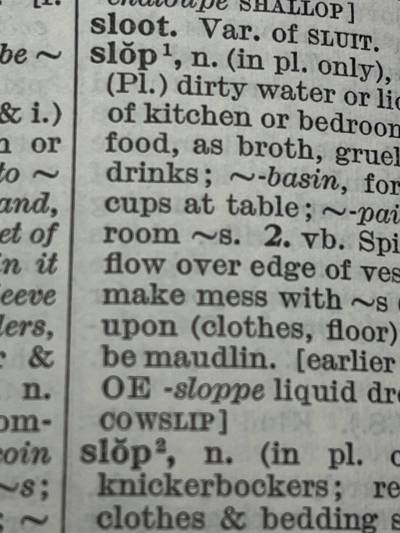
“Slop” is the word of 2025, according to the dictionary publisher. The decision was motivated primarily by the public’s encounters with, and reaction to, content generated by “artificial intelligence” large-language models.

Despite the best efforts of the technology’s proponents, people are quickly getting tired of being inundated with gaudy, glossy, lazy AI-generated images and videos practically everywhere they turn, from social media platforms to T-shirt vendors.

According to a Pew Research Center survey of U.S. residents released in September, respondents were more concerned than excited by the technology, and were “generally pessimistic about AI’s effect on people’s ability to think creatively…”

Read
Saturday, Dec. 20, 2025

Who has been invited to the table?

Stephen Borys 6 minute read Preview

Who has been invited to the table?

Stephen Borys 6 minute read 2:01 AM CDT

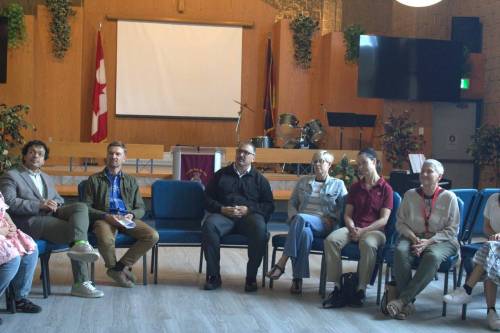
Last Friday, I spoke at Booth University College’s inaugural Honour and Hope Harvest Dinner in support of Shelter U. I had been asked to speak about the power of art in the community, a subject I have spent much of my professional life thinking about — as a museum director, writer and teacher, and now through my consulting work with Civic Muse.

What continues to interest me is not simply what museums, universities and other public institutions do, but whether their work actually matters — whether they make a difference in the lives of the people and communities around them.

Preparing for the evening brought me back to an even more fundamental question: Who has been invited in?

One of my museum mentors used to remind me that institutions often begin the conversation about public engagement too late. Before engagement comes the welcome, and before the welcome comes the invitation. We can create extraordinary buildings, exhibitions and programs and say that everyone is welcome. But unless people believe that these places are also meant for them, many will never cross the threshold.

Read
2:01 AM CDT

Retirement has been a rocky road for Osmond

Lori Ewing, The Canadian Press 5 minute read Preview

Retirement has been a rocky road for Osmond

Lori Ewing, The Canadian Press 5 minute read Wednesday, Jan. 8, 2020

TORONTO - For the better part of two decades, Kaetlyn Osmond knew exactly what she'd be doing every day. Her world and her schedule revolved around figure skating.

The 24-year-old announced her retirement last May, and hasn't competed since winning gold at the 2018 world championships. And while she's completely at peace with her decision to walk away when she did, the months since haven't been all smooth sailing.

"It was a big change," Osmond said Wednesday. "Not having the rink to go to every day — the rink was a safe spot for me — skating was my job, it was my hobby, it was all my friends, it was just a great place for me to be. And I knew exactly what my purpose was every single day.

"Losing that was a lot harder than I was expecting it to be. I didn't have a team of 15 people telling me where to be and what to do, I had to figure that out on my own. And it felt like I had to grow up really quickly."

Read
Wednesday, Jan. 8, 2020

Pimicikamak FN locked down, police hunt for suspect after fatal shooting

By Zoe Pierce 3 minute read Preview

Pimicikamak FN locked down, police hunt for suspect after fatal shooting

By Zoe Pierce 3 minute read Saturday, Aug. 1, 2026

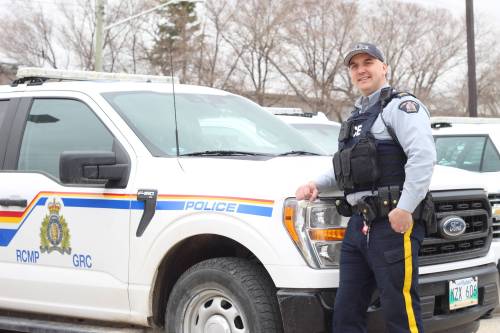
Pimicikamak Cree First Nation, also known as Cross Lake, remains under lockdown as RCMP Major Crime Services investigate a shooting that left a 42-year-old man dead.

RCMP said officers were notified by local First Nation Safety Officers at about 9:30 p.m. Friday about a seriously injured person on Main Road in the community. Officers found two males at the scene, including one with a gunshot wound.

The 42-year-old man was pronounced dead at the scene by EMS. The second male was not injured and did not require medical attention, police said.

Manitoba RCMP Major Crime Services, along with Cross Lake RCMP and Forensic Identification Services, are investigating. Police said the suspect is believed to be known to the person shot and may still be in the community.

Read
Saturday, Aug. 1, 2026

Winnipeg Book Festival starts a new chapter

Ben Sigurdson 4 minute read Preview

Winnipeg Book Festival starts a new chapter

Ben Sigurdson 4 minute read 2:01 AM CDT

Once known as Thin Air, the 2026 Winnipeg Book Festival marks a new chapter heading into its 29th year celebrating fiction, non-fiction and poetry with a new name, new staff and a shorter, more streamlined fest based at The Forks.

Thursday kicks off with a festival blessing and two events with Indigenous authors. Story Lodge (noon to 2 p.m.) features two videos from the new series by Rosanna Deerchild and Kim Wheeler profiling Indigenous authors working in a range of genres. From 3 to 4 p.m., a quartet of children’s authors will discuss the importance of storytelling and Indigenous languages and culture. The Love Local event on Thursday at 6 p.m., brings together a trio of Winnipeg authors — C.C. Benison, Philipp Schott and Margaret Sweatman — all working in different genres.

On Friday at noon, Niigaan Sinclair, Noé Préfontaine and Anna Dewar will discuss author Elaine Dewar’s posthumously released Oblivious, which explores the dark legacy of Canada’s residential schools and segregated hospitals. That event will be followed at 1:30 p.m. by a panel including Samantha Beiko, Ericka Fiddler and Kirsten Wurmann talking about a forthcoming graphic novel from the Prison Libraries Committee.

Aspiring writers will want to attend the 7x7 event Friday at 3 p.m., featuring seven speakers (including author Zilla Jones, publisher Kyla Neufeld and Chris Hall of McNally Robinson) each offering seven-minute presentations about writing and publishing. Both Saturday and Sunday kick off with river walks with writers at 10 a.m.

Read
2:01 AM CDT