All travellers arriving by air, except from U.S., need COVID-19 test at airport

Advertisement

Advertise with us

OTTAWA - All air travellers entering Canada, except for those coming from the United States, will now need to be tested for COVID-19 upon arrival at the airport and isolate until they get their results, even if they are fully vaccinated against the virus.

Read this article for free:


By clicking the button above, an account will be created and you will begin to receive some of our recommended newsletters. You may opt out of any newsletter by visiting your Email and Communication Preferences page or by clicking "unsubscribe" at the bottom of any email.

or

Already have an account? Log in here »

To continue reading, please subscribe:

Digital Subscription

One year of digital access for only $1.44 a week*

  • Enjoy unlimited reading on winnipegfreepress.com
  • Read the E-Edition, our digital replica newspaper
  • Access News Break, our award-winning app
  • Play interactive puzzles

*Billed as $5.77 plus GST every four weeks. After 52 weeks, price increases to the regular rate of $19.95 plus GST every four weeks. Offer available to new and qualified returning subscribers only. Cancel any time.

To continue reading, please subscribe:

Add Free Press access to your Brandon Sun subscription for only an additional

$1 for the first 4 weeks*

  • Enjoy unlimited reading on winnipegfreepress.com
  • Read the E-Edition, our digital replica newspaper
  • Access News Break, our award-winning app
  • Play interactive puzzles
Start now

*Your next Brandon Sun subscription payment will increase by $1.00 and you will be charged $17.95 plus GST for four weeks. After four weeks, your payment will increase to $24.95 plus GST every four weeks.

Hey there, time traveller!
This article was published 30/11/2021 (1795 days ago), so information in it may no longer be current.

OTTAWA – All air travellers entering Canada, except for those coming from the United States, will now need to be tested for COVID-19 upon arrival at the airport and isolate until they get their results, even if they are fully vaccinated against the virus.

The stricter measures come as public health officials around the world warn of the potentially dangerous new Omicron variant of COVID-19. Canada has now confirmed cases in British Columbia, Ontario, Quebec and Alberta — all involving people who recently returned from Nigeria.

With that in mind, the federal government is also expanding its border closure to foreign nationals who have recently travelled through three more African countries — Nigeria, Egypt and Malawi — where officials first became aware of the new variant.

Healthcare workers wait for airline passengers at a COVID-19 testing center at Trudeau Airport in Montreal, Friday, Feb. 19, 2021. Unvaccinated travellers over the age of 12 won't be able to board a plane or train in Canada as of today, now that the grace period has ended on the government's COVID-19 vaccine mandate. THE CANADIAN PRESS/Ryan Remiorz

That is in addition to the seven southern African countries announced last week: South Africa, Mozambique, Botswana, Zimbabwe, Lesotho, Namibia and eSwatini.

The Associated Press reported Tuesday that new findings suggested the Omicron variant was already present in Europe nearly a week before authorities in South Africa reported its existence to the World Health Organization, which prompted questions about the choice to focus on Africa.

Dr. Theresa Tam, the chief public health officer, said one of the factors is the positivity rate among travellers arriving in Canada.

“We now have confirmed Omicron cases, all of our cases reported so far have been … from Nigeria,” Tam said at a news conference in Ottawa on Tuesday.

Federal Health Minister Jean-Yves Duclos said the government will consult with provinces and territories Tuesday evening, before bringing in similar testing and isolation measures for travellers coming from the U.S.

Most travellers will be allowed to isolate at home while they wait for their results. Canadians and permanent residents arriving from the 10 listed countries, or without a safe place to quarantine, will need to stay in a quarantine hotel until their airport COVID-19 test comes back negative.

There are still many questions about the new variant, including the severity of disease it causes and the transmissibility of the virus.

The World Health Organization has warned the impact could be very serious. On Tuesday, it advised that anyone who is unvaccinated against COVID-19 or at risk of developing severe COVID-19 disease and dying, including people 60 years of age or older, should put off travel.

The new measures at the airport may take time to implement, Duclos said, and they could also lead to delays at the border, according to Public Safety Minister Marco Mendicino.

“Our border service officers will never compromise the health and safety of Canadians for the sake of border wait times,” Mendicino said.

Transport Minister Omar Alghabra said travellers who choose to leave the country should be aware that COVID-19 protection measures could change at any moment.

A more stringent vaccine mandate for domestic travellers also came into effect Tuesday.

Unvaccinated travellers over the age of 12 can no longer board a plane or passenger train in Canada, and a negative COVID-19 test won’t serve as a substitute for most people.

The policy was rolled out Oct. 30, but the federal government allowed a short transition period for unvaccinated travellers who could board as long as they provided a negative molecular COVID-19 test taken within 72 hours of their trip. It does not apply to commuter trains.

The government has issued warnings on social media that even Canadians and permanent residents abroad will not be able to fly home beyond their point of entry without having received a full slate of approved vaccines.

There are some exceptions, including valid medical exemptions, travel to remote communities only accessible by plane, and those transiting through Canada en route to another destination.

Most people who qualify for an exemption will need a recent COVID-19 test.

Finally, the government has requested guidance from the National Advisory Committee on Immunization about whether it should bring in new standards on the use of COVID-19 vaccine booster doses in the face of the new variant.

“We are explicitly asking NACI to come up quickly with a revised view on where and how and to whom these boosters should be administered,” Duclos said.

The WHO has urged countries not to offer boosters to healthy adults until high-risk people in other countries around the world have been vaccinated.

Duclos said Canada is doing comparably well when it comes to supporting developing countries in their vaccination efforts.

“We know that this pandemic is going to end only when it ends globally and that’s why we must obviously look after the health and safety of Canadians, but we also must be supporting other countries,” he said.

New domestic health measures will likely also be discussed with the provinces, Duclos said.

This report by The Canadian Press was first published Nov. 30, 2021.

Report Error Submit a Tip

More Stories

Must-see Folk Fest workshops

16 minute read Preview

Must-see Folk Fest workshops

16 minute read Thursday, Jul. 5, 2018

Workshops have always been an integral part of the Winnipeg Folk Festival.

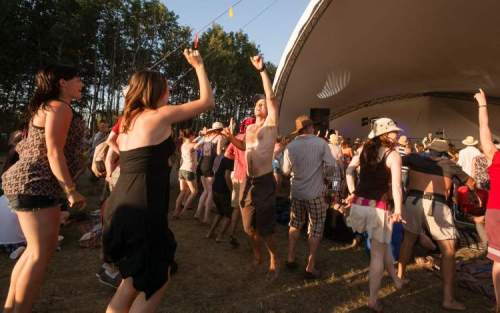
They are magic-moment makers; a curated group of musicians — sometimes friends, sometimes strangers — on one stage playing together, supporting each other, creating something that will only exist for an hour or two. No one knows what will come out of the collaboration, but usually it’s something special.

When the Free Press spoke to Winnipeg Folk Festival artistic director Chris Frayer ahead of the lineup release in early March, he noted he would be paying some extra attention to workshops this year, as some of the special projects occurring during the past couple of festivals had pulled some of his attention away.

And with 37 workshops on the books, it would seem he followed through on his promise.

Read
Thursday, Jul. 5, 2018

City rec facilities crumbling

Ryan Thorpe 6 minute read Preview

City rec facilities crumbling

Ryan Thorpe 6 minute read Monday, Oct. 22, 2018

Throughout Winnipeg, decades-old community assets — pools, arenas and recreation and leisure centres — are deteriorating so quickly that service disruptions are inevitable.

Meanwhile, the city’s community services department, which is responsible for managing those assets, operates with an annual deficit of roughly $80 million, meaning there are scant resources to do little more than bail water on a sinking ship.

Soon, Winnipeggers will have a choice: fewer community services or higher costs.

“It poses a huge challenge because we have very limited dollars that we have to invest in our existing facilities. We also have growing demands for new amenities in new areas. We have to be very strategic,” said Ken McKim, manager of asset management for the department.

Read
Monday, Oct. 22, 2018

A fond farewell to the Hercules

Editorial 4 minute read Preview

A fond farewell to the Hercules

Editorial 4 minute read 2:00 AM CDT

Fans at the NHL’s outdoor Heritage Classic game last weekend were no doubt thrilled by the sight and sound of two CF-18 Hornet fighter jets conducting a flyover at Princess Auto Stadium shortly before the puck was dropped for the much-anticipated Winnipeg Jets/Montreal Canadiens matchup.

Flyovers such as these always create a spectacular scene, as the speed and power of the jets are on full display for the brief moments they’re in view above the stadium bowl. But fans who maintained their skyward gaze for a few seconds after the Hornets’ blink-and-you’ll-miss-it appearance were treated to a much more poignant aeronautical exhibition, as a CC-130H Hercules aircraft passed over the stadium in the fighter jets’ wake.

Compared to the supersonic CF-18s, the massive, propeller-driven transport plane probably seemed to be doing more of a “crawl-over”; what most folks at the outdoor game probably didn’t realize, however, was that this was almost certainly the last time they’ll see one of these ubiquitous Canadian Forces aircraft in the sky.

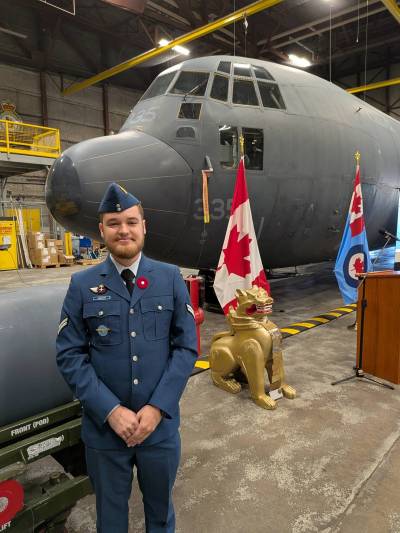
The CC-130H is being retired after more than half a century as the RCAF’s combat, rescue and transport workhorse. The “Herc” will be replaced by more modern aircraft, including the smaller and more nimble CC-295 Kingfisher, which will be used for search-and-rescue missions out of 17 Wing Winnipeg, beginning next month.

Read
2:00 AM CDT

Opera singer David Daniels no longer in singers’ union following sexual assault guilty plea

The Associated Press 2 minute read Preview

Opera singer David Daniels no longer in singers’ union following sexual assault guilty plea

The Associated Press 2 minute read Thursday, Dec. 21, 2023

NEW YORK (AP) — Countertenor David Daniels is no longer a member of the union for singers following his guilty plea to a charge of sexual assault.

The 57-year-old and his husband, Scott Walters, pleaded guilty to sexual assault of an adult, a second-degree felony, in Houston's Harris County District Court on Aug. 4. Their accuser was aspiring opera singer Sam Schultz.

They both were sentenced to eight years’ probation and required to register as sex offenders.

American Guild of Musical Artists spokesperson Alicia Cook said Wednesday that Daniels is no longer a member of the union.

Read
Thursday, Dec. 21, 2023

Is Canada headed for time chaos this weekend?

Michelle Bastian 5 minute read 2:00 AM CDT

When Manitoba Premier Wab Kinew declared Sept. 17 that the province would remain on permanent daylight time, he suggested it was a historical moment people would share with their “great-great-grandkids.” But, while Sunday, Nov. 1 has been heralded as the date many Canadians will stop changing their clocks, there are rumblings behind the scenes suggesting this will actually cause more trouble than ever before.

There are, of course, the warnings from chrono-biologists and sleep scientists about the damage permanent daylight time will do. The lighter evenings will mean many more dark mornings. But there is another set of problems in the offing in the critical infrastructure that underpins our digital lives.

While it used to be common to spend the Sunday morning after a time change going around our homes updating the clocks, we now wake up to devices that have already adjusted to the new time. These automatic updates occur regularly for daylight time, as well as when we travel to new time zones.

Our clocks are able to change by themselves owing to the hard work of a group of volunteers who were recently named in a list of the people who hold up the internet. This group, led by Paul Eggert, a computer scientist at UCLA, maintains a little-known tool called the Time Zone Database. Since the 1980s, it has kept track of regional, national and international debates about clock time and provided an up-to-date table of what time it should be on our walls.

Submit a news tip

1 minute read Monday, Mar. 16, 2026

Submit a news tip