A ‘one-way door’: Ottawa goes slow on easing testing rule for Canada-U.S. travellers

Advertisement

Advertise with us

WASHINGTON - Ottawa is effectively installing "one-way" signs along the road to the Canada-U.S. border, critics complained Friday as the federal government promised to stop requiring costly COVID-19 tests to enter the country — but only for Canadian citizens and permanent residents returning from short-term visits.

Read this article for free:


By clicking the button above, an account will be created and you will begin to receive some of our recommended newsletters. You may opt out of any newsletter by visiting your Email and Communication Preferences page or by clicking "unsubscribe" at the bottom of any email.

or

Already have an account? Log in here »

To continue reading, please subscribe:

Digital Subscription

One year of digital access for only $1.44 a week*

  • Enjoy unlimited reading on winnipegfreepress.com
  • Read the E-Edition, our digital replica newspaper
  • Access News Break, our award-winning app
  • Play interactive puzzles

*Billed as $5.77 plus GST every four weeks. After 52 weeks, price increases to the regular rate of $19.95 plus GST every four weeks. Offer available to new and qualified returning subscribers only. Cancel any time.

To continue reading, please subscribe:

Add Free Press access to your Brandon Sun subscription for only an additional

$1 for the first 4 weeks*

  • Enjoy unlimited reading on winnipegfreepress.com
  • Read the E-Edition, our digital replica newspaper
  • Access News Break, our award-winning app
  • Play interactive puzzles
Start now

*Your next Brandon Sun subscription payment will increase by $1.00 and you will be charged $17.95 plus GST for four weeks. After four weeks, your payment will increase to $24.95 plus GST every four weeks.

Hey there, time traveller!
This article was published 19/11/2021 (1806 days ago), so information in it may no longer be current.

WASHINGTON – Ottawa is effectively installing “one-way” signs along the road to the Canada-U.S. border, critics complained Friday as the federal government promised to stop requiring costly COVID-19 tests to enter the country — but only for Canadian citizens and permanent residents returning from short-term visits.

As of Nov. 30, fully vaccinated travellers who can enter Canada by right won’t be required to obtain a molecular test for COVID-19, such as a PCR test, if they’ve been in the United States for less than 72 hours, Health Minister Jean-Yves Duclos told a news conference.

“With more Canadians getting vaccinated every day, we can move forward, though cautiously, towards a more open border, economy and society,” Duclos said. “At the same time, we can’t let our guard down. Every one of us must work to protect the gains we have made.”

A worker picks up a COVID-19 self collection test kit which are given to arriving international passengers at Vancouver International Airport, in Richmond, B.C., Friday, July 30, 2021. THE CANADIAN PRESS/Darryl Dyck

The PCR test requirement for American visitors to Canada, he added, will be re-evaluated in due course, with an update on any plans for adjustments “at a later date.”

The news was underwhelming to those in both countries who believe it’s high time Canada stopped requiring the test altogether, arguing that the price tag of between $150-$300 per swab is proving a deterrent to the lucrative flow of incidental cross-border traffic.

The Canadian Chamber of Commerce promptly panned the decision, calling it a “one-way door on the border.”

“Just as the holiday shopping season — the most important period for the retail sector — begins, Ottawa is making it easier for Canadians to cross-border shop while maintaining punitive restrictions that discourage fully vaccinated Americans from vacationing or shopping in Canada,” chamber president and CEO Perrin Beatty said in a statement.

“The 72-hour cutoff is also arbitrary. It is hard to understand how travellers are low-risk for 72 hours, but become a danger at hour 73.”

The National Airlines Council of Canada, which represents the country’s largest carriers, said it was “somewhat encouraged” by the announcement, but in the same breath called it a “piecemeal approach” with no clear scientific justification.

“To our knowledge, no other country in the world has adopted such a narrow approach,” council president and CEO Mike McNaney said in a statement.

New York congressman Rep. Brian Higgins, arguably the loudest U.S. critic of any persistent border restrictions against fully vaccinated travellers, sounded equally bemused.

“The public is again left confused and waiting for more information,” Higgins said. “The same standard should be applied to all vaccinated travellers, regardless of which side of the border you are crossing into or where you live.”

Public health officials in Ottawa insisted that the discrepancy in travel rules at the Canada-U.S. border has nothing to do with nationality. Dr. Theresa Tam, Canada’s chief public health officer, said it has more to do with “operational considerations” than anything else: the ability to keep tabs on people who enter the country.

For American visitors, “there is no way that we can actually follow them up in terms of return or the length of the trip,” Tam said.

“For Canadians, there are systems in place that we can track in terms of someone leaving Canada and coming back in. But we are continuing to explore a phased approach to easing those measures.”

Tam’s deputy public health officer, Dr. Howard Njoo, said from an epidemiological perspective, it’s reasonable to assume that in communities near the border where most short-term visitors are going to gather, the level of the virus is likely to be about the same on either side.

“If a Canadian wants to go across for a quick shopping trip in the U.S. … the actual risk for themselves, as well as when they come back to Canada, is pretty minimal,” Njoo said.

“However, if you’re just talking about Americans in general coming to Canada, you can see there’s still lots of hot spots in the United States, and we have no idea what any given individual, regardless of nationality, what they’ve been doing or what community or situation they’re coming from.”

Friday’s announcement did open Canada’s borders to some: anyone who received the Sinopharm, Sinovac or Covaxin shots, approved by the World Health Organization and common in China, India and elsewhere around the world, will by the end of the month be considered fully vaccinated for travel purposes.

However, beginning early next year, the government will close loopholes for certain unvaccinated travellers, including international students, professional and amateur athletes, work permit holders and essential-service providers, including truck drivers. A family-reunification exemption will also end Jan. 15.

The only exceptions after that date will be for agricultural and food processing workers, marine crew members, those entering on compassionate grounds, new permanent residents to Canada, refugee resettlement and some children under the age of 18.

This report by The Canadian Press was first published Nov. 19, 2021.
Report Error Submit a Tip

More Stories

Meteorologist behind Rob’s Obs is moving weather station to Ontario

Ben Waldman 7 minute read Preview

Meteorologist behind Rob’s Obs is moving weather station to Ontario

Ben Waldman 7 minute read Monday, Jun. 13, 2022

In a Winnipeg winter, there are always at least two certainties: it will be cold, and it will snow. A third certainty: the people will talk endlessly about how frigid the temperature is, and argue about how much snow is cloaking their driveways. Is it colder than it ever has been? Is there more snow today than the same time last year?

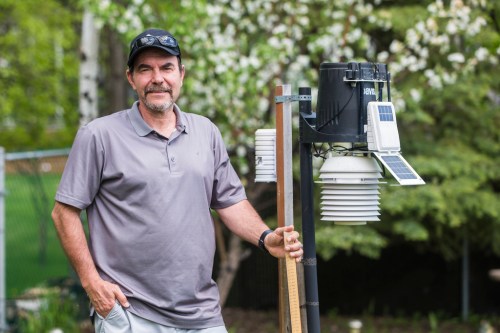
Rob Paola likely knows the answers to those questions.

Paola possesses no super powers. He is but a man with a metre stick and 40 years of professional meteorological experience, in the midst of a lifelong love affair with Mother Nature, a most turbulent mistress who rarely, if ever, reciprocates.

Each year when snow begins to fall, Paola heads outside his Charleswood home to figure out how much. He sticks his ruler in the ground, grabs his clipboard, and clicks his pen. In neat script, he records the temperature, what time precipitation began, how deep the powder is stacked. Then, he shares his data and insights online with thousands of followers who want a clear answer to the eternal questions: Why is this happening? When will it stop? How much snow has fallen in the city of Winnipeg?

Read
Monday, Jun. 13, 2022

Brian Bowman wins mayoral battle

Aldo Santin and Mary Agnes Welch 6 minute read Preview

Brian Bowman wins mayoral battle

Aldo Santin and Mary Agnes Welch 6 minute read Thursday, Oct. 23, 2014

In the end, it wasn’t even close.

A mayoral race that was supposed to be a head-to-head battle between privacy lawyer Brian Bowman and former NDP MP and MLA Judy Wasylycia-Leis turned into a rout on election night. Wasylycia-Leis, the experienced politician, had held what looked like an unassailable lead for months, but Bowman, the outsider who promised Winnipeggers a better, prosperous future, chipped doggedly away at it.

“I’m excited to tell you that positive change is coming to city hall,” Bowman told roaring supporters at the Inn At The Forks after making his way into the small ballroom accompanied by his wife and two young sons.

He said he hadn’t expecting such a landslide victory, but had believed that the campaign was building momentum.

Read
Thursday, Oct. 23, 2014

Two government bills left on table as NDP ends third year of term

Carol Sanders 4 minute read Preview

Two government bills left on table as NDP ends third year of term

Carol Sanders 4 minute read 6:59 PM CDT

Year 3 of the NDP government’s four-year mandate ended Thursday with more than 50 bills expected to become law and two that didn’t make it to the finish line.

“We’re on the final stages of passing 52 amazing bills,” government house leader Nahanni Fontaine said after the final question period of the 43rd legislature.

Most were passed before the house rose for the summer break, including getting rid of the provincial sales tax on pop, chips and packaged foods that took effect July 1. A handful of health-care bills that aim to restrict mandatory overtime, create a patient safety charter, establish nurse-to-patient ratios and do away with sick-note requirements for employees — unless they miss more than seven consecutive days or 10 in a year — were also passed.

Under rules of the legislature, the Progressive Conservatives held back three government bills until the fall session to allow for further debate before passage by the NDP majority Thursday. The most contentious was Bill 13, the Residential Tenancies Amendment Act, that aims to strengthen renter protections and increase maximum fines for landlords in breach of the act.

Read
6:59 PM CDT

Three in-custody fatalities trigger inquests

Free Press staff 2 minute read Preview

Three in-custody fatalities trigger inquests

Free Press staff 2 minute read 1:50 PM CDT

The province’s chief medical examiner has called inquests into the deaths of three men, including two who died by suicide in correctional facilities earlier this year.

Craig Flett, 32, was found hanging in his cell in the Stony Mountain Institution prison on Feb. 10 this year.

Corrections officers were able to cut him down and tried to resuscitate him, but he later died of a brain injury. Flett was serving a life sentence at the time.

Sebastian Atkinson, a 25-year-old inmate at the Winnipeg Remand Centre, was found hanging in his cell by a linen sheet tied to a metal bar about five feet from the floor.

Read
1:50 PM CDT

2026 Winnipeg election results: Mayor and council

1 minute read Preview

2026 Winnipeg election results: Mayor and council

1 minute read Thursday, Oct. 22, 2026

Complete results for the 2022 election races for Winnipeg mayor and city councillors.

Read
Thursday, Oct. 22, 2026

Opera singer David Daniels no longer in singers’ union following sexual assault guilty plea

The Associated Press 2 minute read Preview

Opera singer David Daniels no longer in singers’ union following sexual assault guilty plea

The Associated Press 2 minute read Thursday, Dec. 21, 2023

NEW YORK (AP) — Countertenor David Daniels is no longer a member of the union for singers following his guilty plea to a charge of sexual assault.

The 57-year-old and his husband, Scott Walters, pleaded guilty to sexual assault of an adult, a second-degree felony, in Houston's Harris County District Court on Aug. 4. Their accuser was aspiring opera singer Sam Schultz.

They both were sentenced to eight years’ probation and required to register as sex offenders.

American Guild of Musical Artists spokesperson Alicia Cook said Wednesday that Daniels is no longer a member of the union.

Read
Thursday, Dec. 21, 2023