Reconciliation efforts might involve raising funds

Advertisement
Read this article for free:
or
Already have an account? Log in here »
To continue reading, please subscribe:

Digital Subscription
One year of digital access for only $205*
- Enjoy unlimited reading on winnipegfreepress.com
- Read the E-Edition, our digital replica newspaper
- Access News Break, our award-winning app
- Play interactive puzzles
*First annual payment billed as $205.00 + GST for one year. This annual subscription will automatically renew at $233.00 + GST every 52 weeks (10% off the regular annual price of $259.35). Offer available to new and qualified returning subscribers only. Cancel any time.
To continue reading, please subscribe:
Add Free Press access to your Brandon Sun subscription for only an additional
$1 for the first 4 weeks*
- Enjoy unlimited reading on winnipegfreepress.com
- Read the E-Edition, our digital replica newspaper
- Access News Break, our award-winning app
- Play interactive puzzles
*Your next Brandon Sun subscription payment will increase by $1.00 and you will be charged $17.95 plus GST for four weeks. After four weeks, your payment will increase to $24.95 plus GST every four weeks.
Read unlimited articles for free today:
or
Already have an account? Log in here »
Hey there, time traveller!
This article was published 20/07/2021 (1853 days ago), so information in it may no longer be current.
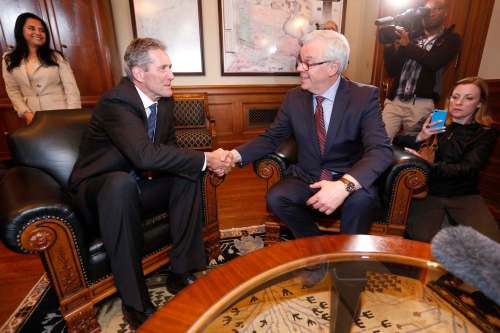
AS Roman Catholic bishops in Saskatchewan begin efforts to raise funds to promote healing and reconciliation with Indigenous people, the archbishops of St. Boniface and Winnipeg are considering ways to do something similar in this province.
That topic will be on the agenda when the Manitoba bishops meet in August, Archbishop Richard Gagnon of the diocese of Winnipeg said.
In St. Boniface, Archbishop Albert LeGatt said he is in discussions with Indigenous parishioners in the northern part of the diocese, along with the chiefs and members of the band councils, about the best way forward.

“These discussions are about how, specifically, they would want assistance in any way from the Roman Catholic Archdiocese of St. Boniface,” he said.
LeGatt is also asking members of the diocese, “parish by parish,” to think of ways they can become more informed about the residential schools “and the many elements of their tragic legacy.”
The Canadian Conference of Catholic Bishops indicates bishops from many dioceses across the country are ready to initiate local or regional fundraising initiatives.
In a statement, the conference said, “The bishops of Canada are profoundly saddened by the residential schools legacy.”
“We are committed to working with Indigenous Peoples and communities towards a greater understanding of the priorities of healing and reconciliation and how to address them together.”
Discussions across Canada about fundraising campaigns are taking place against the backdrop of the failed “best efforts” campaign, which fell far short of its goal of $25 million for healing and reconciliation efforts.
The campaign was part of the 2006 Indian Residential School Settlement Agreement between 16 Catholic dioceses and 32 orders in Canada.
In addition to the fundraising effort, the individual entities that signed the agreement paid $29 million in cash to the Aboriginal Healing Fund and $25 million of “in-kind” services for Indigenous communities.
Michael Swan, a longtime reporter at the Catholic Register who has followed this issue, said the “best efforts” campaign was “doomed from the start” because of unfortunate timing and bad strategy.

It was launched during the height of the 2008 recession, and the fundraising firm hired to run the campaign focused on corporate Canada and large donors. “Most Catholics did not know the campaign was going on,” he said.
When an appeal targeted at people in the pews was launched in 2013 to try to save the campaign, only 14 dioceses in Canada participated, he said, noting the appeal went out to churches a week after Typhoon Haiyan swept through the Philippines.
That huge disaster grabbed most of the attention from Canadian Catholics, along with many donations, Swan noted.
In the end, that special collection raised $200,000, bringing the total raised to $3.7 million.
faith@freepress.mb.ca
The Free Press is committed to covering faith in Manitoba through our Religion in the News project. This reporting continues because readers like you step forward to fund it.
Donate now to support our reporting on religion.
Your donation is eligible for a charitable tax receipt.
BECOME A FAITH JOURNALISM SUPPORTER
John Longhurst has been writing for Winnipeg's faith pages since 2003. He also writes for Religion News Service in the U.S., and blogs about the media, marketing and communications at Making the News.
Our newsroom depends on a growing audience of readers to power our journalism. If you are not a paid reader, please consider becoming a subscriber.
Our newsroom depends on its audience of readers to power our journalism. Thank you for your support.
The Free Press is committed to covering faith in Manitoba through our Religion in the News project. This reporting continues because readers like you step forward to fund it.
Donate now to support our reporting on religion.
Your donation is eligible for a charitable tax receipt.
BECOME A FAITH JOURNALISM SUPPORTER
John Longhurst has been writing for Winnipeg's faith pages since 2003. He also writes for Religion News Service in the U.S., and blogs about the media, marketing and communications at Making the News.
Our newsroom depends on a growing audience of readers to power our journalism. If you are not a paid reader, please consider becoming a subscriber.
Our newsroom depends on its audience of readers to power our journalism. Thank you for your support.
Related Articles
Archbishop asks for forgiveness after priest accuses residential school survivors of lying



Advertisement Advertise With Us
Advertisement Advertise With Us
History
Updated on Tuesday, July 20, 2021 6:31 AM CDT: Adds photo
The Free Press acknowledges the financial support it receives from members of the city’s faith community, which makes our coverage of religion possible.