Getting details just right

The Porter, based on Winnipeg's Black history, is set in Montreal

Advertisement

Advertise with us

For better and worse, the eight-episode Winnipeg-lensed CBC drama The Porter, set mostly in the Montreal of the 1920s, will be filled with rich historical detail when it is scheduled to be broadcast next February.

Read this article for free:


By clicking the button above, an account will be created and you will begin to receive some of our recommended newsletters. You may opt out of any newsletter by visiting your Email and Communication Preferences page or by clicking "unsubscribe" at the bottom of any email.

or

Already have an account? Log in here »

To continue reading, please subscribe:

Digital Subscription

One year of digital access for only $1.44 a week*

  • Enjoy unlimited reading on winnipegfreepress.com
  • Read the E-Edition, our digital replica newspaper
  • Access News Break, our award-winning app
  • Play interactive puzzles

*Billed as $5.77 plus GST every four weeks. After 52 weeks, price increases to the regular rate of $19.95 plus GST every four weeks. Offer available to new and qualified returning subscribers only. Cancel any time.

To continue reading, please subscribe:

Add Free Press access to your Brandon Sun subscription for only an additional

$1 for the first 4 weeks*

  • Enjoy unlimited reading on winnipegfreepress.com
  • Read the E-Edition, our digital replica newspaper
  • Access News Break, our award-winning app
  • Play interactive puzzles
Start now

*Your next Brandon Sun subscription payment will increase by $1.00 and you will be charged $17.95 plus GST for four weeks. After four weeks, your payment will increase to $24.95 plus GST every four weeks.

Hey there, time traveller!
This article was published 12/06/2021 (1954 days ago), so information in it may no longer be current.

For better and worse, the eight-episode Winnipeg-lensed CBC drama The Porter, set mostly in the Montreal of the 1920s, will be filled with rich historical detail when it is scheduled to be broadcast next February.

The detail may be grim. The whole practice of hiring Black porters to serve on sleeping cars was conceived in a post-slavery world by train magnate George Pullman as a consolation to white passengers who yearned for the quality of eager servility in Black servants.
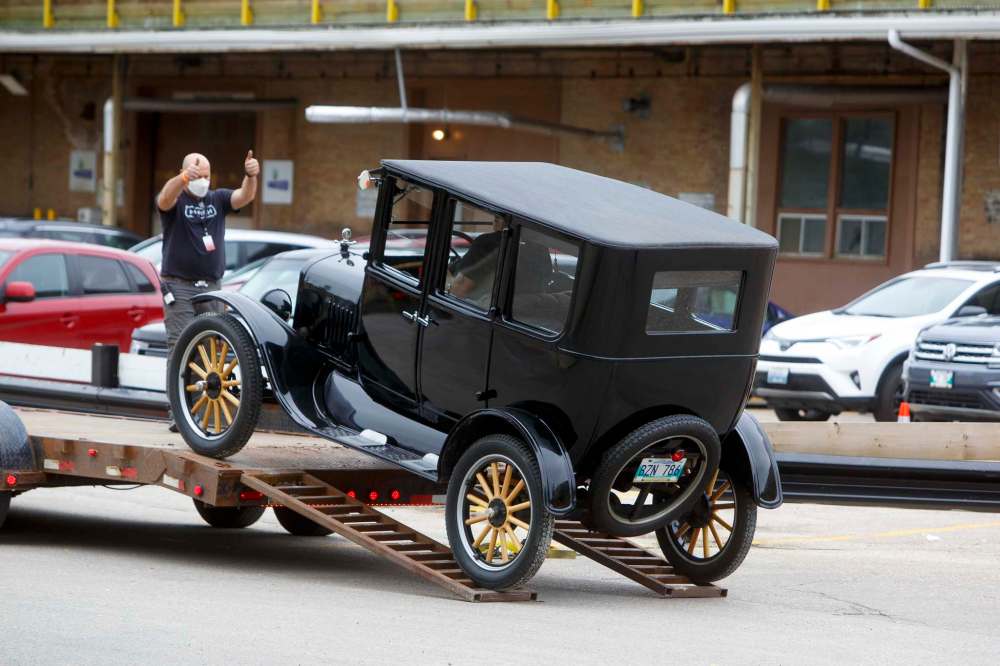
MIKE DEAL / WINNIPEG FREE PRESS
The Porter production crew work on location at the Via Rail train station.
MIKE DEAL / WINNIPEG FREE PRESS The Porter production crew work on location at the Via Rail train station.

But it won’t all be grim — one of the main sets will be an early jazz club — and there is quirk too. In the 1920s, controversial Jamaican political activist Marcus Garvey spread his own gospel with the formation of the United Negro Improvement Association, which saw a volunteer force of “Black Cross nurses.”

“It was kind of a play on Red Cross nurses who went around the community and helped Black residents, giving them health information and sanitary information,” says The Porter showrunner Marsha Greene, who promises that will be in the show.

That is the kind of detail embraced by the production, which employed its own historian as an adviser.

Sarah Jane (Saje) Mathieu, 50, is a professor in the History department at the University of Minnesota: Her book North of the Color Line: Migration and Black Resistance in Canada, 1870-1955 was an early inspiration for show producer-writer Arnold Pinnock, who reached out to the Ottawa-raised Mathieu a year ago.

“The project was moving forward in dramatic ways and he wanted to thank me for how my work played a part in helping him come up with this wonderful world that he created with the TV show,” recalls Mathieu in a phone interview.

Showrunners Annmarie Morais (left) and Marsha Greene worked diligently with history professor Saje Mathieu to get details of The Porter correct.

“I guess he thought it was a longshot,” Mathieu says. “He asked if I would be even remotely interested in serving as a counsel to the show, as a historian.”

The longshot turned out to be a good bet.

“I thought the show was so important that I cleared my desk in one fell swoop,” Mathieu says. “I wanted to do my part to help them thrive and succeed.”

The Porter, which is the biggest Black-led production ever in Canada, will air during Black History Month. It will also be broadcast in the U.S. on the cable network Black Entertainment Television (BET). The series is produced by Winnipeg-based Inferno Pictures Inc. and Sphere Media’s Toronto-based Sienna Films.

If the devil is in the details, the show is doing its best to take the devil by the tail.

“I am blown away by the professionalism, the attention to detail that the show has put together,” Mathieu says. “They turned over every stone. The questions were so specific like: What kind of watch would they have worn? What would they have eaten during that lunch meeting? And that’s that kind of granular attention that will make this show so incredible for people.

“I don’t know how many times (Greene’s fellow showrunner Annmarie Morais) would text me or call me and say: ‘Did this really happen?’” Mathieu says.

“It was exactly like that,” Greene concurs. “We cook up a scene and a series of things would happen and we just thought it sounds so fanciful, we better check with Saje.”

“Almost every episode provides the viewer a jaw-dropping moment,” Mathieu adds, ‘where you say: This was in Canada?’”

“That’s why it is so important, because the show is historicizing that moment in truly impressive ways.”

“I speak as a Canadian kid growing up in Ottawa, I never thought I would be able to turn on the television and see not one not two but an entire cast of Black people telling the story about my own country,” she says. “That would’ve saved me hours in having to cook up my own imagination as a kid.”

● ● ●
Supplied
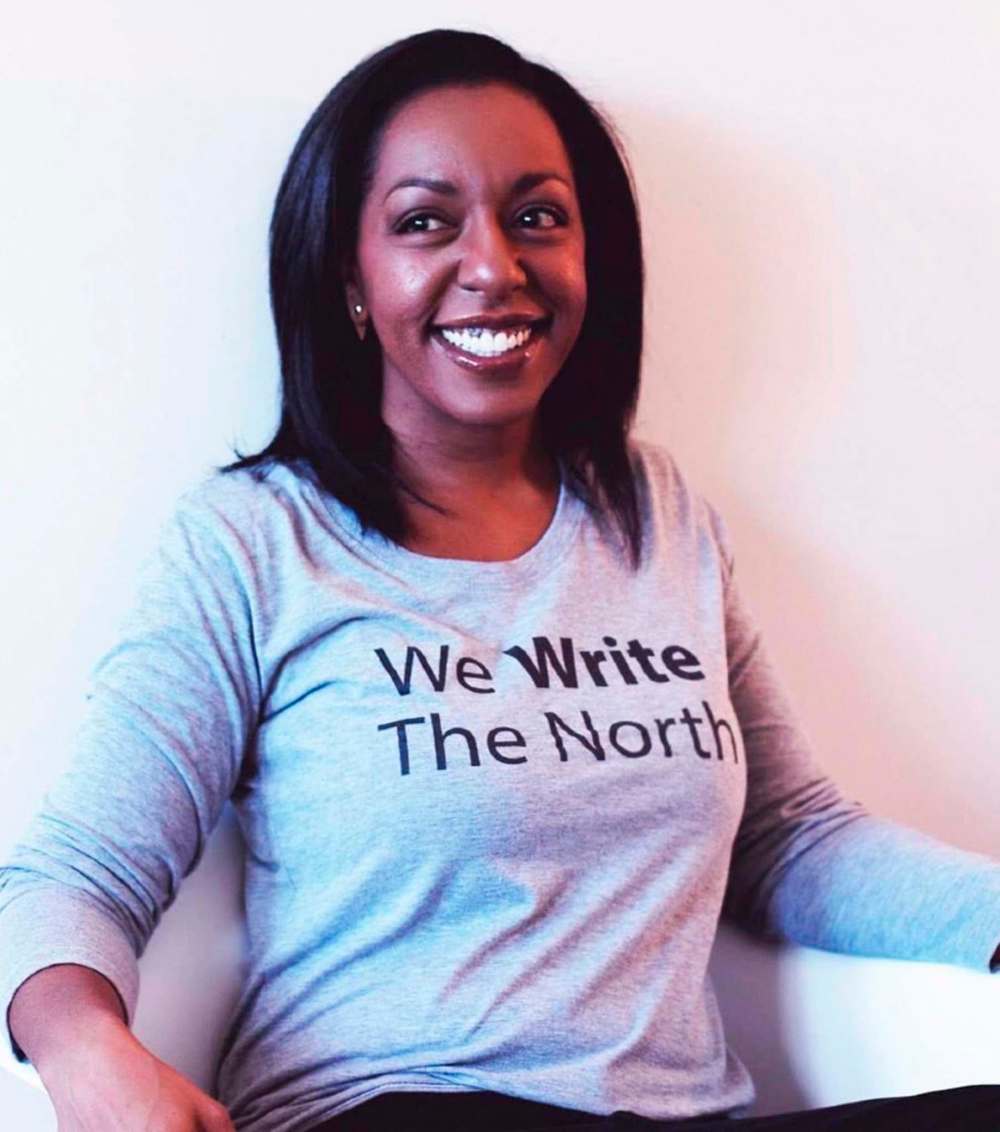
Showrunner Marsha Greene says it was important while writing the show to verify details for historical accuracy.
Supplied Showrunner Marsha Greene says it was important while writing the show to verify details for historical accuracy.

The series is currently being shot in Winnipeg where The Order of Sleeping Car Porters — the first Black railway union in North America — was formed in 1917.

“It started in the Unity Pool Room at 795 Main St., a longtime hub for the city’s Black community over a period of decades,” Pinnock says.

It is also the city where Mathieu did the bulk of her research for North of the Color Line.

But Winnipeg will not be playing itself during this first season.

“I will say that while Winnipeg is not concretely in the show, it is at the heart of the show,” says Greene. “We’ve taken some of the history that happened in Winnipeg and transplanted it into Montreal.

“There is a mention of Winnipeg around the time of the general strike. The strike takes place in the show in Montreal is a mirror of the strike that took place in Winnipeg,” Greene says.

“Our great hope is that people will watch the show and then be really curious about the real history,” Greene says. “So they’re going to learn more about the history.”

randall.king@freepress.mb.caTwitter: @FreepKing
ALEX LUPUL / WINNIPEG FREE PRESS
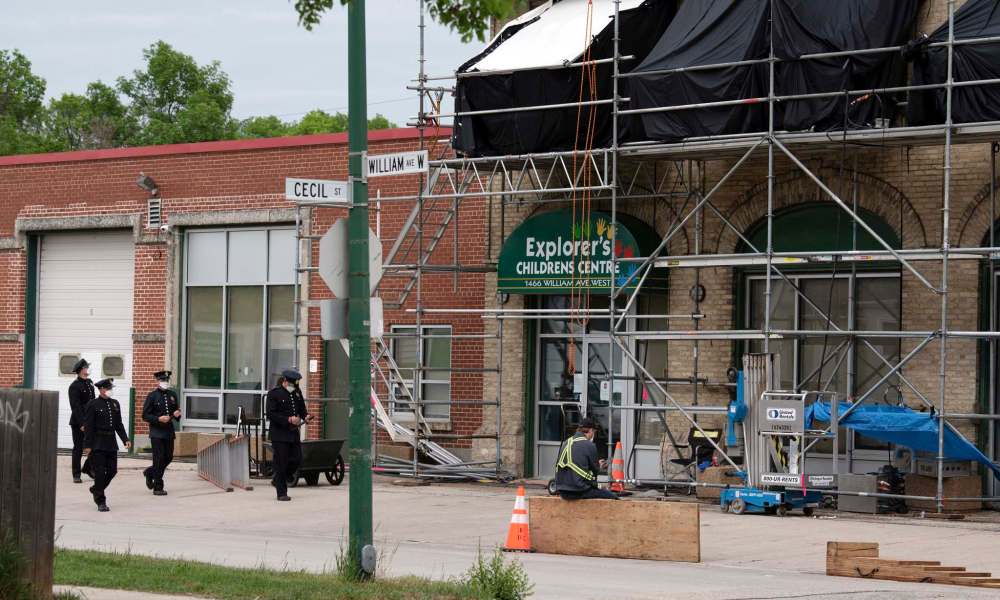
A former fire hall, located at 1466 William Ave. W., is being utilized as a location for The Porter, which is currently being shot in Winnipeg.
ALEX LUPUL / WINNIPEG FREE PRESS A former fire hall, located at 1466 William Ave. W., is being utilized as a location for The Porter, which is currently being shot in Winnipeg.
Randall King

Randall King
Reporter

In a way, Randall King was born into the entertainment beat.

Our newsroom depends on a growing audience of readers to power our journalism. If you are not a paid reader, please consider becoming a subscriber.

Our newsroom depends on its audience of readers to power our journalism. Thank you for your support.

History

Updated on Tuesday, June 22, 2021 1:39 PM CDT: Fixes name of production company.

Report Error Submit a Tip

More Stories

Carney’s ‘counterweight’ summit strategy

David McLaughlin 5 minute read Preview

Carney’s ‘counterweight’ summit strategy

David McLaughlin 5 minute read Yesterday at 2:01 AM CDT

Modern summit diplomacy had very inauspicious beginnings. Winston Churchill is widely credited with coining the phrase “summit” in 1950 to describe a conference of global leaders. But it was another British prime minister, Neville Chamberlain, who initiated the first actual summit meeting 12 years earlier — with Adolf Hitler, no less.

It didn’t go well.

Over a one-month period, the two leaders met three times over the fate of Czechoslovakia. Hitler threatened war. Chamberlain threatened appeasement. Guess who won?

Chamberlain was so desperate for a peace deal and so convinced he alone could convince Hitler, that he swallowed his inhibitions and flew in an airplane for the very first time in his life. “If at first you don’t succeed, try, try again” he told reporters, explaining his tenacious summit activity. Skeptical of the spectacle, British Foreign Office wags quietly amended it to, “If at first you don’t concede, fly, fly again.”

Read
Yesterday at 2:01 AM CDT

If every child matters, why no public inquiry?

Marion Willis 5 minute read Yesterday at 2:01 AM CDT

It is shocking to find children living in encampments with their parents. It is deeply disturbing to find young people who have aged out of child welfare living in encampments with their families of origin.

As founder and executive director of St. Boniface Street Links, I have encountered both. These are experiences that stay with me. They leave me asking what happened to these children and families, what help they received and what support might have prevented their homelessness.

They also make the Manitoba government’s rejection of a public inquiry into Child and Family Services difficult to accept.

On Oct. 8, the NDP defeated a motion calling for an inquiry into systemic failures in child welfare. This is a puzzling position for a government committed to advancing Indigenous issues, particularly when Indigenous children and families are so profoundly overrepresented in the system.

The threat from outside Canada

Dan Lett 4 minute read Preview

The threat from outside Canada

Dan Lett 4 minute read Yesterday at 2:01 AM CDT

The 10-question referendum being held in Alberta on Monday, Oct. 19, is not the first time the unity of Canada has been threatened by a vote within one province. It is, however, the first referendum of this type to take place in an age of unfettered social media misinformation and deliberate foreign interference.

From mischievous comments by U.S. President Donald Trump about making Canada the 51st state to technology trillionaire Elon Musk’s urgings to Quebec and Alberta to separate, there are clear signs foreign interests are trying to influence Monday’s vote. But there are also less-obvious efforts at work to influence the referendum and destabilize Canada.

The Canadian Security Intelligence Service (CSIS) and independent think-tanks such as the Centre for Artificial Intelligence, Data and Conflict at the University of Regina have documented incidents involving Russian-linked automated content farms posting thousands of misleading articles about the referendum campaign on social media platforms. The content, CSIS has said, focuses on erroneous claims about the benefits of separation and the liabilities of remaining in Canada.

In the face of all that activity, Prime Minister Mark Carney has been alarmingly unconcerned. Campaigning in Alberta this week, Carney said Ottawa is closely monitoring disinformation campaigns. He added that, in his conversations with foreign governments, all have agreed to stand down from any activities that might be perceived as threats to democracy.

Read
Yesterday at 2:01 AM CDT

The Porter, based on Winnipeg's Black history, is set in Montreal

Randall King 5 minute read Preview

The Porter, based on Winnipeg's Black history, is set in Montreal

Randall King 5 minute read Tuesday, Jun. 22, 2021

For better and worse, the eight-episode Winnipeg-lensed CBC drama The Porter, set mostly in the Montreal of the 1920s, will be filled with rich historical detail when it is scheduled to be broadcast next February.

The detail may be grim. The whole practice of hiring Black porters to serve on sleeping cars was conceived in a post-slavery world by train magnate George Pullman as a consolation to white passengers who yearned for the quality of eager servility in Black servants.

But it won’t all be grim — one of the main sets will be an early jazz club — and there is quirk too. In the 1920s, controversial Jamaican political activist Marcus Garvey spread his own gospel with the formation of the United Negro Improvement Association, which saw a volunteer force of “Black Cross nurses.”

“It was kind of a play on Red Cross nurses who went around the community and helped Black residents, giving them health information and sanitary information,” says The Porter showrunner Marsha Greene, who promises that will be in the show.

Read
Tuesday, Jun. 22, 2021

Valieva wins European figure skating title ahead of Olympics

The Associated Press 3 minute read Preview

Valieva wins European figure skating title ahead of Olympics

The Associated Press 3 minute read Saturday, Jan. 15, 2022

Three years in, All Elite Wrestling has established itself as being the first viable alternative to WWE since the ‘Monday Night Wars’ of the mid-90s.

Read
Saturday, Jan. 15, 2022

Biden chooses veteran diplomat Burns as CIA director

Matthew Lee, The Associated Press 6 minute read Preview

Biden chooses veteran diplomat Burns as CIA director

Matthew Lee, The Associated Press 6 minute read Monday, Jan. 11, 2021

WASHINGTON - William Burns, a well-known figure in diplomatic circles around the world, is President-elect Joe Biden’s choice to lead the CIA, a selection likely to be embraced by the rank and file at the nation’s premier spy agency.

A former ambassador to Russia and Jordan, Burns, 64, had a 33-year career at the State Department under both Republican and Democratic presidents. He rose through the ranks of the diplomatic corps to become deputy secretary of state before retiring in 2014 to run the Carnegie Endowment of International Peace.

If confirmed, he would succeed Gina Haspel, the first female CIA director, who guided the agency under President Donald Trump. Trump expressed skepticism about intelligence and frequently disparaged the assessments of U.S. spy agencies, especially about Russia’s interference in the 2016 election to help his campaign.

Trump also fired several career intelligence professionals in favour of loyalists, including some with little to no experience in the field.

Read
Monday, Jan. 11, 2021