Saskatchewan to bring in own carbon price on fuel following SCOC decision: premier

Advertisement

Advertise with us

REGINA - Saskatchewan, one of the biggest foes of a federal carbon tax, plans to charge one of its own after a legal defeat in its drawn-out battle against Ottawa.

Read this article for free:


or

Already have an account? Log in here »

To continue reading, please subscribe:

Subscribe and receive a limited-edition Free Press branded hat or tote.

Digital Subscription

One year of digital access for only $205*

  • Enjoy unlimited reading on winnipegfreepress.com
  • Read the E-Edition, our digital replica newspaper
  • Access News Break, our award-winning app
  • Play interactive puzzles

*First annual payment billed as $205.00 + GST for one year. This annual subscription will automatically renew at $233.00 + GST every 52 weeks (10% off the regular annual price of $259.35). Offer available to new and qualified returning subscribers only. Cancel any time.

To continue reading, please subscribe:

Add Free Press access to your Brandon Sun subscription for only an additional

$1 for the first 4 weeks*

  • Enjoy unlimited reading on winnipegfreepress.com
  • Read the E-Edition, our digital replica newspaper
  • Access News Break, our award-winning app
  • Play interactive puzzles
Start now

*Your next Brandon Sun subscription payment will increase by $1.00 and you will be charged $17.95 plus GST for four weeks. After four weeks, your payment will increase to $24.95 plus GST every four weeks.

Hey there, time traveller!
This article was published 25/03/2021 (2021 days ago), so information in it may no longer be current.

REGINA – Saskatchewan, one of the biggest foes of a federal carbon tax, plans to charge one of its own after a legal defeat in its drawn-out battle against Ottawa.

Premier Scott Moe announced the policy shift hours after the Supreme Court of Canada ruled 6-3 that the federal government has the constitutional right to bring in a carbon price in provinces without one.

“This was a battle that was for the right reasons,” Moe said Thursday.
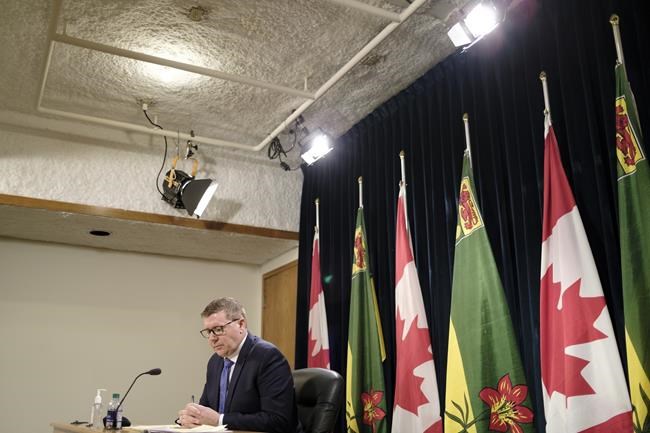
Saskatchewan Premier Scott Moe speaks at a press conference at the Legislative Building in Regina, Thursday, March 25, 2021. Saskatchewan, one of the biggest foes of a federal carbon tax, plans to charge one of its own after a legal defeat in its drawn-out battle against Ottawa. THE CANADIAN PRESS/Michael Bell

“We don’t agree with the ruling, but I’ve played enough hockey to know that we’re not going to do a lot of fruitful arguing with the referees after the game is over.”

Saskatchewan was the first province to mount a legal challenge against the Liberal government’s Greenhouse Gas Pollution Pricing Act and looked to Canada’s highest court after losing in its own Appeal Court in 2019.

It argued the legislation overstepped into provincial territory, a sentiment Moe repeated on Thursday.

He also reiterated his long-standing belief that developing technology like carbon capture and storage for coal plants and small modular nuclear reactors is a better way to reduce emissions than a carbon tax, which he criticized as making industries less competitive.

His Saskatchewan Party government will focus on reducing the policy’s effect on consumers and industries. He pitched doing that by replacing the federal tax with a made-in-Saskatchewan plan, which will include its own carbon price.

“The government will submit a proposal that will see Saskatchewan design its own carbon-pricing system for fuel … that will be similar to one the federal government has approved in the province of New Brunswick,” Moe said.

“This would provide an immediate rebate right at the pump to Saskatchewan people.”

Federal Environment Minister Jonathan Wilkinson said in a statement that provinces can have their own carbon-pricing plans, as long as they meet minimum national standards.

“We said in December when we released our strengthened climate plan that those national minimum standards need to be strengthened, but certainly we are open to conversations with provinces – including Saskatchewan,” Wilkinson said.

Moe said that under its plan, Saskatchewan will seek exemptions for different uses of fuel, including that used by farmers in grain dryers — a call also made by the provincial Opposition NDP.

“We”ll be looking towards refunding as much of the carbon tax as possible right at the outset.”

A political scientist at the University of Regina said much of Moe’s political identity has been built around fighting the carbon tax, which has also come to define Saskatchewan’s relationship with Ottawa.

That’s why Jim Farney said the court ruling is a turning point.

“I don’t think this issue being put to bed is going to hurt Moe politically though, or take away opportunities for him to argue for a more autonomous vision of Saskatchewan.”

Farney said he believes Moe’s supporters won’t see the court decision as a loss for the premier. And when it comes to a made-in-Saskatchewan carbon price, public reaction will depend on what kind of exemptions are included.

“Politically, one of the big question marks will be: Do people see the cost directly or not?”

Moe said Saskatchewan’s new plan would also bring electrical generation and natural gas transmission under provincial regulations also being developed. These are subject to Ottawa’s rules and not included in Saskatchewan’s existing pollution plan.

Moe said bringing them under provincial legislation would allow for more control and flexibility in how carbon tax revenues are spent.

He also said a greenhouse gas offset program will be designed to allow companies to meet their emissions targets by buying carbon credits from farmers and other businesses that can sequester carbon.

The premier is asking Ottawa to send Saskatchewan millions it hasn’t been able to get from a low-carbon economy fund, because it refused to sign onto the federal framework that includes a carbon price.

This report by The Canadian Press was first published March 25, 2021.

Report Error Submit a Tip

More Stories

Wasteful operations should be held accountable

Barry E. Prentice 5 minute read Preview

Wasteful operations should be held accountable

Barry E. Prentice 5 minute read Yesterday at 2:00 AM CDT

Rising water bills are a top-of-mind issue for residents of Winnipeg going into the fall election. Management of the water and waste system is under question, with citizen’s groups, as well as the Free Press, calling for proper oversight of rates (Time for the PUB to review Winnipeg water rates, Editorial, Sept. 26).

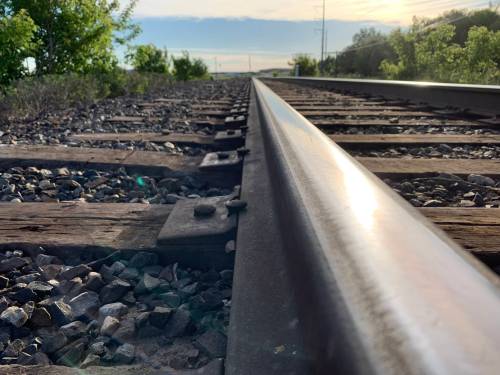
The need to increase rates to build the North End sewage plant is understandable. Siphoning off utility proceeds to make up other tax revenue shortfalls is another matter. But it is not the only questionable practice. If there was Public Utilities Board oversight of Winnipeg’s water and sewer rates, it would certainly be asking why the city is spending more than $3 million annually to operate the 164-kilometre-long, Greater Winnipeg Water District railway (GWWD) on ratepayers’ behalf.

The GWWD has come to the attention of the Railway Relocation Study, led by Lloyd Axworthy. All existing rail lines within the city are under review, as is the feasibility of a new railway bypass.

The GWWD is an example of a railway that has outlived its usefulness and sits on a pocket of land close to downtown that could be converted to higher-value uses.

Read
Yesterday at 2:00 AM CDT

Essential workers ruling raises questions

Editorial 4 minute read Preview

Essential workers ruling raises questions

Editorial 4 minute read 2:00 AM CDT

Ever been to a Dynacare clinic? Most of us have been. It’s an amazing demographic and ethnic slice of the city we’ve become. Old patients. Young patients. New arrivals. Long-time Canadians. People who know the ropes — others who are startled by the crowds and the noise and the lockstep forward motion of professionals doing what they have been trained to do. It seems, all at the same time, both chaotic and diagnostic, as names of patients are steadily called out and thousands of tests are performed.

But Dynacare is at the centre of a new kind of test and this time, we’re all in the test tube together.

It’s the first real test for new labour law put in place by the government of Premier Wab Kinew in 2024 — a law that redefined what essential services are for provincially-regulated workplaces. Under this law, companies and their employee and unions must have an agreement of which employees are essential — which ones must stay on the job during a legal strike for the protection of the health and safety of the public.

Dynacare had that kind of essential employee agreement with its staff and union — the company and the union had agreed the employees were not essential.

Read
2:00 AM CDT

Residents reeling after man shot, killed by police

Nicole Buffie 5 minute read Preview

Residents reeling after man shot, killed by police

Nicole Buffie 5 minute read Thursday, Oct. 3, 2024

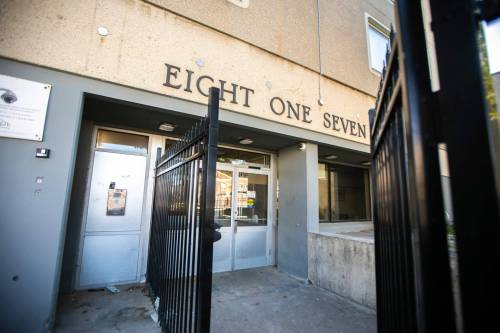
Van Ho was inside his sixth-floor Main Street apartment when he heard a ruckus in the hall around noon Wednesday afternoon.

Ho looked out his window to see police and emergency vehicles surrounding the 10-storey North Point Douglas Manor. When he peeked into the hallway, he saw the body of his next-door neighbour being carried away.

“I thought somebody was fighting, then I open my door and that’s what I see,” Ho saidThursday afternoon.

The Vietnamese immigrant moved to the building four years ago. He said his neighbour, who has not been identified, moved into the Manitoba Housing complex about two months ago, but often caused excessive noise at night and kept him awake.

Read
Thursday, Oct. 3, 2024

Odermatt wins super-G, keeps season title hopes alive

The Associated Press 3 minute read Preview

Odermatt wins super-G, keeps season title hopes alive

The Associated Press 3 minute read Sunday, Mar. 7, 2021

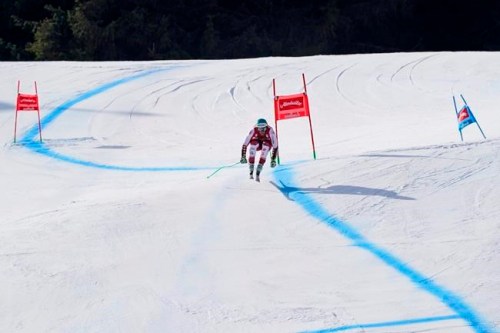
SAALBACH-HINTERGLEMM, Austria - Marco Odermatt dominated the penultimate men’s World Cup super-G of the season Sunday to keep himself in the race for the discipline title.

The Swiss skier finished his gutsy run on the Schneekristall course 0.62 seconds ahead of runner-up Matthieu Bailet.

The Frenchman was the 2016 junior world champion and earned his first podium result on the World Cup circuit.

Vincent Kriechmayr, the double world champion from Austria, trailed Odermatt by 0.81 in third, a day after he won the downhill on the same hill. Another Austrian, Raphael Haaser, finished two-hundredths behind Kriechmayr in fourth.

Read
Sunday, Mar. 7, 2021

Report calls for schools to add more ‘sensory rooms’

Maggie Macintosh 6 minute read Preview

Report calls for schools to add more ‘sensory rooms’

Maggie Macintosh 6 minute read Wednesday, Jul. 15, 2026

Manitoba schools are being urged to set up more “sensory rooms” and use the spaces — which can feature mood lighting, flexible seating and fidget toys — to address growing concerns about student outbursts and related injuries.

A new report from the Manitoba Federation of Labour is renewing calls to better protect educational assistants, teachers and other public-sector employees.

One of its 10 recommendations, published on Monday, focuses on tackling overcrowding in community facilities and establishing “safe spaces in schools to respond to violence.”

“It’s become the norm: kids having meltdowns that require you have to evacuate the classroom,” said Jane Allison, an educational assistant in Winnipeg.

Read
Wednesday, Jul. 15, 2026

Three Manitoba nurses censured for inappropriate behaviour

Morgan Modjeski 3 minute read Yesterday at 8:38 PM CDT

A Manitoba nurse has been disciplined for inappropriate behaviour towards students including what is being described as unwanted touching.

The College of Registered Nurses of Manitoba listed three recent censures of Manitoba nurses. The most recent details a supervising nurse’s unprofessional conduct while he worked as a clinical education facilitator at the University of Manitoba in 2023.

The behaviour, examined by a college complaints committee, included reports from several students of unwanted touching, violating the confidentiality of students in a group chat and failing to properly report a needlestick injury.

The committee made the decision of censure — a discipline record applied to a nurse’s license — on April 9.