One weird city

Winnipeg's more obscure historical tidbits collected in entertaining volume

Advertisement

Advertise with us

In his quirky compilation of “lesser known” histories, local journalist Darren Bernhardt offers some surprising glimpses of Winnipeg’s past.

Read this article for free:

or

Already have an account? Log in here »

To continue reading, please subscribe:

Subscribe and receive a limited-edition Free Press branded hat or tote.

Digital Subscription

One year of digital access for only $205*

  • Enjoy unlimited reading on winnipegfreepress.com
  • Read the E-Edition, our digital replica newspaper
  • Access News Break, our award-winning app
  • Play interactive puzzles

*First annual payment billed as $205.00 + GST for one year. This annual subscription will automatically renew at $233.00 + GST every 52 weeks (10% off the regular annual price of $259.35). Offer available to new and qualified returning subscribers only. Cancel any time.

To continue reading, please subscribe:

Add Free Press access to your Brandon Sun subscription for only an additional

$1 for the first 4 weeks*

  • Enjoy unlimited reading on winnipegfreepress.com
  • Read the E-Edition, our digital replica newspaper
  • Access News Break, our award-winning app
  • Play interactive puzzles
Start now

*Your next Brandon Sun subscription payment will increase by $1.00 and you will be charged $17.95 plus GST for four weeks. After four weeks, your payment will increase to $24.95 plus GST every four weeks.

Hey there, time traveller!
This article was published 30/01/2021 (2011 days ago), so information in it may no longer be current.

In his quirky compilation of “lesser known” histories, local journalist Darren Bernhardt offers some surprising glimpses of Winnipeg’s past.

In 17 short chapters, heavily illustrated with archival photos, Bernhardt tells tales of oddities not included in the typical history class. Structured chronologically, the book can be read cover to cover, or can be dipped into like a bag of assorted candy.

Filled with tangents and digressions, Bernhardt’s enthusiasm for local historical tidbits is contagious. Did you know, for example, that the original Budweiser Clydesdale horses came from Winnipeg? Or that Winnipeg had a mini-golf craze in 1931 started by a bootlegger? Or that a Winnipegger started the largest international organization of magicians? There is no end to the facts readers can pull out to entertain family and friends.
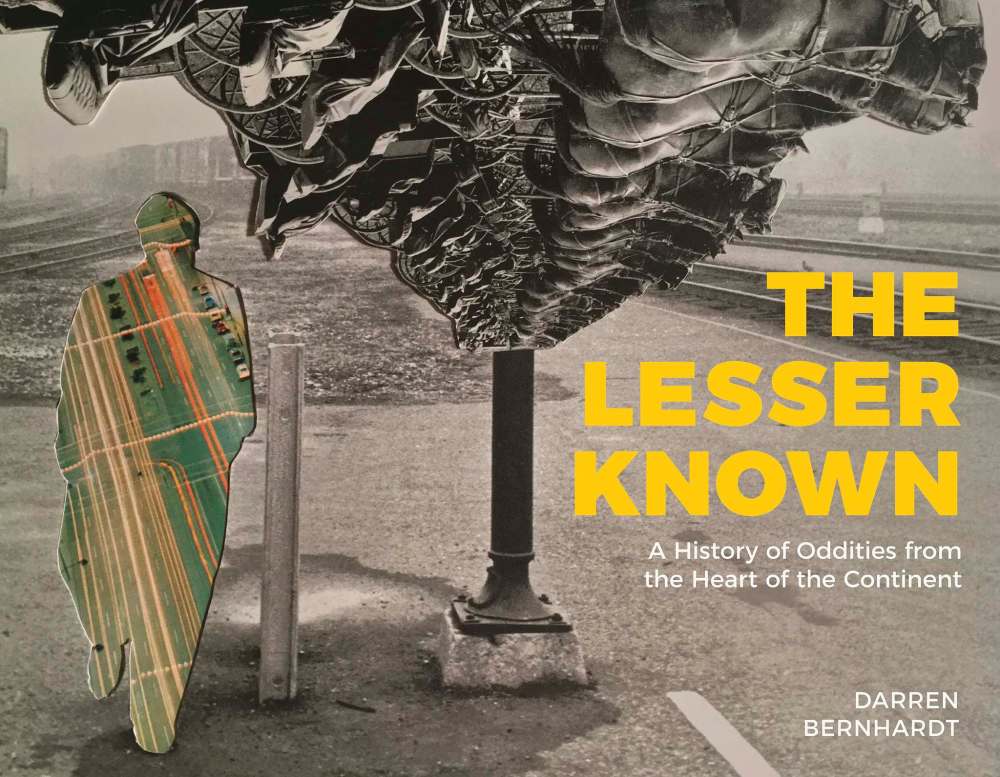
Enticingly designed by Relish Branding, The Lesser Known is a coffee table type of book, but in a smaller softcover format. Bernhardt’s prose is straightforward, with an occasional smattering of imagery and puns. His description of the Clydesdales’ hooves “as the size of frying pans” is vivid, but saying that some city councillors “pooh-poohed” public bathrooms is a definite groaner.
Warren Kay photo
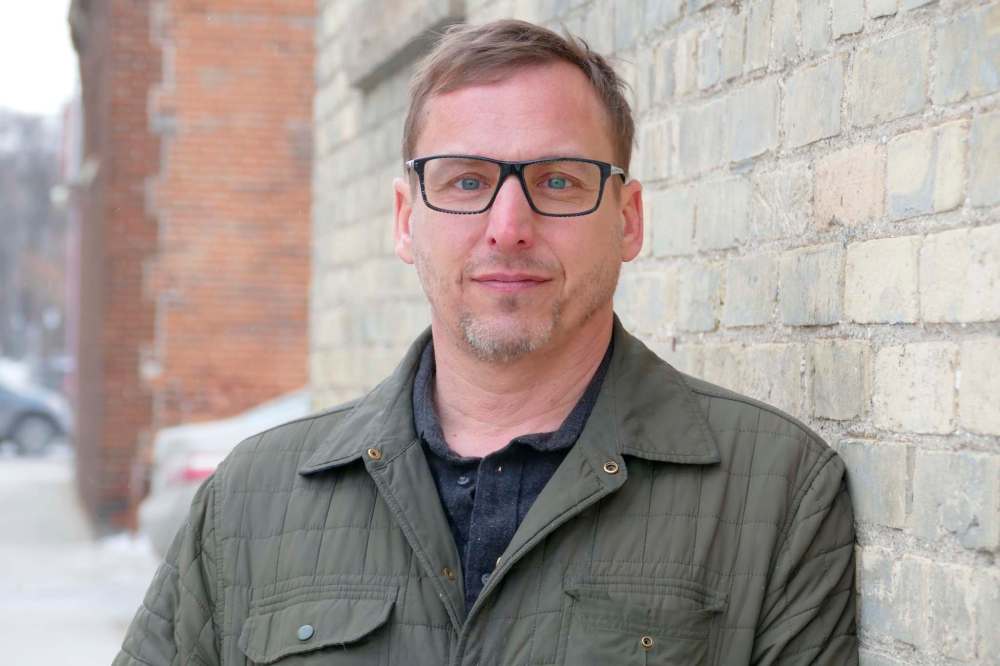
Author Darren Bernhardt
Warren Kay photo Author Darren Bernhardt

A CBC journalist who often writes about local history, The Lesser Known is Bernhardt’s first book. Most of the historical information he provides is pieced from secondary sources published on websites, with frequent credit going to the work of local history writer Christian Cassidy. Almost every page features a black-and-white photograph from one of the many archives located in the city, making use of the City of Winnipeg Archives, the Archives of Manitoba (and especially their Foote photograph collection), the Tribune collection at the University of Manitoba as well as smaller institutions such as the Transcona Museum and Archives.
Winnipeg Free Press files
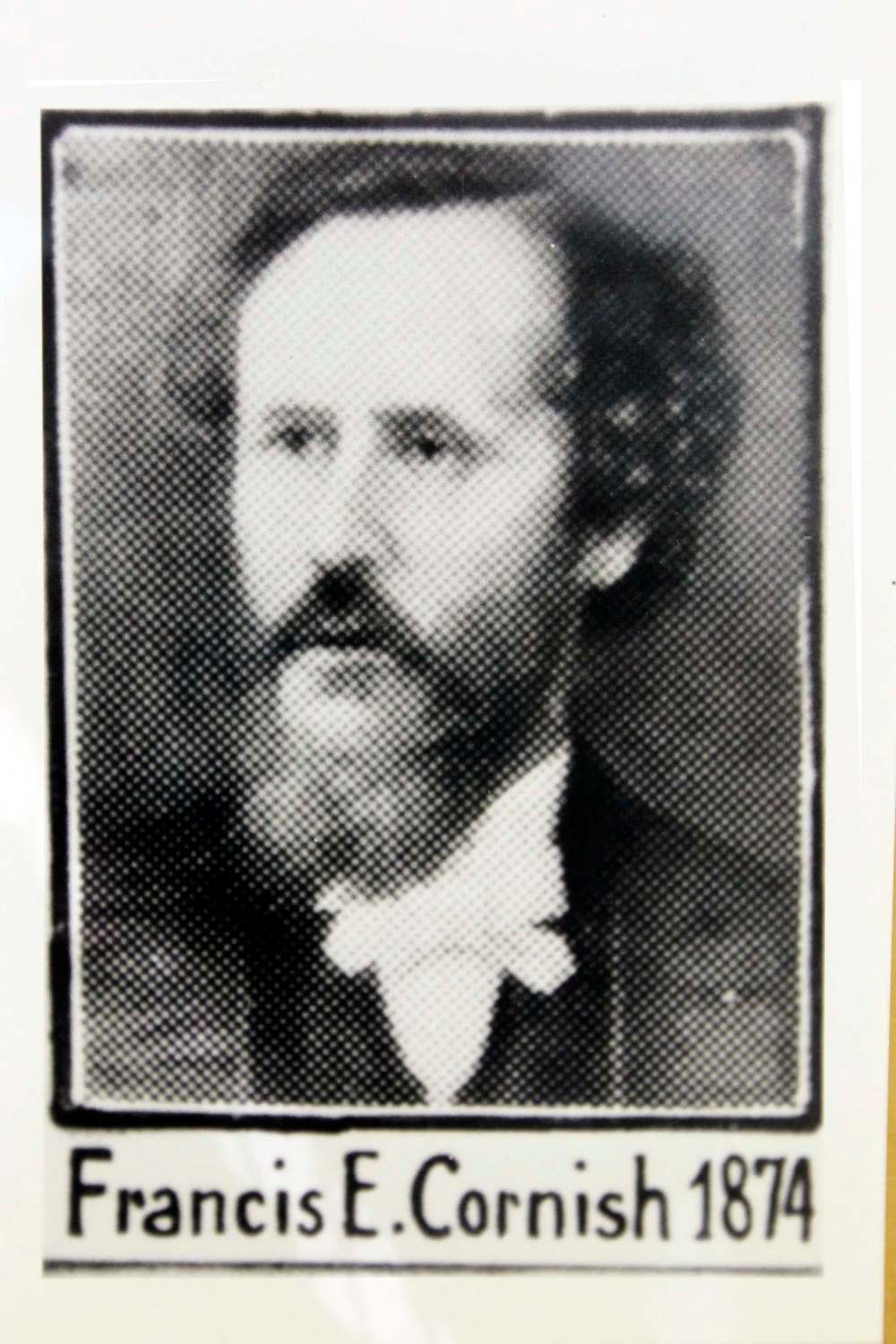
In 1874, Francis Cornish became Winnipeg’s first mayor. A street and one of the local library branches still bear his name.
Winnipeg Free Press files In 1874, Francis Cornish became Winnipeg’s first mayor. A street and one of the local library branches still bear his name.

Bernhardt’s early chapters about Winnipeg’s colonial history look at many of the men such as Donald Smith, Col. Garnet Wolseley, Archibald McGillivray, Miles Macdonell and Francis Cornish, whose names are bestowed on our streets, libraries and schools. There’s a section on the election riots of 1872, in which newspaper offices were ransacked, Métis people assaulted and police tossed in their own jail, instigated by no other than Cornish, who didn’t like the way the polling results were shaping up. Cornish later became Winnipeg’s first mayor, and his name still marks a municipal library branch and street name.

While the focus of the book is on forgotten marvels, the lack of cultural diversity in the stories doesn’t do enough to capture Winnipeg’s identity as a cultural mosaic, or the Canadian city with the highest urban Indigenous population. The first several chapters show that effort was made to interweave First Nations and particularly Métis history in the origins of Winnipeg, but unfortunately mentions of Indigenous peoples gradually fall off.

Only one chapter is devoted to a person of colour, Black athlete John Armstrong Howard. A champion sprinter, the Winnipeg-born Howard was the first Black member of a Canadian Olympic team. Overt racism, however, undercut his performance in the Swedish Summer Olympics of 1912. His legacy lives on through his posthumous induction into the Manitoba Sports Hall of Fame in 2004, and the athletic feats and awards of his grandchildren Valerie and Harry Jerome.

Henry Kalen / University of Manitoba Archives
Metro Plaza, designed by Étienne Gaboury and built in 1966, once stood at Confusion Corner. All but the perimeter wall and the taller portion of the structure were razed by the city in 1987.
Henry Kalen / University of Manitoba Archives Metro Plaza, designed by Étienne Gaboury and built in 1966, once stood at Confusion Corner. All but the perimeter wall and the taller portion of the structure were razed by the city in 1987.

Bernhardt anchors many of his stories with “clues in plain sight,” such as the perimeter wall that still outlines a section of the community centre near Confusion Corner. This wall was previously part of an award-winning civic park called Metro Plaza, designed by renowned local architect Étienne Gaboury. Built in 1966, the Brutalist-inspired concrete park was not appreciated by all, and was nicknamed “Cement Park” or the “Bear Pit” after its unfortunate resemblance to the cement bear enclosures formerly at the Assiniboine Park Zoo. The plaza, save for the perimeter wall and a larger sculptural element that is now the community centre’s sign remain, was razed by the city in 1987.
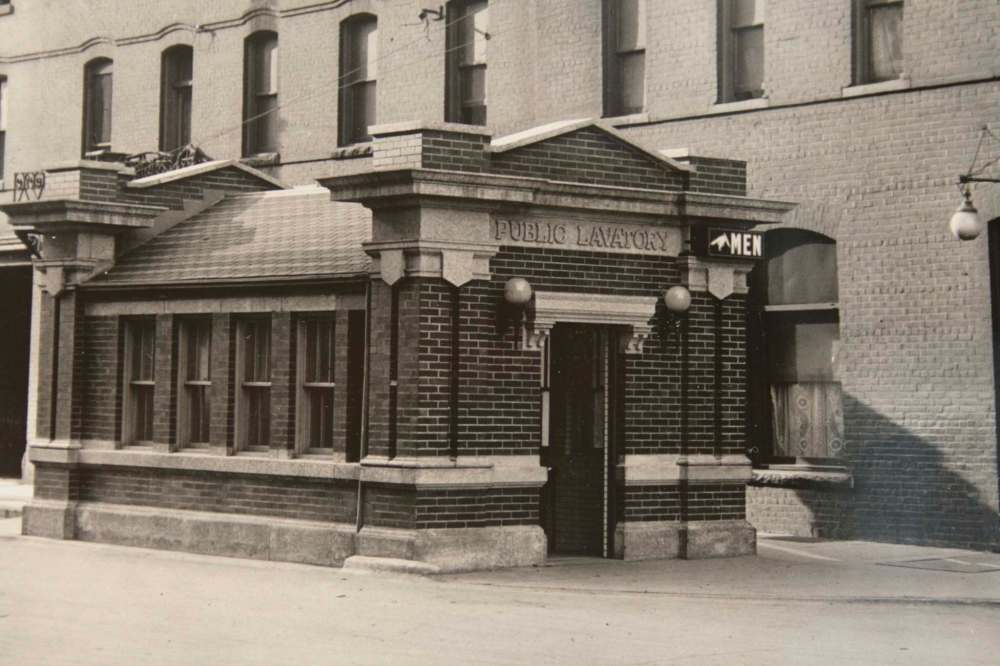
This comfort station, which stood on Logan Ave., was one of a few such public washrooms which eventually were torn down.

The two final chapters, on public bathrooms and public transportation, link the past with the present as they show the decades-long debates the city continues about providing these types of basic infrastructure for its citizens.

Entertaining and sometimes thought-provoking, Bernhardt’s histories add depth and vibrancy to how we see our city and the surrounding areas. It also serves as a timely reminder of the vast treasures to be mined in our archives.

Mary Horodyski is an archivist living in Winnipeg.

Report Error Submit a Tip

More Stories

Projecting ghost signs in new light

Ben Waldman 5 minute read Preview

Projecting ghost signs in new light

Ben Waldman 5 minute read Thursday, Jun. 16, 2022

The existence of ghosts is uncertain. Ghost signs? Those are real. In Winnipeg’s Exchange District, they’re easy to spot: fading advertisements for faded firms, splashed across century-old buildings in paint that isn’t quite ready to disappear just yet — unfinished business for finished businesses.

At 281 McDermot Ave., three ghost signs refuse to go to the grave, and Matt Cohen and Craig Winslow refuse to let them.

On Friday night, the duo will flick on a set of projectors to illuminate the huge ads in what they call the world’s first permanent ghost sign installation, overlooking Old Market Square each night from sunset until midnight. Grim reaper be damned.

Cohen, a Winnipeg marketing professional, has been obsessively cataloguing the city’s surviving wall-based advertisements for a decade. In 2016, he first heard of Winslow, who was working on reviving ghost signs across the United States using light projection. The two connected, and a few months later, Winslow was in Winnipeg to breathe new life into five ghost signs for a single night.

Read
Thursday, Jun. 16, 2022

One weird city

Reviewed by Mary Horodyski 5 minute read Preview

One weird city

Reviewed by Mary Horodyski 5 minute read Saturday, Jan. 30, 2021

In his quirky compilation of “lesser known” histories, local journalist Darren Bernhardt offers some surprising glimpses of Winnipeg’s past.

In 17 short chapters, heavily illustrated with archival photos, Bernhardt tells tales of oddities not included in the typical history class. Structured chronologically, the book can be read cover to cover, or can be dipped into like a bag of assorted candy.

Filled with tangents and digressions, Bernhardt’s enthusiasm for local historical tidbits is contagious. Did you know, for example, that the original Budweiser Clydesdale horses came from Winnipeg? Or that Winnipeg had a mini-golf craze in 1931 started by a bootlegger? Or that a Winnipegger started the largest international organization of magicians? There is no end to the facts readers can pull out to entertain family and friends.

Enticingly designed by Relish Branding, The Lesser Known is a coffee table type of book, but in a smaller softcover format. Bernhardt’s prose is straightforward, with an occasional smattering of imagery and puns. His description of the Clydesdales’ hooves “as the size of frying pans” is vivid, but saying that some city councillors “pooh-poohed” public bathrooms is a definite groaner.

Read
Saturday, Jan. 30, 2021

Making music a marathon rather than a sprint

Alan Small 5 minute read Preview

Making music a marathon rather than a sprint

Alan Small 5 minute read Thursday, Oct. 19, 2023

Larysa Musick has taken the stage countless times, armed with the verses she’s written and rehearsed.

The Winnipeg poetry-slam artist will do the same Friday night at the Times Change(d) High and Lonesome Club, except she’ll have songs from her debut EP to perform rather than poems to recite, and she’ll have a band to back her up instead of being alone to earn the audience’s kudos or criticism.

“It’s a little nerve-racking but it’s also exciting.” says Musick, who released the six-song Tomorrow Is Bound to Come on streaming services Oct. 13.

“The stakes are the same, because people are still watching you, but the difference in poetry slam is you’re scored from zero to 10 on your poetry. I’ve received five out of 10 on stage; I’ve received 10 out of 10.

Read
Thursday, Oct. 19, 2023

Prepare to be … blutterbunged?

David McLaughlin 5 minute read Preview

Prepare to be … blutterbunged?

David McLaughlin 5 minute read Saturday, Aug. 1, 2026

Are you not blutterbunged?

If Russell Crowe’s second-century gladiator character had uttered a 19th century equivalent of “Are you not entertained?” that fit the mood of today’s 21st century, that would be it.

Definitions first. Blutterbunged is an obscure regional dialect word from England that means everything from astonished to confounded to bemused or shocked into speechlessness. Its composition suggests something both more and less, namely blustering bloviation (that’s the more part) and empty words (that’s the empty part). These days we would more naturally punctuate our reaction to an event or statement with a profanity. But you get the drift.

Unearthed by lexicologist Susie Dent, it speaks volumes about our times that it fits now. That we need to reach back hundreds of years to find the right word to adequately capture a contemporary civic reaction to what the hell is going on in politics and the world today.

Read
Saturday, Aug. 1, 2026

Manitoba reports 427 new COVID infections, four deaths

Danielle Da Silva 4 minute read Preview

Manitoba reports 427 new COVID infections, four deaths

Danielle Da Silva 4 minute read Thursday, Nov. 5, 2020

Manitoba’s COVID-19 caseload grew by 427 new infections Thursday, as the province reported four more pandemic deaths.

The triple-digit bump pushed the province to 7,177 total cases since March. It also entrenched the province as having the most new cases per capita in Canada in the past 14 days.

Of the four deaths announced by officials, three contracted the novel coronavirus while receiving unrelated care in hospital: a woman and man — both from Winnipeg and in their 70s — were patients of Victoria General Hospital; a Winnipeg woman in her 80s was a patient at St. Boniface Hospital.

A woman in her 50s from the Southern Health region also died from COVID-19, raising the number of Manitoba pandemic fatalities to 91.

Read
Thursday, Nov. 5, 2020

Substitute teachers want extra compensation to recognize COVID-19 risks

Maggie Macintosh 6 minute read Preview

Substitute teachers want extra compensation to recognize COVID-19 risks

Maggie Macintosh 6 minute read Monday, Feb. 7, 2022

Job opportunities may be abundant for supply teachers in Manitoba, but substitutes say stringent COVID-19 safety protections are harder to come by.

“We should get danger pay,” said Anne Williams, a substitute teacher in west Winnipeg.

Temporary teachers earn far less than full-time educators, yet they often work across multiple buildings in which they are exposed to dozens if not hundreds of students during a shift, said the retired teacher, who has the protection of three vaccine doses.

Space is so limited the 70-year-old said none of the handful of high schools she has taught at recently have had even close to two metres of distance between desks because rooms are typically packed with 30 teenagers.

Read
Monday, Feb. 7, 2022